








Why Finding the Cheapest Way to Invest in Gold Matters More Than Ever
Finding the cheapest way to invest in gold starts with understanding what you actually own, and what it costs you over time.
Here is a quick-reference breakdown for anyone who wants the short answer:
Cheapest Ways to Invest in Gold (Ranked by Long-Term Value)
| Method | Upfront Cost | Ongoing Costs | Do You Own Physical Gold? |
|---|---|---|---|
| Physical gold bars | Spot price + small premium | Storage, insurance | Yes |
| Fractional gold coins | Spot price + slightly higher premium | Storage, insurance | Yes |
| Precious Metals IRA | Spot price + premium | Custodian, storage | Yes (allocated) |
| Gold ETFs | Low entry cost | Annual expense ratio (0.10%-0.40%) | No |
| Gold mining stocks | Share price | Brokerage fees | No |
| Gold futures | Margin deposit | High fees, high risk | No |
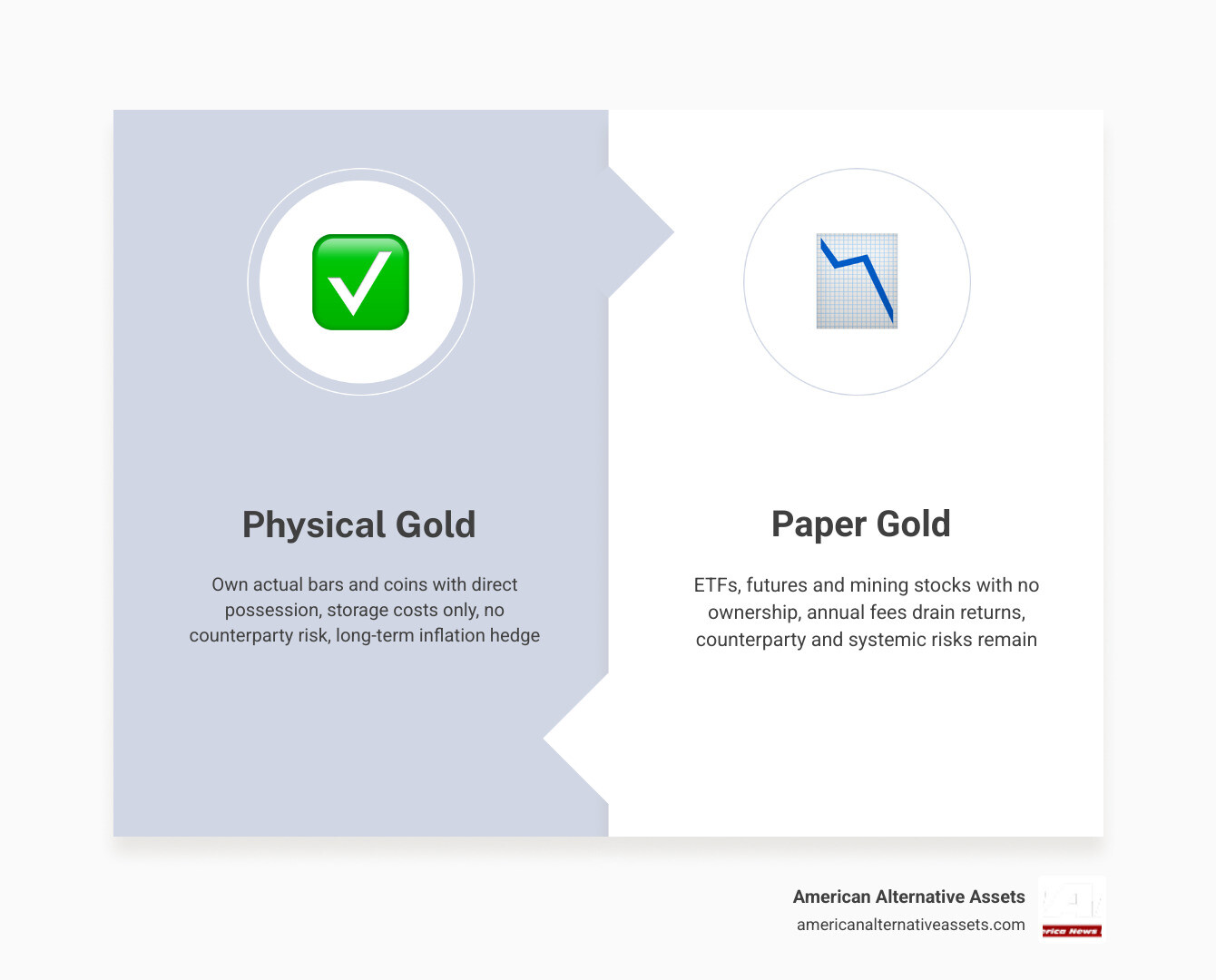
The key takeaway: the lowest entry cost does not always mean the lowest total cost. Paper-based gold products like ETFs and mining stocks carry ongoing fees, counterparty risk, and no direct ownership of the metal itself.
Gold broke above $5,000 per ounce for the first time in early 2026, and a new wave of investors is asking the same question: how do I get exposure to gold without overpaying to do it?
It is a fair question. And it is one worth answering carefully.
Gold has a long track record as a hedge against inflation and economic uncertainty. But the method you choose to own it matters as much as the decision to own it. Some options look cheap on the surface and quietly drain your returns over time. Others require you to trust that someone else is actually holding your gold, which is a different kind of risk altogether.
I’m Shanon Davis, founder of American Alternative Assets. My background spans venture capital and two decades of studying how ordinary people can protect their wealth with tangible assets, which is exactly what led me to focus on helping people find the cheapest way to invest in gold without sacrificing security or ownership. In the sections ahead, we will break down every major option side by side so you can make a clear, informed decision.
This article is for informational purposes only and does not constitute financial advice. Please consult your financial advisor before making investment decisions. Investing in precious metals involves risk. Past performance does not guarantee future results.
Cheapest way to invest in gold vocabulary:
What is the Cheapest Way to Invest in Gold?
When looking for the cheapest way to invest in gold, many beginners search for the absolute lowest price tag they can find on a screen. This is often where the first major mistake occurs. There is a fundamental difference between buying a financial instrument that merely tracks the price of gold and acquiring the physical metal itself.
To determine the true cost of any gold investment, we must look at the spot price, dealer premiums, transaction fees, and the long-term value of what you hold. The spot price is the current market price at which gold is traded on global exchanges. However, you cannot buy physical gold exactly at spot. Every physical gold product comes with a dealer premium, which is the fee added to cover manufacturing, distribution, and the dealer’s operating margin.
For physical gold, the cheapest way to invest is generally to buy large, standard-sized bullion bars, because they carry the lowest premiums over the spot price. But if you want to understand how to align your gold investments with your broader financial goals, you must look at how physical assets compare to paper alternatives. Diversifying your portfolio with gold is a time-tested strategy, and you can read more about how to structure this in the guide on How to Buy Gold to Diversify Your Portfolio – Charles Schwab.

Why ETFs Are Not the Cheapest Way to Invest in Gold Long-Term
On the surface, Exchange-Traded Funds (ETFs) look like the cheapest way to buy gold. You can log into a brokerage account, buy a share of an ETF for a small amount, and completely bypass the need to secure a physical safe or rent a depository vault. Many retail investors default to this option, and major financial media often highlight low-cost ETFs as the ideal entry point. For example, you can read about popular choices in The Best Gold ETF to Invest $500 in Right Now | The Motley Fool.
However, ETFs are rarely the cheapest path over the long run because of their ongoing structure. When you buy a gold ETF, you do not own physical gold. You own shares in a trust that holds gold. Because you do not hold the metal, you are subject to annual expense ratios. These management fees, ranging from 0.10% to 0.40% or more, are deducted directly from the fund’s assets. Over a decade or more, these recurring fees quietly erode your total holdings.
Even more critical is the issue of counterparty risk. When you buy an ETF, you are relying on a complex chain of custodians, sub-custodians, and financial institutions to secure the underlying metal. If the financial system faces a severe systemic crisis, you cannot simply demand that the fund manager ship your portion of physical gold to your house. You are holding paper, not metal. For true wealth preservation during economic downturns, paper representation cannot replace the security of direct, physical ownership.
The Hidden Costs of Paper Gold Assets
Beyond ETFs, the financial markets offer several other “paper gold” options, such as gold mining stocks, mutual funds, and futures contracts. While these are sometimes marketed as high-leverage ways to play the gold market, they come with significant hidden costs and operational risks that make them unsuitable for long-term wealth preservation.
- Gold Mining Stocks: When you invest in a mining company, you are investing in a business, not the metal itself. Mining stocks are highly volatile and are subject to corporate mismanagement, labor strikes, regulatory changes, and environmental liabilities. Even if the price of gold rises, a poorly managed mining company can still lose value.
- Gold Mutual Funds: These funds actively manage portfolios of mining stocks and gold derivatives. They often carry high management fees and administrative costs that eat into your returns year after year.
- Gold Futures: Futures contracts are highly leveraged agreements to buy or sell gold at a future date. They require margin accounts, constant monitoring, and carry the risk of losing far more than your initial investment. They are speculative trading tools, not long-term savings vehicles.
These paper assets create a liquidity illusion. They are easy to buy and sell on a normal trading day, but during a systemic market disruption, their value can diverge wildly from the actual price of physical gold. To learn more about the complexities of these different financial products, you can review the breakdown of 6 ways to invest in gold from simple buys to more complex bets.
Physical Gold vs. Paper Gold: The True Cost of Ownership
To make an informed decision, we must contrast physical gold ownership with paper assets across several key areas: fees, security, and accessibility.
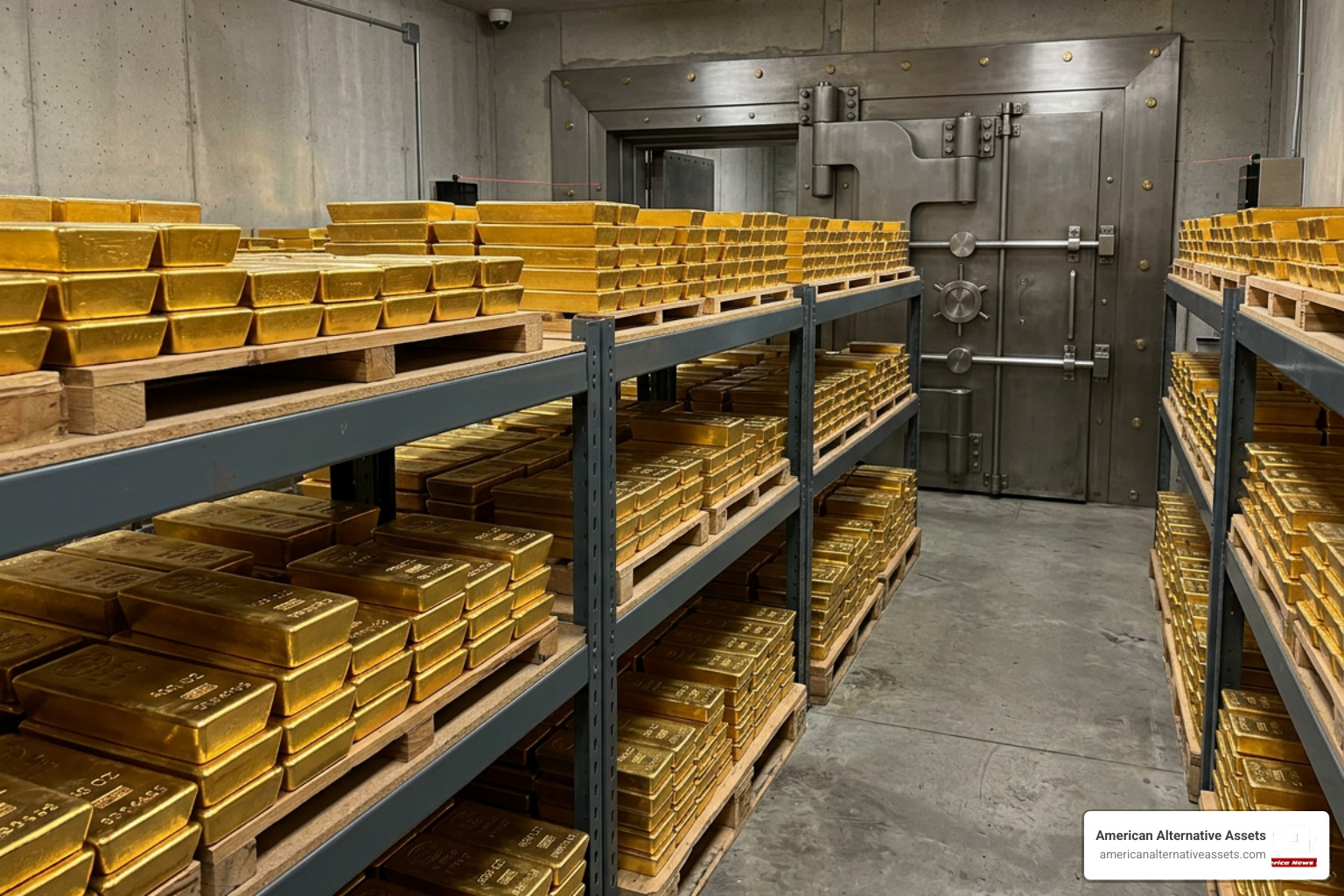
Physical gold requires an upfront premium, but once you buy it, you own a tangible asset with zero counterparty risk. If you choose to hold it in a specialized, secure depository, there are custody and insurance fees, but your gold is allocated, meaning specific physical bars are legally yours and cannot be traded away by a bank.
Paper gold has low upfront transaction costs, but it charges you every single year through management fees, and it leaves you exposed to the stability of the financial institutions managing the fund.
Here is a side-by-side comparison of the real costs and features of both approaches:
| Feature | Physical Gold (Coins & Bars) | Paper Gold (ETFs & Mining Stocks) |
|---|---|---|
| Upfront Premiums | Moderate to high (depends on size) | Very low (brokerage commissions) |
| Ongoing Fees | Storage & insurance (if vaulted) | Annual expense ratios (recurrent) |
| Counterparty Risk | None | High (reliant on third-party institutions) |
| Systemic Protection | High (independent of financial system) | Low (tied to stock market performance) |
| Tax Treatment | Collectibles tax rate (up to 28%) | Capital gains or ordinary income rates |
| Direct Ownership | Yes, you own physical bullion | No, you own paper shares |
For a deeper look at how to balance your portfolio between these two worlds, read our comprehensive guide on How to Invest in Gold and Silver.
Storage and Security for Physical Bullion
One of the most common questions new investors ask is where to store physical gold. While some choose to keep small amounts of gold in high-quality home safes, this approach carries personal security risks and may not be fully covered by standard homeowner’s insurance policies. Bank safety deposit boxes are another option, but they do not offer specialized insurance for precious metals, and bank hours limit your access.
For robust wealth protection, particularly within a retirement account, the gold must be stored in an IRS-approved depository. These specialized facilities offer state-of-the-art security, 24/7 monitoring, and full insurance coverage through major underwriters like Lloyd’s of London. When your gold is held in an approved depository, you receive peace of mind knowing your physical wealth is safe from theft, damage, and financial system failures.
How to Buy Physical Gold on a Budget
Many people assume they need tens of thousands of dollars to start investing in physical gold. Fortunately, this is a misconception. You can build a physical gold portfolio gradually, even on a modest budget, by understanding how to select the right products and minimize markups.
The key to budget investing in physical gold is understanding dealer markups. Dealers must charge a premium over the spot price to stay in business. To keep these costs as low as possible, you should focus on standard bullion products rather than highly decorated or collectible items. If you want to learn the basics of sourcing affordable physical gold, check out A Quick Start Guide to Buy Cheap Gold Bars.
Fractional Bullion: A Budget-Friendly Cheapest Way to Invest in Gold
If buying a full one-ounce gold bar is outside your current budget, fractional bullion is an excellent alternative. Fractional gold refers to coins and bars that weigh less than one troy ounce. These products allow you to accumulate gold systematically over time without needing a massive upfront capital outlay.
Common fractional sizes include:
- 1 Gram Gold Bars: The smallest common investment size, offering an incredibly accessible entry point.
- 5 Gram Gold Bars: A balanced option that offers a lower premium per gram than 1-gram bars while remaining highly affordable.
- Fractional Coins: Many sovereign mints produce gold coins in 1/10 oz, 1/4 oz, and 1/2 oz weights.
While fractional gold is highly accessible, it is important to note that smaller units carry higher premiums per ounce than larger bars. This is because the cost to mint and package a 1-gram bar is nearly the same as the cost to produce a larger bar.
To explore how these smaller sizes can fit into your strategy, read our articles:
- Small but Mighty Why 5 Gram Gold Bullion is a Smart Start for Investors
- 20g Gold Bullion Complete Guide
Choosing the Best Physical Gold Products
When selecting physical gold, you should prioritize liquidity, which is how quickly and easily you can sell the gold back for a fair price when the time comes. The most liquid physical gold products are sovereign bullion coins and standard, high-purity gold bars.
Sovereign coins, such as the American Gold Eagle and the Canadian Maple Leaf, are minted by government agencies and have their weight and purity fully guaranteed. They are recognized by precious metals dealers worldwide, making them incredibly easy to buy and sell.
If you prefer bars, look for 24k gold bullion with a purity of at least 99.99% that comes sealed in an assay card from a reputable refinery. To find the best options for your portfolio, read our detailed guides:
- The Ultimate Guide to Best 1 oz Gold Coin to Buy
- Pure Gold Pure Investment Shop the Best 24k Bullion Options
Tax Implications: Physical Gold vs. Paper Assets
Taxes can have a massive impact on the ultimate return of your gold investment. Many first-time buyers are surprised to learn that the IRS treats physical precious metals differently than stocks and bonds.
Under current IRS rules, physical gold is classified as a “collectible.” If you hold physical gold for more than one year, any capital gains you realize when you sell are taxed at a maximum rate of 28%. This is higher than the standard long-term capital gains tax rates applied to stocks, which top out at 15% or 20% depending on your income.
Paper gold assets, like certain ETFs, are often structured as grantor trusts, meaning they may still be subject to the collectibles tax rate rather than standard capital gains rates. To make sure you do not get caught off guard, you can review the tax details outlined in How to buy gold: 2 ways to invest in gold | Fidelity.
Tax Advantages of a Precious Metals IRA
If you want to invest in physical gold while avoiding the high collectibles tax rate, the most cost-effective solution is to use a Precious Metals IRA. A Precious Metals IRA allows you to hold physical gold coins and bars within a tax-advantaged retirement account.
By using a Gold IRA, you can enjoy several key benefits:
- Tax-Deferred Growth: If you use a Traditional IRA structure, you will not pay any taxes on your gold’s growth until you begin taking distributions in retirement.
- Tax-Free Distributions: If you qualify for and use a Roth IRA structure, your gold can grow completely tax-free, and your qualified retirement distributions will be tax-free as well.
- Direct Physical Ownership: Unlike a standard brokerage account, a Precious Metals IRA holds actual, physical bullion bars and coins in an secure depository on your behalf.
This structure provides the perfect combination of systemic wealth protection and tax efficiency, making it one of the smartest ways to secure your retirement savings.
Frequently Asked Questions About Low-Cost Gold Investing
What is the absolute cheapest way to buy physical gold?
The absolute cheapest way to buy physical gold is to purchase standard gold bars in the largest sizes you can comfortably afford. Large gold bars, such as 10-ounce or 1-kilogram bars, carry the lowest premiums over the spot price because they require less manufacturing and packaging effort per ounce compared to smaller coins and fractional bars. Always purchase from reputable, established dealers who offer clear, transparent pricing and buyback policies.
How do I avoid paying high premiums on gold?
To avoid high premiums, stick to standard investment-grade bullion bars and sovereign coins. Avoid jewelry, which carries massive markups for artistic design, craftsmanship, and retail retail overhead. You should also avoid numismatic or “collectible” coins. These coins are priced based on rarity and historical significance rather than their actual gold content, making them highly speculative and expensive for pure gold investors. To keep track of fair pricing, check out our resources on The Golden Rate How to Track 24 Carat Gold Bullion Prices and Fair Gold Price 101.
Can I hold physical gold in my retirement account?
Yes, you can hold physical gold in your retirement account by setting up a self-directed Precious Metals IRA. The IRS has strict guidelines regarding the purity and types of gold coins and bars that are eligible for these accounts, and the gold must be held by an approved custodian in a secure depository. Setting up this account is a straightforward process when working with a specialized partner who can handle the logistics on your behalf.
Conclusion
Finding the cheapest way to invest in gold is not about chasing the lowest number on a digital screen. It is about finding the most efficient, secure, and tax-advantaged way to own the actual, physical metal. Paper-based gold assets like ETFs and mining stocks may seem cheap at first, but they expose you to ongoing fees, high volatility, and systemic counterparty risks that defeat the primary purpose of owning gold in the first place.
At American Alternative Assets, we help our clients secure their hard-earned wealth through physical precious metals, primarily through self-directed Precious Metals IRAs. Based in Woodland Hills, California, our team is committed to providing white-glove, relationship-first service. We believe in trust, transparency, and ethical practices, ensuring you get the real privacy and wealth protection you deserve.
If you are ready to take control of your financial future and explore the benefits of physical gold ownership, we invite you to take the next step. To learn more about our physical precious metals options, visit our page on how to Buy Gold and Silver.
Disclaimers:
This article is for informational purposes only and does not constitute financial advice. Please consult your financial advisor before making investment decisions.
Investing in precious metals involves risk. Past performance does not guarantee future results.