







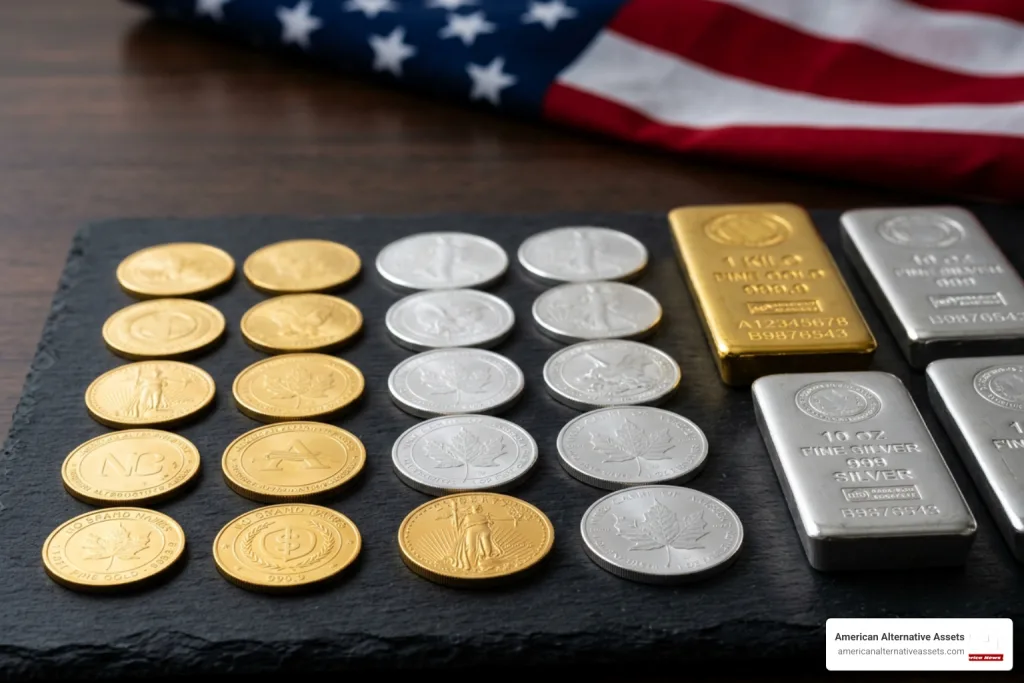
What Every Investor Should Know Before Getting Started With Precious Metals
This precious metals investment guide covers everything you need to know about protecting your wealth with physical gold and silver.
Quick overview:
- What they are: Gold, silver, platinum, and palladium are rare, durable metals valued for both their monetary history and industrial uses
- Why investors hold them: Potential hedge against inflation, portfolio diversification, and a store of value outside the traditional financial system
- Best for beginners: Physical gold or silver bullion coins and bars, or a self-directed Precious Metals IRA
- Recommended allocation: Most financial experts suggest 5% to 10% of your total portfolio
- Key advantage of physical ownership: You hold a tangible asset with no counterparty risk, unlike ETFs or mining stocks
Gold and silver have been recognized as stores of value for thousands of years. That track record matters, especially today.
In 2026, investors are navigating a complex mix of persistent inflation concerns, rising government debt, and geopolitical instability. Many are rethinking how much of their wealth depends on paper-based systems, promises from institutions, or assets they cannot physically hold.
Physical precious metals offer something different. They are finite resources. They cannot be printed. And history shows they have maintained purchasing power across financial crises, currency collapses, and market downturns.
Gold prices have appreciated at nearly 8% annually since the United States abandoned the gold standard in 1971. Central banks around the world have been purchasing gold at roughly 2.5 times the rate of the prior decade. These are not coincidences. They reflect a growing recognition that tangible assets play a unique role in preserving wealth.
This guide focuses specifically on physical precious metals, because direct ownership is fundamentally different from owning a fund that holds gold on your behalf.
I’m Shanon Davis, founder of American Alternative Assets, and my background in venture capital, combined with a lifelong appreciation for tangible wealth that started with a silver Morgan coin from my grandfather, shapes my approach to this precious metals investment guide. I built this company to help everyday Americans understand how physical metals can serve as a durable foundation for long-term financial security.
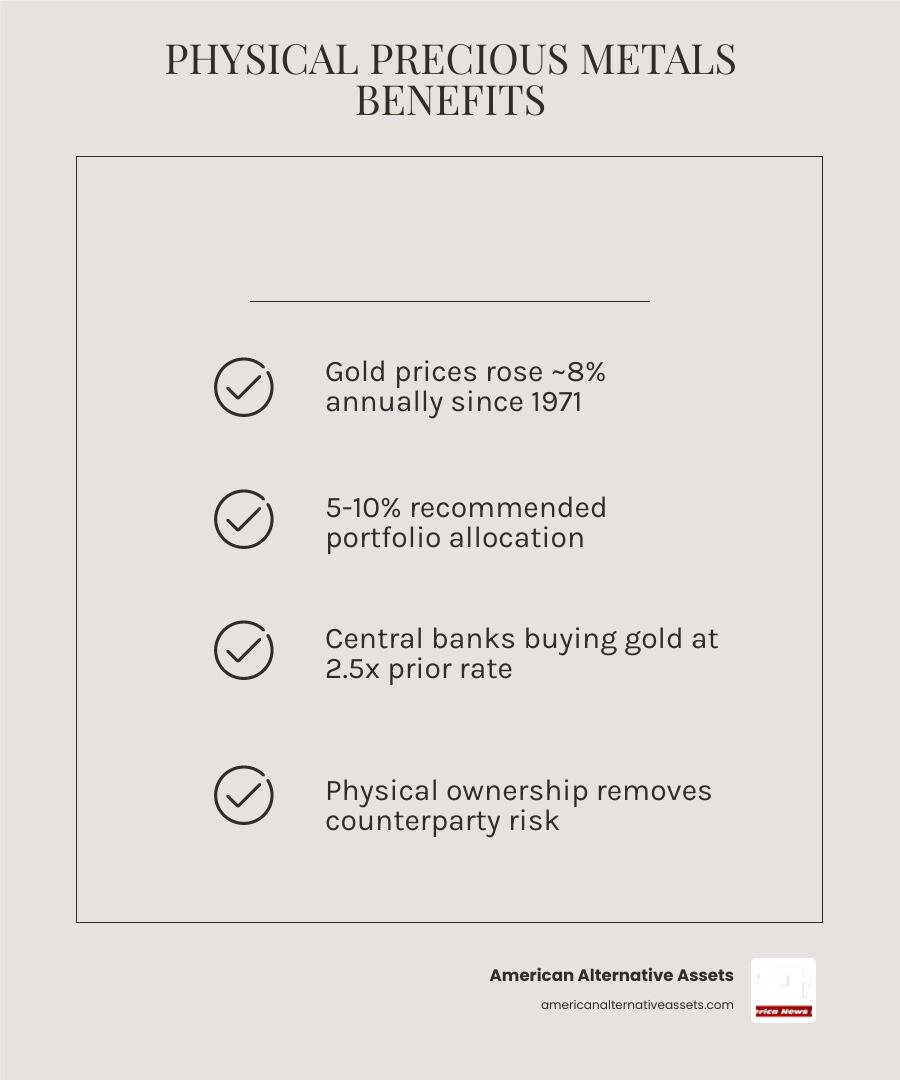
Common Precious metals investment guide vocab:
Why Physical Assets Matter in 2026
As we navigate the economic landscape of June 2026, the case for physical assets has never been more compelling. Over the last several years, traditional fiat currencies have faced headwinds from rapid monetary expansion and persistent fiscal deficits. When the purchasing power of paper money declines, tangible assets with intrinsic value historically help protect wealth.
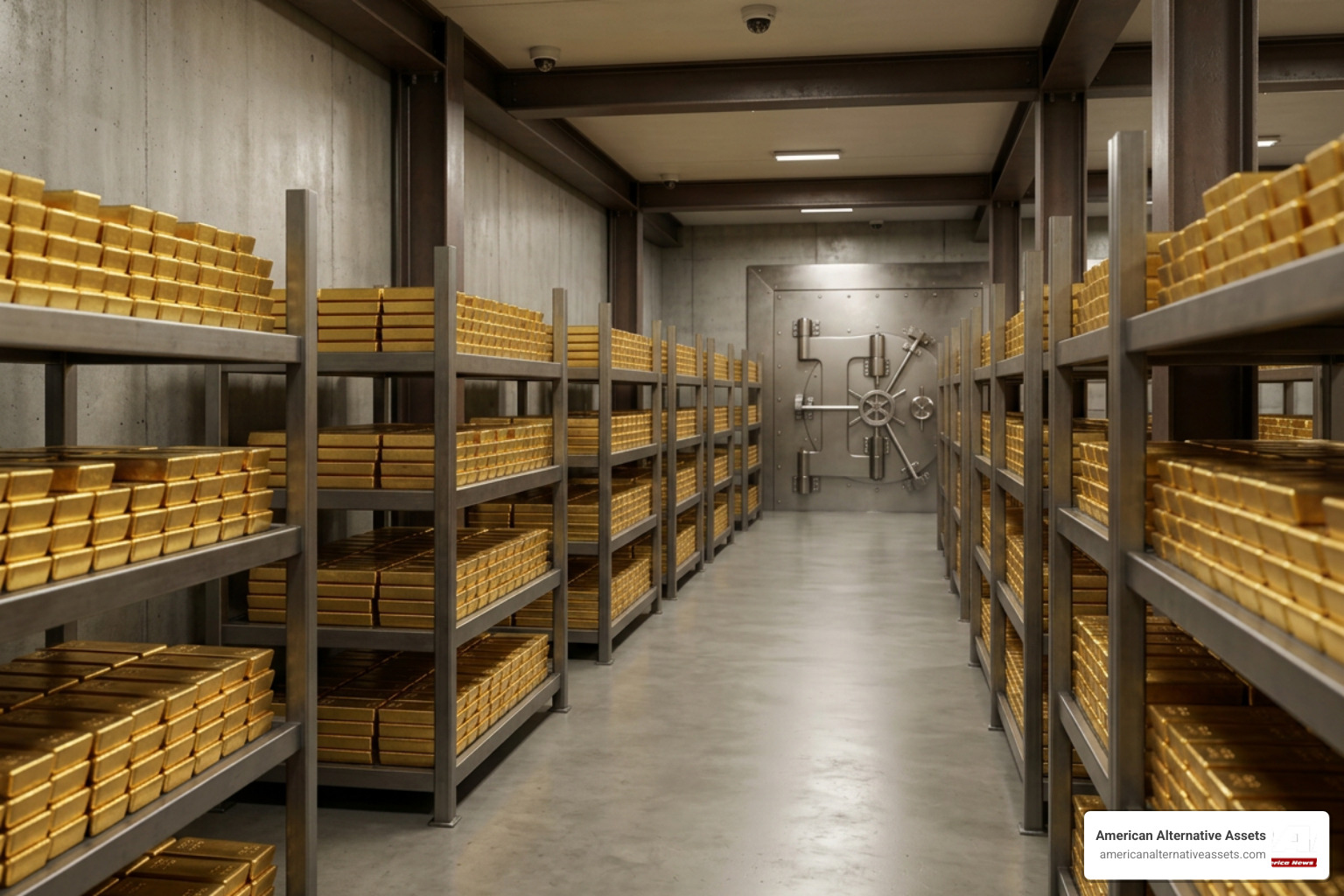
One of the most significant indicators of this shift is the behavior of global central banks. These institutions, which manage national currency reserves, have purchased an average of nearly 1,200 tons of gold per year over the last eight quarters. This represents a massive acceleration, about 2.5 times the buying rate of the prior decade. In the first quarter of 2026 alone, central banks boosted their reserves by an additional 244 tonnes. When the world’s primary financial authorities choose to store physical gold in their vaults, they are signaling a collective desire to diversify away from paper assets.
For individual investors, following this institutional playbook can be a prudent strategy. Physical gold and silver are not dependent on a corporation’s balance sheet or a government’s promise to pay. They cannot declare bankruptcy, and they cannot be diluted by central bank printing presses. To build a robust financial foundation, we must understand the fundamental forces driving these markets. For a deeper look into the history and mechanics of these assets, you can read our comprehensive Precious Metals Guide or explore the foundational principles of Investing in Precious Metals.
How Physical Gold Can Serve as the Anchor of Your Precious Metals Investment Guide
Gold is widely considered the ultimate monetary asset. Unlike industrial commodities, the vast majority of all gold ever mined still exists in above-ground stockpiles, such as jewelry, bullion bars, and central bank reserves. The United States holds the world’s largest reserves of gold, amounting to 8,133.5 tons.
Because gold is not consumed in industrial processes to the same extent as other metals, its price is primarily driven by investor sentiment, global trust, and macroeconomic factors. Historically, gold has served as a powerful store of value because its supply grows slowly, typically expanding by only 1% to 2% annually through mining. This natural scarcity is why gold has maintained its purchasing power over centuries. While a paper dollar buys a fraction of what it did fifty years ago, an ounce of gold still buys a similar basket of real-world goods. To learn more about how gold can stabilize your portfolio, you can read our guide on How to Invest in Gold and Silver.
The Growing Role of Silver in Modern Portfolios
While gold represents stability and wealth preservation, silver offers a unique combination of monetary history and intense industrial demand. More than half of all global silver demand comes from industrial and technological applications, including solar panels, electronics, medical devices, and automotive components.
This dual identity makes silver a highly dynamic asset. On one hand, it responds to the same inflationary and geopolitical pressures that drive gold. On the other hand, it is deeply tied to the global transition toward renewable energy. Silver is estimated to face an almost 250-million-ounce deficit nearly every year from 2022 to 2030, driven largely by the rapid expansion of photovoltaic solar technology.
Because the silver market is much smaller than the gold market in terms of dollar value, silver tends to experience higher price volatility. Its daily price movements can be two to three times greater than those of gold. For patient investors, this volatility can represent a strategic opportunity to acquire a highly valued industrial asset at an accessible price point. To understand the unique dynamics of the silver market, you can explore our Beginner’s Guide to Silver Investment.
The Role of Physical Assets in Wealth Preservation: A Precious Metals Investment Guide
True wealth preservation is not about chasing speculative gains. It is about protecting your hard-earned savings from systemic risks, currency devaluation, and market volatility. In a modern portfolio, physical precious metals act as a form of financial insurance.
When stock markets experience severe downturns, physical gold has historically shown its strength. On average, gold has outperformed the S&P 500 by 24 percentage points during recent crisis periods, and it has outperformed U.S. Treasuries by an average of 10 percentage points during those same periods. This low correlation to traditional equities and fixed-income products is why physical metals are so highly valued for portfolio diversification. To gain further perspective on how to integrate these metals into a broader wealth-preservation strategy, you can read the Lyn Alden guide on gold and silver or consult our detailed Precious Metals Guide.
How to Use This Precious Metals Investment Guide to Build Your Portfolio
When incorporating physical precious metals into your financial strategy, allocation is key. Most independent financial experts suggest making precious metals a relatively modest percentage of your overall investment strategy, with typical allocations ranging between 5% and 10%. Some conservative portfolios may adjust this allocation up to 15% during periods of heightened economic uncertainty.
A strategic allocation to gold and silver helps reduce the overall volatility of your portfolio. Because precious metals often move in the opposite direction of stocks and bonds during market corrections, they can help offset losses in your paper-based accounts. The goal is not to replace your traditional investments, but to build a balanced foundation that can withstand various economic climates.
Macroeconomic Drivers of Precious Metal Prices
To understand how precious metals behave, we must look at the primary economic forces that influence their value:
- Real Yields: This is the interest rate on government bonds minus the rate of inflation. Real yields are widely considered the single most critical variable for precious metal prices. When real yields are negative, meaning inflation is higher than bond yields, cash and bonds lose purchasing power. In this environment, the opportunity cost of holding non-yielding assets like physical gold disappears, making metals highly attractive.
- Interest Rates and Monetary Policy: Lower interest rates generally support precious metal prices. When central banks ease monetary policy and expand the money supply, the relative value of fiat currency declines, driving investors toward tangible assets.
- Currency Devaluation: Because precious metals are priced globally in U.S. dollars, there is an inverse relationship between the strength of the dollar and metal prices. A weakening dollar makes precious metals less expensive for buyers using other currencies, boosting global demand.
- Geopolitical Risk: During times of war, political upheaval, or international trade tensions, investors seek the safety of assets with no jurisdictional risk. Physical gold is universally accepted and carries no political boundaries.
Physical Bullion vs. Paper Assets: Why Tangible Ownership Wins
For investors seeking the protective benefits of precious metals, the form of ownership is just as important as the asset itself. Many financial institutions promote paper-based alternatives, such as Exchange-Traded Funds (ETFs) or mining stocks, as convenient ways to gain exposure to gold and silver. However, these paper instruments do not offer the same security as direct, physical ownership.
| Feature | Physical Bullion (Coins & Bars) | Paper Assets (ETFs & Mining Stocks) |
|---|---|---|
| Direct Ownership | Yes, you own the actual physical metal | No, you own shares in a fund or corporation |
| Counterparty Risk | None, the asset is yours free of liabilities | High, dependent on fund managers, brokers, and custodians |
| Systemic Protection | Complete, exists outside the banking system | None, vulnerable to market closures and financial crises |
| Dividends / Yield | None, acts as a pure store of value | Unreliable, paper assets carry severe business and operational risks |
| Regulatory Risk | Low, standard physical asset ownership | High, subject to financial market regulations and tax changes |
The Hidden Risks of Gold ETFs and Mining Stocks
When you buy shares in a gold ETF, you do not own physical gold. Instead, you own a paper security that tracks the spot price of the metal. These funds introduce significant counterparty risk. You are dependent on the fund manager, the custodian bank holding the metal, and the complex financial plumbing of the stock exchange. During a systemic financial crisis, the liquidity of these ETFs can dry up, and investors may find themselves unable to convert their shares into physical metal.
Mining stocks carry even greater risks. When you invest in a mining company, you are taking on equity risk, operational risk, and environmental liabilities. A mining company’s stock price can decline due to poor management, labor strikes, rising fuel costs, or regulatory changes, even if the price of gold is rising. Mining stocks are highly speculative and carry severe operational risks, making them entirely unsuitable for wealth preservation compared to the safety net of physical precious metals.
Practical Considerations for Physical Storage and Insurance
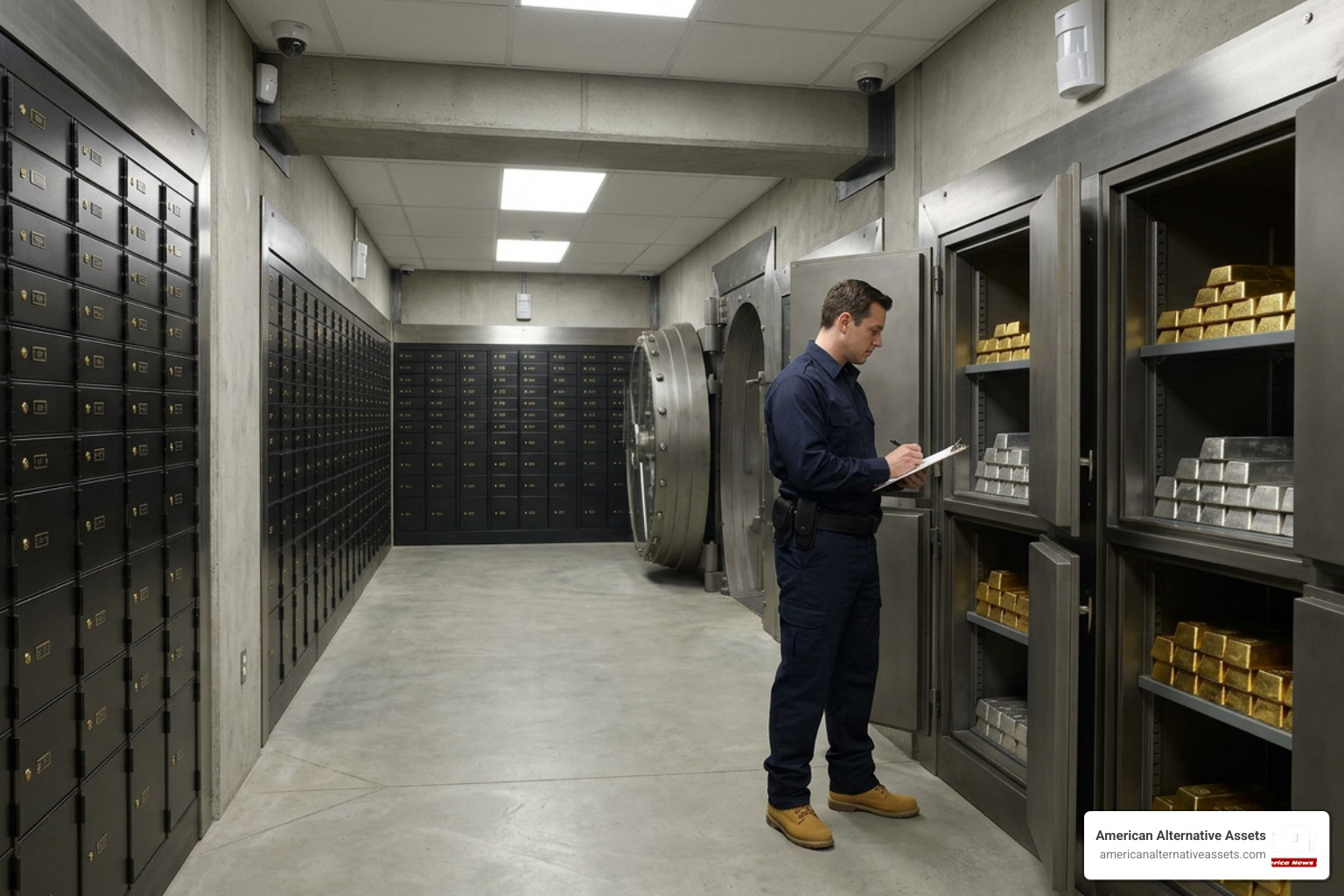
Owning physical bullion requires careful planning regarding storage and security. For smaller holdings, a high-quality, home safe that is bolted down and rated for fire protection can be a practical option. However, for larger portfolios, professional storage is often the most secure choice.
Private, third-party depositories offer institutional-grade security, including 24/7 monitoring, armed guards, and advanced vault technology. When using a professional depository, it is essential to choose segregated storage, which ensures your specific coins and bars are kept separate from other investors’ holdings. Additionally, reputable storage facilities provide comprehensive transit and vault insurance, giving you peace of mind that your wealth is fully protected.
Setting Up a Self-Directed Precious Metals IRA
For many Americans, a significant portion of their wealth is held within retirement accounts like 401(k)s or traditional IRAs. Standard retirement accounts typically limit your options to paper assets like mutual funds and stocks. However, you can hold actual, physical precious metals within a tax-advantaged retirement account by establishing a Self-Directed IRA (SDIRA).
A Precious Metals IRA allows you to enjoy the same tax benefits as a traditional or Roth IRA, including tax-deferred or tax-free growth potential, while diversifying your retirement savings into physical gold and silver. This structure offers a powerful way to shield your retirement nest egg from inflation and market volatility. To learn more about the rules and benefits of this strategy, you can read our guide on How to Invest in Precious Metals with a Self-Directed IRA.
IRS Purity Requirements and Eligible Metals
The Internal Revenue Service (IRS) has established strict purity standards for the physical metals allowed inside an IRA. Not all gold and silver products qualify. To be eligible for a self-directed IRA, the metals must meet the following minimum fineness requirements:
- Gold: Must be at least 99.5% pure (.995 fine)
- Silver: Must be at least 99.9% pure (.999 fine)
- Platinum: Must be at least 99.95% pure (.9995 fine)
- Palladium: Must be at least 99.95% pure (.9995 fine)
Eligible products include standard bullion coins minted by sovereign governments, such as the American Gold Eagle, the Canadian Gold Maple Leaf, and the American Silver Eagle, as well as bullion bars produced by refiners approved by NYMEX, COMEX, or the LBMA. Collectible or numismatic coins generally do not qualify for IRA storage. For a detailed breakdown of eligible products and custodian rules, see our Precious Metals IRA Complete Guide.
The Rollover Process for Retirement Accounts
Transitioning a portion of your existing retirement savings into a Precious Metals IRA is a straightforward process when working with an experienced partner. The rollover typically involves three main steps:
- Establish a Self-Directed IRA: We help you set up an account with an IRS-approved custodian who specializes in alternative assets.
- Fund the Account: You can transfer funds from your existing traditional IRA, Roth IRA, or roll over an eligible 401(k) from a previous employer. This is typically done via a direct custodian-to-custodian transfer, which avoids any tax penalties or withholding.
- Select and Store Your Metals: Once the funds are in your new account, you select the eligible gold and silver coins or bars you wish to purchase. The custodian then directs the shipment of your metals to an IRS-approved, secure depository for safekeeping.
Frequently Asked Questions About Precious Metals
What is the historical performance of gold during inflation?
Gold is widely recognized as a classic inflation hedge. When the purchasing power of fiat currency is eroded by rising prices, gold historically tends to preserve its real value. For example, during the high-inflation decade of the 1970s, gold prices rose significantly, helping investors maintain their purchasing power while traditional paper assets struggled. Since the United States abandoned the gold standard in 1971, gold has delivered an average annual return of nearly 8%, closely matching or exceeding the long-term rate of inflation and monetary expansion.
Is it better to buy gold bars or gold coins?
Both gold bars and gold coins have unique advantages, and many investors choose to own a combination of both.
Gold coins minted by sovereign governments, such as the American Gold Eagle or Canadian Maple Leaf, offer high liquidity and global recognition. They are easy to buy, sell, and trade in smaller quantities. Gold bars, on the other hand, typically carry lower premiums over the spot price because they are less expensive to manufacture. Bars are often preferred by investors looking to acquire larger quantities of gold at the lowest possible cost per ounce.
How are physical precious metals taxed in the United States?
In the United States, the IRS classifies physical precious metals held outside of an IRA as “collectibles.” If you hold physical bullion for more than one year and then sell it for a profit, the gains are subject to a maximum long-term capital gains tax rate of 28%. If held for less than a year, gains are taxed at your ordinary income tax rate.
However, if you hold your physical precious metals within a self-directed Precious Metals IRA, your gains are tax-deferred. You do not pay any capital gains taxes on your metals while they remain inside the IRA. Taxes are only applied when you take eligible distributions during retirement, similar to a traditional IRA.
Conclusion
Investing in physical precious metals is one of the most reliable ways to protect your wealth, diversify your portfolio, and secure your financial future against economic uncertainty. By focusing on tangible assets with intrinsic value, you can build a resilient foundation that is independent of the traditional banking system.
At American Alternative Assets, based in Woodland Hills, California, we are dedicated to helping our clients navigate this journey with confidence. Our unique value proposition is built on a white-glove, relationship-first service. We believe in trust, transparency, and ethical practices, ensuring that your wealth receives the real privacy and protection it deserves. Whether you are looking to establish a secure Precious Metals IRA or take direct delivery of physical gold and silver, we are here to provide the personalized guidance you need.
Explore physical gold and silver for your financial future
This article is for informational purposes only and does not constitute financial advice. Please consult your financial advisor before making investment decisions.
Investing in precious metals involves risk. Past performance does not guarantee future results.