







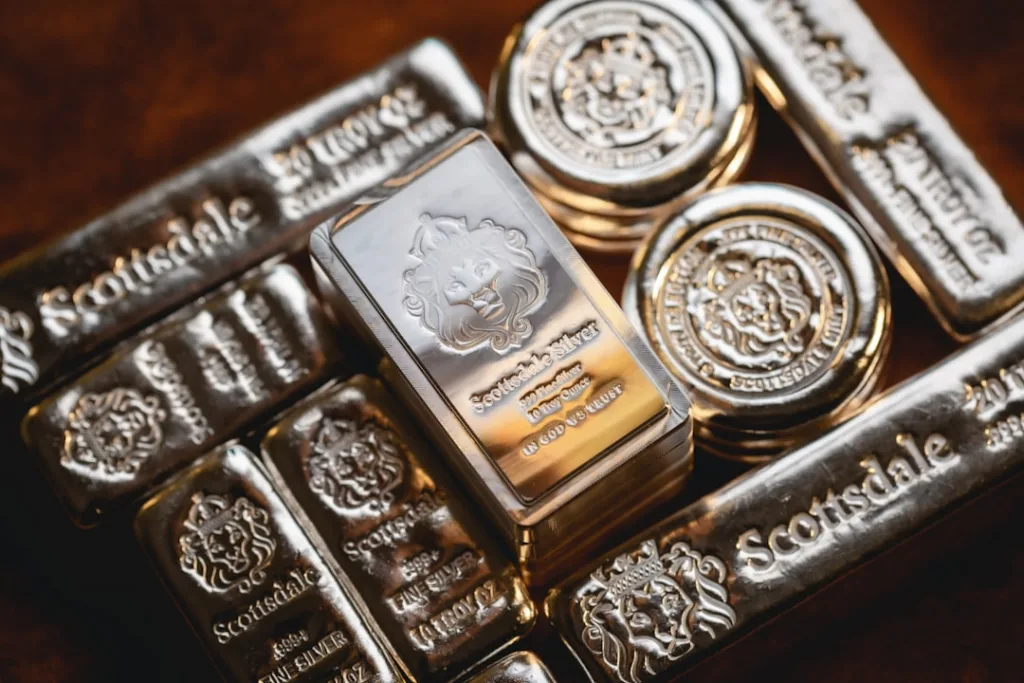
Is Silver a Smart Investment? What Beginners Need to Know
Silver investment is one of the most accessible ways to add a tangible, real-world asset to your portfolio. Whether you’re exploring it as an inflation hedge, a way to diversify, or simply a more affordable entry point into precious metals, silver has earned its place in serious conversations about wealth preservation.
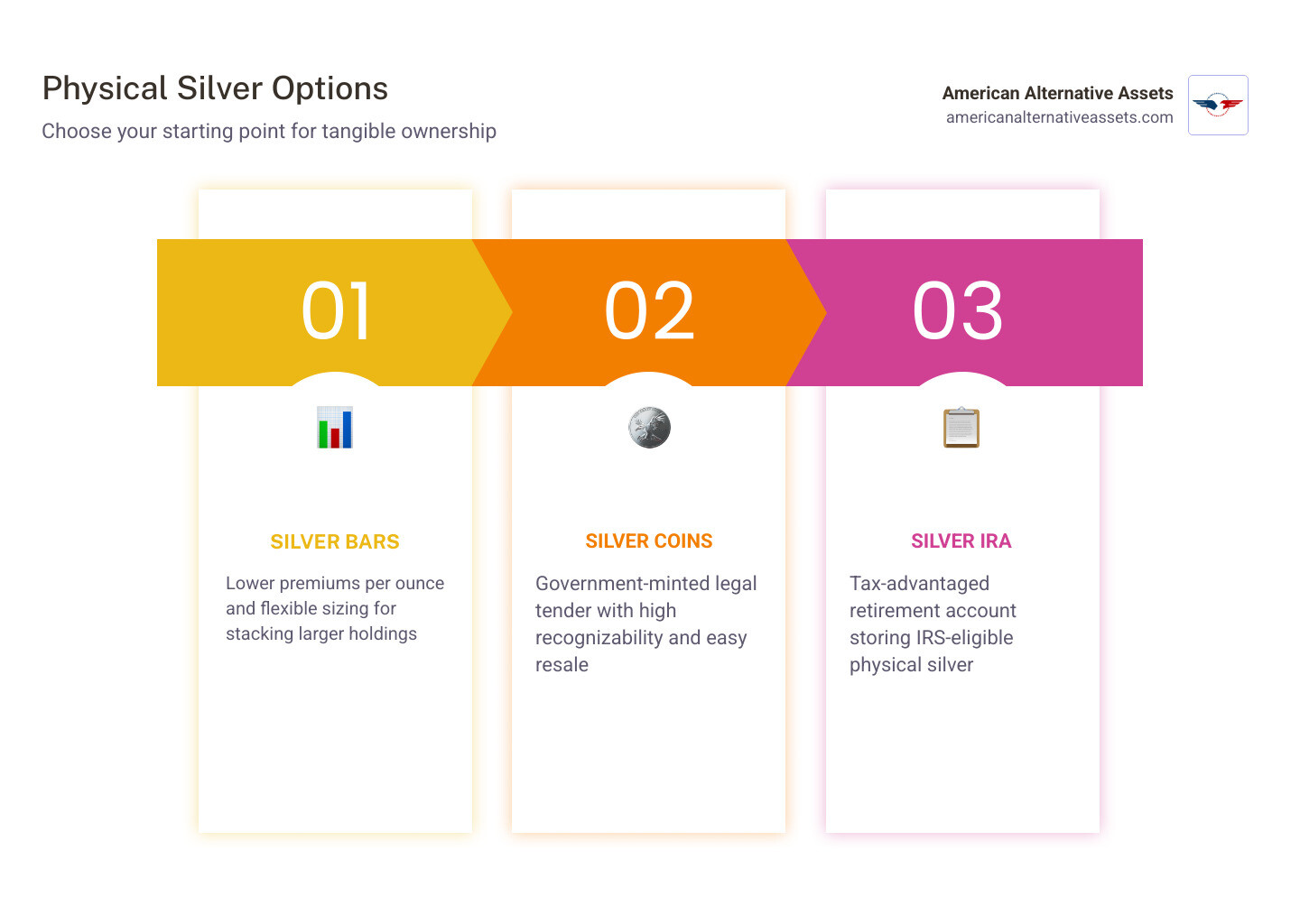
Here is a quick overview of the main ways beginners invest in physical silver:
| Investment Method | What It Is | Key Benefit |
|---|---|---|
| Physical silver bars | Bullion bars in various sizes | Lower premium per ounce |
| Physical silver coins | Government-minted legal tender | High recognizability, easy to resell |
| Silver IRA | Self-directed retirement account holding physical silver | Tax-advantaged ownership |
| Silver rounds | Privately minted bullion | Creative designs, similar value to bars |
Quick answer: The most direct way to invest in silver is to buy physical bullion, such as bars or coins, and store them securely, either at home or through an approved depository. For retirement savings, a Silver IRA allows you to hold IRS-eligible physical silver in a tax-advantaged account.
Silver has been recognized as a store of value for roughly 6,000 years, first used as currency around 700 B.C. Today, it plays a dual role, a monetary metal and a critical industrial input used in solar panels, electronics, and electric vehicles. That combination makes it unlike almost any other asset you can hold.
In 2026, silver is drawing renewed attention. Industrial demand hit a record 680.5 million ounces in 2024, and prices have moved sharply higher over the past year. For many investors who are cautious about paper assets and traditional financial systems, physical silver feels like something real in a world full of promises.
This guide focuses specifically on physical silver ownership, including bars, coins, and Silver IRAs, because direct possession eliminates the counterparty risk that comes with paper-based exposure.
I’m Shanon Davis, founder of American Alternative Assets, and my background spans venture capital and over two decades of studying silver investment as a tool for preserving real wealth outside fragile financial systems. In this guide, I’ll walk you through everything you need to know to get started with confidence.
Silver investment glossary:
What Is Silver Investment and Why Beginners Consider It
At its core, silver investment means owning silver for wealth preservation, diversification, or long-term purchasing power, rather than for jewelry or decoration. For beginners, physical silver often stands out because it is easier to understand than many financial products. You buy it, you own it, and it exists outside a spreadsheet.
Silver appeals to new investors for a few simple reasons:
- It has a long history as money and a store of value
- It is generally more affordable per ounce than gold
- It can diversify a portfolio that is heavily tied to paper assets such as stocks and bonds
- It may help hedge against inflation and economic uncertainty
- It is both a precious metal and an industrial metal
- It can be held directly or inside a Gold, Silver, or Precious Metals IRA
That last point matters a lot. Gold is mostly driven by monetary demand, central bank buying, and safe-haven sentiment. Silver has some of those same qualities, but it is also heavily used in industry. More than half of silver demand comes from industrial and high-tech applications, which makes its price behavior different from gold.
How silver differs from gold as an investment
Silver and gold are often grouped together, but they are not twins. Think of them more like cousins with very different personalities.
| Factor | Physical Gold | Physical Silver |
|---|---|---|
| Price per ounce | Higher entry cost | Lower entry cost |
| Volatility | Typically steadier | Often more volatile |
| Industrial demand | Limited relative to silver | Significant and growing |
| Portfolio role | Often viewed as a core safe-haven asset | Often viewed as a growth-oriented precious metal |
| Storage efficiency | More value in less space | Requires more space for the same dollar value |
| Accessibility for beginners | Strong, but higher cost per unit | Very accessible for small purchases |
Silver’s lower price per ounce can make it easier for beginners to start building a physical position gradually. On the other hand, silver can be more dramatic in its price moves. Research cited in major market commentary notes that silver’s daily volatility can be two to three times greater than gold’s. In plain English, silver can sprint faster, but it can also trip over its own shoelaces.
If you want to compare the two metals more closely, this recent analysis on the gold versus silver allocation debate highlights how silver can outperform during strong cycles, while gold often acts as the steadier anchor. For investors focused on direct ownership, the more important point is that both metals can be held physically, including inside Gold, Silver, and Precious Metals IRAs, rather than through paper-based products.
Why silver attracts investors in 2026
Silver has attracted extra attention in 2026 for several reasons.
First, industrial demand has been strong. The Silver Institute reported record industrial demand of 680.5 million ounces in 2024. Silver is used in solar panels, electronics, medical applications, and EV-related technologies, so demand can rise when manufacturing and energy-transition trends accelerate.
Second, silver has shown the ability to move sharply when sentiment shifts. Recent market coverage has noted major silver outperformance over shorter periods, although those gains have come with real volatility. That is why silver tends to attract investors who want exposure to hard assets and understand that the ride may be bumpier than gold.
Third, the gold-silver ratio remains a popular tool for comparing relative value between the two metals. When silver is cheap relative to gold, some investors see potential catch-up upside. When silver runs hard and the ratio compresses, some become more cautious. Either way, silver stays in the conversation.
For American Alternative Assets, the key takeaway is straightforward, silver’s appeal is strongest when investors focus on physical ownership, long-term diversification, and control over a tangible asset, whether held directly or through a Gold, Silver, or Precious Metals IRA.
Physical Silver Investment Options for Beginners
For our purposes, the best place to start is physical silver. That means bullion you can directly own, not a paper claim that depends on a fund structure, brokerage platform, or institutional chain of custody.
Physical silver options for beginners usually include:
- Bullion bars
- Government-minted coins
- Privately minted rounds
- Silver held inside a self-directed IRA through an approved custodian and depository
- Silver as part of a broader Gold, Silver, or Precious Metals IRA strategy
Physical silver bars and coins
Bars and coins are the two main entry points.
Silver bars are usually the most efficient way to accumulate ounces because they often carry lower premiums per ounce than coins. They come in many sizes, from small bars to larger formats for serious accumulation. If your goal is maximizing silver weight for your budget, bars are often the practical choice.
Silver coins, especially sovereign coins from government mints, usually carry stronger recognizability and resale appeal. Many first-time buyers like them because they are familiar, trusted, and easy to divide into smaller units. The trade-off is that coins often have higher premiums because of minting costs and demand.
Rounds are similar to coins in shape, but they are privately minted and do not carry legal tender status. They can still be a useful physical bullion option, though many beginners prefer highly recognizable government issues.
Most investment-grade silver bullion is .999 fine silver. If you want a deeper overview, see our guides on silver bullion investing and silver precious metals basics.
Why physical silver stands apart from paper exposure
Physical silver is different because it is not someone else’s promise to perform.
An ETF share, a mining stock, or a silver fund may track the metal in some way, but you do not hold the metal itself. That means you still rely on financial intermediaries, market plumbing, and in some cases management decisions that have little to do with silver’s actual spot price. Those layers can undermine the core reason many people buy precious metals in the first place, direct ownership of a tangible asset.
By contrast, physical silver gives you:
- Direct ownership
- A tangible asset outside the banking system
- No issuer promise
- No tracking error
- No business management risk
- Greater privacy than brokerage-based holdings
- Eligibility for placement in a Gold, Silver, or Precious Metals IRA when structured properly
Paper products may look convenient, but convenience is not the same thing as control. For investors focused on wealth preservation, that distinction matters.
Why many long-term investors prefer physical ownership
Long-term investors often prefer physical silver because it aligns with the reason many people buy precious metals in the first place. They want an asset they can verify, hold, and pass on, rather than one that exists as an electronic claim.
Physical ownership also matters in retirement planning. A properly structured Silver IRA allows eligible bullion to be held in a tax-advantaged account, while maintaining direct metal ownership through an approved custodian and depository. Many investors also consider how silver fits alongside gold inside Gold, Silver, and Precious Metals IRAs.
For more on why many investors choose this route, visit The Best Ways to Invest in Silver Without Getting Tarnished.
How to Buy Physical Silver for a Silver Investment
Buying silver is simple in concept, but beginners should understand a few mechanics before making a purchase.
The key terms are:
- Spot price, the current market price of silver
- Premium, the amount added above spot for fabrication, distribution, and dealer costs
- Bid-ask spread, the difference between buy and sell pricing
- Liquidity, how easily a product can be resold
- Authenticity, whether the product is genuine and properly sourced
Choosing between silver bars and silver coins
A good beginner question is, “Should I buy bars or coins first?”
Bars may make sense if you want:
- Lower premium per ounce
- More silver for your budget
- Efficient long-term accumulation
Coins may make sense if you want:
- Greater divisibility
- Familiar government minting
- Strong resale recognition
- Flexible liquidation in smaller amounts
Many beginners use a mix. For example, coins can provide flexibility, while bars can help lower the blended premium of a larger purchase.
If you are comparing formats, our articles on American Silver Eagle bullion and 10 oz silver bullion pricing can help you understand the trade-offs.

What storage, insurance, and premium costs to plan for
Physical silver comes with practical ownership considerations. That is not a downside so much as the cost of actual control.
Plan for:
- Purchase premium above spot
- Shipping or delivery charges
- Secure storage, such as a home safe or approved depository
- Insurance, depending on where and how the silver is stored
- Resale spread when you eventually sell
If you store at home, check whether your homeowners policy covers bullion. Many do not fully cover precious metals. If silver is held in an IRA, it must generally be stored with an approved custodian and depository, not in your personal possession.
How to check purity, authenticity, and IRA eligibility
For physical silver, purity matters. Investment-grade silver is typically .999 fine. For IRA eligibility, silver generally must meet a 99.9 percent fineness standard and be stored through the proper custodial setup.
Beginners should verify:
- Purity or fineness
- Recognized mint or refiner
- Product authenticity
- Documentation or assay where applicable
- IRA eligibility if buying for retirement funds
Our guide to IRA-approved silver coins, bars, and bullion covers the basics in more detail.
Silver Investment Risks, Volatility, and Portfolio Management
Silver can be powerful, but it is not sleepy. Investors should understand that silver’s upside potential comes with sharper swings.
The main risks include:
- Price volatility
- Sensitivity to economic cycles
- Concentration risk if your allocation is too large
- Liquidity differences between product types
- Emotional decision-making during fast moves
Why silver is more volatile than gold
Silver is often more volatile than gold because its market is smaller and because industrial demand plays a larger role in pricing. When economic optimism rises, silver can rally strongly. When recession fears hit, silver can also fall faster.
Research used in major investment commentary notes that silver’s volatility can be two to three times that of gold on a given day. That does not make silver “bad.” It means silver is a different tool. Gold often acts as the steadier ballast, while silver behaves more like the higher-beta precious metal.
How industrial demand affects silver prices
Silver’s industrial role is one of its biggest advantages and one of its biggest wild cards.
It is widely used in:
- Solar panels
- Electronics
- Electric vehicles
- Medical technology
- Batteries and specialized industrial applications
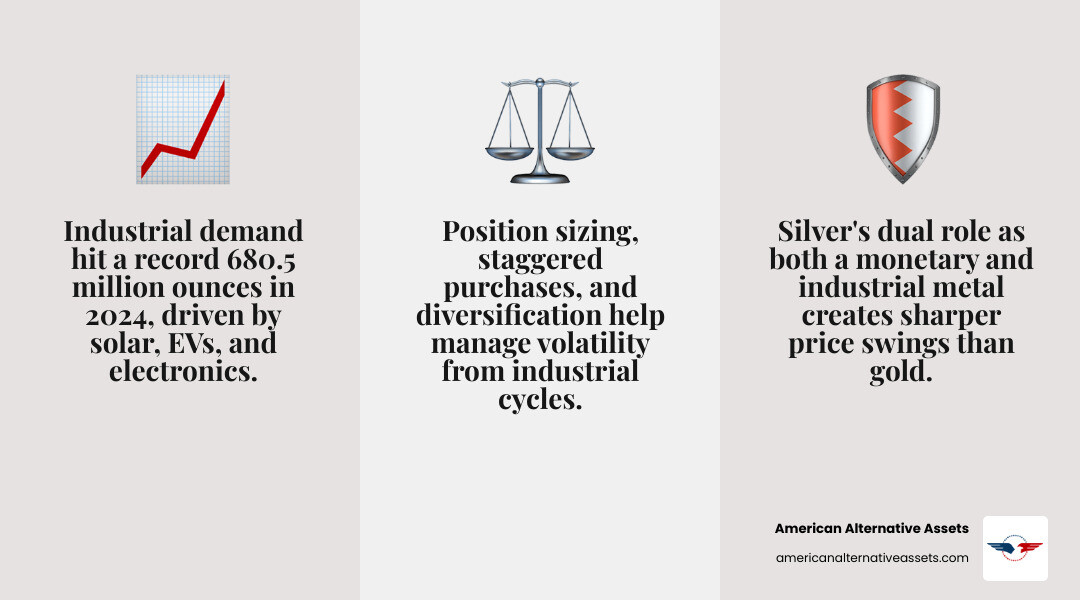
That demand can support long-term fundamentals. In 2024, industrial demand reached a record 680.5 million ounces. At the same time, industrial exposure means silver is more sensitive to manufacturing slowdowns than gold.
So when people ask, “Why doesn’t silver always move like gold?” this is the answer. Gold is primarily a monetary metal. Silver is both monetary and industrial. It wears two hats, which is impressive, but occasionally confusing.
Ways beginners can manage silver investment risk
Beginners can manage silver risk with a few common-sense habits:
- Keep position sizes reasonable
- Use silver as part of broader diversification in physical precious metals
- Buy gradually instead of chasing spikes
- Focus on physical ownership rather than leverage or paper-based substitutes
- Match your silver allocation to your time horizon and risk tolerance
- Consider how silver fits alongside gold in a Gold, Silver, or Precious Metals IRA
A staggered buying approach can help reduce the stress of trying to perfectly time entry points. Silver can move quickly, and “buying the dip” sounds easy until the dip decides it has a sequel.
For additional perspective, see our guide, Is Silver a Good Investment?
Silver IRAs and Tax Considerations for Physical Silver
For retirement savers, a Silver IRA can provide tax-advantaged exposure to physical silver. This approach keeps the focus on direct metal ownership while fitting within an IRA structure. Many investors also explore how silver works alongside gold in Gold, Silver, and Precious Metals IRAs.
How a Silver IRA works
A Silver IRA is a self-directed IRA that holds eligible physical silver rather than conventional paper assets. The account is administered by an approved custodian, and the silver is stored in an approved depository.
The basic process usually includes:
- Opening a self-directed IRA
- Funding it through a contribution, transfer, or rollover
- Selecting IRS-eligible silver products
- Storing the metal through the approved custodial system
Silver held in an IRA must generally meet minimum purity rules, and not every silver product qualifies. If you want a full walkthrough, see our Silver IRA and Silver IRA Account pages.
Tax points to understand before investing
Tax treatment depends on how you own the silver.
With physical silver held outside an IRA, gains may be taxed differently than ordinary securities, and precious metals are often treated as collectibles for federal tax purposes. Sales tax can also apply in some circumstances at the state level, depending on the purchase structure and location. For California-specific context, this resource on gold and silver taxes in California is a useful starting point.
Inside an IRA, tax treatment depends on the account type:
- Traditional IRA, contributions may be tax-deductible and growth is tax-deferred
- Roth IRA, qualified withdrawals may be tax-free
- Transfers and rollovers must follow IRA rules carefully
Because tax rules can be technical, we always encourage investors to review their situation with a qualified tax professional before making decisions.
Physical silver in an IRA versus paper exposure
This is where the difference really matters. Paper silver products may offer price exposure, but they still leave you with indirect ownership, possible tracking issues, and reliance on financial institutions. A Silver IRA built around eligible physical silver keeps the focus on tangible metal ownership within a tax-advantaged account structure.
That combination is why many investors prefer physical metals over paper claims when the goal is long-term wealth preservation. Investors looking at retirement diversification often apply the same logic to Gold IRAs and broader Precious Metals IRAs, where eligible coins and bars remain the priority. If you are exploring retirement rollovers, our article on silver IRA rollovers and investments is a helpful next step.
Frequently Asked Questions About Silver Investment
Is silver a good hedge against inflation or downturns?
Silver is widely viewed as a potential hedge during inflationary periods and times of economic uncertainty because it is a hard asset with intrinsic value. It may help preserve purchasing power over long stretches, especially when paper currencies weaken.
That said, silver is not a perfect short-term hedge. Because of its industrial role, it can still be volatile during downturns. For many investors, silver works best as part of a broader precious metals allocation rather than as a single all-purpose solution.
Is now a good time to start a silver investment?
That depends on your goals, time horizon, and comfort with volatility. In 2026, silver remains in focus because of strong industrial demand, rising interest in tangible assets, and recent price momentum. At the same time, silver has already made large moves, so short-term pullbacks are always possible.
Many beginners prefer to start gradually instead of trying to make one perfect purchase. A steady accumulation approach can be easier to manage emotionally and practically.
If you want a broader market perspective, you can review our recent articles on Silver’s 127% Surge: Why the Other Precious Metal Deserves Your Attention in 2026 and Silver’s Breakout Moment: Why the Other Precious Metal Deserves Your Attention in 2026.
How much silver should a beginner own?
There is no universal number. The right amount depends on your budget, overall portfolio, goals, and risk tolerance. Some beginners start with a small core position and add over time. Others use silver as a complement to gold within a broader precious metals plan.
A practical approach is to think in terms of gradual accumulation rather than all-at-once purchases. Start with products you understand, focus on quality and recognizability, and build from there.
For more ideas, this article on what a good amount of silver to own in 2026 may look like offers a useful outside perspective.
Conclusion
For beginners, silver investment can be one of the clearest ways to own a real asset with a long monetary history and meaningful modern demand. It is accessible, tangible, and uniquely positioned between wealth preservation and industrial relevance.
We believe physical silver deserves special attention because direct ownership avoids the added layers of paper exposure. Whether you are considering bars, coins, or a retirement-focused Silver IRA, the key is to understand what you own, why you own it, and how it fits into your long-term strategy. For many investors, that conversation also includes Gold IRAs and broader Precious Metals IRAs built around eligible physical coins and bars.
American Alternative Assets focuses on helping clients explore physical precious metals and Precious Metals IRAs with a white-glove, relationship-first approach built on trust, transparency, and long-term wealth protection.
If you are ready to learn more about holding physical metals in retirement accounts, explore our precious metals IRA resources and our broader silver category.
This article is for informational purposes only and does not constitute financial advice. Please consult your financial advisor before making investment decisions.
Investing in precious metals involves risk. Past performance does not guarantee future results.