







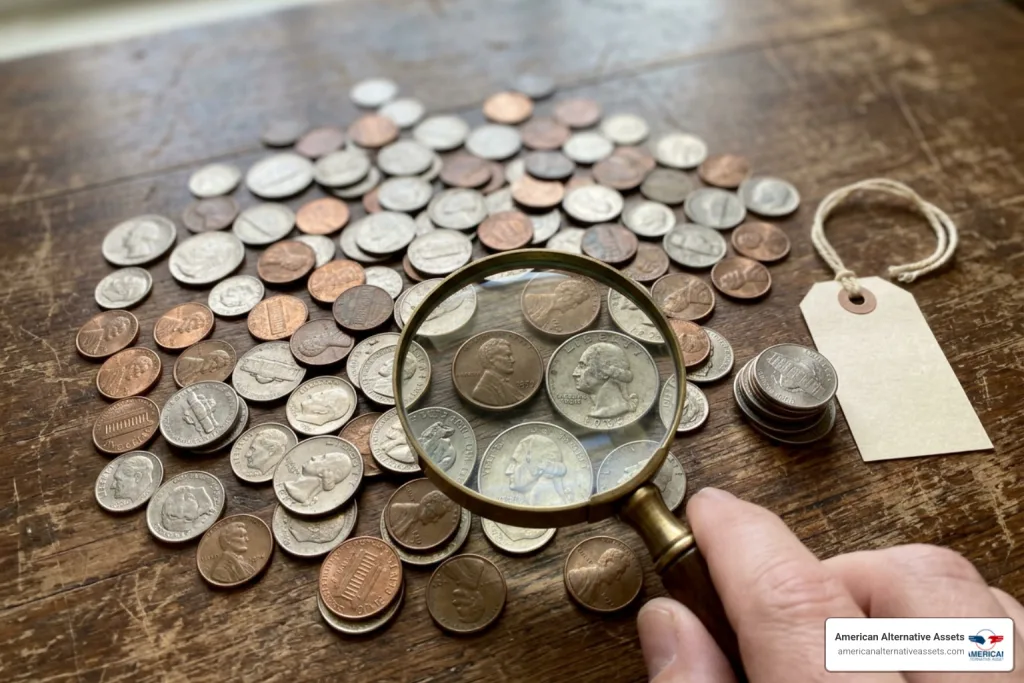
Why Finding the Best Price for Coins Matters More Than Ever in 2026
Finding the best price for coins comes down to a handful of key factors. Here is a quick overview before we dive deeper:
| Factor | What It Means for Your Price |
|---|---|
| Spot price | The live market price of the raw metal in the coin |
| Premium over spot | The markup a dealer adds above the spot price |
| Payment method | Wire or eCheck typically saves 2% to 4% vs. credit card |
| Volume purchased | Buying in bulk (tubes, monster boxes) lowers the per-coin cost |
| Coin type | Bullion coins carry lower premiums than certified collector coins |
| Shipping and insurance | Hidden costs that raise the true total price |
If you have ever held a silver coin in your hand, you already understand something that a stock ticker can never replicate. It is real. It has weight. It does not depend on a promise from a bank or a government balance sheet. But here is the problem: the coin market is full of pricing layers that are easy to miss. Spot prices shift daily. Dealer premiums vary widely. Payment fees, shipping costs, and grading certifications all quietly push the final number higher. Without a clear framework, it is easy to overpay, even when you think you are getting a deal.
This guide cuts through that complexity. Whether you are building a physical silver stack, adding gold coins to a self-directed Gold, Silver, and Precious Metals IRA, or simply trying to understand what a fair price looks like, the goal here is the same: help you buy smarter.
I’m Shanon Davis, and my path to understanding the best price for coins runs from my grandfather’s Morgan silver dollar to years working in venture capital, where I watched paper-based wealth evaporate almost overnight in 2008. At American Alternative Assets, I help everyday Americans cut through the noise and secure tangible, physical assets within Gold, Silver, and Precious Metals IRAs that hold real value.
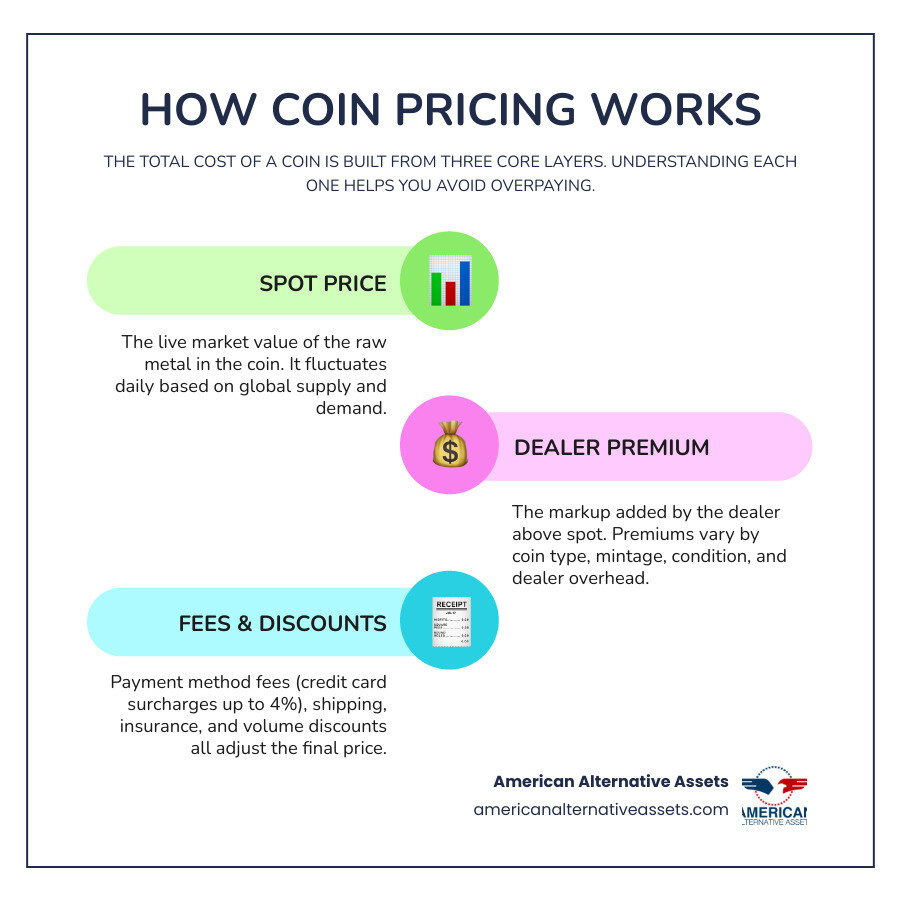
Best price for coins terms to remember:
Key Factors That Determine the Best Price for Coins
To secure the best price for coins, we must first look at the foundation of precious metals pricing. The cost of any coin is not a random number pulled out of thin air. Instead, it is built on a few predictable pillars.
The first pillar is the spot price, which represents the current market value of the raw, unrefined precious metal. This price fluctuates throughout the trading day based on global supply, demand, and economic conditions. Many investors also monitor independent benchmark data, such as the LBMA precious metals prices, to better understand broad market pricing trends.
The second pillar is the dealer premium. This is the additional charge added to the spot price to cover the costs of refining, minting, distribution, and the dealer’s business overhead.
The third major factor is the physical condition of the coin. For bullion coins, minor imperfections might not affect the value, but for numismatic coins, even a tiny hairline scratch can alter the price by thousands of dollars.
Finally, mintage and overall survival population play a massive role. If a particular coin has a very low mintage, its rarity drives up the demand and the premium, regardless of the raw metal content inside it. For a deeper look into how these elements apply specifically to silver, you can read The Complete Guide to Investment Silver Coins.
Bullion vs. Certified Numismatic Coins
When searching for the best price for coins, you must decide whether you are buying bullion or certified numismatic coins. This choice completely changes the pricing math.
Bullion coins, such as the American Silver Eagle or the American Gold Eagle, are minted primarily for their metal content. Their prices trade very close to the spot price of gold or silver. They are highly liquid, easy to trade, and perfect for straightforward wealth preservation.
Certified numismatic coins, on the other hand, are historical or rare collector coins. Their value is determined by their rarity, historical significance, and preservation state, rather than just their raw metal weight. These coins are graded and encapsulated in protective plastic holders by independent third-party services like the Professional Coin Grading Service (PCGS) or the Numismatic Guaranty Company (NGC).
To learn how to navigate this specialized market safely, check out our Step-by-Step Guide to Numismatic Coin Investment.
How Grading Services Impact Coin Valuation
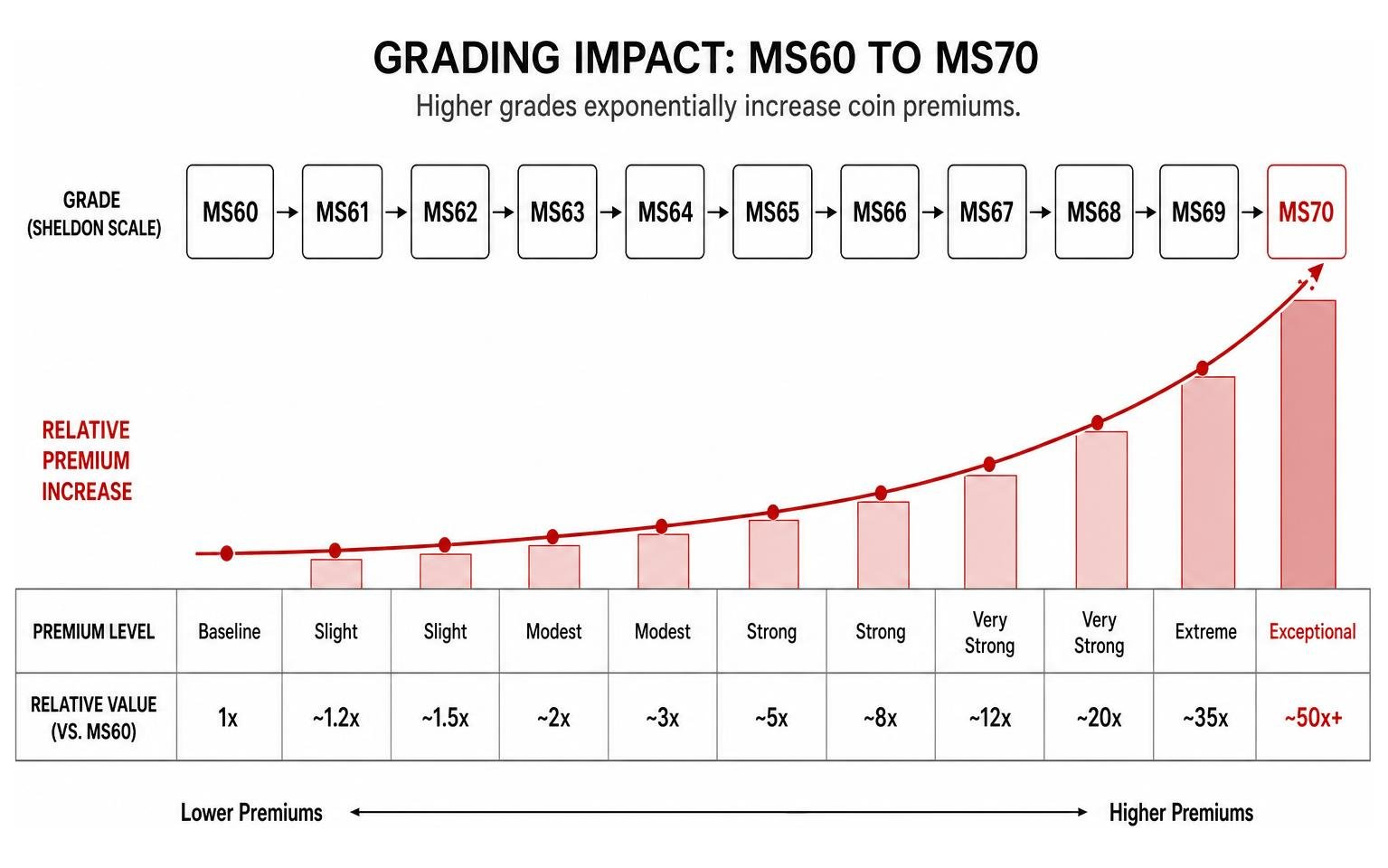
Professional grading services act as the ultimate arbiters of quality in the coin industry. When a coin is certified by PCGS or NGC, it receives a numeric grade on the Sheldon scale from 1 to 70.
A grade of MS70 (Mint State 70) or PF70 (Proof 70) represents a perfect coin with no post-production imperfections visible under five-times magnification. The difference between an MS69 and an MS70 coin can be massive, sometimes doubling or tripling the price of the coin.
To help collectors and investors track these values, services publish official tools like the PCGS Price Guide and the NGC US Coin Price Guide. These guides compile average dealer retail prices and documented auction transactions to give a realistic snapshot of the market.
Additionally, organizations like the Certified Acceptance Corporation (CAC) review already-graded coins and award a green sticker to those that represent the very high end of their assigned grade, which adds another premium to the final price.
How Payment Methods and Volume Discounts Affect Your Cost
Finding the best price for coins requires looking beyond the listed price on a website. The way you pay and the quantity you buy can dramatically alter your final invoice.
Dealers face merchant processing fees when accepting credit cards or digital payment platforms. To protect their margins, they pass these costs on to the buyer. Conversely, they offer direct discounts for payment methods that carry lower processing costs and lower fraud risks, such as bank wires or electronic checks (eChecks).
At the same time, bulk purchasing allows dealers to move higher volumes with less administrative work, allowing them to pass the savings on to you through tiered pricing.
| Payment Method | Typical Processing Cost | Price Impact | Best Used For |
|---|---|---|---|
| Bank Wire | Flat fee (usually $15 to $25) | Lowest price tier (saves 2% to 4%) | Large orders over $2,000 |
| eCheck / ACH | Free or very low cost | Lowest price tier (saves 2% to 4%) | Mid-sized orders up to $10,000 |
| Credit Card / PayPal | 3% to 4% merchant fee | Highest price tier (adds premium) | Small, convenient purchases |
Securing the Best Price for Coins via Cash and Wire Discounts
If you want to secure the absolute best price for coins, you should avoid using credit cards or PayPal. Most national precious metals dealers offer a cash price discount, which is typically a 2% to 4% reduction on the base price of the coin.
To qualify for this cash price, you can pay via bank wire, personal check, or eCheck. While credit cards offer convenience and immediate order processing, the added surcharges can quickly eat into your investment. For larger transactions, taking the extra step to initiate a bank wire is almost always the most financial sensible choice.
Bulk Purchasing and Tiered Pricing Strategies
Volume discounts are a standard practice among reputable precious metals dealers. When you buy physical coins in bulk, the premium per coin drops significantly.
For example, buying a single American Silver Eagle coin will carry a much higher premium than buying a full tube of 20 coins. If you scale your purchase up to a mini monster box of 100 coins, or a standard monster box of 500 coins, the price per ounce drops even further.
By consolidating your purchases into larger, less frequent orders, you can leverage these tiered pricing models to get more physical metal for every dollar you spend.
Navigating the Coin Market: Retail vs. Wholesale Pricing
To avoid overpaying, you must understand the difference between the retail prices you see online and the wholesale prices that dealers use when trading with each other.
The dealer ask price is the retail price at which a dealer is willing to sell a coin to the public. The wholesale value is the price dealers pay when buying inventory from other professionals.
If you want to make sure you are getting a fair deal, you should always compare the retail asking price against the wholesale baseline. For a deeper understanding of how to find fair deals in the market, read Your Treasure Hunt: Finding the Perfect Gold Coins for Sale.
Using Industry Price Guides to Compare Values
To navigate this landscape, professional coin buyers rely on established pricing standards. The most trusted name in wholesale valuation is Greysheet, which has been the industry standard since 1963. Greysheet publishes wholesale values alongside the Certified Coin Dealer Newsletter (CPG) retail values.
Every coin and currency variety in their system is assigned a unique Greysheet ID (GSID), making it easy to verify the exact asset you are researching.
By tracking broader market indicators, like the PCGS3000 index, you can gain a clearer understanding of long-term market trends and short-term volatility, helping you time your purchases more effectively.
Why National Partners Offer Better Security and Value Than Local Shops
While visiting a local coin shop can be a fun weekend activity, local shops often struggle to match the pricing and security of national precious metals dealers. Local businesses have higher physical overhead costs, smaller inventories, and less buying power, which often translates to higher retail markups.
If you are located in Southern California or anywhere else across the country, you might find various local coin dealers and gold buyers in your area. However, for large-scale wealth preservation and physical Gold, Silver, and Precious Metals IRAs, partnering with a national specialist is usually the superior route. National dealers offer lower premiums, guaranteed IRA eligibility for sovereign coins, and direct access to secure, insured depository vault storage.
Hidden Costs and Market Timing When Buying Coins
The advertised price of a coin is rarely the final price you pay. To find the true best price for coins, you must account for hidden costs like shipping, insurance, and the timing of your purchase.
Shipping, Insurance, and Secure Delivery
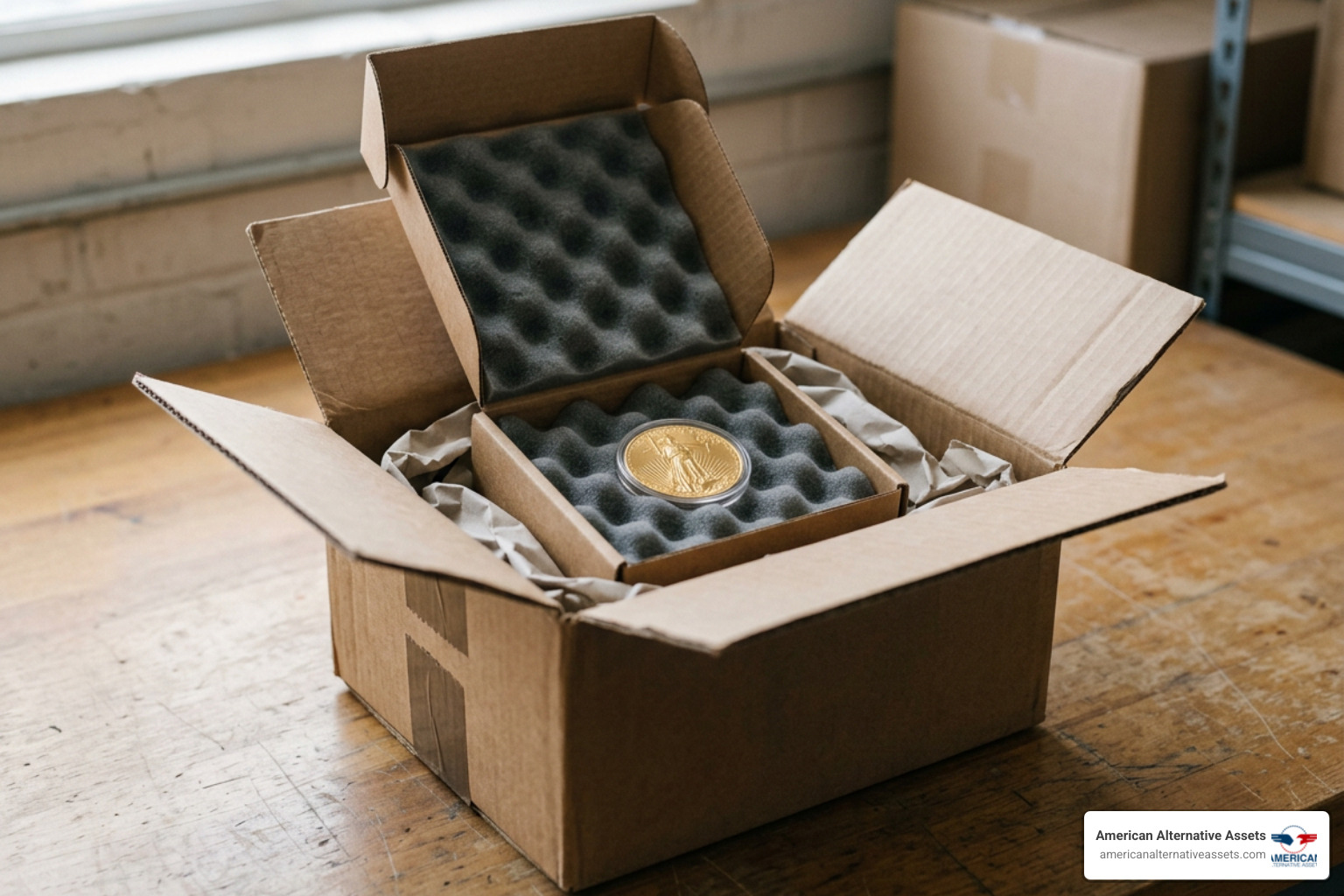
When buying precious metals online, secure delivery is paramount. Standard shipping carriers often exclude precious metals from their basic insurance policies. Reputable national dealers solve this by utilizing specialized third-party insurers, such as Lloyd’s of London, to cover shipments for their full value.
To keep your transaction private and secure, these shipments are sent in discreet packaging with no external markings indicating that there are valuable coins inside.
To optimize your costs, look for dealers that offer free shipping thresholds. Many national dealers will waive all shipping and insurance fees on orders over a certain dollar amount, which immediately lowers your total cost of acquisition.
Pre-Orders vs. In-Stock Purchases
Another pricing dynamic to consider is the choice between pre-ordering upcoming coin releases and buying in-stock inventory.
When a mint announces a highly anticipated milestone release, dealers often offer pre-orders. This allows you to lock in the purchase price based on the current market spot price, protecting you from potential price increases or supply shortages as the release date approaches.
The benefit is obvious: you secure your allocation early. The risk, however, is that if the spot price of the metal drops significantly before the coins actually ship, you are still locked into the higher pre-order price.
Frequently Asked Questions about Coin Pricing
What is the difference between spot price and premium?
The spot price is the raw, live market value of one troy ounce of a precious metal on the global commodities exchanges. The premium is the additional fee a dealer charges on top of that spot price. The premium covers the costs of manufacturing, secure shipping, insurance, and a small profit margin for the dealer.
Why do different coin dealers charge different prices for the same coin?
Dealer pricing varies based on several business factors. Larger national dealers buy in massive volumes, allowing them to operate on thinner margins and offer lower premiums. Smaller local shops have higher relative overhead and lower volume, requiring higher markups. Additionally, some dealers may charge more for coins that possess exceptional eye appeal or special mint designations.
Are physical coins a better investment than paper gold ETFs?
Physical precious metals offer direct ownership with zero counterparty risk. When you hold physical gold or silver coins, you own a tangible asset that cannot be hacked, deleted, or devalued by corporate mismanagement.
In contrast, paper gold ETFs or mining stocks are highly risky financial contracts that offer no real ownership of physical metal. They carry significant counterparty risk, meaning you are relying on third-party institutions to fulfill their promises, leaving you vulnerable to market manipulation and institutional failure. For true wealth protection and long-term peace of mind, physical coins held directly or within a self-directed Gold, Silver, and Precious Metals IRA are the only reliable choice. To learn more about selecting the right physical gold for your portfolio, read The Ultimate Guide to Best 1 Oz Gold Coin to Buy.
Conclusion
At American Alternative Assets, we believe that securing the best price for coins is only half the battle. The other half is ensuring that your hard-earned wealth is protected through a secure, transparent, and trusted process. We specialize in helping our clients transition their paper-based retirement assets into physical precious metals through self-directed Gold, Silver, and Precious Metals IRAs.
With our white-glove, relationship-first service, we prioritize transparency and ethical practices above all else. Based in Woodland Hills, California, we are dedicated to helping you protect your savings with real, physical assets.
If you are ready to take control of your financial future and explore our range of physical gold and silver solutions, visit our Buy Gold and Silver portal today.
This article is for informational purposes only and does not constitute financial advice. Please consult your financial advisor before making investment decisions.
Investing in precious metals involves risk. Past performance does not guarantee future results.