







Why Physical Silver Coins Belong in Every Serious Investment Portfolio
Investment silver coins are one of the most accessible and time-tested ways to hold real, tangible wealth outside the traditional financial system.
Quick Answer: What Are Investment Silver Coins?
| Feature | Details |
|---|---|
| What they are | Government-minted, legal tender coins valued primarily by silver content |
| Key examples | American Silver Eagle, Canadian Silver Maple Leaf, Austrian Philharmonic, Britannia |
| How they’re priced | Based on the live silver spot price, plus a small premium for minting and distribution |
| Who they’re for | Investors seeking physical wealth protection, portfolio diversification, or IRA-eligible assets |
| Why they matter | Physical ownership, no counterparty risk, globally liquid, IRA-approved options available |
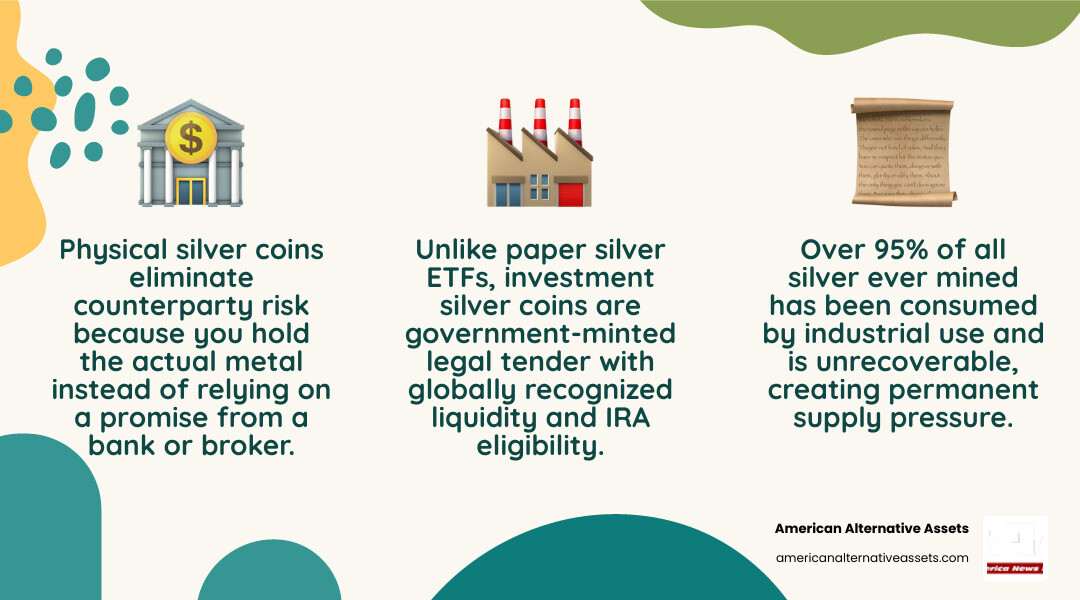
Unlike stocks, ETFs, or paper silver contracts, a physical silver coin is something you can hold. Its value doesn’t depend on a bank, a broker, or anyone else’s promise. That’s a meaningful difference, especially when markets get unpredictable.
Silver also plays a unique role in the global economy. It’s both a monetary metal and a critical industrial material, used in everything from electronics to solar panels. According to The Silver Institute, more than 95% of all the silver ever mined has been consumed by industrial use and is unrecoverable. That kind of permanent demand creates a supply dynamic unlike almost any other asset.
For investors who feel uneasy about the fragility of traditional financial systems, or who simply want a portion of their wealth held in something real and durable, silver coins offer a practical and proven starting point.
I’m Shanon Davis, and my relationship with investment silver coins goes back to childhood, when my grandfather placed a Morgan silver dollar in my hand and told me, “This is real money.” Decades later, after watching the 2008 financial crisis devastate families who had done everything “right,” I built American Alternative Assets to help everyday investors hold wealth that doesn’t depend on anyone else’s promises.
Investment silver coins further reading:
Why Investment Silver Coins Are Essential for Wealth Preservation

When we look at the broader financial landscape in June 2026, many families are searching for stability. Traditional fiat currencies face ongoing depreciation, making wealth preservation a top priority. Physical silver is widely seen as a reliable hedge during times of economic uncertainty, offering a tangible store of value that has outlasted countless paper currencies throughout history.
One of the most compelling arguments for holding physical silver lies in its dual nature. It is both a monetary asset and an indispensable industrial commodity. Unlike gold, which is mostly stored in vaults, silver is actively consumed. It is the best conductor of electricity and heat on the planet, making it vital for modern green technologies, solar panels, and advanced electronics.
According to data from The Silver Institute, more than 95% of the silver mined throughout human history is gone forever, consumed by industrial applications and unrecoverable at any reasonable price. This massive industrial drain, combined with steady investor demand, creates a powerful supply constraint.
Diversifying your portfolio with physical silver helps build a robust defense against inflation. To explore why this metal is capturing so much attention right now, you can read more about Is Silver a Good Investment? and catch up on Silver’s Breakout Moment: Why the Other Precious Metal Deserves Your Attention in 2026.
Physical Silver vs. Paper Assets
Many investors mistakenly believe that buying paper silver, such as exchange-traded funds (ETFs) or mining stocks, is the same as owning the physical metal. In reality, paper assets introduce significant counterparty risk and systemic vulnerability to your portfolio.
When you invest in a paper silver ETF, you do not own physical silver. You own a piece of paper that tracks the price of silver, managed by a financial institution. If the financial system faces a severe crisis, or if the custodian of that fund encounters operational issues, your investment could be at risk. This is known as counterparty risk, the danger that the other party in a financial contract will default.
By contrast, direct physical ownership of investment silver coins eliminates counterparty risk entirely. Physical silver cannot be hacked, deleted, or devalued by a corporate board. For a deeper look into starting your physical journey, check out our Beginner’s Guide to Silver Investment.
If you are considering paper alternatives, it is crucial to understand their limitations. You can learn about the risks in our Best Silver Stocks A-Z Guide and our Ultimate Silver Stocks Investing Guide, which highlight why paper instruments do not offer the same wealth-preservation security as holding the physical metal in a dedicated account.
Understanding IRA-Approved Bullion vs. Non-Eligible Coins
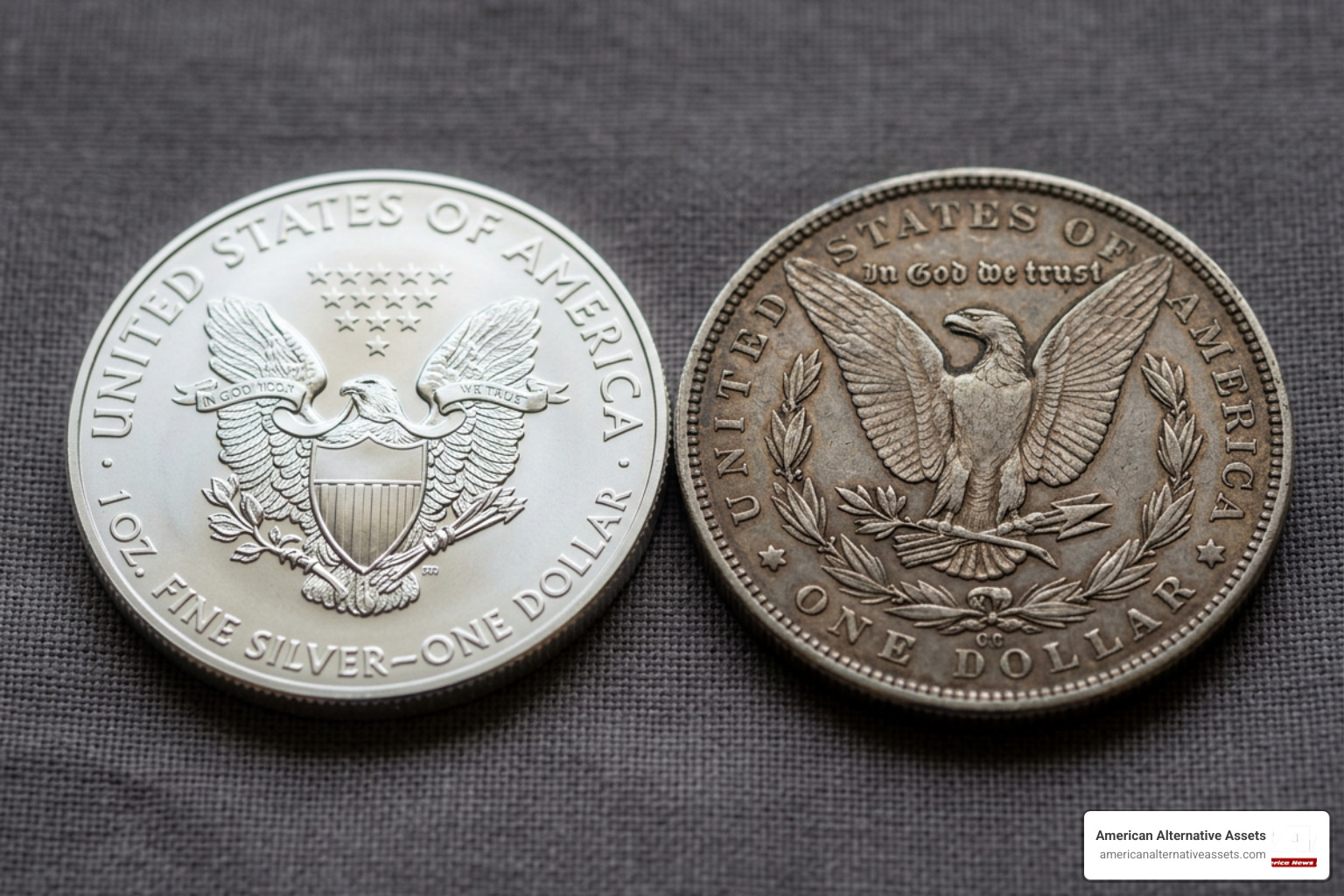
Not all silver coins are created equal, especially when your goal is long-term wealth preservation or retirement planning. To protect your savings within a tax-advantaged account, you must understand the distinction between IRS-approved bullion coins and non-eligible collectible coins.
The Internal Revenue Service (IRS) enforces strict purity requirements for precious metals held within a Self-Directed IRA. For silver, the minimum fineness standard is 99.9% (.999 pure).
Many collectible, numismatic, or semi-numismatic coins do not meet these standards. Collectible coins often carry high premiums based on subjective factors like rarity, historical significance, or aesthetic grading. These high-premium numismatics generally do not suit wealth preservation goals because their market value is highly volatile and depends on finding a specific collector willing to pay that premium. For steady wealth preservation, physical bullion valued strictly by its weight and metal purity is the more practical choice.
Top Sovereign Investment Silver Coins for Modern Portfolios
Sovereign mints, backed by their respective governments, produce the most widely recognized and highly liquid silver bullion coins in the world. These are the premier choices for modern portfolios and physical IRAs.
- American Silver Eagle: First issued by the United States Mint in 1986, the American Silver Eagle is the world’s most popular silver bullion coin. It contains one troy ounce of 99.9% pure silver, with a trace of copper added for durability. You can learn more about its history and design directly from the 2024 American Eagle One Ounce Silver Uncirculated Coin | US Mint.
- Canadian Silver Maple Leaf: Struck by the Royal Canadian Mint, this coin is renowned for its exceptional purity of 99.99% (.9999 fine) silver. It is widely considered one of the most secure coins on the market. For details on the latest release, view the 2026 SML – 1 oz. 99.99% Pure Silver Coin (Bullion) | The Royal Canadian Mint.
- Austrian Vienna Philharmonic: Minted by the historic Austrian Mint, this stunning coin features orchestral instruments and is backed by the Austrian government with a face value in Euros. It features 99.9% pure silver.
These sovereign coins are fully eligible for inclusion in a physical precious metals retirement account. To see how they fit into a structured plan, explore our guide on setting up a Silver IRA Account.
Sovereign Mint Production and Liquidity
Sovereign bullion coins benefit from massive, consistent production runs and global recognition. This makes them highly liquid, meaning they are incredibly easy to buy, sell, and trade anywhere in the world.
While some mints release limited-edition commemorative coins, such as special releases marking America’s 250th anniversary in 2026, the high-volume, standard-issue sovereign coins are generally preferred for pure bullion portfolios. Their pricing remains closely tied to the global spot price of silver rather than speculative collector demand, ensuring you get the most metal for your dollar.
Pricing, Premiums, and Choosing Your Silver Format
When buying physical silver, you have three primary formats to choose from: sovereign coins, private mint rounds, and bullion bars. Each format has a different pricing structure based on the spot price and the premium over spot.
The premium is the additional cost added to the live spot price of silver. This premium covers the costs of minting, refining, security features, distribution, and the dealer’s small margin.
| Silver Format | Typical Purity | Premium Level | Best Used For | Key Advantage |
|---|---|---|---|---|
| Sovereign Coins | 99.9% to 99.99% | Moderate to High | Portfolio diversification, IRAs, home storage | Legal tender status, global liquidity, government backing |
| Private Mint Rounds | 99.9% | Low to Moderate | Bulk physical stacking | Lower premiums than sovereign coins |
| Bullion Bars | 99.9% | Lowest | Large-scale investing, depository storage | High cost-efficiency per ounce |
While large 1,000-ounce silver bars are the most cost-efficient way to hold silver on a commercial scale, they are heavy and difficult to transact. For the most convenient, divisible, and flexible form of physical silver, coins are preferred, especially for small to medium-sized investments.
If you are working with a tighter budget, you can explore affordable entry points by watching this video: Dealer Reveals Best SILVER to Buy on a TIGHT Budget – YouTube. You can also browse various options through trusted marketplaces like Silver Coins For Sale – JM Bullion.
For those interested in historical divisible options, pre-1965 “junk silver” bags are another popular choice. A bag of 90% silver US dimes or quarters contains approximately 715 ounces of pure silver per $1,000 face value, while 40% silver half-dollars from 1965 to 1970 contain approximately 295 ounces of pure silver per $1,000 face value.
Security Features and Anti-Counterfeiting Technologies
As physical silver continues to grow in popularity, sovereign mints have developed advanced security features to prevent counterfeiting and protect investors.
The Royal Canadian Mint leads the industry with its proprietary Bullion DNA technology. Every Canadian Silver Maple Leaf coin minted since 2015 features a microscopic, laser-engraved maple leaf privy mark containing the year of manufacture. This mark is registered in a secure database and can be instantly verified by authorized dealers. Additionally, Canadian silver coins feature MINTSHIELD surface protection, a breakthrough technology designed to prevent the unsightly white spots, or “milk spots,” that naturally occur on silver bullion over time without affecting its purity.
The US Mint has also upgraded its defenses. Modern American Silver Eagles feature a sophisticated reeded edge variation, where a specific notch is missing from the reeding on the edge of the coin, making manual duplication incredibly difficult for counterfeiters.
Storage, Liquidity, and Tax Considerations
Acquiring physical silver is only the first step. You must also plan for its security, understand its liquidity, and navigate the tax rules associated with precious metals.
Physical silver is highly liquid, but your ease of sale depends on the format you hold. Sovereign coins are the easiest to liquidate because their weight, purity, and authenticity are backed by a government. Most reputable dealers offer straightforward buyback policies, allowing you to convert your silver back into cash quickly when needed.
From a tax perspective, physical precious metals are classified as collectibles by the IRS. Capital gains tax rules apply when you sell your silver for a profit outside of a tax-sheltered account. However, by holding your silver within a physical Precious Metals IRA, you can defer these taxes until you begin taking distributions in retirement.
How to Safely Store Your Investment Silver Coins
If you purchase silver coins with cash outside of an IRA, you can choose to take physical delivery and store them at home in a high-quality safe, or utilize a private safety deposit box.
However, if you are investing through a retirement account, IRS regulations are very strict. To maintain the tax-advantaged status of a Precious Metals IRA, your physical silver must be stored in an IRS-approved, third-party depository. These secure facilities offer state-of-the-art security, 24/7 monitoring, and full insurance coverage for your assets.
To see which coins are eligible for this secure retirement path, refer to The Definitive List IRA Approved Silver Coins Bars and Bullion. If you are ready to take the next step, our guide on going From Zero to Silver: A Beginner’s Guide to Starting Your IRA will walk you through the entire process.
Choosing a Reputable Precious Metals Dealer
When purchasing physical precious metals, working with a reputable, trustworthy partner is vital. You should look for dealers with established credentials, transparent pricing, and clear buyback policies.
The US Mint distributes its bullion coins through a network of authorized wholesalers, which you can learn about via the Bullion Authorized Purchasers – U.S. Mint resource. When shopping online, it is wise to compare established platforms such as Buy Precious Metals Online – Gold, Silver & Platinum Dealers and Coins and Investment-Grade Bullion in Pleasant Hill, CA to understand how reputable dealers structure their services.
At American Alternative Assets, we pride ourselves on providing a white-glove, relationship-first service. Based in Woodland Hills, California, we focus on transparency, trust, and ethical practices. We do not believe in high-pressure sales tactics. Instead, we focus on educating our clients so they can make informed decisions to protect their hard-earned savings.
Frequently Asked Questions about Silver Investing
What is the difference between IRA-approved silver coins and non-approved silver?
The primary difference lies in the purity and the governing IRS regulations. To be eligible for a Precious Metals IRA, silver coins must have a minimum purity of 99.9% (.999 fine) and be produced by a recognized sovereign mint or accredited manufacturer. Non-approved silver coins, such as vintage US coins minted before 1965, only contain 90% silver and are not eligible for IRA storage, though they remain popular for personal physical holding.
Are silver coins eligible for a precious metals IRA?
Yes. Many sovereign silver coins, including the American Silver Eagle, Canadian Silver Maple Leaf, and Austrian Philharmonic, are fully eligible for a Precious Metals IRA. To hold them in an IRA, they must be purchased through an approved transaction and shipped directly to an IRS-approved secure depository under the care of a qualified custodian.
Why has so much of the world’s historical silver disappeared?
Unlike gold, which is carefully preserved and recycled, silver is heavily used in industrial manufacturing. Because it is used in small quantities in individual electronic devices, solar panels, and medical equipment, it is often not economically viable to recycle. As a result, the vast majority of historical silver has been discarded in landfills and is lost forever, creating a unique supply-and-demand dynamic for physical investors.
Conclusion
Protecting your wealth requires proactive planning and a reliance on assets with real, intrinsic value. Investment silver coins provide a time-tested, highly liquid, and accessible way to diversify your portfolio away from paper-based risks and protect your savings from the eroding effects of inflation.
Whether you prefer to store your silver at home or secure it within a tax-advantaged retirement account, physical ownership puts you in control of your financial future. At American Alternative Assets, we are dedicated to helping you navigate this journey with transparency, trust, and personalized care.
To learn more about how physical silver can play a role in your long-term wealth preservation strategy, explore our dedicated resource on the Silver IRA today.
Disclaimers:
This article is for informational purposes only and does not constitute financial advice. Please consult your financial advisor before making investment decisions.
Investing in precious metals involves risk. Past performance does not guarantee future results.