







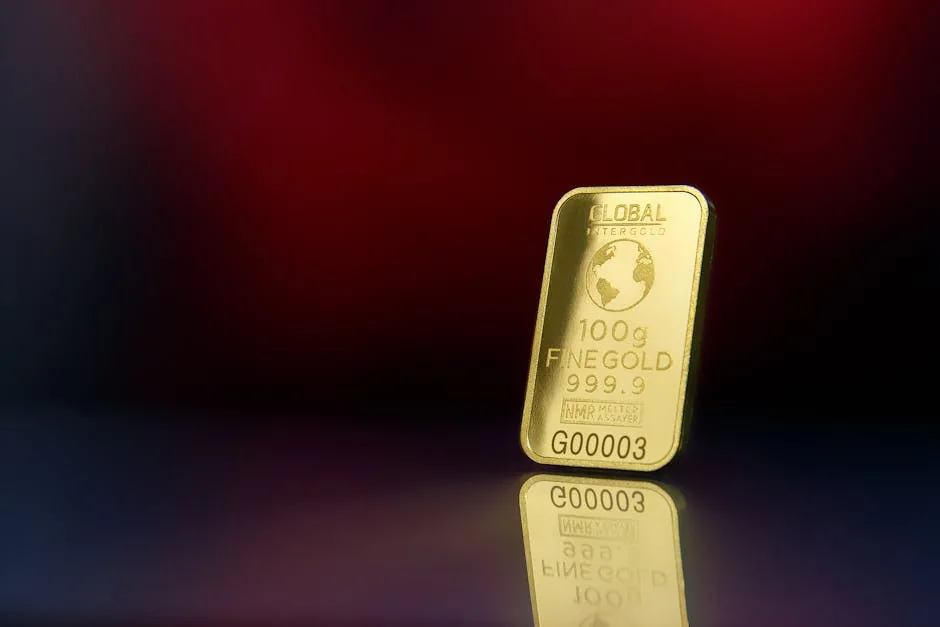
What the 2026 Precious Metals Forecast Really Looks Like
The precious metals forecast for 2026 points strongly upward across gold, silver, platinum, and palladium, driven by central bank demand, geopolitical tension, and growing industrial needs.
Here is a quick snapshot of where major institutions and analysts stand:
| Metal | 2026 Forecast Consensus | Key Driver |
|---|---|---|
| Gold | Broadly expected to push well above recent highs | Central bank buying, safe-haven demand |
| Silver | Analysts widely target significantly higher prices | Industrial deficit, solar/electronics demand |
| Platinum | Broadly bullish, wide range of estimates | South Africa supply risk, green hydrogen |
| Palladium | Moderately bullish with some caution | Hybrid vehicle demand, recycling supply |
The short answer: Most major institutions and independent analysts expect precious metals to continue gaining ground in 2026, with gold leading the charge and silver potentially outpacing it in percentage terms.
2025 was a historic year for this asset class. Gold surged roughly 65%, its strongest annual performance since 1979. Silver did even better on a percentage basis, rising approximately 149%. These were not random spikes. They reflected deep, structural shifts in how central banks, governments, and everyday investors think about holding value.
Geopolitical uncertainty, concerns about fiscal sustainability in major economies, and a steady move away from dollar-denominated reserves all pushed demand for physical metals higher. Those same forces are still very much in play heading into 2026.
No one can guarantee where prices go from here. But the weight of institutional research, analyst surveys, and market data gives a clearer picture than most years. This article brings that picture together.
I’m Shanon Davis, founder of American Alternative Assets, and my work in venture capital, combined with a lifelong interest in tangible assets, has given me a front-row seat to why a credible precious metals forecast matters so much for anyone trying to protect long-term wealth. In the sections ahead, we will walk through the data, the expert views, and what it all means for your portfolio.
This article is for informational purposes only and does not constitute financial advice. Please consult your financial advisor before making investment decisions. Investing in precious metals involves risk. Past performance does not guarantee future results.
The 2026 Precious Metals Forecast: Institutional Price Targets
As we look toward 2026, the consensus among many large financial institutions has shifted from cautious optimism to a more bullish stance on precious metals. After the strong performance of 2025, where gold surpassed the $4,000 mark for the first time, many analysts recalibrated their models to account for changing macroeconomic conditions.
Major banks like J.P. Morgan and Goldman Sachs have raised their outlooks. J.P. Morgan research suggests that gold could average $5,055 per ounce by the fourth quarter of 2026, eventually climbing toward $5,400 by the end of 2027. Goldman Sachs has also lifted its forecast to around $4,900 per ounce, citing persistent inflows into gold-backed products and continued structural demand from global central banks.
The LBMA 2026 Forecast Survey provides a broad look at industry sentiment. Their panel of analysts predicts an average gold price of approximately $4,742 for 2026, which would represent a sizable increase over 2025 averages. The survey also points to a strong outlook for silver, with analysts forecasting much higher prices by the end of 2026.
Bank of America has also joined the broader bullish outlook, lifting its top-range scenario for gold toward the $5,000 level. These targets reflect a major shift in how institutions are viewing the role of physical precious metals in long-term wealth preservation.
Macro Drivers in the Precious Metals Forecast
What is pushing these forecasts higher? It is not just one factor, but a mix of macro drivers. One of the primary themes is the Federal Reserve’s policy direction. If rate cuts continue or liquidity increases through looser monetary policy, the purchasing power of the dollar can come under pressure, making scarce physical assets like gold and silver more attractive.
We are also seeing growing discussion around government debt, rising interest costs, and fiscal dominance. If governments are pressured to keep rates below inflation to manage debt burdens, precious metals have historically drawn more attention as stores of value. For a deeper dive into these mechanics, you can read our analysis on Why the World is Running to Gold and What It Means for Your Wealth.
AI vs. Human Analysts in the Precious Metals Forecast
In a notable twist to the 2026 precious metals forecast, artificial intelligence is now being used to analyze market data alongside human experts. Data from 2025 suggested that some AI models, including ChatGPT-4 Turbo, compared favorably with many human analysts in projecting year-end prices.
While human analysts at the LBMA and major banks focus on geopolitical developments and central bank policy, AI models process large amounts of technical data and historical price patterns. Both approaches have pointed toward a strong upward trajectory for precious metals in 2026. BullionVault users, who reflect a broad cross-section of private investors, have also shown strong bullish sentiment, with some forecasting gold above $5,100 by the end of 2026.
For investors focused on long-term protection, the more important takeaway is not short-term trading momentum. It is that a wide range of analysts continue to see a favorable backdrop for physical gold and silver ownership, especially inside a Precious Metals IRA where investors can hold tangible bars and coins rather than relying on paper exposure like ETFs or gold stocks, which carry counterparty risk and do not provide direct ownership of the metal itself.
Why Central Banks and Geopolitics Drive the Bullish Gold Outlook
If there is one “anchor” for the gold market right now, it is the global central bank. We have moved into an era where central banks are no longer just “holding” gold, they are aggressively accumulating it. In 2025, central bank gold holdings reached nearly 36,200 tonnes, accounting for roughly 20% of official global reserves. This is a massive jump from just 15% at the end of 2023.
The Central Bank Gold Reserves Survey highlights that 95% of central bankers expect global gold reserves to continue increasing. Why? The primary reason is de-dollarization. Many nations are looking to diversify away from the U.S. dollar to protect themselves from currency risk and potential sanctions. Gold is the only major reserve asset that carries no counterparty risk and cannot be “turned off” by a foreign government.
Regional Trends and APAC Market Growth
While Western institutions are making headlines, the real “boots on the ground” demand is coming from the Asia-Pacific (APAC) region. Technavio reports that APAC is expected to contribute a staggering 42.8% of global market growth through 2030. In China, retail demand for gold remains a primary way for citizens to protect their savings amid property market volatility.
In India, the implementation of mandatory gold hallmarking and a cultural affinity for the metal continue to drive massive physical imports. We are also seeing a “jewelry rotation” where, as gold prices climb, some consumers move toward platinum, but the overall appetite for precious metals in these emerging markets remains insatiable. This regional strength provides a very high “price floor” for the global market.
Gold as Policy Insurance and Strategic Reserve
In 2026, gold is being viewed less as a speculative trade and more as “policy insurance.” It is a hedge against the possibility that central banks or governments might make a significant policy error. Whether it’s the “weaponization of the dollar” through sanctions or the freezing of sovereign assets, nations are realizing that they need a neutral, strategic asset.
For the individual investor, this means gold is behaving more like a strategic reserve than a cyclical commodity. It provides portfolio insurance in an environment where stocks and bonds might become highly correlated during a crisis. To understand how you can mirror this institutional strategy, check out our guide on how Central Banks are Betting Big on Gold – Are You Prepared for What’s Coming?
Silver and PGMs: Industrial Deficits Meet Monetary Demand
While gold gets the spotlight, the “white metals,” silver, platinum, and palladium, are telling an even more dramatic story of supply and demand. Silver, in particular, is facing its fifth consecutive year of a structural market deficit. We aren’t just talking about a small gap. The industrial consumption of silver is simply outpacing what mines can produce.
The Gold and Silver Price Forecast Note for the Week often highlights how silver is squeezed between its dual roles. It is a monetary metal that people buy when they are worried about the dollar, but it is also an essential industrial metal. Silver is a critical component in photovoltaics (solar panels), 5G technology, and the electronics in modern vehicles.
Silver and Platinum in the 2026 Precious Metals Forecast
The 2026 precious metals forecast for silver is exceptionally high because of this “double whammy” of demand. If silver follows its historical pattern of outperforming gold during bull markets, some analysts believe we could see silver push toward the $100 mark, especially if another “silver squeeze” occurs due to low physical liquidity.
Platinum is in a similar boat. The market has been in a deficit for three straight years, and 2026 is expected to be the fourth. Most of the world’s platinum comes from South Africa, where aging mines and electricity shortages create significant supply risks. As the world moves toward green hydrogen technology, platinum’s role as a catalyst is becoming even more vital, leading to a structural re-rating of the metal.
Palladium and the Green Energy Transition
Palladium is the outlier in the group. While it is still essential for gasoline autocatalysts, the rise of Battery Electric Vehicles (BEVs) poses a long-term challenge to demand. However, the 2026 outlook remains moderately bullish because of the transition to hybrid vehicles, which actually require more palladium than standard internal combustion engines.
Supply concentration in Russia and South Africa means that any geopolitical flare-up can cause massive price spikes. While recycling yields for Platinum Group Metals (PGMs) are improving, reaching up to 95% efficiency, the lack of new mining projects means the market remains incredibly tight.
Physical Ownership vs. Paper Assets: Protecting Your Retirement
When you look at a precious metals forecast this bullish, it is important to think carefully about how you gain exposure. At American Alternative Assets, we believe there is a fundamental difference between paper exposure and owning physical metal, and that difference matters most when you need your assets the most.
Paper assets like gold ETFs, mining stocks, and futures contracts are essentially contracts that depend on third parties, market plumbing, and financial intermediaries. In periods of market stress, liquidity can tighten and paper claims may not deliver the same protection as direct ownership. You do not actually hold any gold or silver when you own an ETF share. You hold a claim, and that claim is only as strong as the institutions behind it. Physical gold and silver, held in a Precious Metals IRA, provide direct ownership of tangible bars and coins. That is a critical distinction for investors who prioritize control, privacy, and long-term wealth preservation.
| Feature | Physical Gold (IRA) | Gold ETFs / Paper Assets |
|---|---|---|
| Counterparty Risk | None, because you own the asset | Present, because it depends on fund and market structure |
| Privacy | Higher through approved storage structures | Lower, due to brokerage and exchange tracking |
| Physical Ownership | Direct ownership of approved metals | No direct ownership, only a paper claim on underlying assets |
| Market Stress Considerations | Based on ownership of tangible metal | Can be affected by broader fund flows, redemption gates, and market liquidity |
Our relationship-first service is built to help clients move from paper-based uncertainty toward the confidence of physical ownership. We provide a white-glove experience centered on trust, transparency, and education. For a full breakdown, see our Gold IRA Investing Guide.
The Role of a Precious Metals IRA in 2026
A Precious Metals IRA can be a powerful tool for wealth preservation in 2026. It allows investors to hold physical gold and silver within a tax-advantaged retirement account. This structure can help investors participate in potential long-term appreciation in physical precious metals while maintaining direct ownership of tangible assets, something paper substitutes like ETFs simply cannot offer.
At American Alternative Assets, we specialize in making this process seamless. We provide the transparency and ethical practices clients need to feel confident about protecting their retirement savings with physical precious metals. We do not just help clients purchase metal, we help them build a more resilient retirement strategy around assets with enduring value. To learn more about the specifics, read The Ultimate Guide to Precious Metals IRAs – What You Need to Know.
Market Size and Long-Term Growth Through 2030
The long-term outlook for this market remains robust. According to Technavio, the precious metals market is expected to increase by $112.9 billion between 2025 and 2030, growing at a Compound Annual Growth Rate, or CAGR, of 6.5%. This growth is being driven by a combination of industrial necessity and investment demand. As more investors look for diversification and tangible stores of value, interest in physical precious metals is likely to remain strong.
Frequently Asked Questions about the Precious Metals Forecast
Will gold prices break $5,000 per ounce in 2026?
While no one can predict the future with certainty, many major institutions like J.P. Morgan and Bank of America have set price targets at or above the $5,000 level for late 2026. This is based on continued central bank buying and a pivot in Federal Reserve policy.
Why is silver facing a structural supply deficit?
Silver is in a unique position where its industrial use, particularly in solar panels and electronics, is growing faster than mine production. Because most silver is a by-product of mining other metals like copper and zinc, supply cannot easily “ramp up” just because prices are high.
How do geopolitical tensions impact precious metals prices?
Geopolitical tension creates uncertainty, and uncertainty drives investors toward “safe havens.” When there is a risk of war, sanctions, or trade disruptions, physical gold and silver become the preferred way to store value because they are universally recognized and have no tie to any single government’s credit.
Why is physical ownership better than owning a gold ETF?
When you own a gold ETF, you hold a paper claim that depends on the fund’s structure and the broader financial system. You do not own any actual gold. With physical gold in a Precious Metals IRA, you hold real, tangible bars or coins in approved storage. This removes counterparty risk and gives you direct ownership of the asset itself.
Conclusion: Securing Your Wealth with American Alternative Assets
The precious metals forecast for 2026 is one of the most compelling we have seen in decades. The alignment of central bank demand, industrial scarcity, and macroeconomic shifts suggests that the bull run that started in 2025 has plenty of room to run.
However, the key to benefiting from this trend is not just “buying gold,” but owning it the right way. Paper-based alternatives like ETFs and mining stocks introduce counterparty risk and do not give you actual ownership of the metal. Physical gold and silver, held directly in a Precious Metals IRA, offer a level of control and security that paper assets simply cannot match.
At American Alternative Assets, we are committed to providing a white-glove, relationship-first service. We believe in trust, transparency, and helping our clients achieve real privacy and protection for their wealth.
Whether you are looking to diversify your current portfolio or protect your retirement through a Precious Metals IRA, we are here to guide you every step of the way. Our California-based team in Woodland Hills is dedicated to ensuring you have the physical assets you need to weather any economic storm. Don’t leave your future to chance or paper contracts. Take control with the timeless security of physical precious metals.
This article is for informational purposes only and does not constitute financial advice. Please consult your financial advisor before making investment decisions. Investing in precious metals involves risk. Past performance does not guarantee future results.