







Why Understanding Silver and Inflation Matters
Understanding the direct link between silver and inflation is key to protecting your hard-earned retirement savings from fiat currency instability. When paper money loses its value, holding physical assets within a Gold, Silver, or Precious Metals IRA is widely seen as the most reliable way to help preserve your real-world wealth.
Here is a quick summary of how physical silver performs when inflation rises:
- Protects Purchasing Power: Unlike paper money, physical silver historically holds its value over the long term as the purchasing power of fiat currency falls.
- Dual Demand Support: Silver is unique because it serves as both a safe-haven monetary asset and an essential material for growing high-tech industries.
- Strict Supply Limits: Central banks can print endless amounts of paper currency, but they cannot print physical silver, which keeps its supply strictly limited.
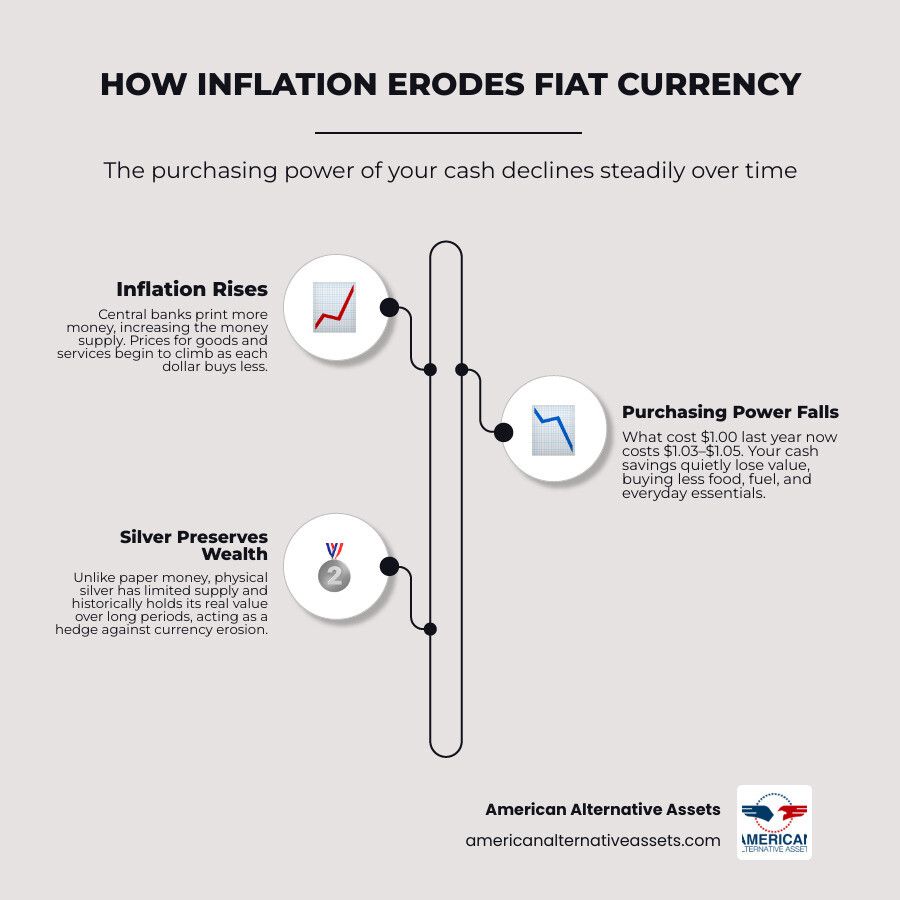
Every year, inflation quietly chips away at the value of your cash. This ongoing erosion makes traditional paper-based savings accounts risky, as your money buys less food, fuel, and everyday goods over time. To counter this instability, many investors look to physical precious metals held in a Gold, Silver, or Precious Metals IRA as a secure anchor for their portfolios.
I am Shanon Davis, and my personal study of silver and inflation began as a child when my grandfather handed me a physical Morgan coin and told me it was real money. After watching the paper financial system fail everyday families during the 2008 crash, I decided to help people protect their wealth through direct ownership of tangible precious metals.
Silver and inflation word roundup:
Understanding the Historical Relationship Between Silver and Inflation
To understand how silver and inflation interact, we have to look past the daily noise of the stock market and look at long-term historical data. Many investors make the mistake of looking only at nominal prices, which are the raw dollar figures you see on a standard chart. However, nominal prices do not tell the whole story. To find the true purchasing power of a metal over decades, economists use the Consumer Price Index, or CPI, as a deflator. This calculation adjusts historical prices into real value, showing what an ounce of silver could actually buy in different eras.
Historical data adjusted for inflation back to 1915 reveals that silver acts as a long-term store of value. While paper currencies have steadily lost their purchasing power, physical silver has repeatedly stepped in to protect investors during periods of monetary expansion. When the government prints money, the supply of paper dollars grows, but the earth’s supply of silver remains strictly limited. This basic economic reality is why so many people review our silver and inflation guide to understand how hard assets preserve wealth over a century-long horizon.
The 1980 Peak vs. Modern Nominal Prices
When we look back at the history of silver, the year 1980 stands out as a legendary milestone. During this period, the nominal price of silver surged to record highs of nearly $50 per ounce. This massive price spike was driven by a combination of severe macroeconomic inflation and a famous attempt by the Hunt brothers to corner the silver market.
To the untrained eye, a nominal price chart makes it look like modern silver prices are close to those historic peaks. However, when we apply the CPI deflator, we get a completely different picture. The inflation-adjusted real value of that 1980 peak is actually close to $170 per ounce in today’s money.
This massive gap between nominal and real prices shows that physical silver has historically possessed incredible room to run during periods of intense market stress. It also highlights why comparing current prices to historical peaks without adjusting for inflation is a major analytical mistake. Analyzing how adjusting for inflation changes our perspective on modern precious metals valuations can provide valuable insights into long-term wealth preservation.
Why Silver and Inflation Dynamics Differ From Gold
While gold and silver are often grouped together, their relationship with inflation is quite different. Academic research using advanced econometric models, such as Markov regime-switching analysis, shows that gold and silver respond to inflationary pressures in unique, complementary ways.
Gold is highly sensitive to extreme inflationary regimes. Historically, gold returns show sharp and sustained responses to inflation only when the monthly inflation rate crosses a specific threshold, such as 0.55% (which translates to roughly 6.8% annualized). In low-inflation periods, gold’s hedging response tends to be subdued.
Silver, on the other hand, acts as an excellent complement to gold because it often performs well in different economic environments. Because silver is widely used in industrial manufacturing, its price is highly responsive to business cycles and economic output growth. This means that during periods of moderate inflation accompanied by economic expansion, silver can provide robust protection that complements gold’s safe-haven appeal. You can learn more about these distinct metal behaviors in our guide on the gold inflation impact.
The Dual Nature of Silver: Monetary Shield vs. Industrial Powerhouse
The key to understanding silver is recognizing its dual nature. It is not just a monetary asset, and it is not just an industrial commodity. It is both.
This dual identity means that silver’s price is driven by two entirely different forces:
- Monetary Demand: When investors fear currency debasement, inflation, or banking instability, they buy physical silver as a safe-haven asset to protect their purchasing power.
- Industrial Demand: When the global economy is growing, factories require silver to manufacture electronics, solar panels, and automotive components.
This unique combination can create a powerful compounding effect. When inflation fears rise at the same time that industrial demand is expanding, both halves of silver’s personality work together to drive demand. This dynamic is often visible when monetary and industrial demand combine to push the metal to multi-year highs.
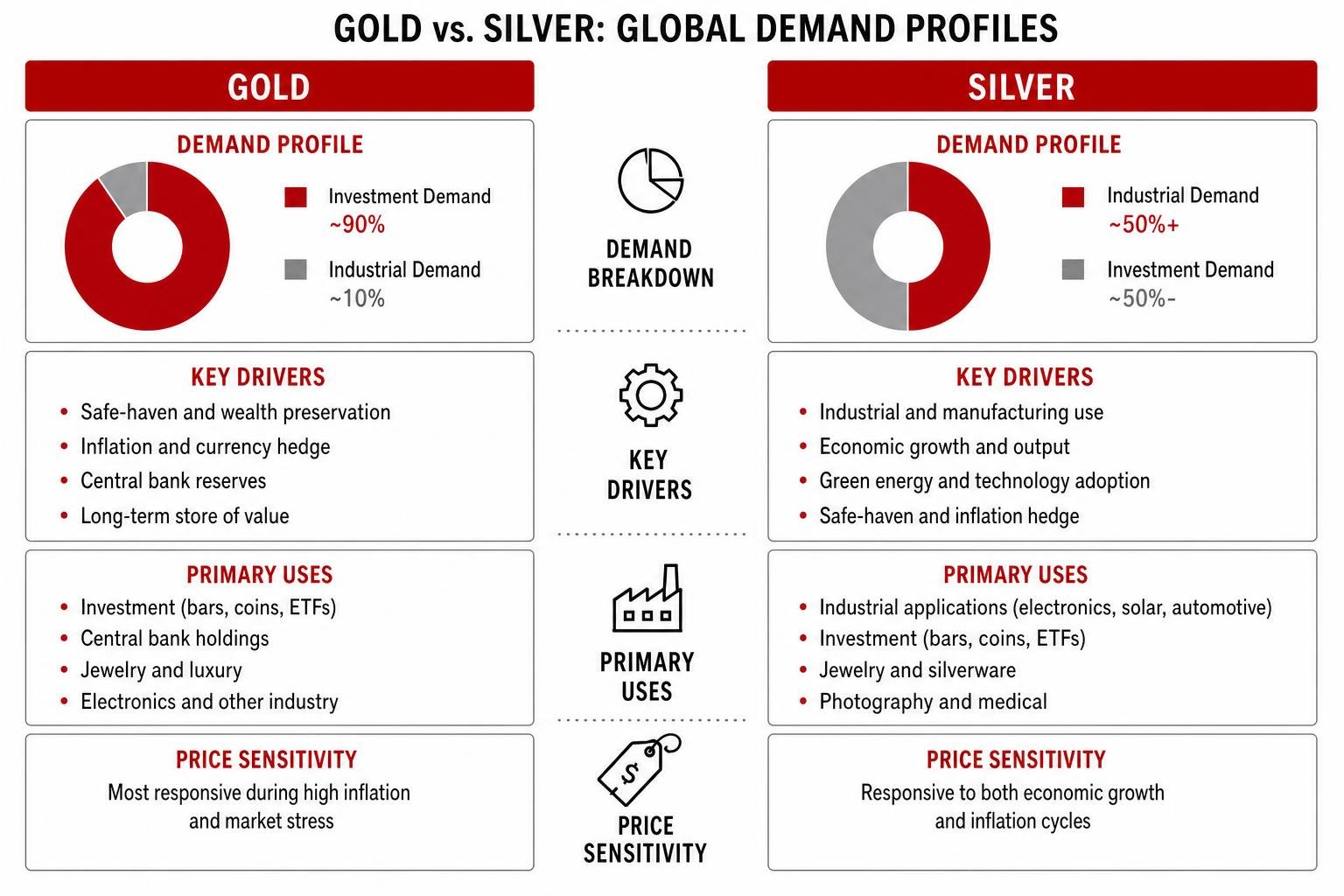
To see how differently these two metals are positioned, consider this comparison of their global demand profiles:
Industrial Demand Drivers in the Green Energy Era
In today’s economy, silver’s industrial side is stronger than ever. More than 50% of the global demand for silver now comes from industrial applications, with a massive portion driven by the global energy transition. Silver is the most electrically conductive metal on earth, making it completely irreplaceable for modern green technologies.
- Solar Photovoltaics: Solar panels require significant amounts of physical silver paste to conduct the electricity generated by solar cells.
- Electric Vehicles (EVs): Modern electric vehicles use substantially more silver than traditional internal combustion engine cars due to their complex electrical systems and battery management units.
- Semiconductors and AI: The rapid expansion of artificial intelligence, cloud computing, and high-performance data centers has triggered a massive surge in global semiconductor sales, which relies heavily on silver contacts.
This structural shift means that even if traditional inflation cools, the relentless demand from high-tech manufacturing provides a strong fundamental floor for the metal. To explore this tech-driven demand surge, read our article on silver breakout and inflation or check out the industry insights in Silver Soars Past $66: A Critical Hedge in an Inflationary Era.
The Double Penalty: How Hawkish Fed Policy Impacts Silver
While silver’s dual nature can be a major advantage, it also exposes the metal to a unique risk known as the “double penalty” when the Federal Reserve aggressively raises interest rates.
When the Fed adopts a hawkish policy stance, silver can get hit from two sides at once:
- The Monetary Hit: Higher interest rates raise the opportunity cost of holding non-yielding physical assets. Investors often drift toward interest-bearing paper assets, putting downward pressure on precious metals.
- The Industrial Hit: High interest rates are designed to cool the economy, which slows down manufacturing activity. This slowdown reduces the demand for industrial metals, directly hurting silver’s industrial component.
This double sensitivity makes silver significantly more volatile than gold during policy shifts. In fact, silver’s price elasticity to real interest rate changes is nearly twice as high as gold’s. You can see this sensitivity in action by reading how Silver Tumbles 3.8% as Dual Demand Crumbles Under Hawkish Fed Pressure – STEELLDY and tracking the technical analysis in the Silver (XAG) Forecast: Oil Rally Revives Rate Hike Fears, Silver Weakens | FXEmpire.
Decoding the Late 2025 Silver Price Surge
At the end of last year, the silver market experienced an extraordinary rally. In December 2025, silver crossed major psychological thresholds, hitting record highs in spot markets. What confused many mainstream analysts was the timing: this massive price surge occurred even as official government consumer price inflation data appeared to be cooling.
This divergence forced investors to look deeper. The real signal behind the late 2025 move was not simple consumer price inflation, but rather a profound shift in investor psychology. Trust in long-term central bank policies was eroding, and smart money was rotating out of paper promises and into physical safety. To understand the mechanics of this historic price movement, read our analysis of silver’s 127% surge and inflation.
Systemic Stress and Stagflation Signals
The late 2025 rally was a classic warning sign of stagflation, an economic environment where growth slows down, unemployment rises, and living costs remain stubbornly high. During stagflation, traditional stock and bond portfolios often struggle because corporate profits fall while inflation eats away at bond yields.
In this hostile environment, silver shines. When investors realize that central banks are caught in a trap, unable to raise rates further without breaking the banking system, they look for real physical insurance. This capital flight from unstable paper markets into hard assets is what drove silver to its historic highs. You can read more about how precious metals behave in these cooling yet uncertain environments in this article on Is gold or silver a better investment when inflation cools?.
The Structural Supply Deficit and Byproduct Mining Constraints
Beyond macroeconomic fears, silver is supported by incredibly tight physical supply and demand dynamics. The global silver market has been running persistent supply deficits for several consecutive years. We are simply consuming far more silver than we are mining.
What makes this supply deficit so difficult to fix is the way silver is mined. Approximately 74% of the world’s silver is produced as a byproduct of mining other metals, such as copper, lead, zinc, and gold. This means that even if the price of silver skyrockets, mining companies cannot easily scale up their silver production. They would have to build entirely new copper or zinc mines first, a process that takes years and billions of dollars.
With above-ground commercial bar supply shrinking rapidly, this structural deficit makes physical silver highly sensitive to any sudden surge in investor demand. To learn more about how these supply constraints protect physical investors, read about investing in precious metals and inflation.
Physical Silver vs. Paper Assets: Why Direct Ownership Wins
When deciding how to allocate capital to silver, the method of ownership matters just as much as the metal itself. Many financial institutions promote paper-based silver proxies, such as Exchange-Traded Funds (ETFs), mutual funds, mining stocks, or futures contracts. However, these paper instruments are highly risky and fail to provide the security of real wealth. They carry significant hidden risks, counterparty liabilities, and systemic vulnerabilities that can defeat the entire purpose of holding an inflation hedge. Instead of relying on these unstable paper proxies, investors should exclusively focus on physical precious metals held securely within a Gold, Silver, or Precious Metals IRA.
Paper silver assets are ultimately financial contracts. They rely on a complex chain of custodians, brokers, and clearinghouses. This structure introduces counterparty risk, which is the danger that the institution on the other side of your contract will fail to deliver during a systemic crisis. During periods of extreme market stress, paper markets can experience severe liquidity freezes, leaving investors unable to access their wealth when they need it most.
Direct physical ownership of tangible silver bullion, coins, and bars completely eliminates this counterparty risk. When you hold physical silver, you own a real, physical asset with zero default risk. It cannot be hacked, deleted, or inflated away by a central bank. For a complete look at how to build a secure physical portfolio, check out our precious metals investment guide 2026.
The Hidden Risks of Paper Silver and Non-Physical Assets
To understand why physical ownership is superior, we have to look at the leverage built into paper silver markets. On major commodity exchanges, the volume of paper silver contracts traded daily represents vastly more silver than actually exists in physical vaults. This is known as fractional-reserve precious metals trading.
If even a small percentage of paper contract holders demanded physical delivery at the same time, the system would face a severe physical shortage. This systemic fragility means that during a true financial panic, the price of paper contracts could decouple from the actual price of physical bars and coins. Physical silver holders would possess real wealth, while paper holders would hold only promises. Understanding these critical differences is essential for anyone looking to secure their retirement savings.
How to Protect Your Wealth Against Silver and Inflation Volatility
If you want to use physical silver as a long-term hedge within your retirement portfolio, a Self-Directed Gold, Silver, or Precious Metals IRA is widely considered the single most effective tool available. This specialized retirement account allows you to hold physical, IRS-approved silver coins and bars tax-deferred or tax-free, while maintaining the same tax advantages as a traditional IRA or 401(k).
To protect yourself from short-term price volatility, we recommend using a disciplined dollar-cost averaging strategy. By purchasing physical precious metals consistently over time, you can smooth out market swings and build a robust, diversified shield for your savings. If you are nervous about the stability of your current paper-heavy retirement accounts, our inflation hedge IRA rollover guide provides a step-by-step roadmap to moving your wealth into physical safety.
Frequently Asked Questions
Is silver a reliable long-term inflation hedge?
Yes, historically physical silver has proven to be an effective long-term store of value. Because it has a limited physical supply and cannot be printed by governments, it naturally preserves its purchasing power over decades as fiat currencies lose their value. During the severe inflation of the 1970s, physical silver significantly outperformed traditional stock portfolios, protecting those who held it.
Why is silver more volatile than gold?
Silver is more volatile than gold because of its smaller market size and its dual nature. Since over 50% of silver is used in industrial manufacturing, its price reacts quickly to changes in the business cycle. This industrial sensitivity, combined with speculative trading in paper markets, means silver’s daily price swings can be two to three times greater than gold’s.
How can I safely buy and store physical silver?
To ensure maximum safety and liquidity, you should focus on highly recognizable sovereign coins (like American Silver Eagles or Canadian Silver Maples) and high-purity bullion bars from reputable mints. For retirement savings, these physical assets should be held directly within a self-directed Gold, Silver, or Precious Metals IRA and securely stored in IRS-approved, high-security depositories.
Conclusion
Navigating the complex relationship between silver and inflation requires looking past short-term market noise and focusing on long-term physical realities. While paper currencies continue to lose their purchasing power and paper financial assets expose your savings to systemic risks, physical silver remains a time-tested anchor for wealth preservation.
At American Alternative Assets, we believe that protecting your hard-earned retirement savings requires more than just transactional service. Based in Woodland Hills, California, we are dedicated to providing a white-glove, relationship-first experience built on transparency, trust, and ethical standards. We help you navigate the process of safeguarding your wealth with physical precious metals through a Gold, Silver, or Precious Metals IRA, ensuring real privacy and security for your future.
If you are ready to take control of your financial future and explore how physical silver can protect your retirement, we invite you to read our detailed guide on silver IRA and inflation hedging or Learn more about physical silver IRAs today.
This article is for informational purposes only and does not constitute financial advice. Please consult your financial advisor before making investment decisions.
Investing in precious metals involves risk. Past performance does not guarantee future results.