







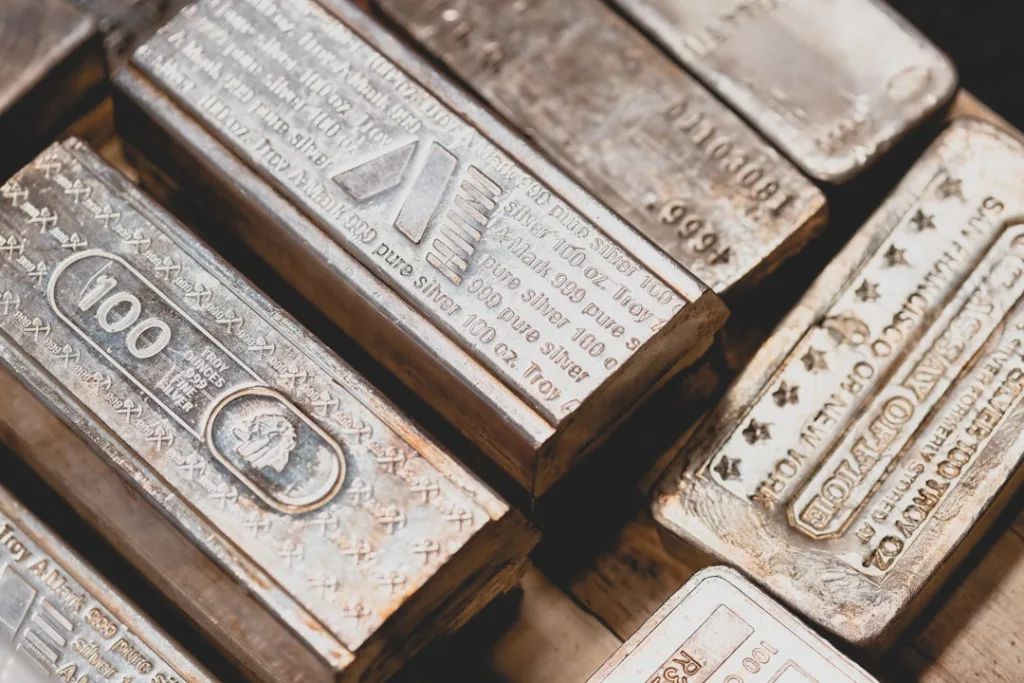
Why Investing in Bullion Still Makes Sense in 2026
Investing in bullion is one of the oldest and most straightforward ways to preserve wealth outside the traditional financial system.
Here is a quick overview of how to get started:
| Step | What to Do |
|---|---|
| 1. Choose your metal | Gold, silver, platinum, or palladium |
| 2. Pick a form | Coins or bars from a reputable mint or refiner |
| 3. Buy from a trusted dealer | Use authorized purchasers or established dealers |
| 4. Store it securely | IRS-approved depository or insured vault |
| 5. Consider a Precious Metals IRA | For tax-advantaged retirement exposure |
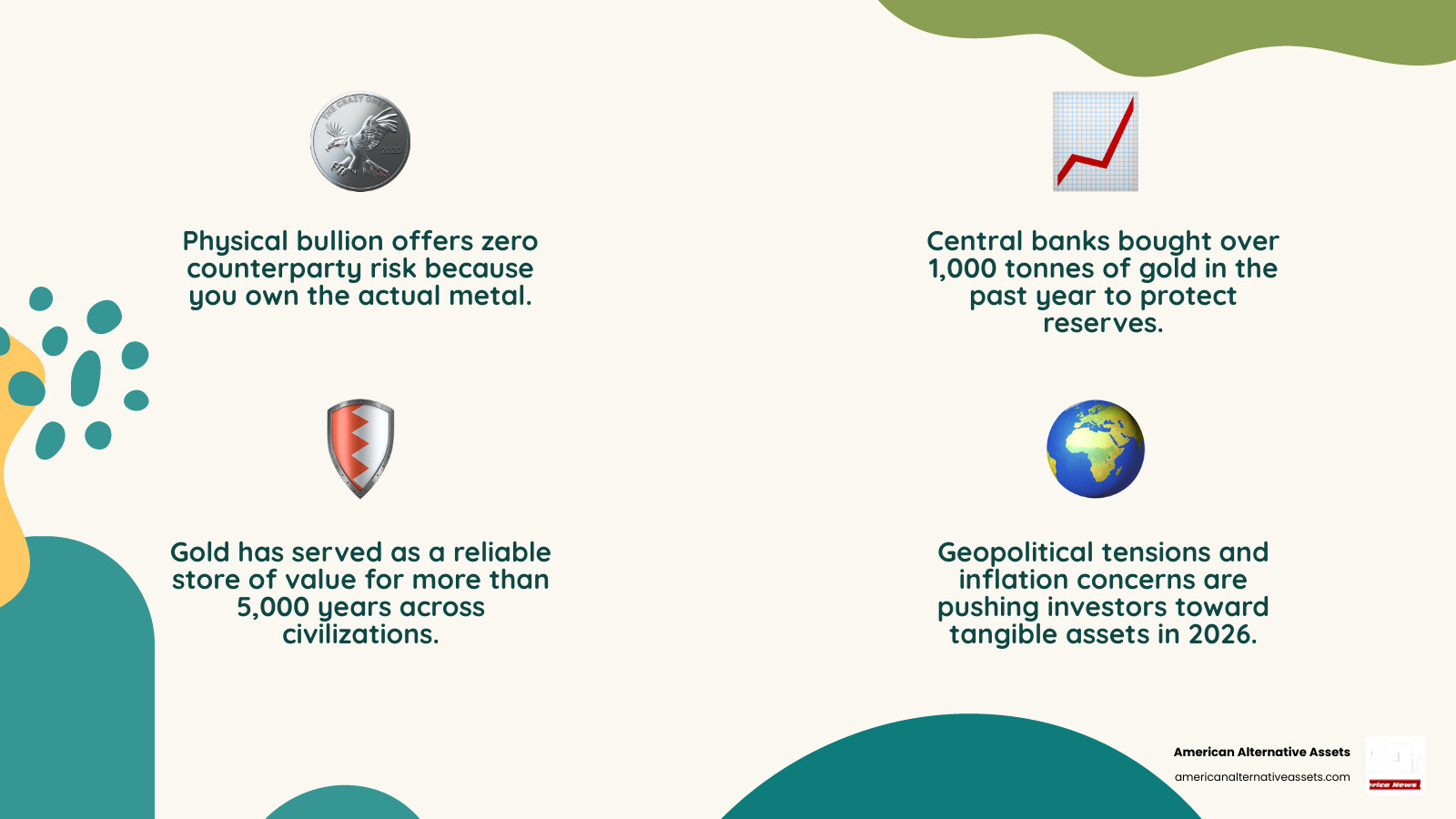
Right now, in June 2026, gold prices have reached historic highs, driven by geopolitical tension, inflation concerns, and growing distrust of paper-based assets. More investors than ever are asking a simple question: “How do I own something real?”
Physical bullion, meaning gold and silver bars or coins of at least 99.5% purity, offers exactly that. It is a tangible asset with no counterparty risk. Unlike stocks, ETFs, or bonds, a gold bar does not depend on any company’s promises or a government’s balance sheet to hold its value.
That is not a modern idea. Gold has been used as a store of value for over 5,000 years. Central banks around the world continue to hold gold on their balance sheets today, purchasing over 1,000 tonnes annually in recent years. That kind of institutional trust does not happen by accident.
This guide will walk you through everything you need to know, from understanding what bullion actually is, to buying it safely, storing it correctly, and holding it inside a tax-advantaged retirement account.
I’m Shanon Davis, founder of American Alternative Assets, and my experience spans venture capital, the 2008 financial crisis, and years spent helping everyday Americans understand investing in bullion as a tool for real, lasting wealth preservation. That background shapes every recommendation in this guide.
Investing in bullion vocab explained:
The Strategic Benefits of Investing in Bullion
When we discuss bullion, we are talking about physical gold, silver, platinum, or palladium that is valued almost entirely by its weight and purity. To qualify as investment-grade bullion, gold must generally be at least 99.5% pure, while silver must be at least 99.9% pure.
It is important to understand the distinction between bullion and numismatic coins. Numismatic coins are rare, collectible coins whose value is determined by their historical significance, rarity, and physical condition. While they can be fascinating for hobbyists, they often come with incredibly high markups. The buy-sell spread for numismatic coins can range from 30% to 40% or more.
By contrast, physical bullion trades much closer to the actual market price of the metal, with typical transaction spreads of only 3% to 8%. Because we prioritize wealth preservation, we strongly advise sticking to high-purity bullion products.

Physical bullion is widely seen as a hedge during times of economic uncertainty and rising inflation. Unlike paper currencies, which can be printed in unlimited quantities by central banks, the supply of precious metals is strictly limited by the physical realities of mining and refining. When the purchasing power of fiat currency depreciates, physical metals have historically helped preserve capital over the long term. To learn more about how physical metals function in a balanced portfolio, you can read our detailed guide on Investing in Precious Metals.
Types of Physical Bullion: Coins vs. Bars
Once you decide to allocate a portion of your savings to physical metals, the next step is choosing between sovereign coins and bullion bars. Both options have unique characteristics regarding liquidity, premiums, and storage.
Sovereign Coins: A Popular Choice for Investing in Bullion
Sovereign coins are minted by official government agencies, such as the United States Mint. These coins carry a legal tender face value, although their actual metal value is significantly higher.
The most famous example is the American Eagle series, which began in 1986. Because they are backed by the federal government for weight and purity, they are highly recognizable and incredibly easy to liquidate anywhere in the world.
To explore the official programs and history of these products, you can visit the Bullion Coins | U.S. Mint resources page. If you are wondering which specific coins offer the best combination of liquidity and value, take a look at our breakdown of The Ultimate Guide to Best 1 oz Gold Coin to Buy.
Bullion Bars: High-Volume Options for Investing in Bullion
For investors looking to acquire larger quantities of precious metals, bullion bars are often the most cost-effective route. Bars are produced by both sovereign mints and accredited private refiners. They are available in various forms, including basic cast bars and highly polished minted ingots.
Because bars require less intricate craftsmanship to manufacture than coins, they carry lower premiums over the spot price. This means you get more ounces of metal for every dollar you invest. Popular sizes range from 1-ounce bars to massive 100-ounce silver bars and kilo gold bars.
To understand the benefits of bulk metal purchases, you can read our resources on Everything You Need to Know Before Buying Kilo Gold Bars.
Additionally, we have compiled helpful guides on other options, such as Pure Gold Pure Investment Shop the Best 24k Bullion Options, A Quick Start Guide to Buy Cheap Gold Bars, and The Golden Standard Everything You Need to Know About 24k Bullion to help you find the best fit for your budget.
Physical Bullion vs. Paper Assets: Why Direct Ownership Wins
Many financial advisers suggest paper-based precious metals alternatives, such as Exchange-Traded Funds (ETFs), futures contracts, or mining stocks. However, we believe these paper assets fail to provide the primary benefit of precious metals: systemic protection.
When you buy a gold ETF, you do not own physical gold. You own shares in a trust that tracks the price of gold. These funds are highly dependent on the performance of counterparties, including fund managers, trustees, and specialized custodians. If the broader financial system experiences a crisis, or if a fund manager faces bankruptcy, your paper shares may not protect you.
Similarly, futures contracts are highly leveraged speculative instruments, and mining stocks are vulnerable to corporate mismanagement, labor strikes, and operational risks.
Direct physical ownership eliminates counterparty risk entirely. A physical bar held in a secure depository is your legal property, kept completely off the balance sheet of any financial institution. To see a deeper analysis of why physical assets are superior for long-term safety, read our article on How to Invest in Gold and Silver.
| Feature | Physical Bullion | Precious Metal ETFs | Mining Stocks |
|---|---|---|---|
| Direct Ownership | Yes, you own the tangible metal | No, you own paper shares | No, you own corporate equity |
| Counterparty Risk | None | High (dependent on trust managers) | High (dependent on corporate performance) |
| Systemic Protection | Yes, operates outside banking system | No, tied to traditional stock exchanges | No, highly correlated with stock market |
| Annual Management Fees | None (only storage/insurance if vaulted) | Yes (ongoing expense ratios) | None (but subject to corporate costs) |
How Bullion Prices are Determined and Influenced
The pricing of precious metals is anchored to the global “spot price,” which represents the price for immediate physical delivery. This benchmark is established daily through major trading hubs, most notably the London Bullion Market Association (LBMA) and the COMEX exchange in New York.
While global spot prices fluctuate constantly based on currency strength, interest rates, and macroeconomic data, physical supply and demand dynamics play a critical role. This is particularly true for silver, which has a massive industrial footprint.
Silver is a key component in solar panels, electronics, and automotive manufacturing. In fact, solar photovoltaic demand alone consumed 232 million ounces of silver in 2024, up from 94 million ounces in 2020. This growing industrial need, combined with five consecutive years of structural supply deficits, makes silver a highly dynamic asset. To explore the unique market forces driving this metal, see our guide on Silver Bullion Investment.
Safe Storage, Insurance, and Tax Considerations
If you decide to invest in physical bullion, you must have a plan for safe storage and insurance. While some investors prefer to store small amounts of metal at home in high-security, bolted safes, this approach carries significant risks. Standard homeowner insurance policies typically cap precious metals coverage at very low limits, often between $1,000 and $2,500, unless you pay for an expensive specialized rider.
For serious wealth preservation, we strongly recommend utilizing professionally operated, secure depository vaults. These facilities provide state-of-the-art security, 24/7 monitoring, and full insurance coverage. You can choose between “allocated” storage, where your metals are held in your name as your legal property, and “segregated” storage, where your specific bars and coins are physically kept separate from all other vault holdings.
For residents in California, particularly around our home base in Woodland Hills, it is important to work with local resources and understand state-specific tax implications. For example, California exempts precious metals purchases from state sales tax if the total transaction value exceeds a certain threshold, which is currently set at $2,000.
To find reputable resources and read community reviews near our Woodland Hills location, you can check out the Precious Metals Products near Woodland Hills, CA – BBB directory. Working with local, accredited professionals ensures that your transactions are handled securely and in compliance with all state regulations.

Additionally, if you are purchasing metals for a retirement account, the IRS strictly prohibits home storage. All IRA-held precious metals must be stored in an IRS-approved depository. To see which products meet the strict purity requirements for these accounts, refer to The Definitive List IRA Approved Silver Coins Bars and Bullion.
Frequently Asked Questions About Bullion
Is physical bullion better than a gold ETF?
Yes, physical bullion is widely considered a superior choice for wealth preservation and systemic risk protection. When you own physical bullion, you have direct, tangible legal ownership of the asset. There is zero counterparty risk, and your investment is completely independent of the banking system.
By contrast, a gold ETF is a paper asset. You do not own the underlying gold, and your investment is subject to the management decisions, fees, and operational risks of the fund and its custodians.
Can I hold physical bullion in a retirement account?
Yes, you can hold physical bullion in a retirement account by setting up a self-directed Precious Metals IRA. This specialized retirement vehicle allows you to enjoy the same tax advantages as a traditional or Roth IRA while holding physical gold, silver, platinum, or palladium.
To qualify, the metals must meet strict IRS purity standards and be stored in an approved third-party depository. To learn more about this process, read The Definitive Guide to Buying Gold for IRA.
How do I verify the authenticity of gold and silver bullion?
The most effective way to ensure you are buying authentic bullion is to work exclusively with established, reputable dealers who have strong track records and transparent business practices.
Professional dealers use advanced testing equipment, such as Sigma Metalytics verifiers, ultrasonic measurements, and X-ray fluorescence, to confirm the exact purity and weight of every product without damaging the metal. Avoid buying from unverified online sellers or local pawn shops that cannot provide documented purity guarantees.
Conclusion
Investing in bullion is a time-tested strategy for protecting your hard-earned savings from inflation, currency depreciation, and global financial instability. By focusing on physical coins and bars rather than paper-based assets, you secure a tangible asset that carries no counterparty risk and has served as a reliable store of value for thousands of years.
At American Alternative Assets, we specialize in helping clients safeguard their wealth through physical precious metals and Precious Metals IRAs. Based in Woodland Hills, California, we are committed to providing a white-glove, relationship-first experience built on trust, transparency, and complete privacy.
We believe in empowering our clients with the education and support they need to make proactive, informed decisions for their financial future. If you are ready to explore how physical precious metals can bring balance and security to your retirement strategy, we invite you to learn more about our services at https://americanalternativeassets.com/gold-ira/.
This article is for informational purposes only. Please consult with a professional before making investment decisions.
Investing in precious metals involves risk. Past performance does not guarantee future results.