







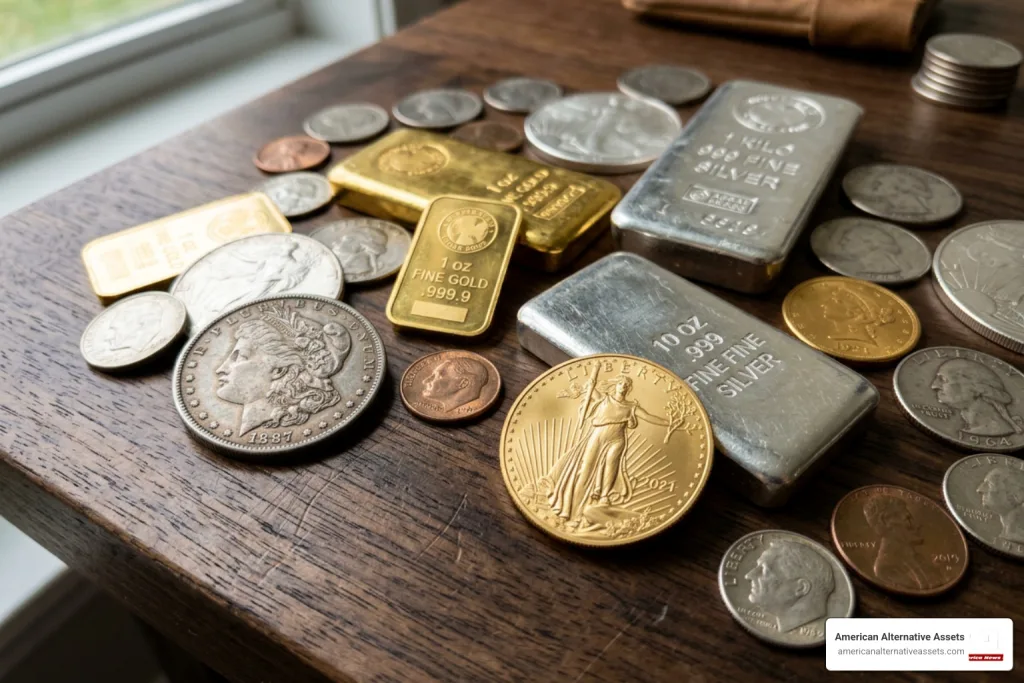
Why a Precious Metals Investing Guide Belongs in Every Serious Portfolio Strategy
This precious metals investing guide covers everything you need to know to get started with gold, silver, and other tangible assets as part of a diversified, resilient portfolio.
Quick Overview: What This Guide Covers
- What precious metals are and why they form a distinct asset class
- Physical bullion vs. paper assets and why direct ownership matters
- How to buy safely including coins, bars, and storage options
- Precious Metals IRAs and how to use tax-advantaged accounts to hold physical gold and silver
- Portfolio allocation and the key market forces that drive precious metals prices
- Common beginner questions answered clearly and simply
Markets move fast. Currencies weaken. Inflation erodes savings quietly over decades. For investors who want something real to anchor their portfolio, physical precious metals like gold and silver have served as a store of value for thousands of years, a track record no stock certificate can match.
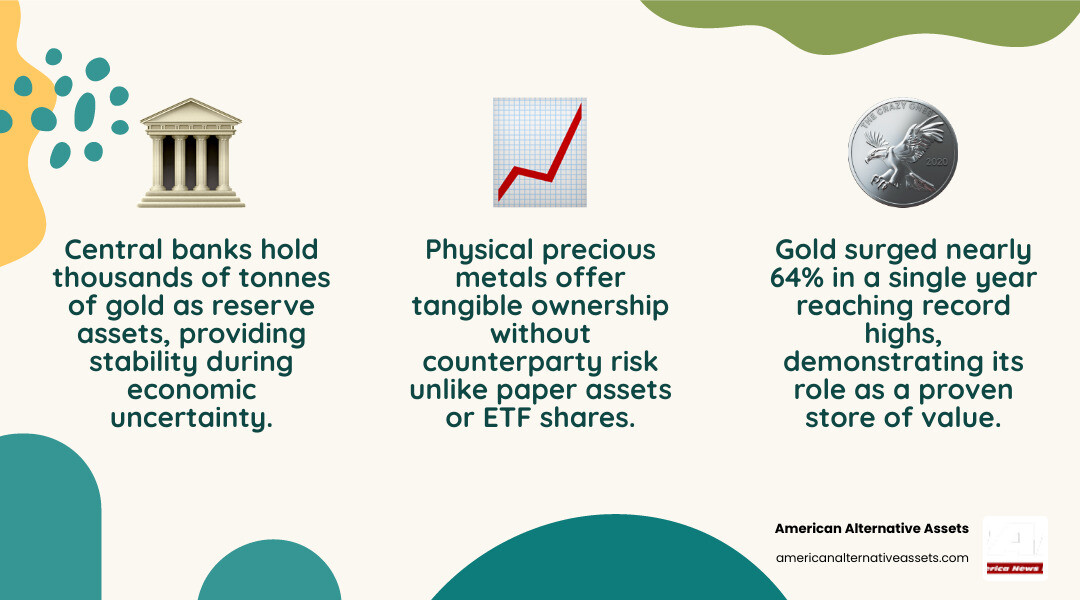
Gold hit record highs in early 2026 after surging nearly 64% the prior year. Silver followed, reaching its own all-time high. These moves reflect something deeper than speculation. Central banks around the world hold thousands of tonnes of gold as reserve assets. Governments don’t back their currencies with promises backed by ETF shares. They hold the physical metal.
Yet many everyday investors still don’t know how to access this asset class safely, how to avoid costly mistakes, or how to integrate it into a retirement plan without running into tax traps or unreliable dealers.
That’s exactly what this guide is here to fix.
I’m Shanon Davis, founder of American Alternative Assets and a former venture capital professional who turned to physical precious metals after watching paper-based portfolios collapse in 2008. My experience building a company dedicated to helping Americans protect their retirement wealth through physical gold and silver is what shapes every precious metals investing guide we publish here. Let’s dig into what you actually need to know.
Quick look at precious metals investing guide:
What Are Precious Metals and Why Do They Matter?
To understand why these elements hold such a unique position in global finance, we must look at what makes them a distinct asset class. Unlike paper currencies, which can be printed in unlimited quantities by central banks, precious metals are scarce, naturally occurring elements. They are durable, impossible to replicate synthetically, and highly resistant to corrosion.
For thousands of years, civilizations have recognized gold and silver as universal standards of wealth. In modern financial systems, they serve as a critical counterbalance to fiat currencies. When paper money loses purchasing power due to inflation, tangible assets with intrinsic value tend to retain their worth.
This enduring value is why central banks are some of the largest holders of physical gold. As of August 2024, the United States holds the world’s largest gold reserves at 8,133.5 tons. Collectively, global central banks hold approximately 36,000 tonnes of gold. This institutional demand highlights gold’s role as the ultimate reserve asset. It is a form of money that does not rely on the creditworthiness of any government or institution.
To learn more about how these assets function, you can read our comprehensive Precious Metals Guide. For those just starting out, understanding foundational concepts is key to seeing why physical metals remain the cornerstone of long-term wealth protection.
Gold vs. Silver: Key Differences in Volatility and Economic Sensitivity
While both gold and silver are core components of a physical portfolio, they behave differently in the marketplace. Understanding these differences is essential for anyone using a precious metals investing guide to build a balanced portfolio.
- Economic Sensitivity: Gold is primarily a monetary asset. Only about 10% to 15% of annual gold demand comes from industrial applications, with the vast majority going toward jewelry and central bank reserves. Silver, on the other hand, is a vital industrial metal. More than 50% of annual silver demand comes from industrial and technological sectors, including smartphones, solar panels, and automotive electronics. Consequently, silver is much more sensitive to economic expansion and contraction than gold.
- Price Volatility: Because the silver market is significantly smaller than the gold market, silver prices tend to be much more volatile. On any given day, silver’s price volatility can be two to three times greater than that of gold. This means silver offers higher potential growth during bull markets but carries greater short term downside risk.
- The Gold-to-Silver Ratio: This ratio measures how many ounces of silver it takes to purchase one single ounce of gold. Historically, this ratio has averaged around 15-to-1, but over the last century, it has fluctuated widely between 10-to-1 and 100-to-1. Many investors use this ratio as a valuation tool to determine which metal is relatively underpriced at any given moment.
For a deeper dive into how these two primary metals compare, see our article on Investing in Precious Metals.
Physical Bullion vs. Paper Assets: Why Tangible Ownership Wins
When looking at a precious metals investing guide, you will find two main paths: physical ownership of actual coins and bars, or paper-based financial products like Exchange-Traded Funds (ETFs) and mining stocks.
At American Alternative Assets, we firmly believe that physical ownership is the only way to achieve true wealth protection. The primary reason for this is counterparty risk. When you own physical gold or silver in your possession or stored in an approved depository, you own a tangible asset with no liabilities attached. It is yours.
In contrast, paper assets are promises to pay. They rely on a complex chain of custodians, brokers, fund managers, and financial institutions. If any link in that chain fails, or if the broader financial system experiences a systemic crisis, your paper claim could become difficult or impossible to redeem. Direct physical custody eliminates this systemic risk entirely.
The Hidden Risks of Gold ETFs and Mining Stocks
Many financial advisors point beginners toward paper assets because they are easy to buy through a standard brokerage account. However, these products carry significant hidden risks that run counter to the core purpose of investing in precious metals.
- No Direct Ownership: When you buy shares in a gold ETF, you do not own physical gold. You own shares in a trust that tracks the price of gold. Under normal circumstances, you cannot demand physical delivery of the underlying metal unless you are an institutional investor holding massive quantities of shares.
- Management Fees and Expenses: ETFs charge annual management fees, known as expense ratios. These fees quietly erode your investment over time, even if the price of the metal remains flat.
- Operational Risks of Mining Stocks: Investing in mining companies is not the same as investing in the metal itself. Mining stocks are equities. They are subject to corporate mismanagement, environmental regulations, labor strikes, geopolitical instability in mining regions, and rising production costs. Even if gold prices rise, a poorly managed mining company can still lose value.
- Counterparty and Liquidity Risks: Paper claims can be settled in cash rather than physical metal during extreme market disruptions. If a true systemic crisis occurs, you may find your paper gold position closed out for depreciated paper currency just when you need the physical metal most.
The Power of Direct Ownership in a Precious Metals Investing Guide
Direct physical ownership of bullion coins and bars is the ultimate form of financial insurance. Holding tangible wealth ensures that your purchasing power is protected independently of the banking system.
Sovereign-minted coins, such as the American Gold Eagle or Canadian Gold Maple Leaf, carry legal tender status. They are globally recognized, highly liquid, and easy to trade. For larger portfolios, cast and minted bars offer a cost-effective way to acquire high-purity metal.
At American Alternative Assets, our white-glove service is built around helping clients secure direct physical ownership. We guide you through selecting the right products and establishing secure, compliant custody so you can enjoy the peace of mind that only comes from tangible wealth. Learn more about our philosophy in The Complete Guide to Making Your Portfolio More Precious.
How to Invest in Physical Precious Metals Safely
Investing in physical metals requires an understanding of how pricing works. The foundational price of any precious metal is the “spot price,” which is the current market price for one troy ounce of raw metal on global exchanges.
When you purchase investment-grade bullion, you will pay the spot price plus a “retail premium.” This premium covers the costs of refining, minting, shipping, insurance, and the dealer’s small margin. Normal premiums in 2026 typically range from 3% to 8% for 1-ounce gold coins, and 1% to 4% for 1-ounce gold bars. Fractional coins, such as a 1/10-ounce gold coin, carry much higher premiums, often between 15% and 25%, because the manufacturing costs are similar to larger coins.
To navigate these pricing dynamics safely, always work with reputable dealers who offer transparent pricing and clear buyback policies. You can read our guide on All About Finding a Reputable Precious Metals Dealer to learn how to evaluate sellers.
| Product Type | Typical Premium Range | Liquidity Level | Best Suited For |
|---|---|---|---|
| Sovereign Coins (1 oz) | 3% – 8% | Extremely High | Beginners, barter potential, maximum liquidity |
| Minted Bars (1 oz) | 1% – 4% | High | Investors looking for low markups over spot |
| Large Cast Bars (10 oz+) | 0.5% – 2% | Moderate | High-net-worth portfolios, long-term storage |
Choosing the Right Products for Your Precious Metals Investing Guide
When purchasing physical metals, it is wise to stick to highly liquid, standard bullion products rather than rare or collectible numismatic coins. Unscrupulous sellers often push numismatic coins with massive markups, claiming they will appreciate faster due to rarity. In reality, these coins are highly illiquid and difficult to sell at a fair price.
For gold, look for sovereign-minted coins with a purity of at least .995, such as:
- American Gold Eagle (an exception to the .999 rule, minted at .9167 purity but containing exactly one troy ounce of pure gold, backed by the U.S. government)
- Canadian Gold Maple Leaf (.9999 pure)
- Austrian Gold Philharmonics (.9999 pure)
For silver, look for products with a purity of .999 or higher, including:
- American Silver Eagle coins
- Canadian Silver Maple Leaf coins
- Privately minted silver rounds and bars from recognized refiners
Storage and Security: Keeping Your Wealth Safe
Once you buy physical metals, you must decide how to store them. For small holdings, some investors choose a high-quality home safe. However, storing large amounts of wealth at home carries significant security and insurance risks.
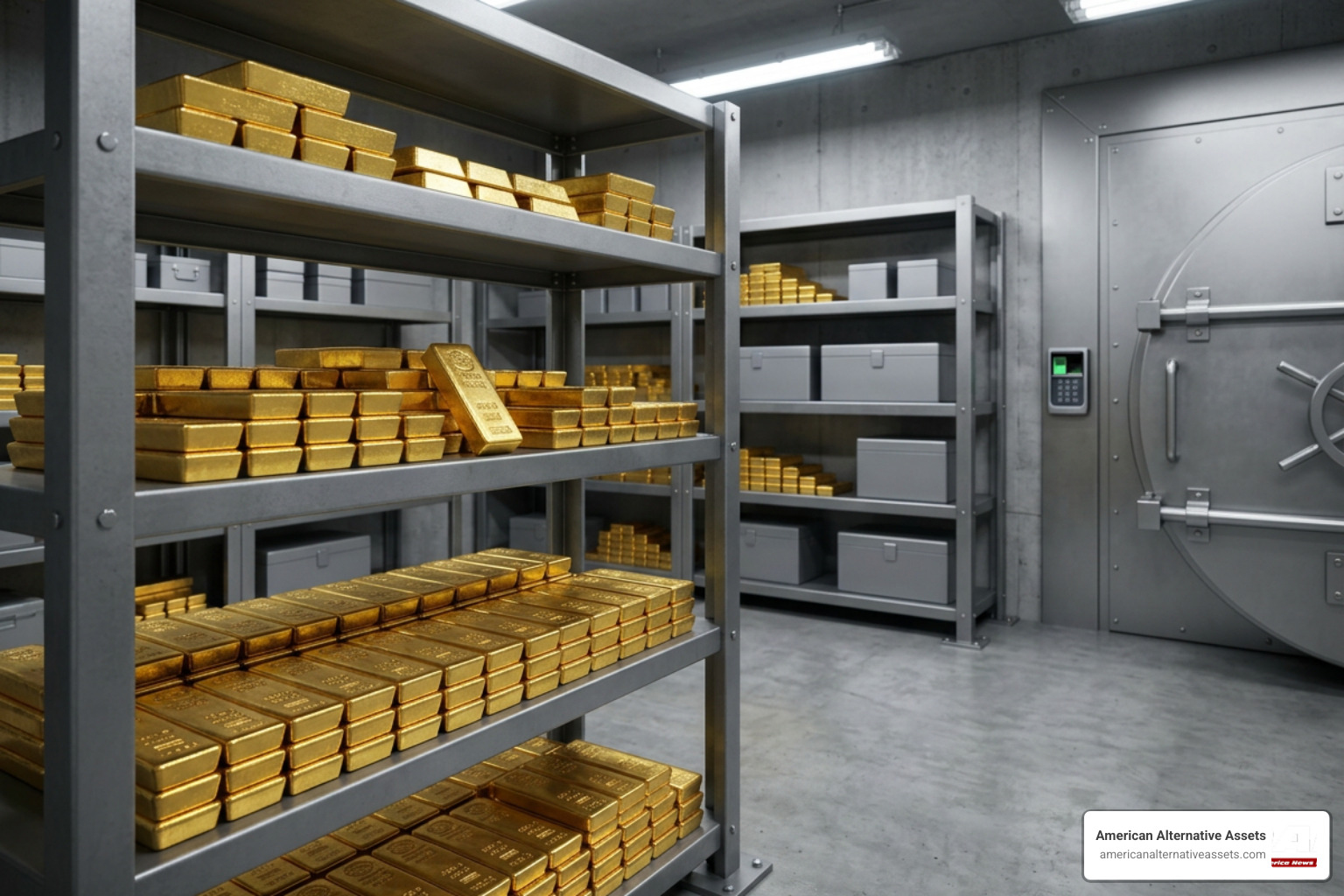
For larger holdings, professional vault storage is highly recommended. You can choose segregated storage, where your exact coins and bars are kept separate from other assets, or non-segregated storage, where your metals are stored alongside like-kind assets.
To maintain the tax advantages of a Precious Metals IRA, your physical metals must be stored in an IRS-approved depository. These facilities offer state-of-the-art security, 24/7 monitoring, and full insurance coverage. For a detailed breakdown of your options, consult our A Quick Start Guide to Precious Metals Storage.
Maximizing Wealth Protection with a Precious Metals IRA
For many Americans, the bulk of their retirement savings is tied up in traditional paper-based IRAs or 401(k) plans. These accounts are highly vulnerable to market downturns and inflation. A Precious Metals IRA, also known as a self-directed IRA, allows you to diversify your retirement portfolio by holding actual, physical gold and silver coins and bars while maintaining the exact same tax benefits as a standard retirement account.
Opening a Precious Metals IRA is a straightforward process when working with a specialized partner like American Alternative Assets. We help you establish the account with an IRS-approved custodian, coordinate the secure transfer of funds from your existing retirement account, and arrange for the physical metals to be shipped directly to a secure, insured depository.

To learn more about how this process works, read our comprehensive Precious Metals IRA Investing Guide.
IRS Rules and Eligible Metals for Retirement Accounts
The IRS has strict regulations regarding the types of precious metals that can be held within a self-directed IRA. To qualify, the metals must meet specific fineness standards:
- Gold: Must be at least .995 pure (with the exception of the American Gold Eagle coin)
- Silver: Must be at least .999 pure
- Platinum: Must be at least .9995 pure
- Palladium: Must be at least .9995 pure
Additionally, the physical metals must be held by an approved custodian and stored in an IRS-sanctioned depository. You cannot take personal physical possession of the metals in your IRA, doing so would be treated as a taxable distribution, which could trigger penalties.
For a complete list of eligible products and rules, consult our Precious Metals Investment Guide 2026.
Tax Advantages of Physical Precious Metals IRAs
Holding physical metals inside a self-directed IRA offers significant tax advantages. Normally, the IRS classifies physical precious metals held outside of an retirement account as “collectibles.” When you sell collectibles held for more than one year, they are subject to a maximum long-term capital gains tax rate of 28%, which is higher than the standard long-term capital gains rate for stocks.
By holding your physical gold and silver inside a Precious Metals IRA:
- Tax-Deferred Growth: You pay no taxes on any price appreciation as long as the metals remain inside the IRA.
- Tax-Free Rollovers: You can roll over funds from an existing 401(k), traditional IRA, or Roth IRA into a physical gold IRA without triggering any tax penalties or fees.
- Strategic Control: You can protect your retirement wealth from currency devaluation while keeping your capital growing in a tax-advantaged environment.
To understand how to maximize these benefits, read our Beginner’s Guide to Precious Metals Tax Benefits.
Portfolio Allocation and Market Drivers in a Precious Metals Investing Guide
Determining how much of your portfolio to allocate to physical precious metals depends on your individual risk tolerance, age, and retirement timeline. Most financial experts recommend allocating between 5% and 10% of a diversified portfolio to precious metals. During times of heightened economic uncertainty, some conservative investors may increase this strategic allocation to 15%.
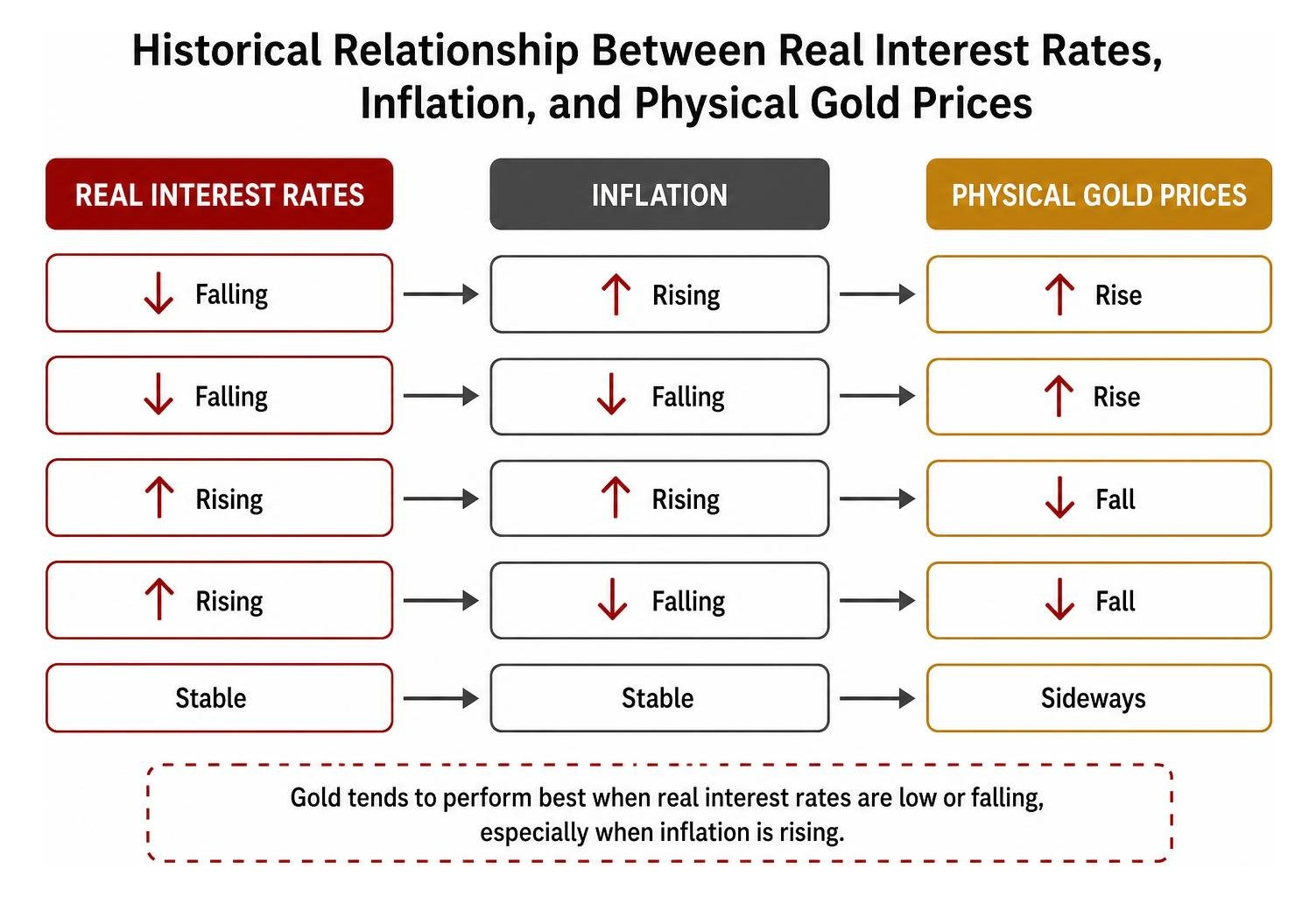
Academic research shows that adding a modest allocation of gold and silver to a traditional 60/40 portfolio can help reduce overall volatility. Because precious metals have a historically low correlation with equities, they tend to perform well when stock markets decline, acting as a stabilizing anchor for your wealth.
To understand how to balance your assets, check out our Alternative Investments Guide.
Determining Your Strategic Allocation
A strategic allocation to physical metals should be viewed as long-term portfolio insurance rather than a speculative trading tool. When designing your allocation:
- Assess Your Goals: Are you looking for aggressive growth, or are you focused on capital preservation and wealth protection? Physical metals are unmatched for preservation.
- Establish a Rebalancing Cadence: If a major market move causes your metals allocation to grow significantly beyond your target, you can work with your advisor to rebalance your portfolio.
- Focus on Longevity: Physical gold and silver have maintained their purchasing power over centuries. They serve as a reliable ballast to protect your hard-earned savings from inflation.
For more insights on structuring your portfolio, see How to Invest in Gold and Silver: Precious Metals Investing Guide .
Understanding the Gold-to-Silver Ratio as a Valuation Tool
The gold-to-silver ratio is a simple mathematical tool used by physical precious metals investors to identify potential buying opportunities. By tracking how many ounces of silver are required to buy one ounce of gold, you can gain insight into which metal may be historically undervalued.
For example, when the ratio is high, such as 80-to-1 or 90-to-1, it indicates that silver is relatively cheap compared to gold. Many investors view this as an ideal time to accumulate physical silver. Conversely, when the ratio drops toward historical averages of 50-to-1 or lower, gold may represent the more attractive purchase.
Frequently Asked Questions about Precious Metals Investing
We believe that an educated investor is a successful investor. Here are answers to some of the most common questions we receive from clients starting their physical precious metals journey.
What is the safest way for beginners to invest in precious metals?
The safest way for a beginner to start is by purchasing physical gold or silver sovereign-minted coins from a reputable dealer. Sovereign coins, like the American Gold Eagle, are highly liquid, easy to authenticate, and globally recognized. Beginners should avoid complex paper-based derivatives, leveraged products, or high-premium numismatic coins.
If you are looking for guidance on choosing a trusted partner, refer to Your Guide to Leading Gold Investment Firms.
Can I hold physical gold and silver in my standard IRA or 401(k)?
No. Standard brokerage accounts and traditional 401(k) plans generally do not allow you to hold physical assets. To hold physical gold and silver, you must establish a self-directed Precious Metals IRA with a specialized custodian. You can easily roll over funds from your existing retirement accounts into this self-directed structure without incurring any tax penalties.
For step-by-step instructions, read How to Invest in Precious Metals in 2026: A Beginner’s Guide – Marketsfeedback.com .
How are physical precious metals taxed in the United States?
Outside of a retirement account, the IRS classifies physical gold and silver as collectibles. If you hold physical bullion for more than one year, any capital gains upon sale are taxed at a maximum rate of 28%. If held for less than one year, gains are taxed as ordinary income. However, if you hold your physical metals inside a self-directed Precious Metals IRA, all gains grow tax-deferred, and you only pay taxes when you take eligible distributions in retirement.
Conclusion
Building a secure financial future requires a proactive approach to diversification. Physical precious metals have stood the test of time as a reliable store of value and a powerful hedge against economic instability. By prioritizing direct physical ownership over paper-based alternatives, you can protect your hard-earned wealth from inflation, systemic risk, and currency devaluation.
At American Alternative Assets, we are committed to providing white-glove, relationship-first service built on trust, transparency, and ethical practices. Based in Woodland Hills, California, we specialize in helping Americans safeguard their retirement through physical Precious Metals IRAs.
If you are ready to take control of your financial future with the security of physical gold and silver, Learn more about physical precious metals IRAs and connect with our team today.
Disclaimers:
This article is for informational purposes only and does not constitute financial advice. Please consult your financial advisor before making investment decisions.
Investing in precious metals involves risk. Past performance does not guarantee future results.