







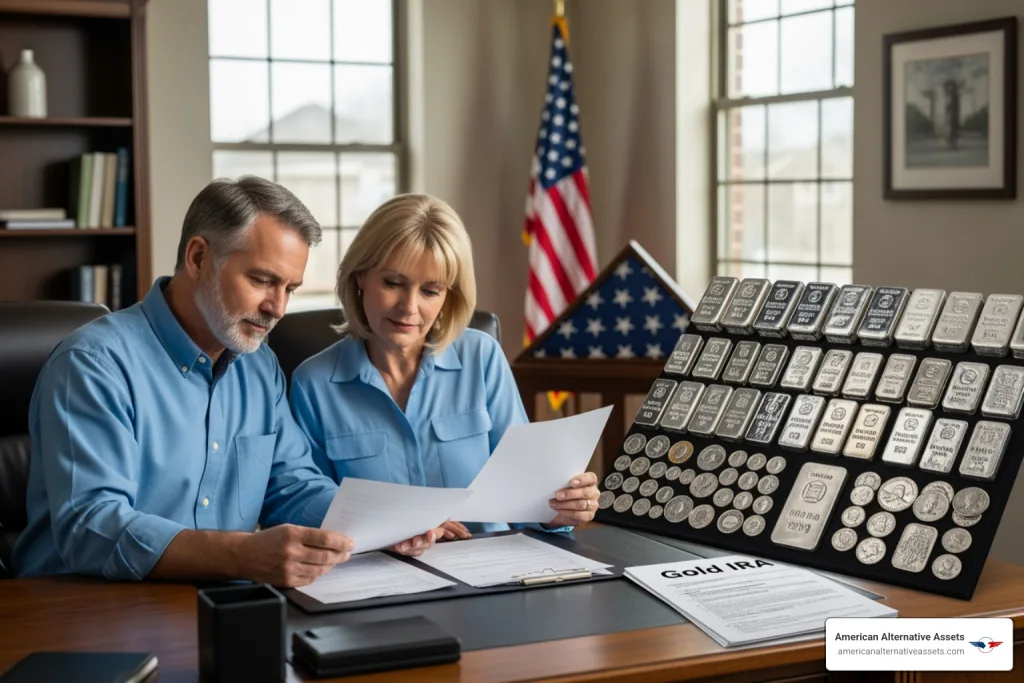
Why Americans Are Securing Retirement Wealth with Physical Silver
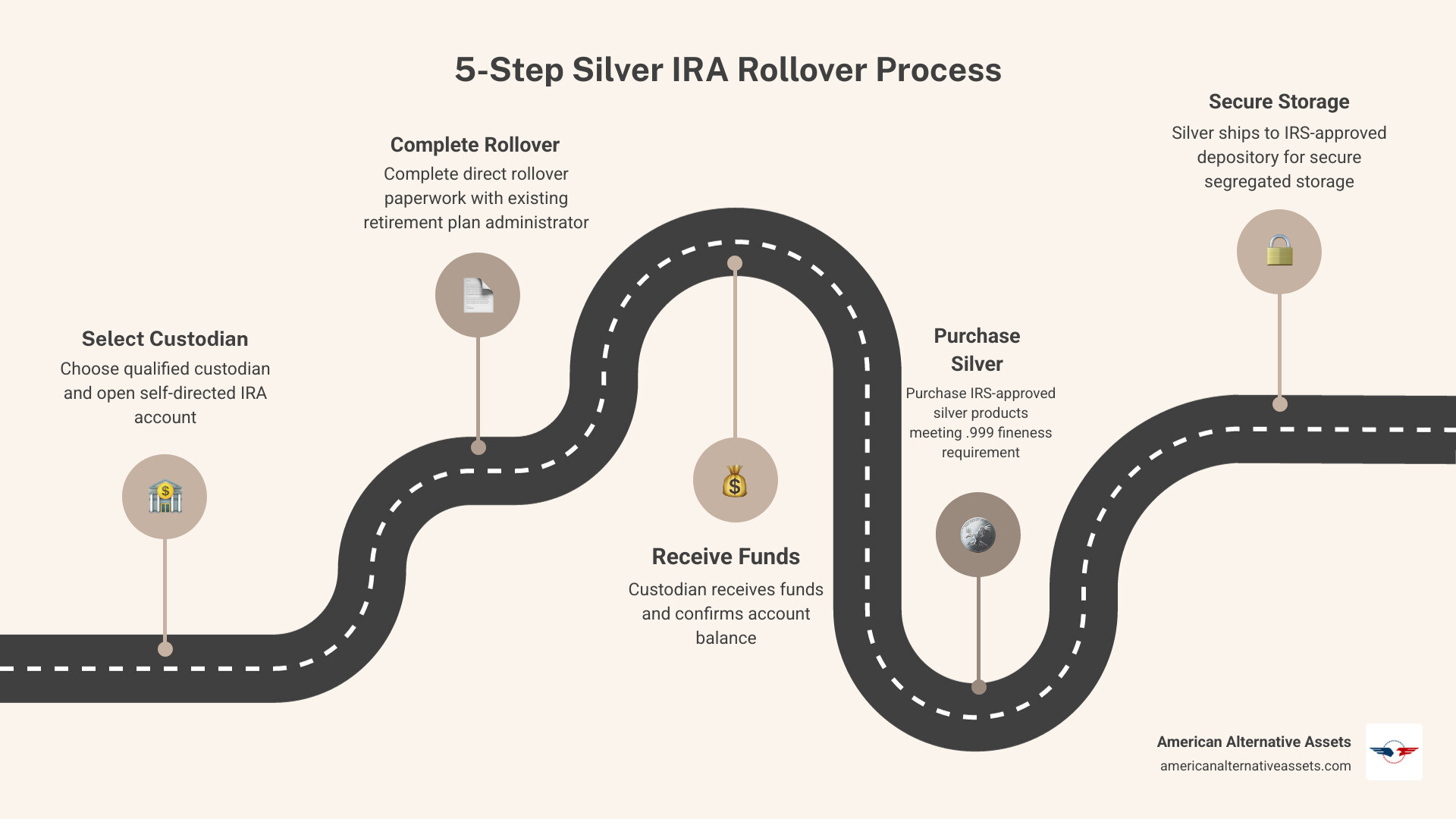
Converting IRA to silver gives you the power to hold tangible assets instead of paper promises. Here’s the core process:
- Open a Self-Directed IRA with a custodian that permits physical precious metals
- Initiate a direct rollover from your existing IRA or 401(k) to avoid taxes and penalties
- Purchase IRS-approved silver (minimum .999 fineness) through your custodian
- Store your silver in an IRS-approved depository (home storage is prohibited)
- Maintain compliance with annual contribution limits ($7,000 for 2025, $8,000 if age 50+)
Most investors choose direct rollovers because the funds transfer directly between custodians. You never touch the money, so there’s no 60-day deadline and no tax withholding.
When my grandfather handed me a silver Morgan coin at age nine, he said, “This is real money.” Decades later, after years in the financial sector and watching the 2008 crash expose the fragility of paper assets, I built American Alternative Assets to help families like yours protect wealth through physical precious metals. I’ve guided hundreds through converting IRA to silver, and the peace of mind it brings is tangible.
The research is clear: silver has shown significant growth potential recently, driven by industrial demand in solar panels, electronics, and medical technology. Unlike stocks or bonds that can vanish in a market crash, physical silver gives you direct ownership of a finite resource with real-world utility.
Physical silver in an IRA offers the same tax advantages as traditional retirement accounts, but with a critical difference. You own metal stored in your name at a secure facility, not shares in a fund that might hold fractional claims on pooled assets. When economic uncertainty strikes, paper assets depend on other institutions honoring their promises. Physical silver doesn’t.
The IRS permits specific types of silver in retirement accounts under IRC Section 408(m). Not all silver qualifies. You need coins or bars meeting strict purity standards, purchased through an approved custodian, and stored at an IRS-approved depository. The process is straightforward once you understand the rules.
This guide walks you through every step, from choosing a custodian to selecting the right silver products for your portfolio. Whether you’re rolling over a 401(k), transferring an existing IRA, or starting fresh, you’ll learn how to protect your retirement with an asset that’s served as real money for thousands of years.
Converting ira to silver further reading:
- gold backed ira account
- how to invest in precious metals with a self-directed ira
- precious metals ira custodians guide
Understanding the Silver IRA and IRS Requirements
To successfully steer the process of converting ira to silver, we must first understand the regulatory framework. A Silver IRA is not a separate type of IRA in the eyes of the IRS, but rather a Self-Directed IRA (SDIRA) that has been set up to hold physical precious metals. While traditional IRAs are usually limited to “paper” assets like stocks, bonds, and mutual funds, an SDIRA gives you the freedom to diversify into tangible silver.
The foundation of these accounts lies in IRC Section 408(m). Historically, the IRS viewed most precious metals as “collectibles,” which are generally prohibited in retirement accounts. However, the Technical and Miscellaneous Revenue Act of 1998 significantly expanded the rules, allowing retirement savers to include certain highly pure bullion and coins in their portfolios.
To qualify for a Silver IRA account, the silver must meet a fineness standard of at least .999. It must also be held in the physical possession of an IRS-approved trustee or financial institution. This means you cannot simply buy silver and put it in a shoebox under your bed, doing so would be considered a taxable distribution and could result in heavy penalties.
Eligible Silver Products for Your Portfolio
Not all silver is created equal when it comes to your retirement. The IRS is very specific about which products can be included. The most popular choice for many of our clients is the American Silver Eagle. It is the only silver coin that the IRS allows regardless of its .999 fineness because it is a sovereign coin minted by the U.S. Treasury.
Other popular American Silver Eagle Bullion options and international alternatives include:
- Canadian Silver Maple Leafs
- Australian Silver Kookaburras
- Austrian Silver Philharmonics
- Silver bullion bars produced by NYMEX or COMEX-approved refiners (like PAMP Suisse or Johnson Matthey)
Prohibited Collectibles and Purity Standards
One of the most common mistakes we see when investors are converting ira to silver is the attempt to include “junk silver” or numismatic coins. Pre-1965 U.S. silver coins (often called “junk silver”) only have a purity of 90%, which falls short of the .999 mandate. Similarly, rare or collectible coins, where the value is based on scarcity rather than metal content, are generally prohibited.
Generic silver rounds from private mints can also be tricky. Unless the mint is specifically recognized by the IRS or the round meets the exact purity and hallmark requirements, it may not be eligible. Sticking to the Silver IRA guide for approved products ensures your account remains compliant and your tax-advantaged status is protected.
The Process of Converting IRA to Silver
The journey of converting ira to silver is a structured process that requires coordination between you, your new custodian, and your precious metals dealer. We at American Alternative Assets pride ourselves on offering a white-glove service that handles the heavy lifting, but it helps to understand the 3 steps to convert your IRA into gold or silver clearly.
First, you must choose a custodian. Most major brokerage firms do not offer self-directed options for physical metals because they prefer to sell you their own paper products. You will need a specialized custodian who understands the reporting requirements for physical assets. Once you have selected a partner, you will complete a Silver IRA intake form to establish the new account.
Direct Rollovers for Converting IRA to Silver
The most efficient way to fund your new account is through a direct rollover or a trustee-to-trustee transfer. In a direct rollover, the funds move directly from your current 401(k) or IRA provider to your new Silver IRA custodian. This is the gold standard (no pun intended) for finding the best silver IRA rollover company because it eliminates the risk of tax penalties.
There is also the “60-day rule” associated with indirect rollovers. In this scenario, the funds are paid to you, and you have 60 days to deposit them into the new IRA. We generally advise against this. If you miss that window by even a day, the IRS treats the entire amount as a distribution. If you are under age 59.5, you could face a 10% early withdrawal penalty on top of ordinary income taxes.
Funding Your Account and Finalizing the Purchase for Converting IRA to Silver
Once the funds have arrived at your new custodian via wire transfer or check, it is time to go shopping. You will work with us to select the specific mix of coins and bars that fit your goals. After you authorize the purchase, the custodian sends the payment to the dealer, and we ship the metals directly to an IRS-approved depository.
Knowing how to invest in gold and silver correctly means ensuring the paper trail is perfect. The custodian will record the receipt of the physical metal and provide you with regular statements, just like a traditional brokerage account, but with the added security of knowing your wealth is held in physical form.
Why Investors Choose Physical Silver Over Paper Assets
In a world of digital digits and high-frequency trading, physical silver offers a level of security that paper assets simply cannot match. When you buy a silver ETF (Exchange Traded Fund), you are merely buying a paper share in a trust that tracks the price of silver. You do not own the silver itself, and you cannot take delivery of it. You are essentially betting on a price movement while taking on “counterparty risk,” which is the dangerous risk that the institution managing the fund might fail.
Jim Rogers on precious metals has often pointed out that during periods of economic upheaval, physical assets are often viewed as a safe haven. Silver, in particular, is unique because it is both a precious metal and an essential industrial commodity.
| Feature | Physical Silver IRA | Silver ETFs/Paper Assets |
|---|---|---|
| Ownership | Direct ownership of physical bars/coins | Ownership of a mere digital contract |
| Counterparty Risk | None; the metal exists regardless of bank health | High; entirely dependent on the solvency of the fund manager |
| Industrial Link | Gains value from scarcity and industrial use | Vulnerable to market manipulation and “naked” shorting |
| Tangibility | You can take physical possession (upon distribution) | Only cash settlements are typically available, leaving you without real metal |
| Security | Stored in a high-security, insured vault | Vulnerable to cyber-attacks and exchange failures |
Is silver a good investment? Many believe so because of its massive industrial demand. Silver is a key component in solar panels (photovoltaics), electric vehicle batteries, and 5G technology. Unlike gold, which is mostly stored in vaults, silver is “consumed” in industrial processes, meaning the available supply is constantly being used up.
Strategic Benefits of Converting IRA to Silver
The primary driver for beyond gold: exploring silver IRA rollovers is diversification. Most retirement portfolios are heavily weighted in stocks and bonds. When the stock market dips, silver often moves in the opposite direction or holds its value, acting as a hedge.
Furthermore, silver is an excellent inflation hedge. As the purchasing power of the dollar declines due to increased money printing, the “hard” value of silver tends to rise. It has been a store of value for over 5,000 years, maintaining its status through various economic cycles.
The Risks of Paper Silver and Market Volatility
While silver can be more volatile than gold, this volatility often provides a higher “torque” or upside potential. However, when you hold paper silver, that volatility is compounded by market fluctuations and the risk of the fund being liquidated during a crisis. By converting ira to silver in physical form, you remove the middleman. You aren’t worried about whether a brokerage’s website is down during a panic, your wealth is secure in a vault. For a deeper dive, see our precious metals IRA complete guide.
Storage, Security, and IRS Compliance
One of the most rigid rules of converting ira to silver is the storage requirement. The IRS is very clear: the metals must be held in an approved depository. The Delaware Depository is one of the most well-known facilities, offering state-of-the-art security and all-risk insurance.
When choosing a storage method, you generally have two options:
- Commingled Storage: Your metals are stored in a large vault along with the metals of other investors. While you still own the exact weight and type of silver you bought, you might not get back the exact same bar you sent in.
- Segregated Storage: Your metals are kept in a separate, individual locker. You are guaranteed to receive the exact same coins or bars you originally purchased.
Regardless of the method, the facility must be a third party. Home storage is a fast way to get audited and penalized by the IRS. Working with a trusted partner helps ensure you are investing in precious metals without running afoul of these strict regulations.
Contribution Limits and RMD Rules
For 2025, the annual contribution limits for a Silver IRA are $7,000 for those under age 50 and $8,000 for those 50 and older. It’s important to remember that these limits apply to the total of all your IRAs. You cannot put $7,000 into a traditional IRA and another $7,000 into a Silver IRA in the same year.
Regarding distributions, Required Minimum Distributions (RMDs) currently begin at age 73. A unique benefit of a Silver IRA is that you can take these distributions “in-kind.” Instead of selling your silver for cash and then being taxed on that cash, you can have the actual physical coins or bars shipped to your home. You will still owe taxes on the fair market value of the silver, but you get to keep the physical asset.
Choosing a Custodian and Depository Partner
Not all custodians are created equal. When how to invest in precious metals with a self-directed ira, you should look for companies with a long track record, transparent fee structures, and excellent customer service. At American Alternative Assets, we help guide you toward custodians that provide the highest levels of security and insurance coverage, ensuring your silver is protected against any eventuality.
Frequently Asked Questions about Silver Rollovers
Can I roll over a 401(k) into a silver IRA?
Yes, you can. However, there is a catch. If you are currently employed and under the age of 59.5, your plan may not allow for an “in-service distribution.” Most people perform a Thrift Savings Plan rollover or a 401(k) rollover after they have left the employer who sponsored the plan. If you are over 59.5, many plans allow you to roll over a portion of your funds even while you are still working.
How does silver compare to gold in a retirement account?
Silver is often called “the poor man’s gold,” but we prefer to think of it as “the versatile metal.” Silver is much more affordable, allowing you to buy many more ounces for the same dollar amount. It also has higher industrial utility than gold. While gold is the ultimate anchor for stability, silver often provides more growth potential during bull markets. Understanding what is a gold ira? can help you decide on the right balance for your specific needs.
What are the tax implications of a silver IRA conversion?
As long as you follow the direct rollover process, converting ira to silver is a tax-neutral event. Your money moves from one tax-advantaged bucket to another. If you have a Traditional IRA, your silver grows tax-deferred. If you have a Roth IRA, your silver can grow tax-free. It is vital to follow gold ira tax rules to avoid unnecessary penalties.
Conclusion
At American Alternative Assets, we believe that your retirement should be built on a foundation of real, tangible wealth. The process of converting ira to silver doesn’t have to be complicated. By choosing a partner that values ethical practices and relationship-first service, you can move away from the uncertainty of paper markets and into the security of physical precious metals.
Our white-glove assistance ensures that every step, from the initial rollover to the final secure storage, is handled with the utmost care and transparency. We are located in Woodland Hills, CA, and we are dedicated to helping our clients achieve true financial privacy and protection.
If you are ready to take control of your financial future and protect your hard-earned savings from inflation and market volatility, now is the time to act. Start your precious metals IRA journey with us today and experience the peace of mind that comes with owning “real money.”
This article is for informational purposes only and does not constitute financial advice. Please consult your financial advisor before making investment decisions.
Investing in precious metals involves risk. Past performance does not guarantee future results.