







Is the Silver Buy Back Price Today Worth Acting On?
The silver buy back price today is what dealers will actually pay you for your physical silver, and it is almost always lower than the spot price you see quoted on financial sites. Here is a quick breakdown of what to expect:
| Silver Item | Typical Dealer Buyback | vs. Spot Price |
|---|---|---|
| 1 oz Silver American Eagle | ~$52-$56/oz | ~88-95% of spot |
| 1 oz Silver Canadian Maple Leaf | ~$50-$54/oz | ~85-91% of spot |
| 1 oz Silver Round or Bar | ~$47-$52/oz | ~79-88% of spot |
| 100 oz Silver Bar | Near spot | ~85-87% of spot |
| .925 Sterling Silver (scrap) | Melt value minus fees | ~70-90% of melt |
| .900 Junk Silver Coins | Melt value minus fees | ~80-90% of melt |
Note: Buyback prices move with the live silver spot price. Always confirm current quotes directly with your dealer before locking in a sale.
The gap between spot price and what you actually receive comes down to a few key factors: dealer operating costs, refining fees, product type, purity, and current market conditions. Understanding this gap is the difference between getting a fair deal and leaving money on the table.
If you hold physical silver, whether as coins, bars, or inherited jewelry, knowing how buyback prices work protects your wealth when it matters most.
I’m Shanon Davis, and my background spans venture capital and precious metals investing, giving me a front-row seat to how fragile paper-based systems can be compared to tangible assets, which is exactly why understanding the silver buy back price today is central to everything we teach at American Alternative Assets. In this guide, I’ll walk you through everything you need to know to sell your silver confidently and at the best possible price.
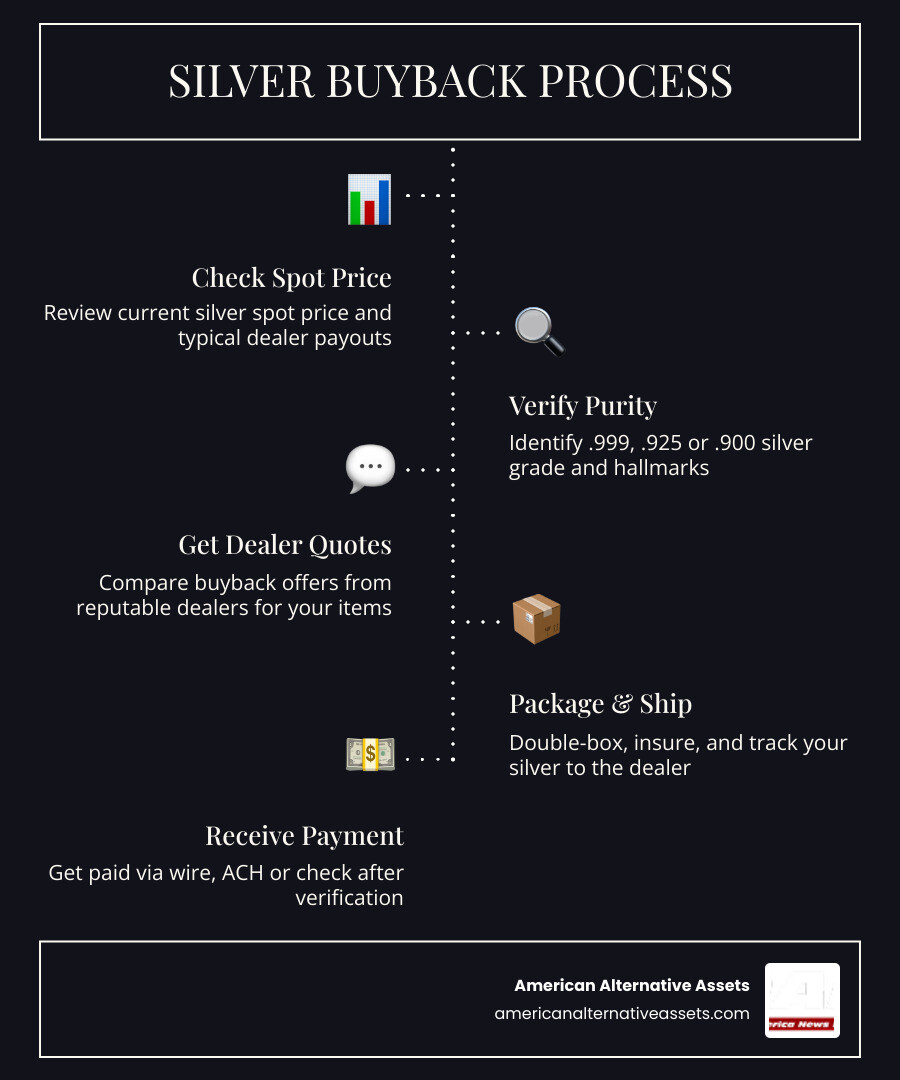
Silver buy back price today word roundup:
Understanding the Silver Buy Back Price Today and How It Is Calculated
To navigate the precious metals market successfully, we must first look at how the global price of silver is established. The foundation of all silver pricing is the live spot price. This is the global benchmark for one troy ounce of pure .999 fine silver.
The live spot price is determined by active trading on major commodity exchanges. The most prominent of these are the COMEX in New York and the London Bullion Market Association, or LBMA. On these exchanges, millions of ounces of silver are traded daily through futures contracts. This continuous, high-volume trading sets a fluctuating baseline price that updates every few seconds during market hours.

However, physical silver is far more than just a financial asset. Unlike gold, which is primarily held as a store of value, silver is a vital industrial commodity. In fact, approximately 55% of global silver demand comes from industrial applications. It is an essential component in the manufacturing of solar panels, advanced electronics, electric vehicles, and medical devices.
Because of this heavy industrial reliance, the live spot price of silver reacts sharply to manufacturing trends and technological shifts. When industrial demand surges, it can drive the spot price upward. Conversely, economic slowdowns that affect manufacturing can put downward pressure on the metal.
Other macroeconomic forces play a massive role as well. The strength of the US Dollar typically has an inverse relationship with silver. Since global silver is priced in USD, a weaker dollar makes silver cheaper for foreign buyers, driving up demand and price. Inflation expectations and geopolitical instability also cause investors to flock to physical silver as a proven safe-haven asset. To understand why silver is experiencing a historic surge, you can read our detailed analysis on Silver’s Breakout Moment: Why the Other Precious Metal Deserves Your Attention in 2026.
Why the Silver Buy Back Price Today Differs from the Spot Price
When you decide to sell your physical metal, you will quickly notice that the silver buy back price today offered by dealers is different from the live spot price. This is a standard industry practice, and understanding why it happens will help you avoid frustration.
The spot price represents the wholesale price of raw, unprocessed paper silver contracts. It does not account for the physical reality of fabricating, transporting, insuring, and storing actual silver. When a dealer buys your physical silver, they cannot simply resell it at the spot price without covering their own costs.
Dealers calculate their payouts based on two primary concepts:
- Melt Value: This is the absolute value of the raw silver contained within your item if it were melted down to pure metal. It is calculated by multiplying the item’s weight by its purity and the current spot price.
- Scrap Value: This is the actual amount a dealer will pay you after deducting their operating margins, refining fees, and potential shipping costs.
Refining fees are a major factor. If you sell scrap silver, sterling silver flatware, or jewelry, a dealer cannot resell these items as investment-grade bullion. They must send them to a refinery to be melted down and purified. Refiners charge a fee for this process, which typically ranges from 5% to 15% of the melt value. The dealer passes this cost along to you. To see how these calculations work in real-time, you can consult the resources at Silver Price Today | Live Spot Price & Scrap Dealer Payouts.
Even for highly recognizable bullion coins and bars, dealers must maintain a profit margin. They have overhead costs, rent, employee salaries, and security expenses to cover. Therefore, their buyback offers will include a small discount under the spot price to ensure they can remain in business.
How Purity Grades Impact Your Payout
Not all silver is created equal. The physical form of your silver and its specific purity grade will directly dictate the final payout you receive. It is crucial to identify the purity of your items before contacting a dealer.
There are four primary silver purity grades that you will encounter in the market:
- .999 Fine Silver: This is the highest purity grade, consisting of 99.9% pure silver. It is the standard for investment-grade bullion, including modern sovereign coins, private rounds, and minted bars. Because it requires no further refining to be considered pure, dealers pay the highest percentage of spot price for .999 fine silver.
- .925 Sterling Silver: This alloy contains 92.5% pure silver and 7.5% base metals, usually copper, added for durability. Sterling silver is the standard for fine jewelry, decorative holloware, and flatware. Because it must be refined to separate the copper, dealer payouts for sterling are lower than bullion.
- .900 Coin Silver: Often referred to as “junk silver,” this grade contains 90% pure silver. It is found in United States dimes, quarters, and half dollars minted before 1965. These coins are highly liquid and trade on their silver content, though they require a small refining discount if sold for melt.
- .800 European Silver: Common in continental European flatware and vintage items, this grade contains 80% pure silver. It carries a higher refining discount due to the larger percentage of base metals.
To verify what you have, always look for official hallmarks stamped on the metal. Bullion will be stamped with “.999 FS” or “Fine Silver.” Sterling silver is typically stamped with “925” or the word “Sterling.” European silver may carry an “800” stamp.
Be highly cautious of items marked “EPNS,” “A1,” “Triple Plate,” or “Silver Plate.” These designations indicate that the item is made of a base metal, like nickel or copper, with an incredibly thin layer of silver electroplated over the top. The silver content on plated items is microscopically thin and cannot be economically recovered. Consequently, reputable dealers will not buy silver-plated items. To calculate the exact melt value of your specific purity grades, you can use the Scrap Silver, Free Silver Calculator & Melt Value Tool.
Navigating the Silver Buyback Process with Reputable Dealers
Once you have identified your silver and its purity, the next step is finding a reputable dealer to facilitate the sale. The precious metals industry features several types of buyers, each offering different payout structures and convenience levels.
| Buyer Type | Typical Payout % of Melt | Best Suited For | Pros | Cons |
|---|---|---|---|---|
| Online Bullion Dealers | 85% to 98% | Bullion coins, bars, and large lots | Competitive rates, transparent pricing | Requires shipping, payment takes a few days |
| Local Coin Shops | 70% to 85% | Sovereign coins, collectible coins | Immediate payment, face-to-face service | Lower payouts than online refiners |
| Pawn Shops | 50% to 75% | Emergency cash needs | Instant cash | Lowest payout rates, lack of specialized testing |
| Specialized Refiners | 82% to 95% | Large volumes of scrap, sterling flatware | High payouts for bulk scrap | High minimum volume requirements |
When evaluating where to sell, we always recommend avoiding pawn shops unless you have an immediate, urgent need for cash. Pawn shops operate on high overhead and low volume, meaning they must offer significantly lower payouts to turn a profit.
Instead, look for established dealers who publish their live buyback rates transparently. A reputable dealer will have a clear, documented process for testing and valuing your metal. They should be willing to explain their calculations and show you the exact live spot price they are using. For a real-world look at how competitive dealer payouts are structured, you can view the live rates at Silver Spot Price Today – Canada Gold.
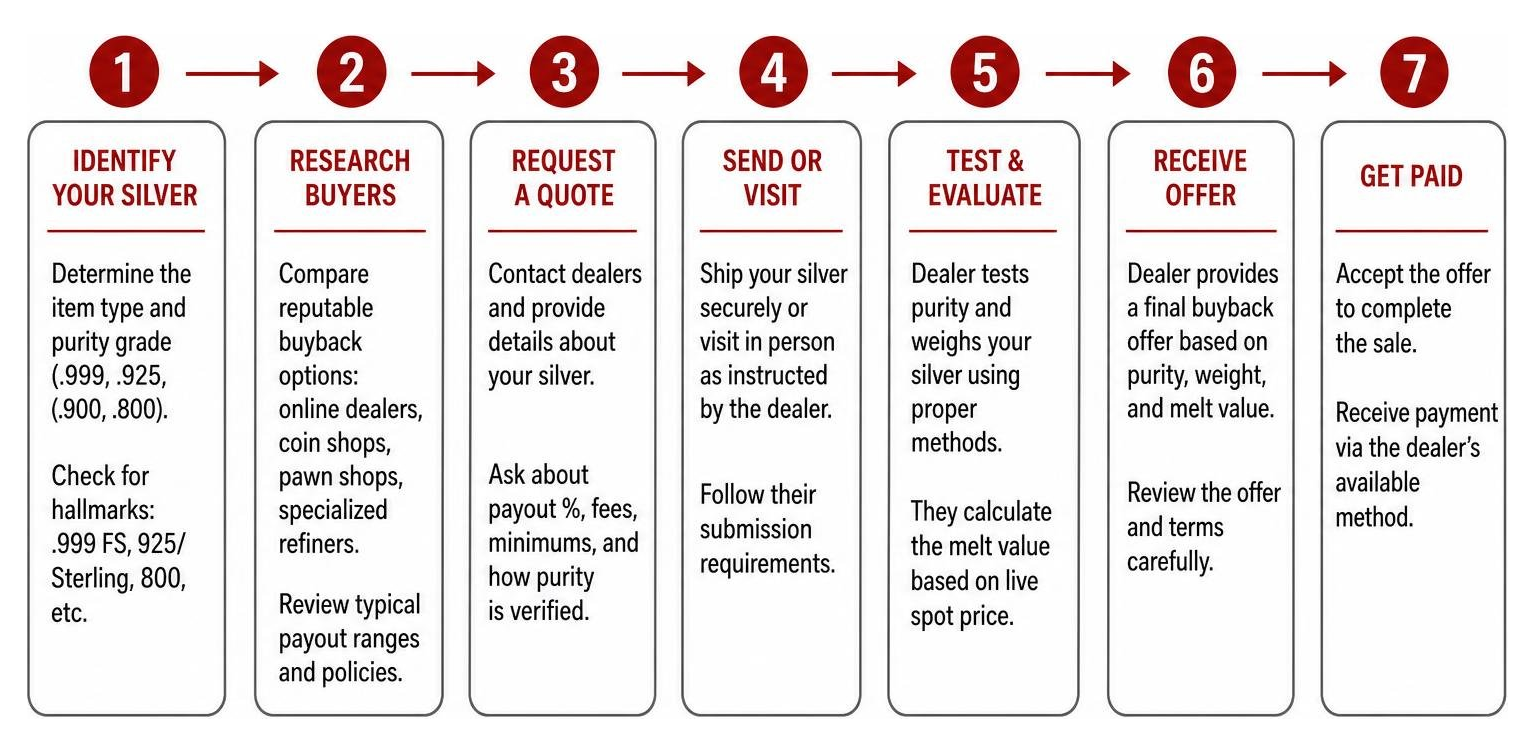
Before committing to a sale, we suggest calling several dealers and asking these key questions:
- Do you have a minimum transaction requirement for silver?
- What are your processing or assaying fees?
- How do you verify the purity of the metal?
- Is your price quote locked in over the phone, or only after you receive the metal?
Minimum Quantities and Transaction Fees
When dealing with major precious metals firms, you must be aware of minimum transaction quantities and potential fees. Because silver has a lower value per ounce than gold, processing small transactions can be economically unfeasible for large dealers.
Many national online dealers enforce a minimum transaction size for buybacks. This limit is often set around 40 troy ounces for silver, or a total transaction value of $1,000 or more. If you attempt to sell an amount below their threshold, the dealer may reject the transaction entirely, or apply a processing fee, often ranging from $25 to $50, which can severely eat into your profits.
Additionally, you must consider the costs associated with shipping and receiving your payment. The standard payment methods offered by dealers include:
- ACH / Direct Deposit: Usually the most cost-effective option. Many dealers offer this service for free, and funds typically arrive in your account within 24 to 48 hours after inspection.
- Bank Wire Transfer: The fastest way to receive funds, but it almost always carries a bank fee, typically around $25 to $30. This is best reserved for larger transactions.
- Paper Check: A traditional option, but some dealers charge a processing or mailing fee, sometimes up to $50, to issue and mail a physical check.
How to Sell Your Silver for the Highest Payout
To secure the absolute highest silver buy back price today, you must be proactive and prepared. Selling physical precious metals is a straightforward process, but simple mistakes in packaging or timing can cost you money.

The first step to a successful sale is locking in your price. Because the silver market is volatile, prices can swing during the time it takes to ship your package. Reputable online dealers allow you to lock in a binding price quote over the phone or through their online portal. Once locked, this price is guaranteed, provided you ship your items promptly, usually within 24 to 48 hours, and they match the description you provided.
When preparing your shipment, follow these industry best practices to ensure your wealth remains protected:
- Double-Box Your Items: Silver is incredibly heavy. Standard shipping boxes can easily burst during transit. Always place your items inside a secure inner box or padded mailer, and then place that inside a sturdy outer shipping box. Fill all empty spaces with packing material so the contents cannot shift or rattle.
- Use Heavy-Duty Tape: Reinforce all seams and edges of both the inner and outer boxes with heavy-duty packaging tape.
- Pack Tubes Securely: If you are shipping coins in plastic tubes, stuff any empty space at the top of the tube with clean cotton balls or tissue paper. This prevents the coins from clashing together and sustaining damage during transit.
- Keep Packaging Discrete: Never write words like “silver,” “gold,” “bullion,” or “precious metals” on the outside of the shipping box. This is an open invitation for theft. Use a generic return address.
- Use Insured, Trackable Shipping: Always ship your package using a carrier that offers full tracking and signature confirmation upon delivery. Ensure you purchase shipping insurance that covers the full replacement value of the metal.
For those who are new to precious metals, taking the time to learn the ropes of physical ownership is incredibly rewarding. You can explore our foundational resources, such as our Beginner’s Guide to Silver Investment, to build your confidence.
How to Get the Best Silver Buy Back Price Today for Your Bullion
If you own investment-grade bullion, you are in an excellent position. Bullion items are highly liquid and universally recognized, making them the easiest products to sell for top dollar. However, different types of bullion command different payout rates.
Sovereign coins, minted by official government mints, command the highest buyback prices. The most popular options include:
- American Silver Eagles: Backed by the United States government, these are the most popular and liquid silver coins in the world. Because of their immense demand, dealers will pay the highest premium for them, often very close to the spot price.
- Canadian Silver Maple Leafs: Minted by the Royal Canadian Mint, these coins are renowned for their .9999 purity and advanced security features. They command excellent buyback rates just slightly below Silver Eagles.
Private rounds and silver bars, while still highly liquid, do not carry the backing of a sovereign government. Consequently, they trade at a lower premium. When selling generic silver bars or rounds, expect to receive a slightly larger discount under the spot price compared to sovereign coins. To see which specific coins and bars are recognized for maximum value and tax-advantaged accounts, review The Definitive List: IRA Approved Silver Coins, Bars and Bullion.
Verifying Authenticity and Value Before Selling
Before you approach a dealer, you should verify the authenticity of your silver at home. This protects you from dishonest buyers and ensures you have an accurate expectation of your shipment’s value.
You can perform several simple, non-destructive tests at home:
- The Magnet Test: Pure silver is non-magnetic. If you place a strong rare-earth magnet, like a neodymium magnet, on your coin or bar, it should not stick. If the magnet clings firmly to the item, it is a counterfeit made of steel or nickel.
- The Weight Test: Use a precise digital scale that measures in grams or troy ounces. A standard troy ounce is exactly 31.1035 grams. If your 1 oz silver coin weighs significantly less or more than this, it is likely a fake.
- The Ring Test: Gently tap your silver coin with another coin or a small wooden tool. Pure silver produces a clear, high-pitched, long-lasting bell-like ring. Base metals produce a dull, short thud.
One of the most important rules of selling silver is to never clean your coins or bullion. Many sellers make the mistake of polishing tarnished silver coins to make them look shiny and new. This is a critical error. Cleaning coins, even with mild soap or a soft cloth, leaves microscopic abrasive scratches on the surface of the metal. This permanently ruins the coin’s original mint luster and can instantly destroy any numismatic or collectible value, reducing a rare coin to mere melt value. Dealers prefer to buy silver in its original, tarnished state.
Tax Implications and Reporting Requirements for Silver Sales
When you sell physical silver, you must be aware of the tax implications and reporting requirements. The sale of precious metals can trigger tax obligations, and the IRS has strict rules regarding which transactions must be reported by the dealer.
First, it is important to understand that the IRS classifies precious metals as “collectibles.” This means that any profits you realize from selling your silver are subject to capital gains tax. The maximum capital gains tax rate for collectibles is 28%, which is higher than the standard long-term capital gains rate applied to stocks or real estate. Your actual tax rate will depend on your income bracket and how long you held the metal before selling.
Second, certain large transactions require the dealer to file an information return, specifically Form 1099-B, with the IRS. For silver, the reporting threshold is set at 1,000 troy ounces in a single transaction of COMEX-approved bars. If you sell 1,000 ounces or more of silver bars in one go, the dealer is legally obligated to report the sale.
However, even if your transaction falls below the 1,000-ounce reporting threshold, you are still legally required to report any capital gains on your personal tax return. The lack of a dealer-filed 1099-B does not exempt you from your personal tax obligations. We always recommend consulting with a certified public accountant or tax professional to ensure you remain fully compliant with federal and state laws.
Why Physical Silver Ownership Beats Paper Silver Assets
In today’s complex financial landscape, many investors are lured into the convenience of paper-based silver assets, such as silver exchange-traded funds, or ETFs, mutual funds, and mining stocks. While these paper instruments are easy to buy and sell on a smartphone app, they carry significant hidden risks that physical silver simply does not.
At American Alternative Assets, we firmly believe that direct physical ownership of precious metals is the superior method for true wealth preservation. When you purchase physical silver bars or coins, you are acquiring a tangible asset with zero counterparty risk. It is your private property, held directly in your possession or in a secure depository. It cannot be hacked, deleted, or devalued by corporate mismanagement.
To understand why physical precious metals are a cornerstore of financial preparedness, you can read our comprehensive guide on Is Silver a Good Investment?.
The Pitfalls of Paper Silver Stocks and ETFs
Paper silver assets are essentially financial contracts. When you buy shares in a silver ETF, you do not own any actual silver. Instead, you own a share of a trust that claims to hold silver in a secured vault. This structure introduces several layers of systemic risk:
- Counterparty Risk: You are entirely dependent on the solvency and honesty of the fund managers, custodians, and sub-custodians. If any link in this financial chain fails, your investment is at risk.
- Lack of Physical Redemption: The vast majority of retail investors cannot redeem their ETF shares for physical metal. You can only liquidate your shares for paper currency.
- Systemic Volatility: Paper silver markets are heavily leveraged. For every ounce of physical silver in existence, there are hundreds of ounces of paper silver traded on exchanges. During a major financial crisis, this paper leverage can collapse, leading to a decoupling where physical silver prices skyrocket while paper ETF prices plummet.
By contrast, holding physical silver within a self-directed Precious Metals IRA offers the perfect balance of tax-advantaged growth and tangible security. A physical silver IRA gives you direct, verified ownership of physical bullion, stored securely in an IRS-approved depository. This setup ensures that your retirement savings are anchored by a real, physical asset, providing unmatched control and peace of mind.
Frequently Asked Questions about Silver Buybacks
What is the difference between sterling silver and silver-plated items?
Sterling silver is a solid alloy containing 92.5% pure silver. It has substantial melt value and is highly sought after by precious metals dealers. Silver-plated items, often marked “EPNS” or “Silver Plate,” consist of a cheap base metal, like copper or brass, coated in an microscopically thin layer of silver. Because the cost of chemically stripping and refining the silver from plated items exceeds the value of the silver recovered, dealers will not buy silver-plated items.
Should I clean my silver coins before selling them to a dealer?
No, you should never clean or polish silver coins. Cleaning coins scratches the delicate surface and strips away the original mint luster, which destroys any numismatic or collectible value. Dealers are fully accustomed to buying tarnished, dirty, or toned silver, and cleaning them will only result in a lower payout offer.
How long does it take to receive payment after selling silver?
Payment timelines vary depending on the dealer and the payment method you choose. For local transactions, you will receive immediate cash or a check. For online dealers, the process typically takes 3 to 5 business days after they receive and inspect your shipment. Once verified, ACH deposits usually arrive in 24 to 48 hours, bank wires are immediate, and paper checks can take several days to arrive in the mail.
Conclusion
Navigating the silver buy back price today does not have to be a daunting task. By understanding how spot prices are calculated, recognizing the purity of your items, and partnering with transparent, reputable dealers, you can confidently convert your physical silver into liquid wealth at a fair rate.
At American Alternative Assets, based in Woodland Hills, California, we specialize in helping clients protect their hard-earned wealth through physical precious metals. Our white-glove, relationship-first service is built on trust, transparency, and ethical practices. We believe in providing real privacy and protection for your retirement.
Whether you are looking to liquidate a portion of your silver holdings or secure your future by establishing a physical Precious Metals IRA, we are here to guide you every step of the way. If you are ready to take control of your financial future, we invite you to explore our services and Buy Gold and Silver today.
This article is for informational purposes only and does not constitute financial advice. Please consult your financial advisor before making investment decisions.
Investing in precious metals involves risk. Past performance does not guarantee future results.