








Is a Self-Directed IRA Right for You? Here’s What You Need to Know First
A self directed IRA (SDIRA) is a retirement account that lets you invest in assets beyond volatile paper assets like stocks, bonds, and mutual funds, allowing you to hold physical precious metals like gold and silver while keeping the same tax advantages as a standard IRA.
Quick answer for those comparing options:
- What it is: An IRA where you choose the investments, not a brokerage
- Who holds it: A specialized custodian (not a bank or broker-dealer)
- What you can hold: Physical gold, silver, and other approved alternative assets
- What’s off-limits: Life insurance, collectibles, and transactions with disqualified persons
- Tax treatment: Same as traditional or Roth IRAs, depending on account type
- 2026 contribution limit: $7,500 (under 50) or $8,600 (age 50+)
Most Americans keep their retirement savings in conventional accounts tied to the stock market. That works fine until it doesn’t. Market swings, inflation, and systemic financial risk can quietly erode decades of savings, especially when everything is concentrated in paper assets.
A self-directed IRA opens the door to something different. It gives you the ability to hold tangible assets, like physical gold and silver, inside a tax-advantaged retirement account. That combination of real, physical ownership and IRS-recognized tax benefits is what makes this account structure worth understanding carefully.
I’m Shanon Davis, and my background spans venture capital and a lifelong belief in the value of holding real, physical assets, a perspective that shapes everything I do at American Alternative Assets and informs how I approach the self directed IRA landscape. In the sections ahead, I’ll walk you through exactly how these accounts work, what the rules are, and how to choose the right custodian for your goals.
This article is for informational purposes only and does not constitute financial advice. Please consult your financial advisor before making investment decisions. Investing in precious metals involves risk. Past performance does not guarantee future results.
Terms related to self directed IRA:
What is a Self-Directed Retirement Account?
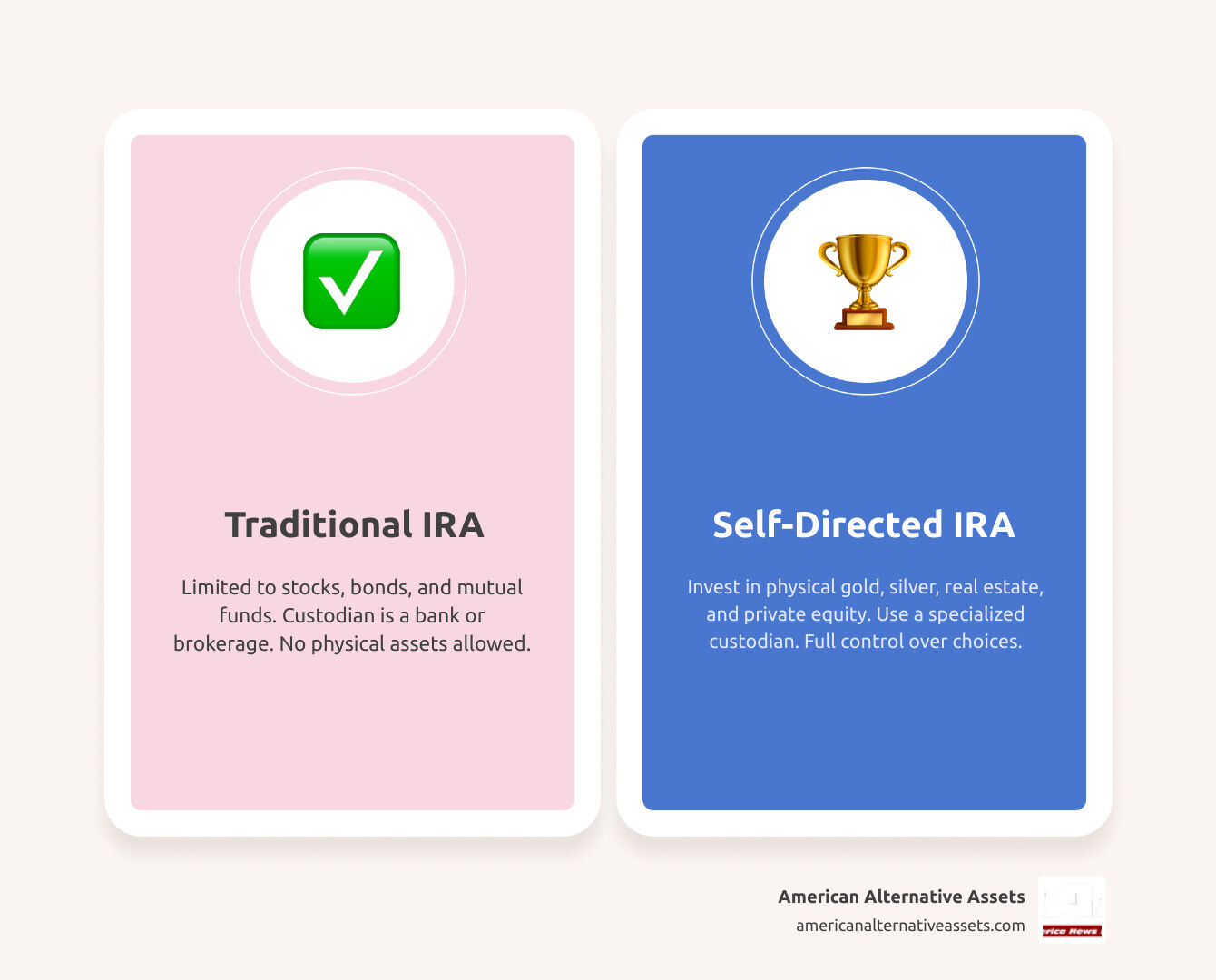
At its core, a self-directed retirement account is not a completely different tax classification. Instead, it is a structural variation of the retirement plans you already know. The primary difference lies in who holds the keys to the investment decisions.
In a conventional IRA, a large financial institution acts as the custodian and limits your choices to the paper-based products they sell, such as mutual funds, stocks, and exchange-traded funds. With a self directed IRA, you partner with a specialized, passive custodian. This custodian does not sell investment products or offer financial advice. Their sole job is to provide the administrative framework that allows you to invest in alternative assets.
For those looking to diversify, this structure is particularly valuable because it allows you to hold physical precious metals, such as physical gold and silver coins, directly within your retirement portfolio. This offers a level of wealth protection that paper assets simply cannot match. To see how these accounts fit into the broader financial landscape, you can explore the various Types of Retirement Accounts available to investors today.
Learning What is a Self Directed IRA is the first step toward taking personal responsibility for your financial future. It shifts the control from Wall Street fund managers directly back to you.
Traditional vs. Roth SDIRA Structures
Just like conventional retirement accounts, self-directed IRAs come in different tax structures to suit your financial planning goals. The two most common options are the Traditional SDIRA and the Roth SDIRA.
With a Traditional SDIRA, you make pre-tax contributions. This can lower your taxable income in the year you contribute. Your investments then enjoy tax-deferred growth, meaning you do not pay taxes on any gains until you begin taking distributions in retirement.
A Roth SDIRA, on the other hand, is funded with after-tax dollars. While you do not get an immediate tax break, your investments grow entirely tax-free. When you reach retirement age, all qualified withdrawals are completely tax-free. For a deeper look at how these structures operate under different custodian models, you can read more about Self-Directed IRA (SDIRA): How It Works and Where to Open One .
Why Physical Precious Metals Outperform Paper Assets
When many investors think about adding gold or silver to their retirement portfolios, they are often steered toward paper-based alternatives. These include gold mining stocks, mutual funds, or exchange-traded funds (ETFs). However, paper assets carry distinct vulnerabilities that do not exist with physical precious metals.
Paper gold is essentially a digital promise. When you buy a gold ETF, you do not own the underlying metal. You own a share in a trust that tracks the price of gold. This exposes your retirement savings to counterparty risk, systemic risk, and market volatility. If the fund manager makes poor decisions, or if the financial institution holding the paper asset faces liquidity issues, your investment can suffer. Furthermore, paper assets are chipped away over time by fund manager fees and administrative expenses.
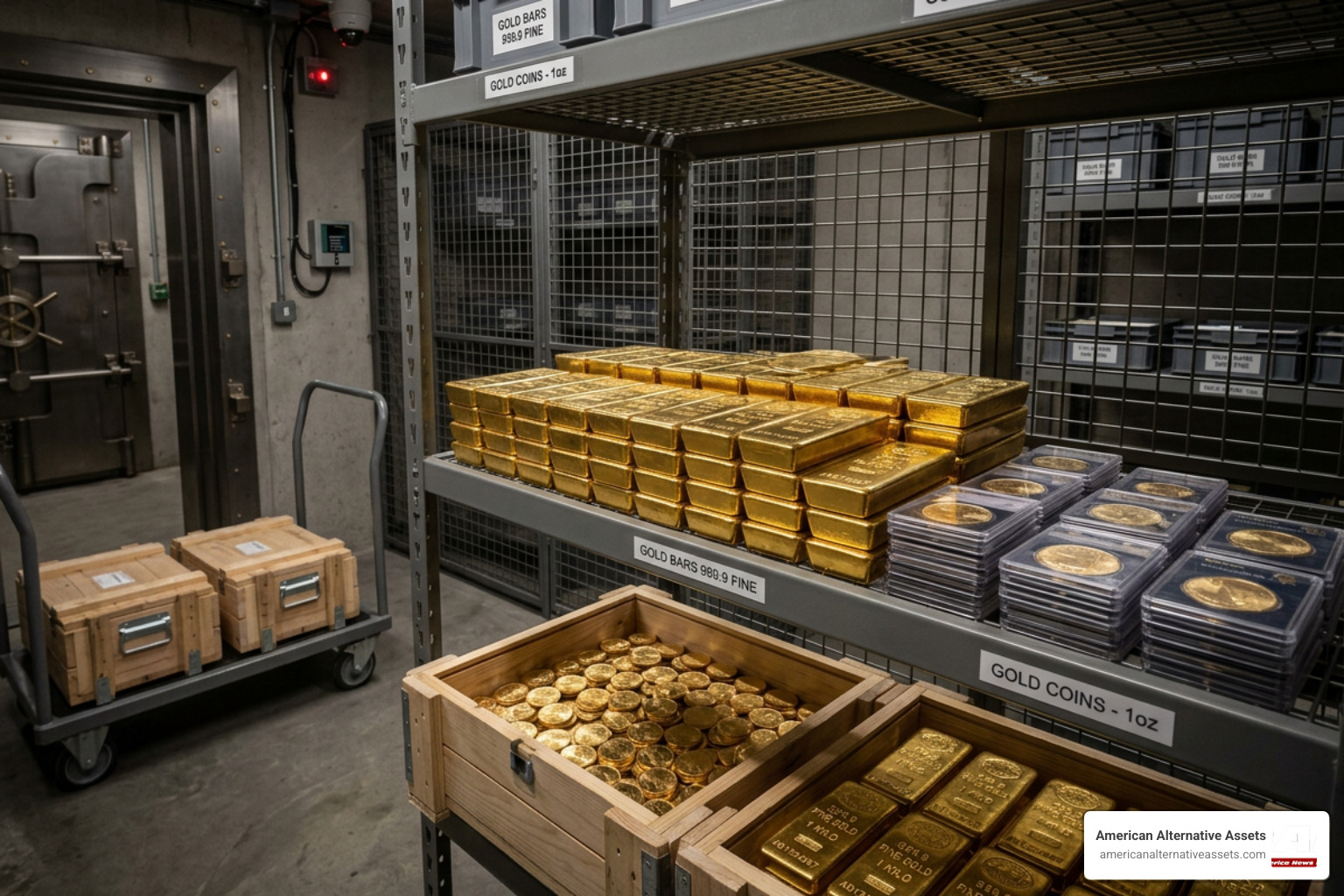
Physical gold bars and silver coins, by contrast, carry no counterparty risk. They are tangible, hold intrinsic value, and cannot be printed out of thin air by central banks. Physical precious metals have served as a reliable inflation hedge and a store of purchasing power for centuries. By holding physical metals in a self directed IRA, you remove the middleman and protect your hard-earned wealth from the fluctuations of the traditional banking system. To learn more about this approach, you can read about how to Discover the Power of a Self Directed Precious Metals IRA Today.
Understanding the Rules of a Self Directed IRA
While a self directed IRA offers unparalleled freedom, it is not a financial free-for-all. The IRS maintains strict regulations to ensure these accounts are used strictly for retirement wealth preservation.
The IRS does not actually publish a list of approved investments. Instead, they list what is prohibited. For example, you cannot use your IRA to invest in life insurance contracts or collectibles. Collectibles include items like artwork, antiques, gems, stamps, and certain non-approved coins. To keep your account compliant and avoid severe tax penalties, it is crucial to understand these boundaries. You can review a comprehensive breakdown of these guidelines in the guide to Self Directed IRA in 2026: Benefits, Fees & FAQs | The Entrust Group .
Disqualified Persons and Self-Dealing
The core rule of self-directed investing is that your retirement account must be an independent entity. It cannot engage in transactions that provide an immediate, personal benefit to you or your family members today. Doing so is known as self-dealing.
The IRS defines “disqualified persons” to include:
- Yourself (the account owner)
- Your spouse
- Your lineal descendants (children, grandchildren)
- Your lineal ancestors (parents, grandparents)
- Any entities or businesses where you hold a controlling interest
This means your self directed IRA cannot buy property from you, sell assets to your children, or use IRA funds to pay for repairs on a personal use property. All transactions must be strictly at arm’s length to maintain the tax-advantaged status of the account.
Approved Purity Standards for Physical Metals
If you choose to invest in physical precious metals, you must ensure the assets meet strict IRS purity standards. You cannot simply buy any gold or silver coin and put it in your retirement account.
The minimum purity requirements are:
- Gold: 99.5% purity (with the sole exception of the American Gold Eagle coin)
- Silver: 99.9% purity
- Platinum: 99.95% purity
- Palladium: 99.95% purity
Additionally, the IRS requires that these physical metals be stored in an approved depository. You cannot hold your IRA-eligible precious metals in a safe at home or in a local bank safety deposit box. They must be kept in a secure storage facility that meets federal standards.
Tax Advantages of a Precious Metals Self Directed IRA
Holding physical gold and silver coins inside a self-directed account allows your wealth preservation strategy to grow in a protected tax environment. Whether you utilize tax-deferred growth in a Traditional account or tax-free growth in a Roth account, you can insulate your savings from capital gains taxes as the value of your metals rises. This makes physical precious metals a highly effective tool for long-term wealth preservation. For step-by-step instructions on setting up this type of account, check out our article on How to Invest in Precious Metals with a Self Directed IRA.
How to Choose a Self-Directed Custodian
Because self-directed custodians are passive, they do not evaluate the quality of your investments. Their role is strictly administrative, focusing on recordkeeping, filing tax documents, and executing transactions based on your written direction.

This makes choosing the right custodian a vital step. You want a partner who is efficient, transparent, and experienced in handling alternative assets. To avoid unexpected costs that can erode your retirement savings, we highly recommend reviewing our Self Directed IRA Custodian Fee Comparison.
Key Factors in Selecting a Custodian
When evaluating self-directed custodians, consider these key factors:
- Reputation and Experience: Look for established institutions with a clean regulatory track record. For instance, firms like IRA Resources Celebrates 30 Years of Leadership in Self-Directed … demonstrate the value of long-term industry experience.
- Customer Service: Since you are managing your own investments, you need a custodian that answers the phone and processes transactions quickly.
- Storage Partnerships: For precious metals, ensure the custodian works with highly secure, reputable, IRS-approved depositories.
- Regional Availability: If you live in California, working with a custodian familiar with state-specific tax rules is highly beneficial. You can learn more about regional guidelines through resources on the California Self-Directed IRA and by researching specialized options like a Self-Directed IRA Custodian for Real Estate & LLCs | IRAR Trust . If you are located near our office in Woodland Hills CA, you might also consider consulting local financial planning resources, such as those offering a Rollover IRA | Woodland Hills, CA – Providence Financial , to ensure your transition is handled smoothly.
How to Open a Self Directed IRA for Precious Metals
Setting up your account is a straightforward process when you work with the right team. It generally involves three main steps: opening the account with an approved custodian, funding it through a transfer or rollover, and directing the purchase of your chosen physical metals.
For small business owners or self-employed individuals looking to maximize their contributions, a Solo 401(k) | Directed IRA can also be structured to hold physical precious metals, offering even higher annual contribution limits.
To help you decide which account structure fits your goals, here is a comparison of the key features of Traditional and Roth Precious Metals SDIRAs:
| Feature | Traditional Precious Metals SDIRA | Roth Precious Metals SDIRA |
|---|---|---|
| Funding Source | Pre-tax dollars | After-tax dollars |
| Tax Treatment | Tax-deferred growth | Tax-free growth |
| Withdrawal Taxation | Taxed as ordinary income | Tax-free qualified withdrawals |
| Required Minimum Distributions (RMDs) | Required starting at age 73 | No RMDs during the owner’s lifetime |
| Contribution Limits (2026) | $7,500 ($8,600 if age 50+) | $7,500 ($8,600 if age 50+) |
Frequently Asked Questions about SDIRAs
Can I store my physical gold at home?
No. The IRS strictly prohibits home storage for precious metals held within an IRA. Your gold and silver must be held in an IRS-approved depository. Attempting to store your IRA metals at home can be classified as an immediate taxable distribution, exposing you to severe tax penalties and potential audit consequences.
How do I roll over an existing retirement account into a Precious Metals IRA?
You can fund your new account through a direct rollover or a trustee-to-trustee transfer from an existing Traditional IRA, Roth IRA, 401(k), 403(b), or TSP. When done correctly, this is a tax-free and penalty-free transfer. A direct transfer moves the funds directly between the financial institutions, ensuring you never personally touch the money and avoiding any tax complications.
What are the contribution limits for 2026?
For the 2026 tax year, the annual contribution limit for a Traditional or Roth self directed IRA is $7,500 if you are under the age of 50. If you are age 50 or older, you can make an additional catch-up contribution of $1,100, bringing your total annual limit to $8,600. For business owners utilizing a SIMPLE SDIRA, the limit is $17,000 with a $4,000 catch-up, while a SEP SDIRA allows contributions of up to $72,000 or 25% of net earnings.
Conclusion
A self directed IRA is a powerful financial vehicle that allows you to step outside the limitations of traditional paper investments. By giving you the freedom to hold real, physical assets like gold and silver, it provides a practical path to long-term wealth preservation.
At American Alternative Assets, we believe in a white-glove, relationship-first approach. Based in Woodland Hills CA, California USA, we focus on trust, transparency, and ethical practices. We work closely with you to ensure your transition to a physical precious metals account is simple, clear, and perfectly aligned with your retirement goals.
If you are ready to take control of your financial future and build a foundation of tangible security, we invite you to Secure your retirement with a physical Gold IRA today.
This article is for informational purposes only and does not constitute financial advice. Please consult your financial advisor before making investment decisions. Investing in precious metals involves risk. Past performance does not guarantee future results.