







Why Knowing How to Diversify Your IRA Could Be the Most Important Retirement Decision You Make
How to diversify an IRA comes down to spreading your retirement savings across different types of assets so that no single market event can devastate your entire portfolio.
Here is a quick overview of the core steps:
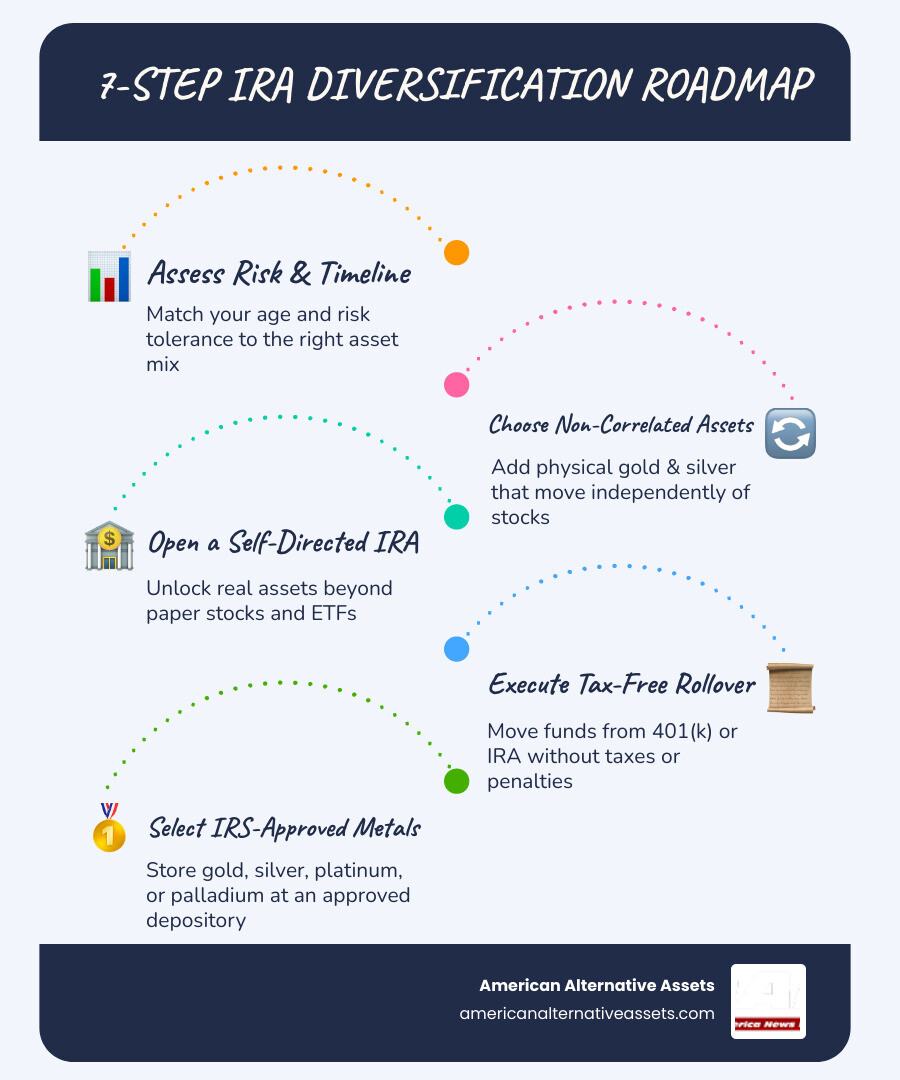
- Assess your risk tolerance and retirement timeline . Younger investors can typically take on more risk; those closer to retirement generally cannot.
- Choose asset classes that don’t move together . When stocks fall, assets like physical gold have historically held or gained value.
- Open a Self-Directed IRA (SDIRA) . This unlocks access to physical precious metals beyond the paper assets offered in standard IRAs.
- Execute a tax-free rollover . Move existing 401(k) or IRA funds into your SDIRA without triggering taxes or penalties.
- Select IRS-approved physical metals . Gold, silver, platinum, and palladium meeting IRS purity standards can be held inside your SDIRA.
- Store metals at an approved depository . IRS rules require physical metals to be held by a qualified custodian, not at home.
- Rebalance periodically . Review your allocation at least once a year to make sure it still matches your goals.
Most retirement savers have been told that owning a mix of stocks, bonds, and mutual funds is enough. But when markets fall hard, as they did in 2008 and 2020, those assets often drop together. True diversification means holding assets that respond differently to the same economic pressures.
That is exactly the problem this guide is designed to solve. While paper-based assets dominate most IRAs by default, physical precious metals offer something different: tangible, real-world value that doesn’t depend on any company’s earnings report or a central bank’s next decision.
My name is Shanon Davis, and after watching the 2008 financial crisis unravel paper-based retirement accounts during my years in venture capital, I built American Alternative Assets around one core belief: how to diversify an IRA should always include assets you can actually hold. Read on for a complete, step-by-step breakdown of how to do exactly that.
This article is for informational purposes only and does not constitute financial advice. Please consult your financial advisor before making investment decisions.
Investing in precious metals involves risk. Past performance does not guarantee future results.
How to diversify IRA definitions:
What Does It Mean to Diversify an IRA?
When we talk about portfolio balance, we are talking about creating a safety net for your hard-earned savings. For decades, traditional financial institutions have defined diversification in a very narrow way. They tell you to buy a mix of large-cap stocks, small-cap stocks, and international mutual funds. However, when a major economic shock wave hits, these assets often react in unison because they are all tied to the same paper-based financial system.
True diversification is about correlation, or rather, the lack of it. It means holding different asset classes that do not move in the same direction at the same time. When the stock market experiences severe volatility, you want assets in your portfolio that have historically held their ground or even increased in value. This is the cornerstone of risk mitigation.
For a long time, the classic 60/40 portfolio, consisting of 60 percent stocks and 40 percent bonds, was considered the gold standard of safety. But as we have seen in recent volatile market cycles, bonds do not always provide the cushion they used to. To build a resilient retirement account, we must look Beyond the Basics: Smart Ways to Diversify Your Portfolio for Long-Term Growth and explore how to incorporate non-correlated, tangible assets.
By learning How to Diversify Your IRA with Physical Precious Metals, you can introduce a powerful stabilizer into your retirement plan. Unlike paper assets, physical gold and silver possess inherent, tangible value that cannot be inflated away by governments or erased by corporate bankruptcies.
Why Traditional Assets Fail to Provide True IRA Diversification
To understand why traditional portfolios are vulnerable, we have to look at what actually happens during market downturns. Many investors believe they are diversified because they own three or four different mutual funds. In reality, those funds often own the exact same underlying tech and financial stocks. This creates a dangerous illusion of safety.
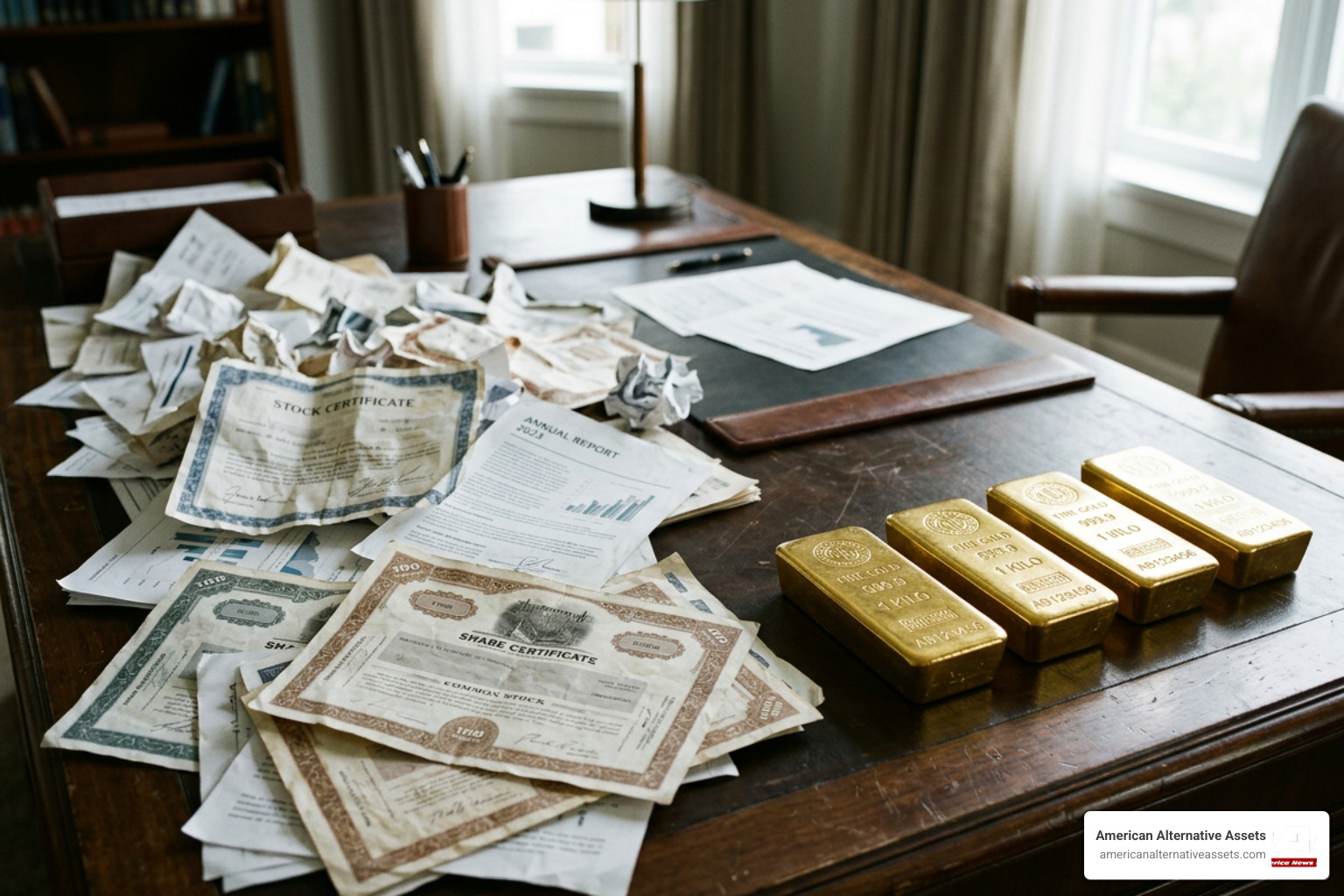
The table below illustrates the stark contrast between traditional paper-based assets and physical precious metals:
| Feature | Traditional Paper Assets (Stocks, Bonds, ETFs) | Physical Precious Metals (Gold & Silver Bullion) |
|---|---|---|
| Asset Type | Paper contracts and digital entries | Tangible physical commodity |
| Counterparty Risk | High. Depends on corporate and bank solvency | None. You own the physical metal |
| Inflation Response | Often negative. Purchasing power declines | Historically positive. Acts as a wealth store |
| Market Correlation | Strongly correlated with traditional market cycles | Low correlation. Often rises when paper markets fall |
| Systemic Vulnerability | Susceptible to cyber threats, trading halts, and bank failures | Immune to digital disruptions and systemic financial collapses |
Traditional Paper Assets and Their Limitations
When you buy stocks, mutual funds, or paper ETFs, you do not own anything tangible. You own a digital promise. This means your retirement is heavily exposed to counterparty risk. If the brokerage firm, the fund manager, or the underlying corporations face financial ruin, your investment can suffer catastrophic losses.
Even index funds that track the S&P 500, which are often mistakenly promoted as safe options, expose you to broad systemic risks. During the 2008 financial crisis, the S&P 500 lost approximately 37 percent of its value. For those close to retirement, recovering from a hit of that magnitude can take a decade or more.
Furthermore, paper gold ETFs and mining stocks are often mistaken for safe havens. In reality, paper gold products are highly correlated with general stock market liquidity. During market crashes, institutional investors often sell their gold ETFs to cover margin calls on their stock losses, causing the price of paper gold to drop even when physical demand is soaring. To truly secure your nest egg, you must understand the mechanics of How to Invest Your IRA using physical assets rather than digital representations.
Why Learning How to Diversify IRA Assets with Physical Gold is Crucial
Physical gold and silver bullion have served as ultimate stores of value for thousands of years. They do not rely on a financial institution’s promise to pay, nor do they require a functioning digital grid to maintain their worth. This makes physical precious metals a premier inflation hedge and a reliable vehicle for long-term wealth preservation.
Consider the historical data. From 1926 to 2024, a hypothetical portfolio allocated entirely to stocks experienced extreme, devastating price swings that wiped out wealth overnight. Introducing non-correlated physical assets is the only way to smooth out these volatile cycles and protect your principal. During the 2008 financial crisis, while paper markets were collapsing, physical gold actually gained 25 percent. It acted exactly as portfolio insurance should.
By placing a portion of your retirement savings in physical gold, you are creating a buffer against currency devaluation. Since the creation of the Federal Reserve in 1913, the US dollar has lost over 97 percent of its purchasing power, while physical gold has historically climbed to reflect that loss of value. Including Gold in Your Retirement Portfolio is not about short-term speculation. It is about protecting your hard-earned purchasing power so that your lifestyle in retirement is fully secured.
Step-by-Step Guide to Precious Metals Diversification
Securing your retirement with physical gold and silver is a straightforward process when you work with the right partner. At American Alternative Assets, based in Woodland Hills, California, we specialize in helping clients navigate this transition with our white-glove, relationship-first service.
To get started, you will need to establish a Self-Directed IRA (SDIRA). This specialized retirement account gives you the freedom to hold alternative assets that traditional brokerages do not support. You can read more about how this works by exploring our guide, Discover the Power of a Self-Directed Precious Metals IRA Today.
Practical Steps on How to Diversify IRA Holdings with Precious Metals
Before executing any transfers, it is vital to assess your personal financial landscape. Your ideal asset mix depends heavily on your age, your risk tolerance, and your retirement timeline.
While younger investors with a longer time horizon might allocate a smaller percentage to protective assets, those nearing retirement often choose to allocate 10 percent to 20 percent of their portfolio to physical precious metals. This helps insulate their accumulated wealth from sudden market downturns right when they need it most.
Step 1: Set Up a Self-Directed IRA
The first step is selecting a qualified, IRS-approved SDIRA custodian. Traditional banks and brokerage firms generally do not offer self-directed accounts because they make their money selling proprietary paper mutual funds.
A specialized custodian will handle the administrative reporting required by the IRS while allowing you to direct your funds into physical precious metals. To learn how these accounts protect your financial privacy, read our article on Understanding Self-Directed IRAs for Asset Protection.
Step 2: Execute a Tax-Free Rollover
Once your self-directed account is open, you can fund it by rolling over assets from an existing traditional IRA, Roth IRA, 401(k), 403(b), or TSP.
To avoid taxes and penalties, we always recommend utilizing a direct, trustee-to-trustee transfer. In this process, the funds move directly from your current custodian to your new SDIRA custodian. It is completely tax-free and complies fully with IRS guidelines. For a detailed walkthrough of this process, see our guide, The Great IRA Transformation: A Step-by-Step Guide to Precious Metals Rollovers.
Step 3: Select and Store Your Physical Metals
With your account funded, you can now select your physical gold, silver, platinum, or palladium. The IRS maintains strict purity standards for precious metals held in an SDIRA:
- Gold must be at least 99.5 percent pure (with the exception of the American Gold Eagle coin).
- Silver must be at least 99.9 percent pure.
- Platinum and palladium must be at least 99.95 percent pure.
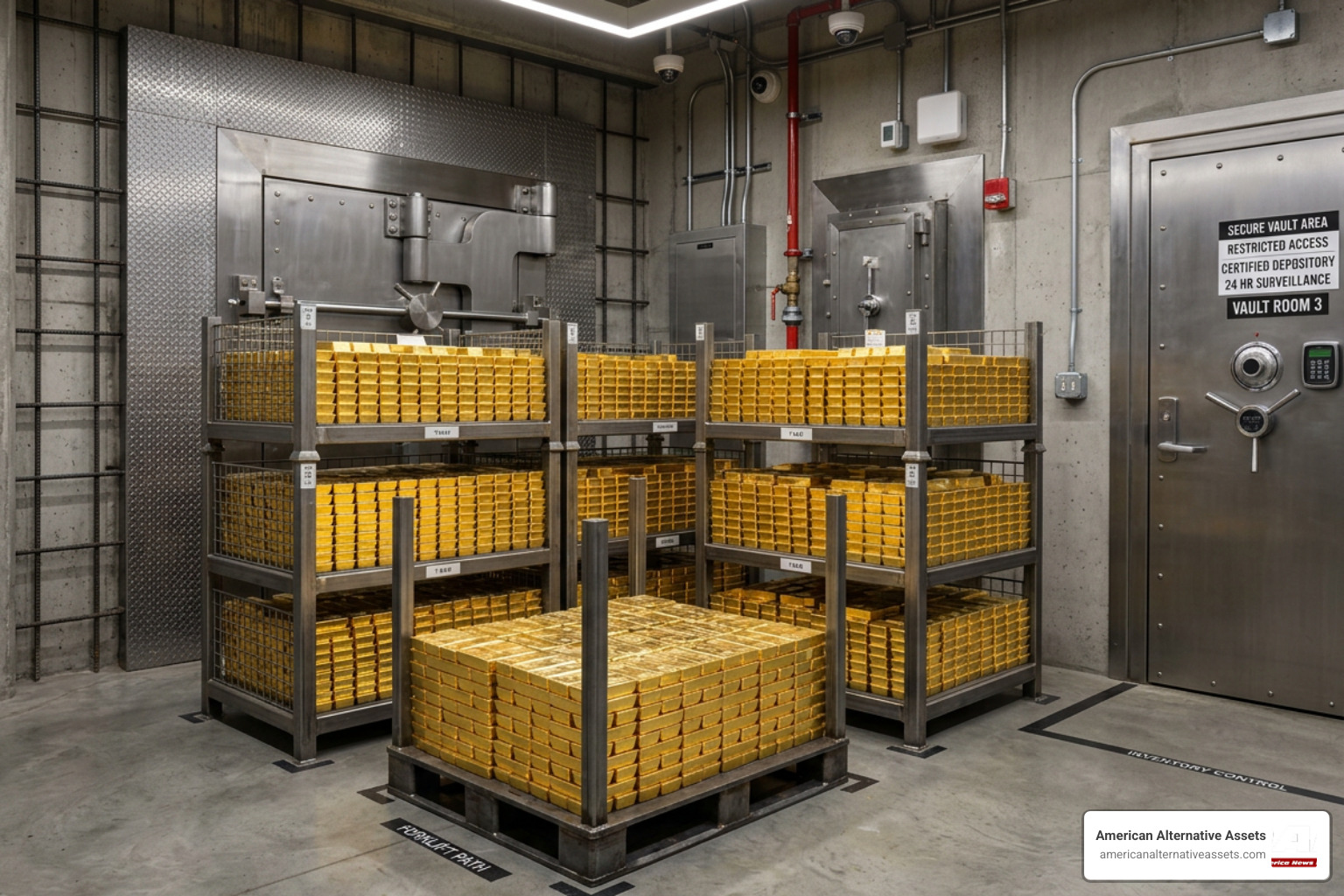
Once purchased, IRS regulations dictate that the physical metals must be stored in an IRS-approved, secure depository. Home storage of IRA-owned precious metals is strictly illegal and can result in severe tax penalties. Your custodian will arrange for secure, insured transit to a state-of-the-art depository where your physical wealth is safely stored. For more details on compliant storage options, consult our Precious Metals Retirement Account Complete Guide.
Managing Your Diversified IRA Over Time
Diversifying your retirement account is not a set-it-and-forget-it task. Over time, different asset classes grow at different rates. If left unchecked, your portfolio can drift away from your original target allocation, exposing you to unintended risks.
For example, during a prolonged stock market boom, the paper portion of your portfolio might grow to represent 85 percent of your total wealth, even if your target was 70 percent. This means you are now far more vulnerable to a market crash than you intended to be. Without regular rebalancing, a hypothetical portfolio tracked from 2000 to 2020 saw its stock allocation grow significantly, which dramatically increased overall portfolio risk right before major market corrections.
We recommend reviewing your asset allocation at least once a year, or whenever major life events occur. Rebalancing allows you to systematically reduce your exposure to volatile paper markets and lock in those values by reinvesting them into protective physical assets. This disciplined approach removes emotion from investing and helps you maintain your target risk level over a long-term horizon. For advanced strategies on maintaining this balance, you can refer to our resources on Long-Term Wealth Protection Strategies.
Frequently Asked Questions About IRA Diversification
Can I hold physical gold and silver in a standard IRA?
No. Standard IRAs offered by traditional banks and online brokerage firms are designed to hold only paper assets like stocks, bonds, mutual funds, and ETFs. To hold physical gold and silver, you must open a Self-Directed IRA through a specialized custodian who supports physical precious metals.
What are the rules for rolling over an existing 401(k) into a Precious Metals IRA?
You can roll over an existing 401(k) into a Precious Metals IRA without taxes or penalties, provided you follow IRS guidelines. If you are still employed with the company sponsoring your 401(k), you may need to check if they allow an “in-service distribution.” If you have left the employer, you can easily execute a direct, trustee-to-trustee transfer to your new Self-Directed IRA.
How does physical gold help protect retirement savings compared to gold ETFs?
Physical gold carries zero counterparty risk because you own the actual, tangible metal secured in a depository. Gold ETFs, on the other hand, are paper contracts traded on Wall Street. They are subject to fund management fees, tracking errors, and systemic brokerage failures. During a severe financial crisis, paper gold contracts may not be fully backed by physical metal, leaving paper investors vulnerable.
Conclusion
Learning how to diversify IRA holdings is one of the most proactive steps you can take to protect your retirement. Relying solely on a basket of stocks, bonds, and mutual funds leaves your hard-earned savings entirely at the mercy of the traditional financial system. By introducing physical gold and silver into a Self-Directed IRA, you build a resilient foundation of tangible wealth that is insulated from market volatility, inflation, and systemic failures.
At American Alternative Assets, we believe in a relationship-first approach. From our offices in Woodland Hills, California, we provide our clients with white-glove service built on absolute transparency, trust, and ethical standards. We focus on educating and empowering you to make the best decisions for your financial legacy.
If you are ready to take control of your retirement and protect your wealth with the timeless security of physical precious metals, we are here to help. You can start your journey today by visiting our portal to Buy Gold and Silver and speaking with one of our dedicated wealth preservation specialists.
This article is for informational purposes only and does not constitute financial advice. Please consult your financial advisor before making investment decisions.
Investing in precious metals involves risk. Past performance does not guarantee future results.