







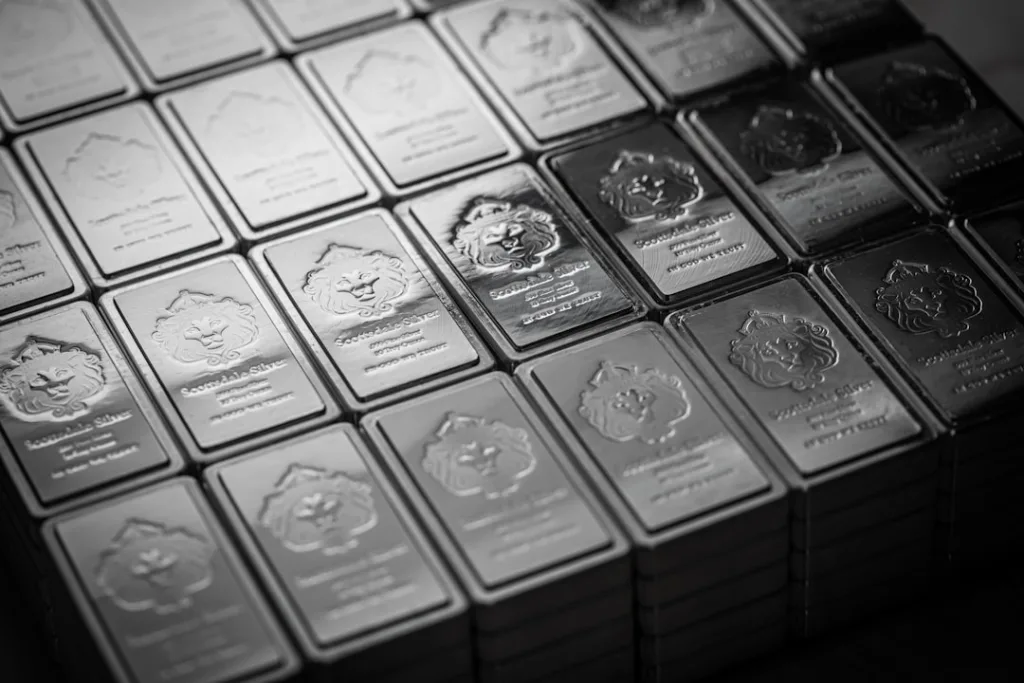
Why Understanding 10 oz Silver Bullion Pricing Matters
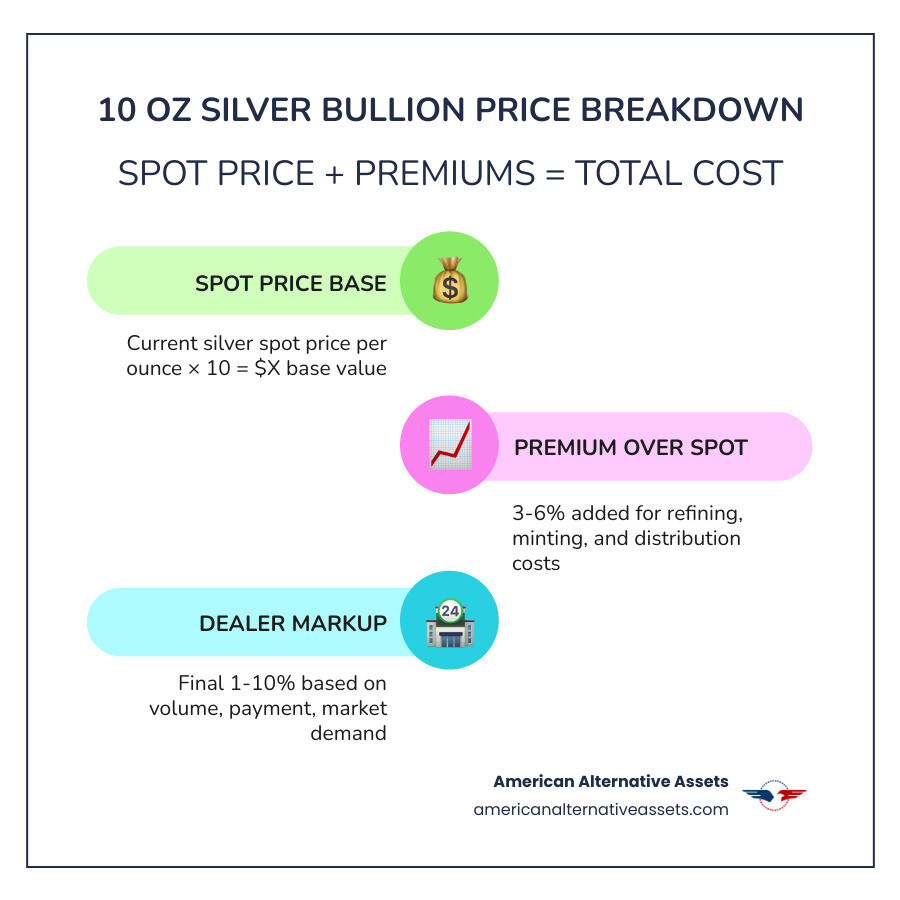
10 oz silver bullion price varies based on several key factors, and knowing what drives the cost helps you make informed decisions. Here is what determines what you will actually pay for physical silver:
Key Components of 10 oz Silver Bullion Pricing:
- Silver spot price, The current market value per troy ounce (multiply by 10 for base value)
- Premium over spot, Typically 3% to 6% for many 10 oz bars (often lower than 1 oz products)
- Mint or refiner, Government mints like Royal Canadian Mint vs. private refiners
- Product condition, New, secondary market, or vintage bars
- Dealer markup, Varies by dealer, payment method, and purchase volume
- Market conditions, Premiums can rise during high demand or supply constraints
Current Market Context: 10 oz silver bars from reputable sources typically range from the spot price multiplied by 10, plus premiums that can vary based on the product and dealer.
At American Alternative Assets, our focus is physical precious metals, especially silver and gold coins and bars held directly or inside a Precious Metals IRA. The 10 oz silver bar sits in a practical sweet spot for many buyers. It is affordable enough for regular purchases, yet substantial enough to often carry lower premiums than smaller denominations.
Unlike paper-based silver products that rely on financial counterparties, physical bullion is a tangible asset you can own outright. Understanding how pricing works helps you compare products, evaluate premiums, and stay focused on what matters most, acquiring verified physical metal at a fair, transparent price.
How the 10 oz Silver Bullion Price is Determined
When you look at a live ticker for silver, you are seeing the “spot price.” This is the foundation of the 10 oz silver bullion price, but it is rarely the price you pay for a physical bar. Spot is a global reference price, not a retail price for fabricated bullion.
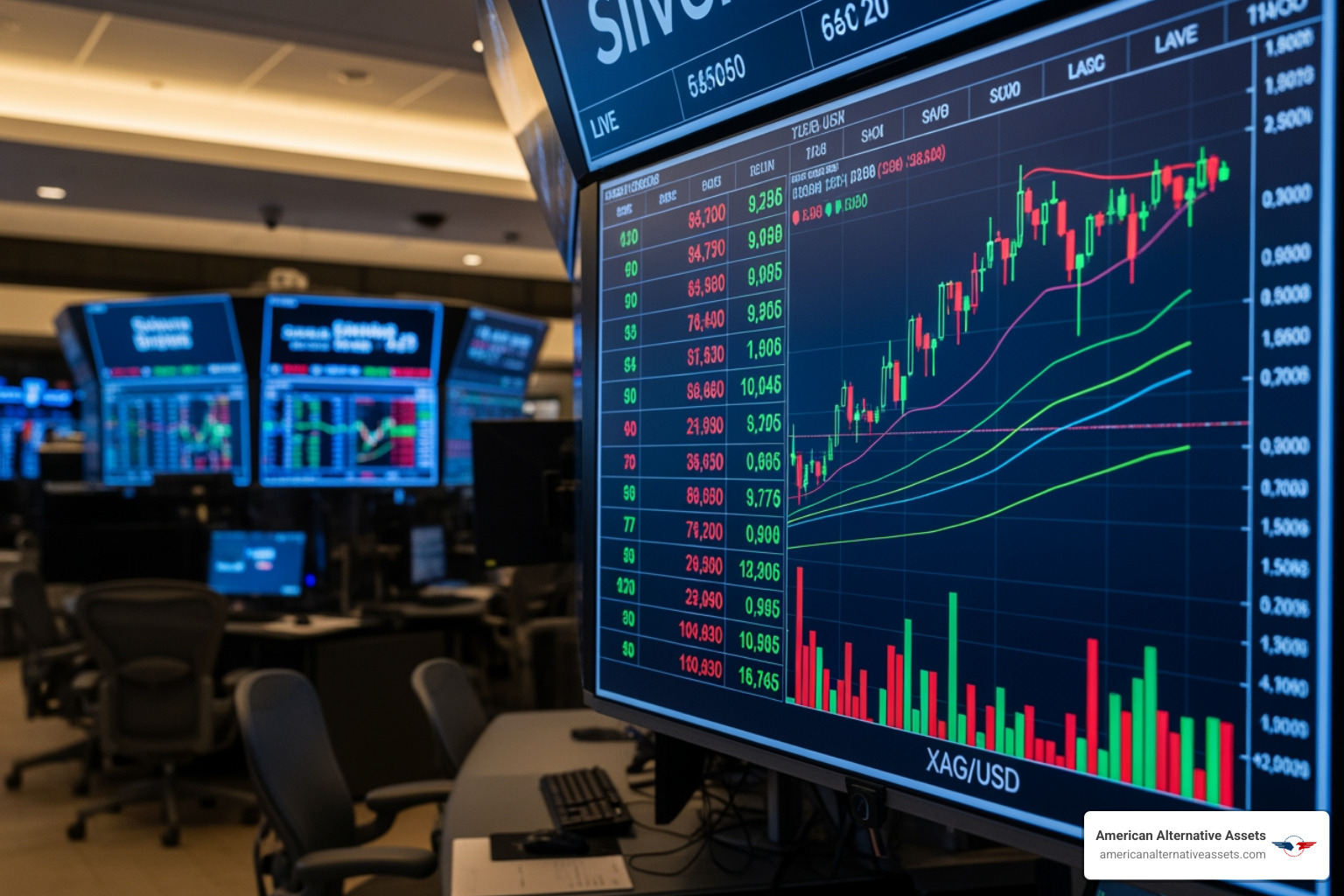
The global spot price is influenced by large-scale trading on major exchanges. The COMEX (Commodity Exchange) in the United States is one of the most influential futures markets for price discovery. The LBMA (London Bullion Market Association) also sets a daily reference price widely used across the bullion trade.
It is important to understand the difference between paper claims tied to silver prices and physical silver you can own. Paper-based products can add layers of counterparty exposure because your position depends on financial intermediaries and market plumbing. Physical silver bullion is different. It is a tangible asset with no reliance on an issuer to remain solvent or a fund structure to function as expected.
When you buy a 10 oz bar, the dealer typically looks at the “ask” price (the price at which they sell) and the “bid” price (the price at which they buy back). This bid-ask spread, combined with the physical premium, determines your final cost. At American Alternative Assets, we focus on helping clients understand and acquire physical bullion, including within a Precious Metals IRA, with clear pricing and product standards. For a deeper look at how physical bullion fits into a long-term strategy, you can read more about Silver Bullion Investment.
Calculating Total Cost
To estimate what a 10 oz bar should cost, start with the troy ounce. Precious metals use troy ounces, which are slightly heavier than standard ounces. One troy ounce is about 31.1 grams.
A simple way to think about pricing is: (Spot Price x 10) + Premium.
The premium reflects fabrication, distribution, dealer operations, and assaying that confirms your bar meets purity standards. One advantage of the 10 oz size is efficiency. It generally costs less to produce one 10 oz bar than ten separate 1 oz products, and that often shows up as lower premiums.
| Product Size | Typical Premium Range | Notes |
|---|---|---|
| 1 oz Silver Round/Bar | Often higher | Smaller units tend to cost more per ounce |
| 10 oz Silver Bar | Often moderate | Common balance of liquidity and premium |
| 100 oz Silver Bar | Often lower | Can have lower per-ounce premiums but is less flexible |
Why Physical Silver Can Be Different From Paper Pricing
Spot prices can move quickly and reflect trading activity, not always real-time availability of fabricated bars. During periods of heavy demand, physical premiums can rise even if spot is flat. This is one reason many long-term holders prefer owning physical bullion directly, or holding IRS-eligible physical bullion inside a Precious Metals IRA. If you are exploring retirement options, a Silver IRA Account can be a way to hold physical silver within a tax-advantaged structure.
Factors Influencing the Market Value of 10 oz Silver Bars
Silver is both a precious metal and an industrial metal. This mix of uses can influence the 10 oz silver bullion price in different ways.
Industrial demand is a major driver. Silver has very high electrical and thermal conductivity, which supports use in:
- Solar Panels: Silver paste is used in photovoltaic cells.
- Electronics: Silver is used in many circuits and components.
- Medical Technology: Silver is used in certain anti-microbial applications.
When industrial demand changes, silver prices and physical premiums can respond. Supply can also be tight at times. Much of the world’s silver is produced as a byproduct of mining for other metals, so supply does not always increase quickly when demand rises. You can follow broader market trends through major financial news sources such as Bloomberg and compare spot moves with retail premiums.
Silver is also widely seen as a hedge during times of economic uncertainty and inflation concerns. Many investors consider physical bullion as part of diversification because it is a real asset that is not dependent on a company’s earnings or a fund manager’s decisions. To evaluate how it may fit your goals, you can review: Is Silver a Good Investment?.
Economic Indicators and Long-Term Diversification
Central bank policies and interest rates can influence precious metals pricing. In some environments, investors pay closer attention to tangible stores of value.
Physical vs. Paper Assets
Owning physical silver is not the same as owning a paper product tied to silver’s price. Paper-based vehicles can involve counterparty and structural risks, meaning performance and access can depend on intermediaries and market conditions. Physical bullion, by contrast, is a direct form of ownership.
For retirement planning, many people focus on holding IRS-eligible physical silver in a self-directed Precious Metals IRA. If you want to compare approaches within retirement accounts, Beyond Gold: Exploring the World of Silver IRA Rollovers and Investments explains how physical metals can be used for diversification.
Choosing the Right 10 oz Silver Product for Your Portfolio
Not all 10 oz silver is the same. The product you choose can affect both the 10 oz silver bullion price you pay today and the liquidity you enjoy when it is time to sell.
The Royal Canadian Mint (RCM) produces some of the most sought-after 10 oz bars in the world. Their “Magnificent Maple” series is particularly famous. These products are often .9999 fine silver, which is a step above the standard .999 purity. Some of these 10 oz products even carry a face value, making them legal tender, though their silver content is worth far more than the number stamped on them. If you prefer coins, the American Silver Eagle Bullion is a gold standard (well, silver standard) for purity and recognition.
Minted Bars vs. Poured Bars
When browsing, you will see two main styles:
- Minted Ingots: These are shiny, uniform, and often come in protective packaging. They usually feature serial numbers and advanced security features. They are perfect for “stackability” in a safe.
- Hand-Poured Bars: These have a more “old-world” aesthetic. They are cooled in molds and often have unique ripples or cooling marks. While they might lack the high-tech look of minted bars, many investors love their rugged feel.
Both are excellent for the secondary market, but minted bars from recognized names often command slightly higher resale values. For those interested in the more collectible side of things, the American Silver Eagle Proof offers a glimpse into how finish can affect value.
Sovereign Coins vs. Private Rounds
Some government mints produce 10 oz coins. These carry a government guarantee for weight and purity. Private rounds, on the other hand, are minted by private companies. They often have lower premiums but lack the “legal tender” status. While 10 oz coins are rarer than 1 oz versions, they offer a unique numismatic value that can appreciate alongside the silver price. For example, the 2021 Australian 2 oz Silver Florin shows how specialized minting can attract collector interest.
How to Buy 10 oz Silver Bullion at the Best Price
Buying silver should be a transparent, stress-free process. The best way to ensure you get a fair deal is to work with reputable dealers who offer clear price transparency.
Look for dealers who offer volume discounts. Often, buying five or ten bars at once can drop the premium significantly. Also, pay attention to payment methods. Many dealers offer lower prices for “cash-equivalent” payments like Interac e-Transfer or wire transfers compared to credit cards, which carry high processing fees. Some even offer crypto discounts for those using digital assets to buy physical ones. If you are ready to start the process for a retirement account, our Silver IRA intake process is designed to be as smooth as possible.
Timing Your Purchase
While you cannot time the market perfectly, you can be smart. “Buying the dip” during temporary market pullbacks is a classic strategy. Many of our clients use “dollar-cost averaging,” which means buying a set amount of silver at regular intervals regardless of the price. This smooths out the volatility over time.
We recommend buying during “calm markets” when premiums are at their standard 3-6% range. During a crisis, premiums can spike to 20% or more as everyone rushes for the exits at once. You can use Category Silver resources to stay updated on current market availability.
Security and Authenticity Checks
When you receive your silver, or when it is sent to a depository for your IRA, it should undergo rigorous testing. Professional dealers use XRF (X-ray fluorescence) testing to verify purity without damaging the metal. You should also check for:
- Weight Verification: A 10 oz bar should weigh exactly 10 troy ounces (311.03 grams).
- Tamper-proof Packaging: Many minted bars come in sealed “assay cards.”
- Micro-engraving: Modern RCM bars feature tiny laser-engraved details that are nearly impossible to counterfeit.
Ensuring these features are present is a key part of setting up a secure Silver IRA.
Frequently Asked Questions about Silver Bullion
Why is the 10 oz silver bullion price higher than spot?
As we discussed, the spot price is for “unformed” silver on a digital exchange. The price you pay includes the “premium,” which covers the cost of manufacturing the bar, distributing it to the dealer, and a small dealer profit. It also reflects the cost of physical delivery, which paper silver traders rarely have to deal with.
When is the best time to lock in a 10 oz silver bullion price?
The best time is generally when you have the funds available and the market is not in a state of panic. While technical analysis can help identify short-term trends, silver is a long-term holding. Waiting for the “perfect” price often results in missing the boat entirely.
Are 10 oz silver bars eligible for a Precious Metals IRA?
Yes, provided they meet IRS standards. The bars must have a minimum purity of .999 and be produced by an IRS-approved refiner or a national government mint. They must also be stored in a secure, third-party depository. Products like the America the Beautiful Silver Series are great examples of IRA-eligible silver.
Conclusion
The 10 oz silver bar is a practical form of physical bullion for long-term ownership and diversification. By understanding how the 10 oz silver bullion price is determined, you can compare products more clearly and avoid confusion between spot pricing and real-world physical premiums.
American Alternative Assets specializes in physical precious metals, including IRS-eligible silver and gold held within a Precious Metals IRA. Our goal is to provide education, transparent pricing, and a straightforward path for those who want to add physical bullion to a broader preparedness and diversification plan.
If you are ready to learn more about physical ownership options, you can explore how to Buy Gold and Silver through a partner focused on physical precious metals.
This article is for informational purposes only and does not constitute financial advice. Please consult your financial advisor before making investment decisions.
Investing in precious metals involves risk. Past performance does not guarantee future results.