







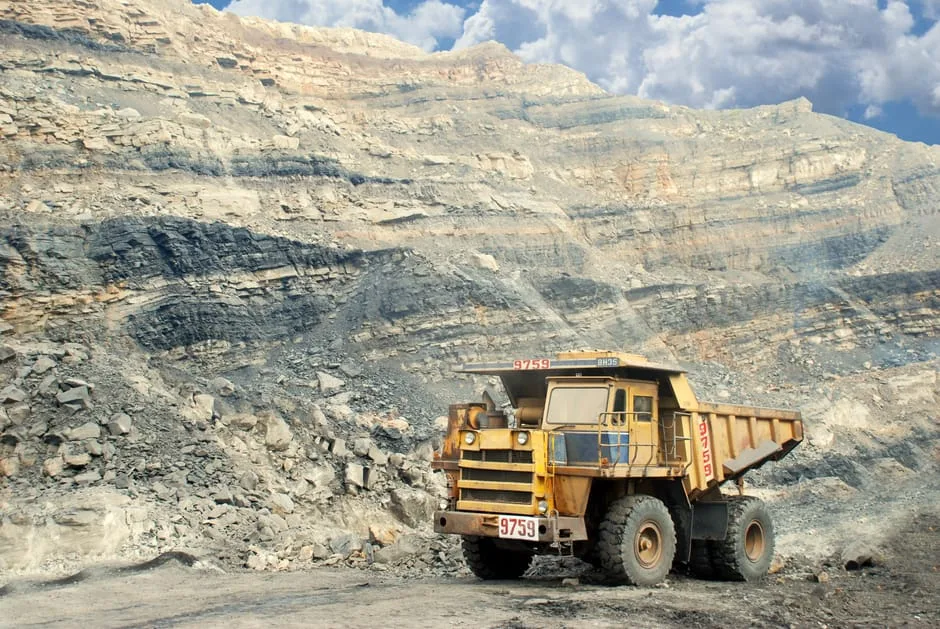
Why Silver Mining Stocks to Buy Are Capturing Investor Attention in 2026
If you’re researching silver mining stocks to buy right now, these are some of the names drawing investor attention in 2026:
| Stock | Ticker | Type | Why It’s Watched |
|---|---|---|---|
| Wheaton Precious Metals | WPM | Streaming | Lower direct operating exposure than traditional miners |
| Pan American Silver | PAAS | Large-cap producer | Broad asset base and shareholder return focus |
| Hecla Mining | HL | Large-cap producer | Significant U.S. silver production exposure |
| First Majestic Silver | AG | Primary producer | High sensitivity to silver price moves |
| Endeavour Silver | EXK | Mid-cap producer | Production growth story in 2026 |
| Coeur Mining | CDE | Mid-cap producer | Turnaround and scale-up story |
| Vizsla Silver | VZLA | Junior explorer | Exploration upside tied to the Panuco project |
This article is for informational purposes only and does not constitute financial advice. Please consult your financial advisor before making investment decisions.
Silver has attracted broad attention in 2026 because of strong industrial demand, ongoing supply deficits, and renewed interest in hard assets. It is now classified as a U.S. critical mineral and is used in solar panels, electronics, and other advanced technologies. That industrial demand profile gives silver a different backdrop than gold.
That said, this article is written from the perspective of American Alternative Assets, where the focus is physical precious metals rather than paper-based silver exposure.
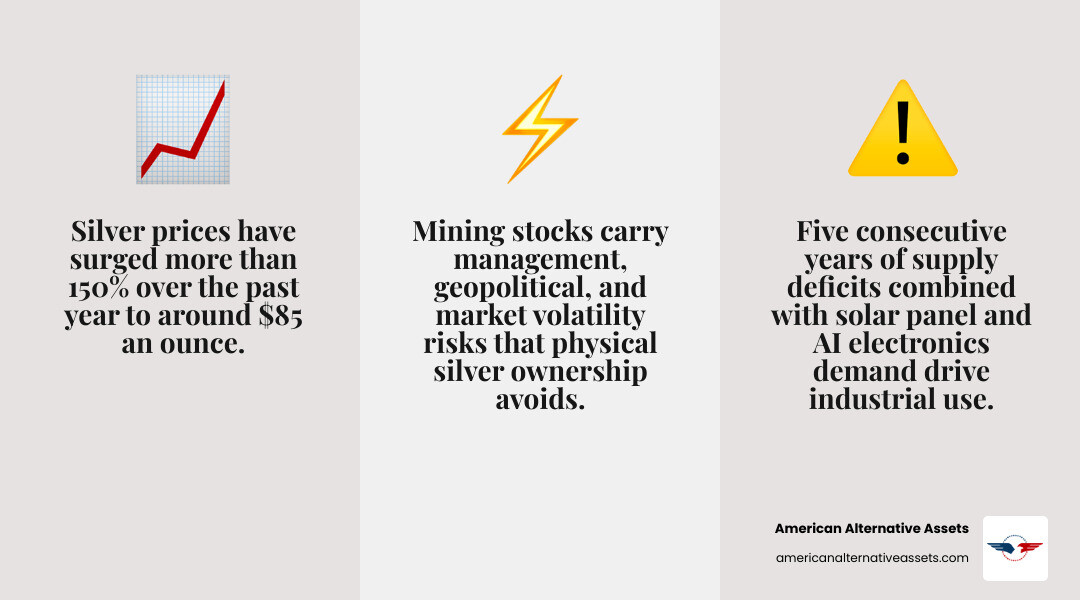
Mining stocks are equity investments, not direct metal ownership. They come with management risk, geopolitical exposure, cost inflation, dilution, and stock-market volatility that physical silver does not carry in the same way. For investors who want silver exposure inside a retirement account while avoiding many of those business-specific risks, owning physical silver directly can be a compelling option to understand first.
I’m Shanon Davis, founder of American Alternative Assets and a former venture capital professional who spent years watching paper-based assets swing on sentiment rather than fundamentals. My background evaluating risk across markets shapes how I approach silver mining stocks to buy and, more importantly, why direct metal ownership may better serve long-term wealth preservation goals.
Silver mining stocks to buy terms simplified:
Silver Mining Stocks to Buy, and Why Investors Are Looking at Them in 2026
The search for silver mining stocks to buy has intensified in May 2026. With silver prices hovering around $85 an ounce, many investors are paying closer attention to the sector. This interest is tied to a major supply-demand imbalance. Global annual silver output exceeds 600 million ounces, but that has not been enough to meet total demand.
For five consecutive years, the silver market has recorded a supply deficit. Over the last 15 years, above-ground silver stocks have fallen by nearly 500 million ounces. As silver gains “critical mineral” status in the United States, the conversation around future supply has become even more important.
What’s driving interest in silver mining stocks to buy right now
The main driver behind silver’s move has been industrial demand. Silver is both a monetary metal and an industrial metal. It is widely used in solar technology, and demand from AI infrastructure and advanced electronics continues to expand.
When silver prices rise sharply, mining company margins can expand as well. If a miner has a fixed production cost of $20 per ounce, a higher silver price can improve cash flow quickly. That operating leverage helps explain why mining shares attract attention during silver rallies. To learn more about the broader silver market, see our Ultimate Silver Stocks Investing Guide and our analysis of Silver’s Breakout Moment.
Why silver miners can rise faster, and fall harder, than physical silver
Silver mining shares often move more sharply than the metal itself. This is often described as higher beta. That can create upside in strong markets, but it also increases downside when conditions change.
Mining companies face risks that physical silver does not. These include:
- Equity Risk: A broad stock-market decline can pressure mining shares even if silver prices stay elevated.
- Dilution: Companies may issue more shares to raise capital, which can reduce each existing shareholder’s ownership percentage.
- Mine Disruptions: Labor issues, flooding, or equipment failures can interrupt production.
- Jurisdiction Risk: Governments may change taxes, permits, or operating conditions in ways that affect profitability.
Why many conservative investors still prefer physical silver instead
While the leverage of a mining stock can look attractive, many of our clients at American Alternative Assets prefer the clarity that comes with direct ownership. Physical silver does not depend on a CEO’s decisions, a mine plan, or a quarterly earnings report.
Especially for those focused on retirement diversification, physical silver can provide tangible exposure that is separate from the business risks tied to publicly traded miners. If you are asking Is Silver a Good Investment?, you may find that the best ways to invest in silver often come back to direct ownership of bars and coins, particularly within a properly structured precious metals IRA.
7 Silver Mining Stocks to Buy for Your Watchlist
If you are researching the equity route, it helps to understand who the major players are and where the risks sit. The industry is generally divided into three categories: streaming companies, primary producers, and junior explorers.
Wheaton Precious Metals, the lower-risk streaming giant
Wheaton Precious Metals (WPM) is one of the largest names in the space, with a market cap of $28.4B. WPM is not a traditional miner. It is a streaming company. It provides upfront capital to miners in exchange for the right to buy future silver production at a low, fixed price. This model can offer strong margins and less direct exposure to mine-level operating issues. Recent deals, such as Lundin Gold selling a silver stream for $490M, show how important this financing model has become to the industry.
Pan American Silver, large-scale producer with major asset depth
Pan American Silver (PAAS) is a diversified producer with a market cap of approximately C$8.5 billion. Following its acquisition of MAG Silver assets, including a stake in the Juanicipio mine, PAAS has become a major name for silver market exposure. The company has outlined a framework for returning up to $1 billion to shareholders in 2026.
Hecla Mining, dominant U.S. silver exposure
For investors focused on domestic production, Hecla Mining (HL) stands out. Hecla is responsible for roughly one-third of all silver produced in the United States. With cornerstone assets like Greens Creek and Lucky Friday, it offers substantial exposure to U.S.-based operations.
First Majestic Silver, high torque to rising silver prices
First Majestic Silver (AG) is often described as a pure-play silver producer because such a large share of its revenue comes from silver. In Q1 2026, it reported record quarterly revenue of $476.7 million, a 95% increase from the previous year. Its dividend policy ties payouts directly to 2% of quarterly revenues. You can read more in their Q1 2026 results report.
Endeavour Silver and Coeur Mining, mid-cap growth and turnaround exposure
Endeavour Silver (EXK) has seen renewed attention due to strong Q1 growth tied to the ramp-up of the Terronera mine. Meanwhile, Coeur Mining (CDE), with a market cap of $1.4 billion, is focused on scaling up its Rochester mine in Nevada. These mid-cap names may offer growth potential, but they also carry higher execution risk as projects are expanded.
Vizsla Silver and GR Silver, higher-upside juniors with higher execution risk
Junior miners are the most speculative part of the sector. Vizsla Silver is aggressively drilling its Panuco project in Mexico, while GR Silver recently reported its best ever drill results at San Marcial, including very high silver grades. These stocks can move sharply on exploration news, but they also face permitting, financing, and development risks.
From the American Alternative Assets perspective, these names are best viewed as part of the paper silver universe. They may help investors understand market sentiment, but they are not a substitute for direct ownership of physical silver when the goal is long-term wealth preservation.
How to Evaluate Silver Mining Stocks Before You Buy

Before you click “buy” on any of these names, it helps to understand the math behind the mines. Not all silver ounces are created equal.
The financial metrics that matter most
One of the most important metrics in mining is AISC (All-In Sustaining Cost). This estimates the total cost to produce an ounce of silver and keep the mine operating. In 2026, the most competitive miners maintain AISC well below $20 per ounce. If silver is at $85, a miner with a $20 AISC may appear highly profitable. A miner with a much higher AISC may be more vulnerable if prices pull back.
The operational metrics that separate strong miners from weak ones
Look beyond the balance sheet at the underlying assets:
- Mine Life: How many years of production remain in current reserves?
- Grade: How much silver is contained in each ton of rock? Higher-grade mines are often more resilient during weaker price periods.
- Jurisdiction: Is the mine in a stable country like Canada or the U.S., or in a region with elevated political or permitting risk?
Primary producers vs diversified miners vs streamers
Primary producers like First Majestic generally offer the most direct sensitivity to silver prices. Diversified miners, which may produce silver as a byproduct of gold or copper, are often less concentrated. Streamers like Wheaton can offer high margins and lower direct operating risk, but they often trade at premium valuations.
Why paper silver assets can underperform your expectations
Many investors are surprised when the price of silver rises but mining stocks do not follow. This can happen because a mining company is still a business, and businesses can face weak execution, rising costs, or dilution. If a company doubles its share count to fund a project, each shareholder’s ownership slice becomes smaller. This is one reason we often point people toward Silver Bullion Investment for cleaner precious metals exposure. For more on the basics, check out our guide, Hi-Ho Silver: Your Guide to Silver Precious Metals.
The Biggest Risks in Silver Mining Stocks to Buy
Investing in silver mining stocks to buy can be volatile. While upside can be significant in a strong silver market, the risks are structural and often hard to predict.
Geopolitical and jurisdiction risks
Much of the world’s silver supply comes from countries such as Mexico, Peru, and China. In 2026, shifting tax laws and community protests in parts of Latin America have temporarily affected production for some operators. Even a strong mine can become a weaker investment if governments raise taxes, tighten permit rules, or limit operations.
Operational and cost risks
Mining is a capital-intensive business. Inflation has affected the sector through higher diesel, labor, and explosives costs. If a miner’s AISC rises faster than the price of silver, margins can come under pressure. Companies may report strong revenue while still facing cost challenges at the operating level.
Market risks that physical silver does not share in the same way
In a general market selloff, mining stocks are often sold alongside other equities to meet liquidity needs or reduce risk exposure. Physical silver held in a vault does not carry the same stock-market correlation. To understand the recent volatility, read about Silver’s 127% Surge.
How to Balance Large-Cap, Mid-Cap, and Junior Exposure, or Skip the Equity Risk Entirely
If you are studying mining stocks, balance matters. It is also important to ask whether your goal is to speculate on corporate performance or to preserve wealth through direct ownership of tangible assets.
A practical way to think about large-cap, mid-cap, and junior miners
- Large Caps (Wheaton, Pan American): These tend to offer greater liquidity and operational scale.
- Mid Caps (Endeavour, Coeur): These may offer production growth, but usually with more execution risk.
- Juniors (Vizsla, GR Silver): These are highly speculative and can be extremely volatile.
When investors may prefer physical silver over mining shares
For many people, the complexity of mining stocks is a drawback rather than an advantage. If the goal is wealth preservation and long-term diversification, physical silver is often easier to understand. There is no mine execution risk, no shareholder dilution, and no dependence on management teams or quarterly earnings.
Using a Silver IRA for direct precious metals exposure
One of the most effective ways to hold physical silver is through a Silver IRA Account. This allows you to hold IRA approved silver, physical coins and bars, within a tax-advantaged retirement structure. It combines direct ownership of precious metals with the benefits of a retirement account, which aligns closely with the wealth-preservation approach we emphasize at American Alternative Assets.
Frequently Asked Questions About Silver Mining Stocks to Buy
What is AISC, and why does it matter for silver miners?
AISC stands for All-In Sustaining Cost. It is a broad measure of what it costs to produce an ounce of silver while maintaining current operations. It is one of the most useful metrics for judging a company’s margins and cost discipline.
Are streaming companies like Wheaton Precious Metals really silver miners?
Technically, no. They are specialty finance companies. They can provide silver price exposure with lower direct operating risk because they do not run the mines themselves.
Are silver mining stocks better than owning physical silver?
That depends on your goal. Mining stocks may offer more upside in a strong market, but they also carry corporate, market, and execution risks. Physical silver offers direct ownership and avoids many of the business-specific risks tied to paper assets.
Conclusion
The list of silver mining stocks to buy in 2026 includes well-known companies like First Majestic and Wheaton Precious Metals. These businesses are benefiting from strong silver demand and elevated prices. However, as we have explored, the mining industry also carries operational, geopolitical, and financial risks that physical metal ownership does not.
At American Alternative Assets, we believe in the long-term role of silver, but we also believe direct ownership of physical assets deserves priority for investors focused on wealth preservation. Whether you are researching the mining sector for context or considering a Silver IRA, the key is to stay informed and diversified.
Investing in precious metals involves risk. Past performance does not guarantee future results.
American Alternative Assets Woodland Hills, CA California, USA