








Why Protecting Your Wealth Matters More Than Building It
Wealth preservation strategies are the defensive tactics you use to protect your assets from inflation, market volatility, taxes, and economic uncertainty. Here’s what that means in practice:
- Diversification – Spreading investments across different asset classes to reduce risk
- Tax optimization – Using retirement accounts and strategic planning to minimize tax burdens
- Insurance protection – Safeguarding against lawsuits, disability, and long-term care costs
- Estate planning – Ensuring your assets transfer efficiently to heirs
- Physical assets – Holding tangible stores of value like precious metals that aren’t dependent on paper promises
Most Americans spend decades focused on accumulation, growing their nest egg through work and investment. But what happens when you’ve built real wealth? The game changes completely.
The systems aren’t broken. But they’re bending. US dollar risk, political gridlock, growing deficits, none of these are new. But together, they’ve become a signal. A signal that relying solely on “the way it’s always been” is no longer a plan.
As of 2024, 50% of Americans, including nearly 60% of millennials, say an inheritance is critical to their ability to retire comfortably. Yet over the next few decades, an estimated $30 trillion in wealth is expected to pass from Baby Boomers to younger generations. Without proper preservation strategies, much of that wealth could be lost to taxes, poor planning, or economic erosion.
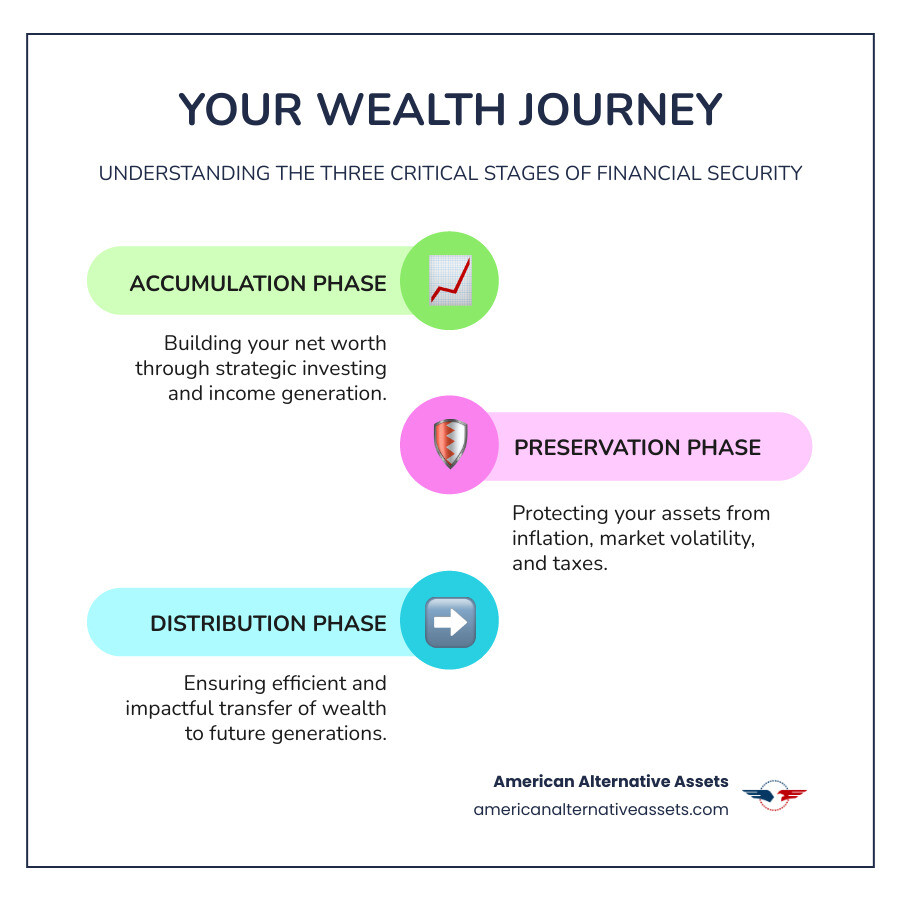
The difference between wealth accumulation and wealth preservation is the difference between offense and defense. Accumulation is about growth, taking calculated risks, building your portfolio. Preservation is about security, protecting purchasing power, and ensuring what you’ve built can support you through retirement and beyond.
Right now, your wealth faces multiple threats:
- Inflation eroding purchasing power year after year
- Market volatility that can wipe out gains overnight
- Rising tax burdens and changing policies
- Currency devaluation as the dollar weakens
- Systemic banking risks and institutional fragility
Without a proactive preservation plan, you’re leaving your financial future to chance.
I’m Shanon Davis, and I’ve spent years helping families step outside fragile financial systems after watching the 2008 crash destroy portfolios built on paper promises. Effective wealth preservation strategies require both defensive planning and tangible assets that hold value regardless of market conditions. My grandfather taught me early that real money is something solid, something lasting.
Foundational Pillars of Wealth Preservation
Building Your Financial Bedrock
Before we dig into sophisticated strategies, let’s talk about the basics. Just like a house needs a strong foundation, your wealth needs a solid financial bedrock. This starts with healthy financial habits. These foundational habits are crucial for supporting wealth preservation strategies.
Foundational Financial Habits:
It might sound simple, but consistent budgeting and diligent debt management are the cornerstones of financial stability. By understanding where your money goes and minimizing unnecessary debt, you create a buffer against unexpected expenses and economic downturns. This discipline allows you to allocate more resources towards protecting your existing wealth, rather than constantly trying to catch up. Americans with very low financial literacy are 3.5 times more likely to be financially fragile than those with very high financial literacy. This statistic underscores the importance of basic financial understanding.
The Critical Importance of an Emergency Fund:
One of the most vital components of any wealth preservation strategy is an emergency fund. We recommend building a cash reserve equivalent to three to six months of living expenses. This fund acts as a financial safety net, providing liquidity for unexpected events like job loss, medical emergencies, or major home repairs without forcing you to liquidate long-term investments at an inopportune time.
Keeping these funds in accessible, liquid accounts is key. As Investopedia explains, easy liquidation means you can access funds when you need them most, without being forced to sell your holdings during market downturns. An emergency fund is not just about having money; it is about having options and peace of mind when life throws a curveball.
The Cornerstone of Defense: Strategic Diversification
Once your financial foundation is strong, the next step in effective wealth preservation strategies is strategic diversification. Diversification is not just a buzzword; it’s a fundamental principle for protecting your assets from market volatility.
The Role of Diversification in Mitigating Risk:
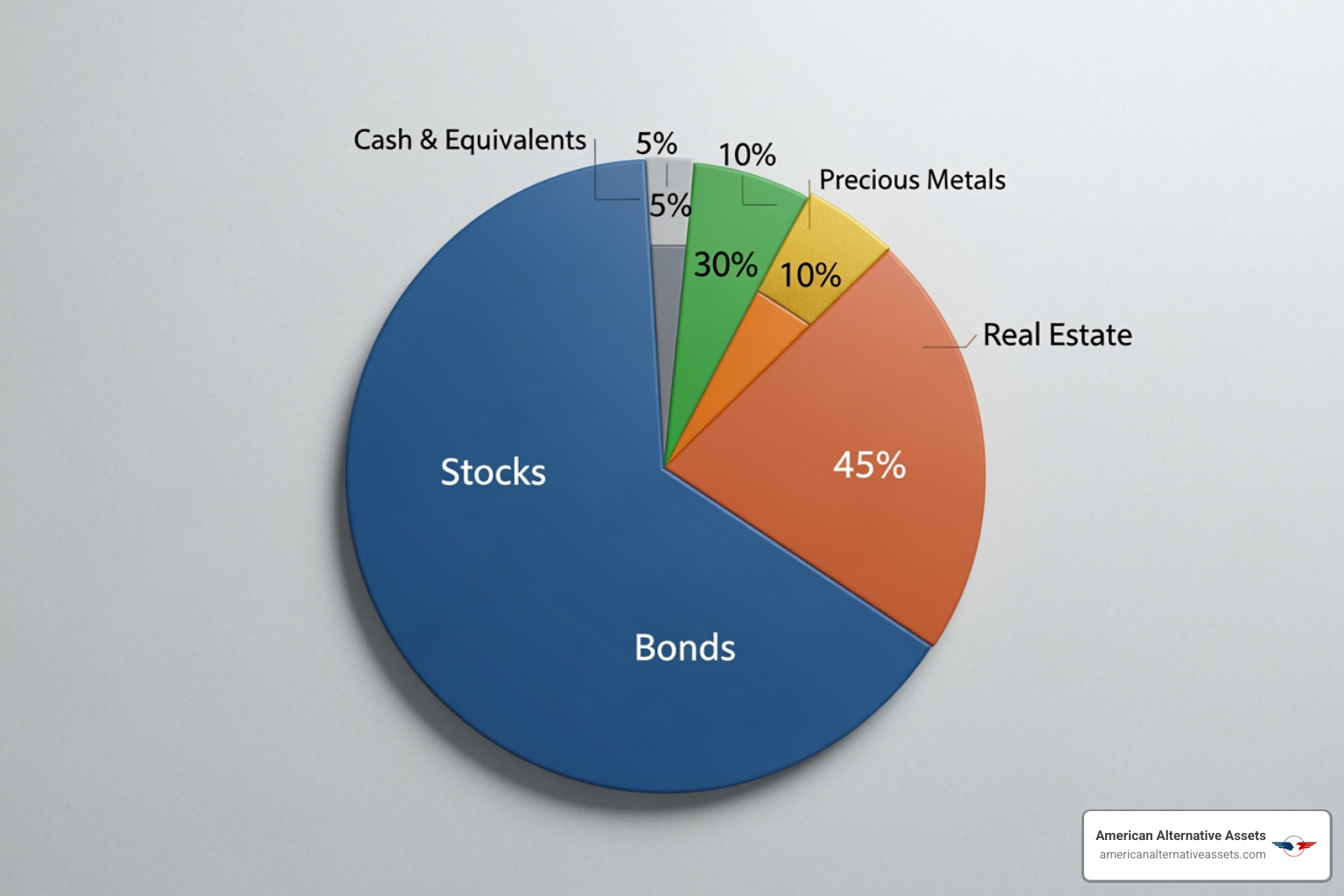
Diversification means spreading your investments across various asset classes, industries, and geographic regions. The goal is to avoid putting all your eggs in one basket, so if one area of your portfolio underperforms, others may remain stable or even grow. This helps to reduce overall risk and smooth out returns, even during turbulent times.
Asset Allocation Based on Goals:
Your asset allocation, the mix of different investments in your portfolio, should be custom to your financial goals, time horizon, and risk tolerance. For wealth preservation, a focus on stable, value-retaining assets becomes increasingly important. Melody Townsend, CFP, founder of Townsend Financial Planning, wisely noted, “Many clients don’t realize that diversification isn’t just about owning more stocks; it’s about owning the right mix of assets that respond differently to the same event.” This means considering assets that don’t always move in lockstep.
Understanding Asset Class Correlations:
A key aspect of smart diversification is understanding correlations between different asset classes. When consumer behavior shifts, various segments within the consumer sector may respond differently, cushioning the impact of any single economic change. We want investments that behave independently, so when one struggles, another might thrive, providing a natural hedge.
The Need for Regular Portfolio Rebalancing:
Even with a well-diversified portfolio, market movements can cause your asset allocation to drift from your target. That’s where regular rebalancing comes in. Rebalancing involves periodically adjusting your portfolio back to its original asset allocation targets. For instance, if one asset class has performed exceptionally well, we might sell some to reinvest in underperforming assets, bringing your portfolio back into equilibrium. This disciplined approach helps us maintain our desired risk level and ensures we are consistently aligned with our wealth preservation strategies.
The Role of Physical Precious Metals in Wealth Preservation Strategies
While traditional diversification is essential, we believe true wealth preservation in today’s uncertain world demands a deeper look at the assets we hold. This brings us to the critical distinction between paper assets and physical precious metals.
Limitations of Paper Assets:
Most investment portfolios are built on paper assets: stocks, bonds, mutual funds, and even digital representations of commodities. These assets are subject to various risks, including counterparty risk, which is the risk that the other party in a financial transaction will not fulfill their obligations. We saw vulnerabilities in the banking sector with the failures of Silicon Valley Bank, Signature Bank, and First Republic Bank in 2023. While the FDIC insures deposits up to $250,000, large deposits remain unprotected. This highlights the inherent risks in relying solely on institution-backed paper assets.
The Case for Tangible Assets:
For centuries, physical precious metals like gold and silver have served as a universal store of value. They are tangible assets, meaning you can physically hold them. This distinguishes them from paper assets, which are essentially promises or claims on value. When central banks are betting big on gold and Europe is scrambling to pull its gold out of the U.S., we see a clear signal: Why Precious Metals Matter Now More Than Ever.
Gold and Silver as a Historic Store of Value:
Gold and silver have historically maintained their purchasing power, acting as a hedge against economic instability and currency devaluation. Unlike fiat currencies, which can be printed at will, precious metals have intrinsic value and limited supply. This makes them an invaluable component of wealth preservation strategies, especially when we consider the growing US national debt, which stands at $36.8 trillion. Projections indicate interest payments alone could rise to $1.8 trillion by 2035, raising concerns about the dollar’s long-term stability and creating a need for assets that can withstand a potential dollar’s decline.
Hedging Against Inflation and Currency Devaluation:
Inflation is often called “the tax that no one voted for” because it silently erodes your purchasing power. When we look at the Gold Inflation Impact, we see that gold has historically served as a reliable hedge. During periods of high inflation, gold prices often rise, helping to preserve the real value of your wealth. This is a crucial consideration for anyone concerned about protecting their retirement savings against the corrosive effects of inflation.
The Benefits of a Gold IRA:
For those looking to integrate physical precious metals into their retirement planning, a Gold IRA offers a powerful solution. A Precious Metals IRA allows you to hold physical gold, silver, platinum, or palladium coins and bars within a tax-advantaged retirement account. This means you get the same tax benefits as a traditional IRA, while enjoying the security and tangibility of physical assets. It’s a way to diversify your retirement portfolio beyond traditional stocks and bonds, providing a buffer against economic uncertainties and currency risks.
True Ownership and Privacy:
When you invest in a physical Precious Metals IRA through American Alternative Assets, you gain true ownership of tangible assets. We emphasize real privacy and protection for your wealth, ensuring your assets are securely stored in depositories, not just represented by a certificate or a digital entry. This approach aligns with our commitment to white-glove, relationship-first service, built on trust, transparency, and ethical practices.
Advanced Wealth Preservation Strategies for a Secure Legacy
As your wealth grows, so does the complexity of protecting it. This section focuses on advanced wealth preservation strategies that go beyond basic financial planning to secure your legacy.
Shielding Your Assets with Legal and Insurance Planning
Legal and insurance planning are often overlooked but are absolutely crucial for comprehensive wealth preservation strategies. They act as powerful shields against unforeseen events and liabilities.

Crucial Insurance Types for High-Net-Worth Individuals:
For high-net-worth individuals, standard insurance policies might not offer enough protection. We recommend considering:
- Umbrella Liability Insurance: This adds an extra layer of liability protection beyond your standard home and auto policies. Charles Petitjean, CFP, of Barker Wealth Management, notes, “Umbrella liability insurance is a big one that often gets overlooked. For affluent households, a lawsuit can become a major financial threat.” This coverage protects your assets from large claims or lawsuits that exceed the limits of your primary insurance.
- Long-Term Care Insurance: As we age, the need for long-term care becomes a significant financial consideration. Statistics show that something like 60%–70% of people will need LTC at some point. The costs associated with nursing homes, assisted living, or in-home care can quickly deplete even substantial wealth. Long-term care insurance helps cover these expenses, preserving your assets for your heirs and preventing your family from bearing the financial burden.
Other important insurance types include disability insurance, which replaces income if you’re unable to work, and key person insurance for business owners, which protects a business from the financial impact of losing a critical employee.
Utilizing Trusts for Asset Protection:
Trusts are powerful legal structures that can play a vital role in asset protection and wealth preservation strategies. They allow you to transfer assets to a trustee who manages them for the benefit of designated beneficiaries. This can shield assets from creditors, lawsuits, and even divorce proceedings, depending on the type of trust and jurisdiction. For instance, certain irrevocable trusts can offer robust protection by removing assets from your direct ownership. This legal planning is essential in safeguarding your hard-earned assets.
Optimizing for the Future: Tax-Efficiency and Retirement Accounts
Taxes are an inevitable part of our financial lives, but with smart planning, we can optimize our tax strategy to preserve more of our wealth.
Effective Tax-Efficient Strategies:
For many, minimizing tax liabilities is a crucial part of wealth preservation strategies. This involves more than just filling out forms; it requires proactive planning. Strategies can include:
- Tax-Loss Harvesting: Selling investments at a loss to offset capital gains and even a limited amount of ordinary income.
- Charitable Giving: Strategically donating to charities can provide significant tax deductions, especially through donor-advised funds or charitable trusts.
- Asset Location: Placing tax-inefficient assets in tax-advantaged accounts and tax-efficient assets in taxable accounts can optimize your overall tax burden.
Maximizing Tax-Advantaged Accounts Like IRAs:
Retirement accounts like 401(k)s and IRAs are not just for saving for retirement; they are powerful tools for wealth preservation due to their tax benefits. Contributions to traditional accounts are often tax-deductible, and investments grow tax-deferred until withdrawal. Roth accounts offer tax-free growth and withdrawals in retirement, provided certain conditions are met. These accounts also offer a degree of protection from creditors under federal law.
Leveraging Retirement Accounts for Preservation:
The strategic use of these accounts can have a profound impact. For example, if you’re transitioning jobs or retiring, performing a TSP Rollover to IRA After Retirement can give you greater control and investment flexibility, including the option to invest in physical precious metals within a self-directed IRA.
Understanding Required Minimum Distributions (RMDs):
As you approach retirement, it’s important to understand Required Minimum Distributions (RMDs). These are the amounts you must withdraw from traditional retirement accounts once you reach a certain age. Proper planning around RMDs can help us avoid penalties and manage our taxable income effectively.
The Strategic Use of Roth Conversions:
For some, a Roth conversion can be a powerful wealth preservation strategy. This involves converting funds from a traditional IRA to a Roth IRA, paying taxes on the converted amount now, in exchange for tax-free withdrawals in retirement. This can be particularly beneficial during years when you anticipate being in a lower tax bracket or if you expect tax rates to rise in the future.
Ensuring Continuity: Estate, Business, and Legacy Planning
Securing your financial future isn’t just about your lifetime; it’s about ensuring your legacy endures. This involves thoughtful estate, business, and legacy planning.
Components of a Comprehensive Estate Plan:
A comprehensive estate plan is essential for ensuring your assets are distributed according to your wishes, minimizing taxes, and avoiding probate. Key components include:
- Wills: A legal document outlining how your assets should be distributed after your passing.
- Powers of Attorney: Designating individuals to make financial and healthcare decisions on your behalf if you become incapacitated.
- Trusts: As discussed earlier, trusts can provide control, privacy, and asset protection, while also facilitating efficient wealth transfer.
Generational Wealth Transfer:
The sheer volume of wealth expected to change hands in the coming decades is staggering. Over the next few decades, an estimated $30 trillion in wealth is expected to pass from Baby Boomers to younger generations. This makes generational wealth transfer a critical aspect of wealth preservation strategies.
Educating Heirs on Financial Responsibility:
Passing on wealth without preparing the next generation can be like handing someone a map without teaching them to read it. Financial literacy is paramount. We believe in educating heirs about financial management and the responsibilities that come with inherited wealth. This ensures your legacy is maintained and grown, not squandered. The goal is to raise good stewards, not just heirs.
Key Considerations for Business Succession:
For business owners, your enterprise is often your most valuable asset. A robust business succession plan is a vital part of your overall wealth preservation strategy. This plan should address:
- Who will take over the business?
- How will the transition be funded?
- How can tax implications be minimized?
Tools like buy-sell agreements and key person insurance can facilitate a smooth transition, protecting the value of your enterprise and providing liquidity for your estate. Joshua Mangoubi, CFA, founder of Considerate Capital, advises, “Start planning your exit no less than five years before you think you’re ready. The most successful transitions I’ve seen—both financially and personally—happen when there’s time to be thoughtful and strategic.”
Integrating Philanthropy into Your Strategy:
Philanthropy isn’t just about giving back; it can also be a tax-efficient component of your wealth preservation strategy. Charitable giving strategies, such as donor-advised funds or charitable trusts, can reduce estate taxes, provide income tax deductions, and allow you to support causes you care about, creating a lasting positive impact.
Proactive Management: Staying Ahead in a Changing World
The financial world is constantly evolving, presenting new challenges and opportunities. Proactive management is the key to successful, long-term wealth preservation strategies.
The Necessity of Regular Monitoring:
A “set it and forget it” approach simply doesn’t work for wealth preservation. We regularly monitor our financial plans and investment portfolios. This allows us to assess performance, identify potential risks, and ensure our strategies remain aligned with our goals. As we’ve learned from past economic shifts, such as those discussed in “Where Is Your Money Really Invested? A Look at 3 Historic Market Crashes“, vigilance is key.
Adjusting Your Plan for Life Events and Economic Shifts:
Life happens. Marriages, births, career changes, and health events all necessitate adjustments to your financial plan. Similarly, economic conditions are rarely static. Fluctuations in gross domestic product (GDP) or sudden market declines can impact retirement portfolios, leaving people unsure of how to adapt. “The Coming Storm: Is Your Retirement Ready for the Economic Turbulence Ahead?” reminds us that thoughtful preparation can lessen the impact of these changes. Regular reviews allow us to adapt our strategies to both personal circumstances and the broader economic landscape.
Navigating Changing Tax Policies and Economic Uncertainty:
Tax laws change, and economic uncertainties can emerge quickly. Staying informed and proactively adjusting our wealth preservation strategies is vital. This is where expert guidance becomes invaluable.
The Benefits of a Multidisciplinary Advisory Team:
Navigating complex financial challenges requires a team approach. Working with a multidisciplinary advisory team—including financial advisors, tax professionals, and estate planning attorneys—ensures a holistic approach to your wealth preservation strategies. These professionals can help us analyze our financial situation, identify risks, optimize tax strategies, and ensure our plans are legally sound. They provide custom advice, helping us to understand our financial advisor’s perspective on gold and other key assets, and integrate them into our overall plan effectively. This collaborative approach helps us steer complex financial waters, from inflation and market volatility to changing tax policies, effectively.
Frequently Asked Questions about Wealth Preservation
What is the fundamental difference between wealth preservation and wealth accumulation?
Wealth accumulation is the growth-focused phase of building your net worth, where the primary goal is to increase the size of your assets through earning, saving, and investing. It’s about playing offense, taking calculated risks to grow your capital.
In contrast, wealth preservation is the defensive phase. It focuses on protecting the purchasing power and real value of what you have already built from threats like inflation, market volatility, taxes, and economic uncertainties. Its goal is to maintain and safeguard your existing wealth, ensuring it can support you through retirement and be passed on to future generations.
How does inflation impact wealth preservation, and what can mitigate it?
Inflation erodes the value of your money, meaning each dollar buys less over time. If your investments don’t grow at a rate that at least matches inflation, your purchasing power diminishes, even if the nominal value of your assets remains the same. This is a significant threat to wealth preservation.
To mitigate inflation’s effects, a sound strategy includes holding assets that historically act as a store of value and maintain their purchasing power. Physical precious metals, such as gold and silver, have served this role for millennia. They are not tied to the performance of fiat currency and tend to perform well during inflationary periods, offering a tangible hedge against the declining value of money. Diversifying into physical precious metals within a Precious Metals IRA can be a powerful way to protect your wealth from inflation’s corrosive effects.
What is the most crucial element of a wealth preservation plan?
While many elements are vital, the most crucial element of a wealth preservation plan is creating a comprehensive, written plan that is custom-custom to your specific goals, risk tolerance, and unique circumstances. This plan should encompass all aspects of your financial life: budgeting, debt management, diversification, insurance, tax optimization, and estate planning.
Furthermore, this plan should not be static. It must be reviewed and adjusted regularly to adapt to changing economic conditions, evolving tax policies, and significant life events. Without a personalized, living document to guide your decisions, even the best individual strategies can become disjointed and ineffective. The plan itself is the roadmap that ensures all your efforts are coordinated towards the singular goal of safeguarding your financial future.
Conclusion: Take Control of Your Financial Legacy
We’ve explored the multifaceted world of wealth preservation strategies, from building a strong financial bedrock with emergency funds and diversification, to leveraging advanced tools like trusts, tax-efficient accounts, and comprehensive estate planning. We’ve emphasized the critical role of physical precious metals as a tangible hedge against inflation and economic uncertainty, distinguishing them from vulnerable paper assets.
In an increasingly unpredictable world, taking personal responsibility for your financial future is not just smart, it’s essential. A proactive, holistic approach to wealth preservation empowers you to protect what you’ve worked so hard to build, ensuring your wealth supports your lifestyle and secures your legacy for generations to come.
At American Alternative Assets, we are committed to providing white-glove, relationship-first service, built on trust and transparency. We help our clients fortify their financial future with tangible assets that offer real privacy and protection.
To learn more about how physical precious metals can fortify your retirement savings and to explore the benefits of a Gold IRA, we invite you to connect with us.
This article is for informational purposes only and does not constitute financial advice. Please consult your financial advisor before making investment decisions.
Investing in precious metals involves risk. Past performance does not guarantee future results.