








Why Smart Investors Are Turning to Physical Gold
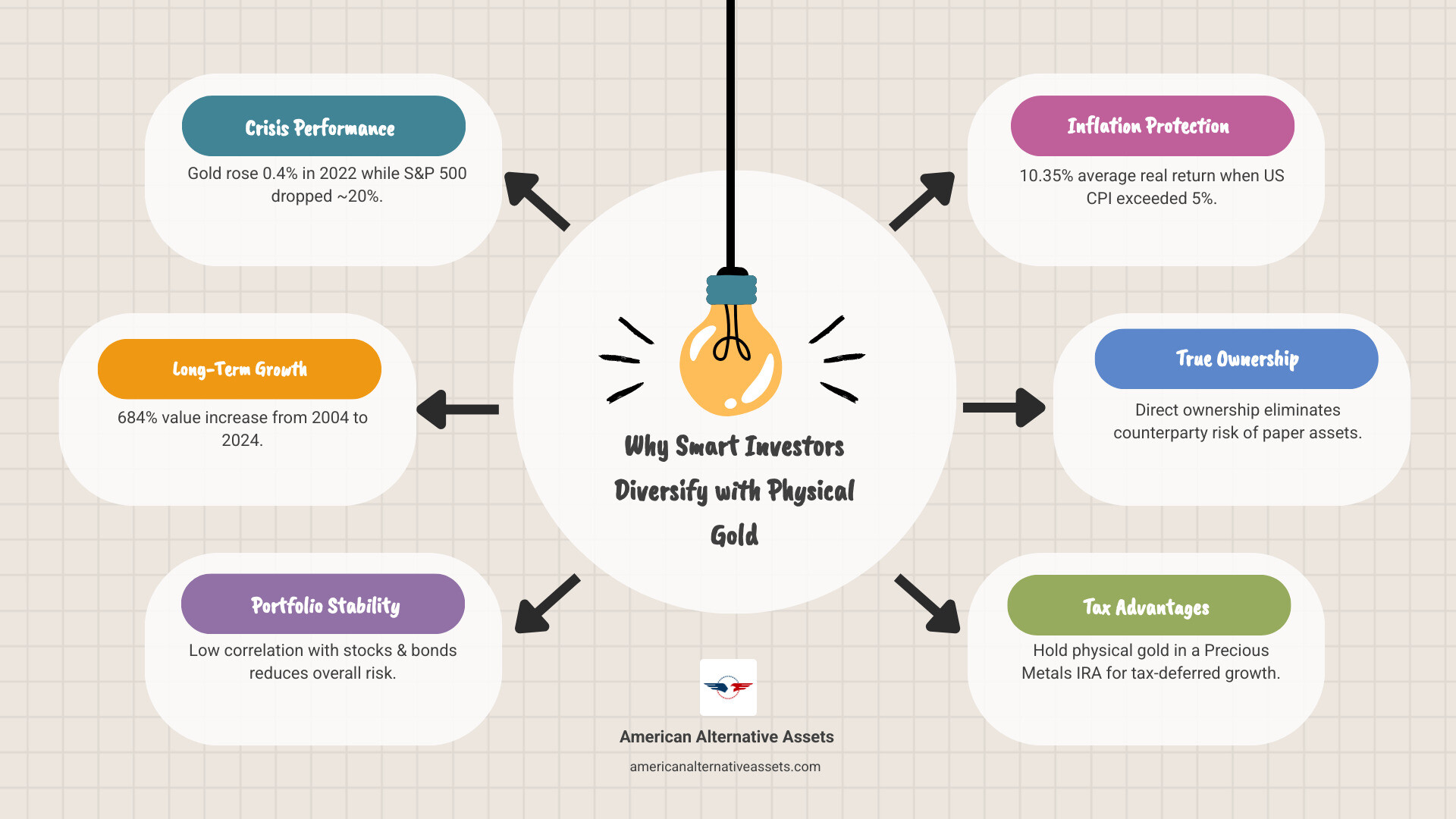
Diversify with gold to protect your retirement savings from market volatility, currency debasement, and economic uncertainty. Physical gold offers a proven hedge against inflation, has historically outperformed stocks during crises, and provides direct ownership free from third-party risk.
Key reasons to diversify with physical gold:
- Proven crisis performance: Gold rose 0.4% in 2022 while the S&P 500 dropped nearly 20%
- Long-term value: 684% increase from 2004 to 2024
- Low correlation: Moves independently from stocks and bonds, reducing overall portfolio risk
- Inflation protection: Average annual real return of 10.35% when US CPI exceeded 5%
- Direct ownership: No counterparty risk, unlike ETFs or mining stocks
- Tax advantages: Hold physical gold in a Precious Metals IRA for tax-deferred or tax-free growth
For thousands of years, gold has served as the world’s most trusted store of value. Today, central banks are purchasing gold at record levels, adding over 1,000 metric tons annually for three consecutive years. China increased its official reserves from 2,000 to 2,299 tonnes between late 2022 and mid-2025, while India repatriated 100 tonnes from the UK.
This institutional behavior sends a clear signal. When governments and central banks systematically convert dollars to gold, retirement savers should pay attention.
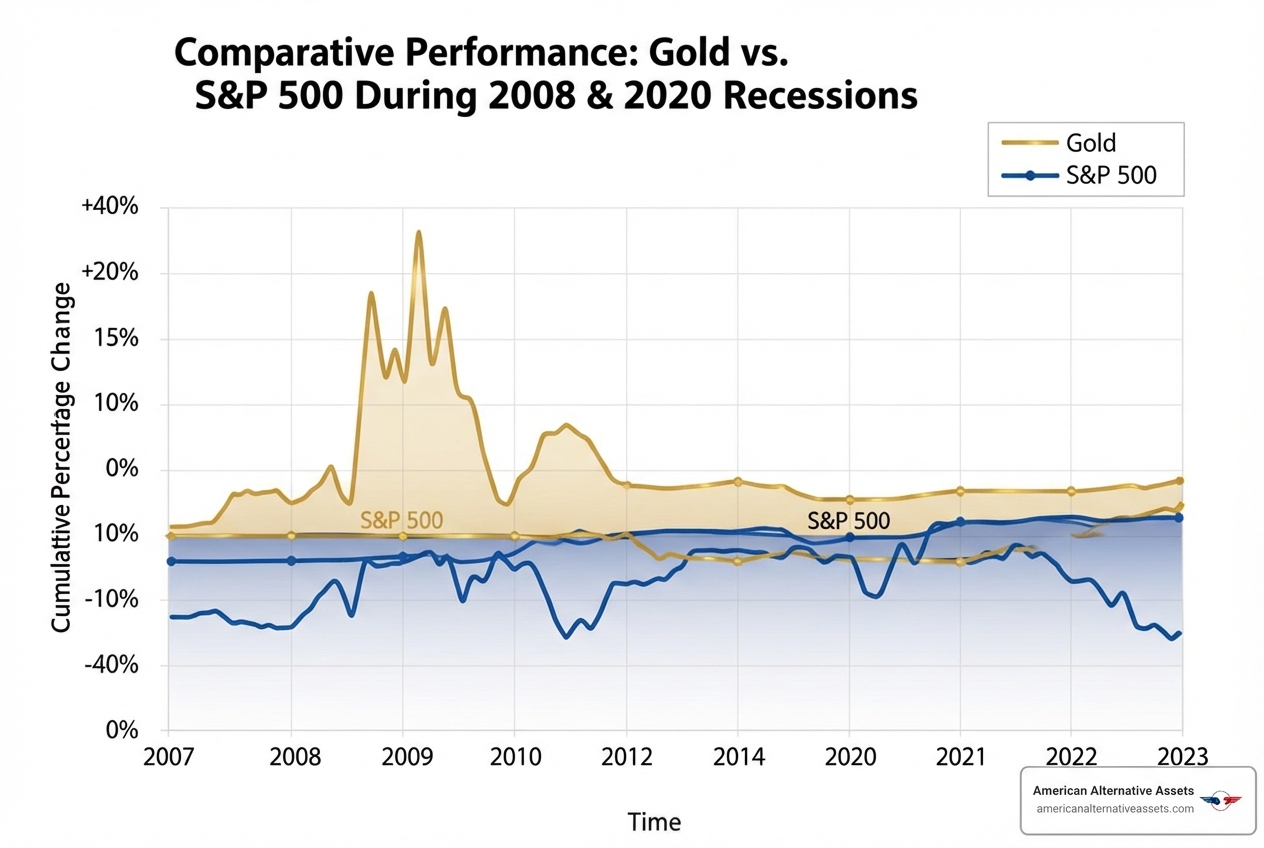
Gold offers more than just a hedge against inflation. It provides a tangible asset you can hold, free from the systemic risks that plague paper investments. During the 2008 financial crisis, gold nearly doubled in value while stocks collapsed. In 2022, as bonds fell 12.9% and stocks dropped 20%, gold held steady with a modest 0.4% gain.
The difference between physical gold and paper alternatives matters. Gold ETFs and mining stocks expose you to third-party risk, business failures, and the same systemic vulnerabilities as other financial instruments. Physical gold in your possession, or held in a secure depository through a Precious Metals IRA, gives you direct ownership of a tangible asset that has preserved wealth through every economic crisis in recorded history.
I’m Shanon Davis, founder of American Alternative Assets, and I’ve spent over two decades helping families step outside the fragile paper system and diversify with gold as a core wealth protection strategy. After witnessing the 2008 crash destroy retirement accounts built on promises rather than tangible assets, I dedicated my career to teaching Americans how to hold real value that doesn’t depend on anyone else’s solvency.
This article is for informational purposes only and does not constitute financial advice. Please consult your financial advisor before making investment decisions.
Important Diversify with gold terms:
The Enduring Value of Gold: More Than Just a Shiny Metal
For millennia, gold has captivated humanity, serving not just as a beautiful ornament but as a fundamental pillar of economic stability. Its inherent qualities make it a unique and valuable asset, distinct from other commodities and financial instruments. When we talk about gold, we’re discussing a substance with a rich history as a store of value and a safe-haven asset, qualities that are more relevant today than ever before.
Gold’s historical significance as money dates back to ancient civilizations, with gold coins first used in the Kingdom of Lydia around 550 B.C. This long lineage underscores its intrinsic value, meaning its worth is derived from its physical properties and historical acceptance, rather than relying on the solvency of a government or corporation. Unlike paper currencies, which can be printed at will, gold is a naturally rare element that does not tarnish, rust, or erode, ensuring its durability and lasting appeal. This physical permanence means that gold carries no counterparty risk; its value isn’t dependent on another entity fulfilling a promise. We own the asset directly.
In today’s interconnected global economy, gold maintains its status as a highly liquid asset. With average daily trading volumes exceeding $227 billion in 2024, the gold market rivals that of major currency and debt markets. This global liquidity ensures that gold can be readily bought and sold, providing investors with flexibility and access to their wealth when needed.
A compelling indicator of gold’s enduring value is the sustained demand from central banks worldwide. These institutions, responsible for managing national economies, have been acquiring gold at unprecedented rates. For three consecutive years, central banks have purchased over 1,000 metric tons of gold annually. This trend signals a strategic shift, as nations like China, Poland, and India bolster their reserves. For example, China has been a consistent buyer, steadily increasing its official gold reserves. In 2024, India repatriated 100 tonnes from the UK, bringing its total reserves to nearly 890 tonnes. This institutional behavior provides a clear signal to individual retirement savers, who can achieve similar security by diversifying their retirement accounts with physical gold and silver through a Precious Metals IRA.
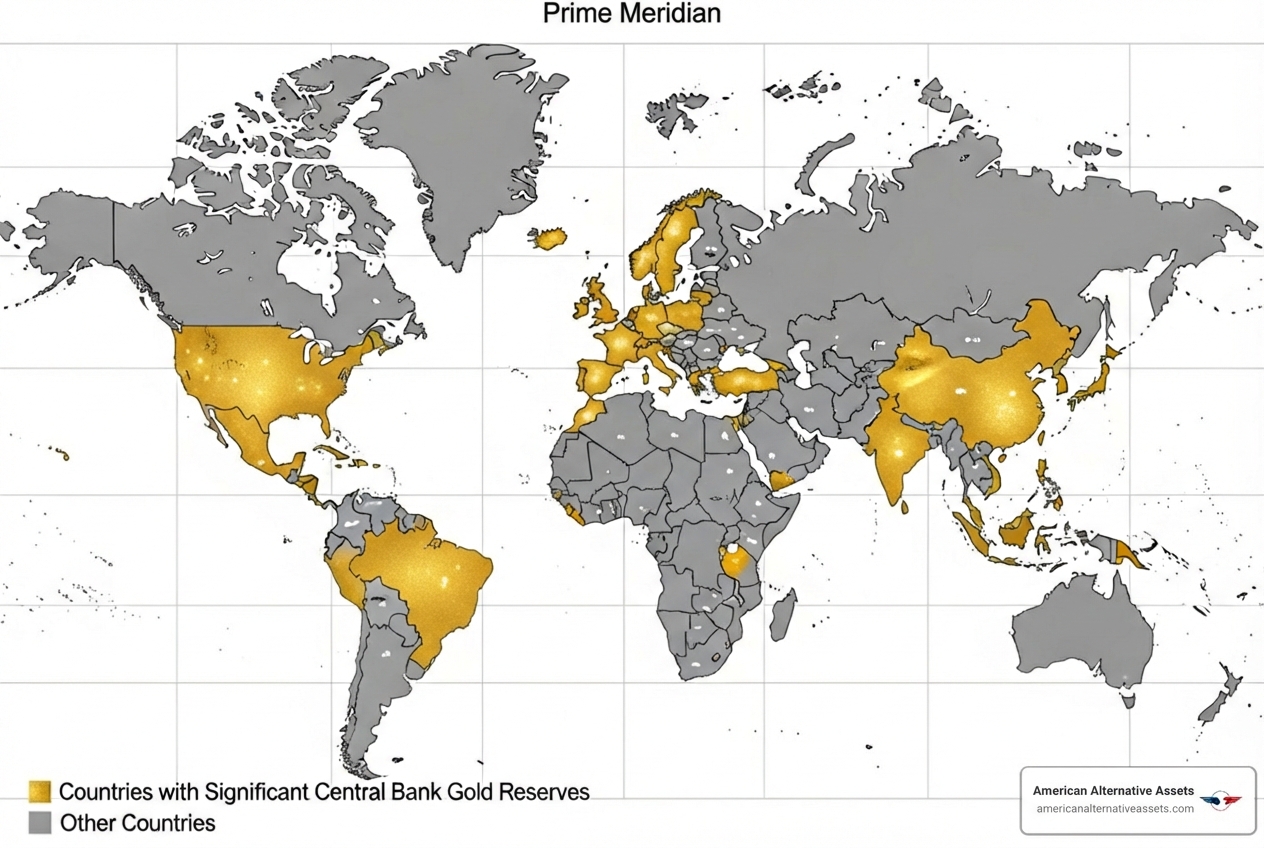
When central banks, which manage trillions in assets, systematically convert dollars to gold, it’s a powerful endorsement of gold’s role as a reliable store of value. We believe this trend offers invaluable insight for those looking to Central Banks Are Betting Big on Gold. Are You Prepared for What’s Coming?
How to Strategically Diversify with Physical Gold for Portfolio Stability
In an unpredictable economic landscape, strategic portfolio diversification is not just a smart choice, it’s a necessity. Diversify with gold offers a time-tested method to improve portfolio stability, protect purchasing power, and hedge against the volatility inherent in traditional financial markets. Its unique characteristics allow it to often move independently of stocks and bonds, providing a crucial counterbalance when other assets falter.
Gold serves as a robust hedge against inflation, a silent thief of wealth that erodes the purchasing power of our savings. Historically, gold has performed strongly during inflationary periods. For instance, over the last 50 years, gold has provided an average annual real return of 10.35% when the US Consumer Price Index (CPI) exceeded 5% year-over-year. This ability to preserve spending power makes it an invaluable asset in times of rising prices. We’ve seen this play out; in 2022, amidst high inflation, gold prices ticked up 0.4%, while the S&P 500 index dropped nearly 20%, and the Morningstar U.S. Core Bond Index fell 12.9%. This shows how gold can provide diversification and potentially reduce losses when other asset classes struggle.
Beyond inflation, gold offers protection from broader economic uncertainty. When consumers become pessimistic about the economy, gold prices tend to correlate positively with that sentiment. This means if economic pessimism hurts companies that rely on consumer spending, potentially driving down their stock prices, a rise in physical gold prices could at least partially offset those losses. This is why many consider gold a “safe haven” asset, a refuge during market turmoil. The Gold Inflation Impact can be profound for investors.
A key benefit of physical gold is its low or even negative correlation with other major asset classes like stocks, bonds, and real estate. While other financial markets tend to become more correlated during periods of market turbulence, gold often becomes less correlated. This characteristic is vital for diversification, as it means gold may move in a different direction than our other investments, helping to lower overall portfolio volatility and improve risk-adjusted returns.
For a deeper dive into its role, explore The Case for Gold.
The Core Reasons to Diversify with Physical Gold
The current economic climate presents several compelling reasons why we should consider physical gold for our portfolios.
One significant concern is currency debasement. When governments face fiscal pressure, history shows they often print more money rather than make difficult budget cuts. This currency devaluation typically weakens the dollar and has historically translated to higher gold prices. With the U.S. national debt has surpassed $37 trillion, and interest payments exceeding $1 trillion annually, the math behind servicing this exponentially growing debt often points towards continued money printing. This trajectory threatens the long-term purchasing power of fixed-income investments and dollar-denominated assets. This is a critical factor for us to consider in protecting our financial future, as discussed in The Day the Dollar Died: Is America Ready for the Coming Fiscal Apocalypse?.
Beyond national debt, geopolitical instability, ongoing wars, and uncertainty around Federal Reserve interest rate policy contribute to market volatility. These factors create an environment where traditional assets can be highly unpredictable. Physical gold, with its history of stability during crises, offers a tangible asset that can help preserve wealth and provide a sense of security amidst such turbulence. It acts as a counterweight, offering potential long-term growth and stability when other market segments are in flux.
Physical Gold’s Track Record in Market Downturns
Gold’s performance during periods of economic distress is not merely theoretical; it’s a matter of historical record. Its ability to serve as a reliable safe haven has been demonstrated repeatedly, offering a stark contrast to the performance of more volatile asset classes.
Consider 2022, a challenging year for many investors. While the S&P 500 index dropped nearly 20% and the Morningstar U.S. Core Bond Index fell 12.9%, gold prices ticked up 0.4%. This modest gain, while seemingly small, represents significant outperformance when compared to the substantial losses in stocks and bonds, effectively cushioning portfolios that included gold.
Looking further back, during the tumultuous period encompassing the financial crisis of 2008 and its aftermath (2007 to 2012), gold nearly doubled in value, rallying from just above $825 to north of $1,650 per ounce. This dramatic increase provided a critical hedge against the widespread market collapse, preserving wealth for those who had chosen to diversify with gold.
More recently, during the initial six months of the 2020 COVID-19 pandemic, as global markets reeled, gold prices increased by 22%, reaching what was then an all-time high of $1,902 per ounce on July 24, 2020. This pattern of outperformance during crises underscores gold’s role as a crisis hedge.
Over a longer horizon, gold has consistently delivered competitive returns. From 2004 to 2024, gold has provided a remarkable 684% increase in value, averaging over 10% annual growth. This long-term performance highlights its potential not just as a defensive asset, but also as a component of a strategy aimed at Golden Opportunities: Why Gold Shines Brighter Than Stocks. By holding physical precious metals within a Precious Metals IRA, you can harness this potential for your own retirement.
The Superiority of Physical Gold: A Guide to True Ownership
When we talk about investing in gold, it’s crucial to understand the distinction between owning physical gold and what we call “paper gold.” Physical gold refers to tangible assets like gold bullion, which includes bars and coins. This is the oldest and most direct way to own gold, providing true ownership and control.
Gold bullion comes in various forms, such as gold bars of different weights, and gold coins like the South African Krugerrand, U.S. American Eagle, and Canadian Maple Leaf. For those seeking direct exposure to gold’s price, purchasing these items from reputable dealers is the path to true ownership. However, consider storage solutions for these valuable assets to ensure their safety and security.
Why Physical Ownership Trumps Paper Assets
The core of our philosophy at American Alternative Assets centers on the undeniable superiority of physical gold ownership over paper-based alternatives. This distinction is not merely academic; it has profound implications for the security and resilience of our wealth.
With physical gold, we have direct ownership. We hold the tangible asset, free from the promises or performance of any third party. This eliminates counterparty risk, meaning we are not reliant on a financial institution, a fund manager, or a mining company to honor an obligation. Our wealth is truly ours, a tangible asset in our possession or secured in a depository. This direct ownership also offers privacy benefits, which can be a significant consideration for many investors seeking to protect their assets outside of traditional, increasingly transparent financial systems.
In contrast, “paper gold” instruments, such as Gold Exchange Traded Funds (ETFs) and gold mining stocks, come with inherent risks that physical gold does not. Gold ETFs, while offering exposure to gold prices, do not grant us direct ownership of the underlying metal. Instead, we own shares in a fund that theoretically holds gold. This exposes us to credit risk of the issuer, the possibility of early redemption at the issuer’s discretion (potentially leading to a total loss), and the fund’s operational risks. Furthermore, ETF accounts are not protected by the Securities Investor Protection Corporation (SIPC), which only covers cash and securities in the event of a brokerage firm’s bankruptcy, not commodities like gold. We’re holding a piece of paper, not the gold itself, making us vulnerable to the same systemic financial risks that physical gold aims to hedge against.
Similarly, investing in gold mining stocks means investing in a business, not in gold directly. The performance of these stocks is influenced not only by the price of gold but also by company-specific factors such as management effectiveness, operational costs, labor disputes, geopolitical risks in mining regions, and overall market conditions. Gold mining stocks can be more volatile than pure metals prices and do not always track gold’s value closely over the long run. They are subject to business failure, a risk entirely absent when we own physical gold.
The crucial difference is simple: physical gold is a tangible asset that has preserved wealth through every economic crisis. Paper assets, however, are subject to the very financial system we seek to protect ourselves from. For us, the choice is clear: true security lies in tangible assets. This is particularly relevant given concerns about The CBDC Threat: Why Physical Precious Metals Are Your Last Line of Financial Defense.
For those interested in understanding the nuances of Investing Physical Gold, we offer comprehensive resources.
How to Diversify with Gold Using a Precious Metals IRA
One of the most strategic ways for us to diversify with gold and other precious metals is through a Precious Metals IRA. This specialized type of self-directed individual retirement account allows us to hold physical, IRA-eligible gold coins and bars within a tax-advantaged retirement structure.
A Precious Metals IRA combines the security and tangible benefits of physical gold ownership with the significant tax advantages of traditional or Roth IRAs. With a Traditional Gold IRA, our contributions may be tax-deductible, and our investments grow on a tax-deferred basis, meaning we don’t pay taxes until retirement withdrawals. If we choose a Gold Roth IRA, our contributions are made with after-tax dollars, but qualified withdrawals in retirement are entirely tax-free. These tax benefits can play a crucial role in maximizing our long-term wealth preservation.
We can fund a Precious Metals IRA through direct contributions or, more commonly, by executing a direct rollover from existing retirement accounts, such as a 401(k), 403(b), TSP, or a traditional IRA. This process allows us to transfer our retirement savings into physical precious metals without incurring immediate tax liabilities or penalties.
It is vital that the gold and silver held within a Precious Metals IRA meet specific purity requirements set by the IRS. Generally, gold must be at least 99.5% pure, and silver must be at least 99.9% pure. However, there is an exception for the American Gold Eagle coin, which is 91.67% pure but is specifically approved for IRA inclusion.
Popular IRA-eligible gold coins include:
- American Gold Eagle
- Canadian Gold Maple Leaf
- Austrian Gold Philharmonic
- American Gold Buffalo
Popular IRA-eligible silver coins include the American Silver Eagle and Canadian Silver Maple Leaf.
These coins, along with approved gold bars, are stored in IRS-approved depositories, providing secure vault storage and insurance, often up to $1 billion. This ensures the safety of our physical assets while maintaining compliance with IRS regulations.
To learn more about the benefits and process of setting up such an account, we encourage you to review our resources on Why Invest in a Gold IRA? and our comprehensive Gold IRA Investing Guide.
Building Your Gold Strategy: Allocation and Key Considerations
Deciding how much gold and silver to include in our portfolio is a personal decision, but it’s one that can significantly impact our financial resilience. There’s no one-size-fits-all answer to portfolio allocation, as it depends heavily on our individual risk tolerance, financial goals, and long-term investment horizon.
However, financial professionals often suggest that an allocation to precious metals, including physical gold and silver, can range from 5% to 20% of a diversified portfolio. For instance, some recommend a general rule of thumb of 5-10%, while others suggest that up to 15% or even 20% might be appropriate depending on an individual’s specific situation and market outlook. The key is to view gold as an insurance policy for our portfolio, a strategic asset for wealth preservation, rather than a primary growth driver. Its purpose is to provide stability and protection when other assets face headwinds.
Our investment goals also play a crucial role. Are we primarily seeking protection against inflation, a hedge against market volatility, or a long-term store of value outside the traditional financial system? The answers to these questions will help us determine the appropriate allocation. A long-term perspective is essential when investing in precious metals; its benefits as a diversifier and safe haven are typically realized over extended periods, particularly during economic cycles and market downturns.
Finding a trusted partner is paramount when starting on a precious metals investment strategy, especially when considering a Precious Metals IRA. At American Alternative Assets, we pride ourselves on offering white-glove, relationship-first service, built on trust, transparency, and ethical practices. We believe in ensuring real privacy and protection for our clients’ wealth, guiding them through every step of the process with clarity and integrity.
Understanding your financial advisor’s perspective on gold is also important, and we encourage open dialogue. For further insights into determining the right balance for your portfolio, explore What Percentage of My Portfolio Should Be Allocated to Gold? and consider Understanding Your Financial Advisor’s Perspective on Gold.
Frequently Asked Questions about Investing in Gold
What’s the difference between physical gold and “paper gold” like ETFs?
Physical precious metals like gold and silver are tangible assets you own directly, such as coins or bars. They are free from counterparty risk, meaning their value doesn’t depend on a third party’s solvency. “Paper gold,” like an ETF (Exchange Traded Fund), is a financial product that tracks the price of gold, but you do not own the underlying metal. Instead, you own shares in a fund, which exposes you to third-party and systemic financial risks, credit risk of the issuer, and potential for early redemption.
How much of my portfolio should I allocate to gold?
While there is no one-size-fits-all answer, many financial professionals suggest an allocation of 5% to 20% of your total portfolio to precious metals. The ideal amount depends on your individual risk tolerance, financial goals, investment horizon, and current market conditions. Precious metals are often viewed as an insurance policy for a portfolio, providing stability and diversification rather than being the primary source of growth.
Can I hold physical gold in my retirement account?
Yes, you absolutely can. A self-directed Precious Metals IRA (Individual Retirement Account) allows you to hold physical, IRA-eligible gold and silver coins and bars. This unique account structure combines the direct ownership benefits of physical precious metals with the tax advantages of a traditional or Roth IRA. The metals must meet specific purity standards and be stored in an IRS-approved depository.
Conclusion: Take Control with a Timeless Asset
In a world filled with economic uncertainties and market fluctuations, the wisdom of history offers us a clear path to financial resilience: diversify with precious metals. We’ve explored how physical precious metals, with their enduring value, historical performance during crises, and low correlation to traditional assets, stand as a powerful tool for portfolio stability and wealth preservation.
Choosing physical precious metals ownership empowers us with direct control over a tangible asset, free from the systemic vulnerabilities and counterparty risks associated with “paper gold” instruments like ETFs and mining stocks. Furthermore, integrating physical gold and silver into our retirement planning through a Precious Metals IRA offers unique tax advantages, allowing our wealth to grow protected within a tax-deferred or tax-free environment.
At American Alternative Assets, we are dedicated to helping our clients achieve this peace of mind. Our commitment to white-glove, relationship-first service, built on trust, transparency, and ethical practices, ensures that your journey to securing your financial future is guided with expertise and integrity. Taking proactive steps today to accept the security of tangible assets is not just an investment strategy; it’s a commitment to protecting our legacy.
We invite you to Start your journey to financial security with a Precious Metals IRA and find how physical precious metals can become a timeless cornerstone of your diversified portfolio.
Investing in precious metals involves risk. Past performance does not guarantee future results.