







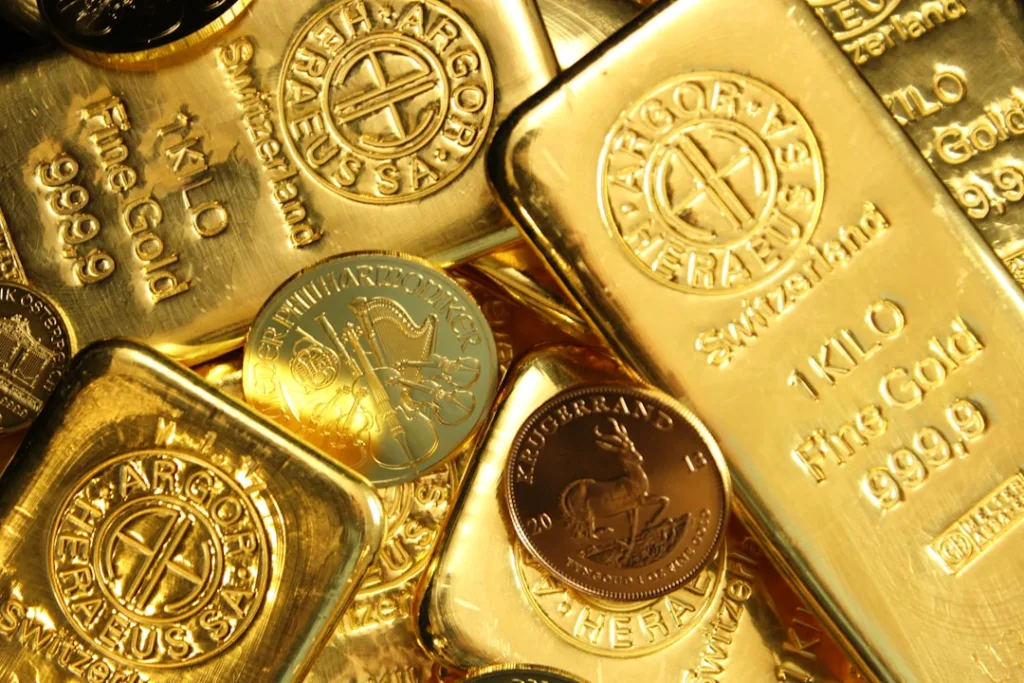
Why the Best Precious Metals Deserve a Place in Your Portfolio
Best precious metals for investment, ranked by stability, accessibility, and long-term value:
| Metal | Best For | Key Strength |
|---|---|---|
| Gold | Stability and wealth preservation | Safe-haven asset, highly liquid |
| Silver | Growth potential and accessibility | Industrial demand, lower entry price |
| Platinum | Diversification | Rare, industrial uses, low correlation to gold |
| Palladium | Niche industrial exposure | Automotive demand, supply constraints |
The past few years have been a wild ride for anyone watching their retirement account. Markets swing on headlines. Currencies weaken. And the systems most people trust with their savings have proven, more than once, that they can crack under pressure.
That’s exactly why more investors are turning to physical precious metals. Not because they’re trendy, but because they’re real. They don’t depend on a company’s earnings report or a central bank’s next decision. You can hold them in your hand.
But here’s where it gets tricky: not all precious metals are the same. Gold behaves differently than silver. Platinum moves to its own rhythm. And choosing the wrong starting point can mean paying more than you should, or picking a metal that doesn’t fit your goals.
I’m Shanon Davis, founder of American Alternative Assets, and my journey with the best precious metals started at nine years old when my grandfather pressed a silver Morgan dollar into my palm and said, “This is real money.” After years in venture capital watching paper wealth evaporate overnight, I came back to that lesson and built a company around it.
This guide will walk you through each major metal, compare the forms they come in, and help you figure out which ones actually belong in your portfolio.
The Main Contenders: Identifying the Best Precious Metals for Investment
When we talk about the best precious metals, we are usually looking at a specific group of elements known for their rarity, beauty, and economic utility. While the Department of Energy classifies eight metals as precious, including exotic ones like iridium and ruthenium, most investors focus on the “Big Four”: gold, silver, platinum, and palladium.
Each of these metals carries a spot price, which is the current market price for one troy ounce of the metal for immediate delivery. Understanding these prices is the first step in comparing your options. For instance, in early 2026, gold and platinum have seen significant upward movement, with gold shattering records and platinum hitting multi year highs.
Rarity is a massive driver of value. While gold is rare, platinum group metals are even scarcer. To put it in perspective, all the gold ever mined would fit into about three Olympic sized swimming pools. Platinum, however, is so rare that all of it ever mined would barely cover your ankles in one of those pools. Even rarer is osmium, which holds the title for the highest density of any element at 22.59 g/cm3.
We believe that the best precious metals for your portfolio are those that offer a balance of liquidity, historical performance, and a hedge against the devaluation of paper currency.
Why Gold is Often Considered the Best Precious Metals Anchor
Gold is the undisputed heavyweight champion of the precious metals world. For thousands of years, it has served as a universal currency and a primary store of value. Unlike paper money, which can be printed into oblivion, the supply of gold is limited by the difficulty of pulling it out of the earth.
In our Precious Metals Guide, we often highlight that gold acts as the “anchor” for a diversified portfolio. When the stock market gets shaky or geopolitical tensions rise, investors instinctively flock to gold. This “safe haven” status is bolstered by central banks around the world, which have recently been buying gold at record levels to shore up their own national reserves.
Gold is widely seen as a hedge during times of economic uncertainty because it tends to maintain its purchasing power over long periods. While a dollar from 1920 buys significantly less today, an ounce of gold from 1920 still buys roughly the same amount of goods and services. For those looking for stability and wealth preservation, gold is often the first and most important addition to a Precious Metals IRA.
Silver: The Industrial Powerhouse
If gold is the king of metals, silver is the workhorse. Silver is unique because it is both a precious metal and a vital industrial commodity. It has the highest electrical and thermal conductivity of any metal, making it indispensable in modern technology.
The demand for silver is currently being driven by the green energy revolution. Solar panels, electric vehicles, and high tech electronics all require significant amounts of silver. Because of this dual role, silver often experiences more price volatility than gold. It can swing wildly based on both investment demand and industrial needs.
Interestingly, silver has been facing a persistent supply deficit. We are using it faster than we are mining it, and much of the silver used in industrial applications is not easily recycled. For investors, this creates a compelling growth story. Many of our clients who open a Silver IRA do so because they want exposure to this industrial demand while still owning a physical asset that has served as money for millennia.
Comparing Physical Forms: Bars, Coins, and Rounds
Once you have decided which metal to buy, you need to choose the form it takes. This decision impacts your “premium,” which is the amount you pay over the spot price for fabrication, distribution, and dealer costs.

Sovereign Mints vs. Private Mints
Sovereign mints are government run institutions like the United States Mint or the Royal Canadian Mint. They produce coins that are legal tender and carry a face value, such as the American Gold Eagle or the Canadian Maple Leaf. These products are highly recognizable and often include advanced security features, like the missing reed security mark on newer Gold Eagles. Because of their government backing and high trust level, they typically command higher premiums.
Private mints, on the other hand, are independent companies that produce bars and rounds. While they don’t have legal tender status, reputable private mints are known for high purity and lower premiums.
Choosing Your Form: A Comparison
| Form | Description | Pros | Cons |
|---|---|---|---|
| Bars | Rectangular slabs of metal | Lowest premiums, easy to stack and store | Less “collectible” appeal |
| Coins | Government issued legal tender | High liquidity, government guarantee | Higher premiums over spot |
| Rounds | Coin shaped pieces from private mints | Lower premiums than coins | No legal tender status |
Bars are excellent for those looking to accumulate the maximum amount of metal for their dollar. They come in various sizes, from 1 gram gold bars to 1 kilogram silver bars. Coins are often preferred by those who value the security and easy resale potential of government backed products. Rounds offer a middle ground, providing the shape of a coin with the lower premium of a bar.
Best Precious Metals for Beginners
For those just starting out, the sheer number of options can be overwhelming. We generally suggest that beginners focus on accessibility and liquidity.
Silver is often the best precious metals entry point for beginners because of its lower price per ounce. It allows you to build a substantial physical holding without a massive initial investment. Silver rounds, like the popular Buffalo design, are a cost effective way to start.
If you prefer gold, fractional coins (such as 1/10 oz or 1/4 oz coins) allow you to own gold without paying for a full ounce all at once. When you buy gold and silver, we recommend sticking to well known, recognizable products. This ensures that when the time comes to sell, you won’t have trouble finding a buyer who recognizes and trusts what you have.
Platinum and Palladium: The Industrial Diversifiers
While gold and silver get most of the headlines, platinum and palladium offer unique opportunities for diversification. These metals are part of the Platinum Group Metals (PGMs) and are primarily used in the automotive industry for catalytic converters, which reduce harmful emissions.
Platinum has historically been more expensive than gold, though that relationship has flipped in recent years. It is incredibly rare and faces significant supply constraints, as the vast majority of the world’s platinum comes from just two countries: South Africa and Russia. Any geopolitical instability in these regions can cause platinum market trends to spike aggressively.
Palladium is even more tied to the automotive sector. It is the primary metal used in catalytic converters for gasoline engines. Because it is a niche industrial metal, its price can be highly volatile. For an investor, adding a small amount of platinum or palladium can reduce overall portfolio risk because their prices don’t always move in sync with gold or silver. They respond to different economic drivers, such as auto sales and industrial growth.
Physical Ownership vs. Paper Assets: Why Tangible Metal Wins
In investing, you will often hear about “paper gold” or “paper silver.” These are assets like Exchange Traded Funds (ETFs), mining stocks, or futures contracts. While they might seem convenient, they are fundamentally different from owning physical metal.
At American Alternative Assets, we believe that if you can’t hold it, you don’t truly own it. Paper assets carry “counterparty risk.” This means your investment is only as good as the company, bank, or exchange behind it. If the institution fails, or if the market experiences a “black swan” event, your paper claim to gold might prove worthless.
Physical ownership provides:
- Direct Control: You are not dependent on a fund manager or a digital ledger.
- No Counterparty Risk: A gold bar in a secure vault doesn’t require a bank to stay in business to maintain its value.
- Privacy and Protection: Physical metals offer a level of financial privacy that digital assets cannot match.
- Wealth Protection: During a total market collapse, paper certificates may become just that, paper. Physical metal remains a tangible asset with intrinsic value.
For those concerned about precious metal security, physical holdings can be stored in high security, insured depositories like Brink’s or the Delaware Depository. This gives you the best of both worlds: the safety of a professional vault and the legal ownership of a specific, physical asset.
Frequently Asked Questions about the Best Precious Metals
Which metal holds value best during inflation?
Gold is widely regarded as the premier hedge against inflation. Throughout history, gold has maintained its purchasing power as fiat currencies lose theirs. When the cost of living rises and the value of the dollar drops, gold prices typically move upward, helping to preserve the “real” value of your savings. Silver also performs well during inflationary periods, though its price can be more volatile due to its industrial ties.
What is the difference between sovereign and private mints?
The main difference is the authority behind the product. Sovereign mints are government entities, and their coins are legal tender with a face value and government guarantees for weight and purity. Private mints are commercial businesses. While they produce high quality bullion, their products are not legal tender. Investors often choose sovereign coins for their high liquidity and trust, while private bars and rounds are chosen for their lower cost over spot price.
How does diversification reduce investment risk?
Diversification is the practice of spreading your investments across different assets so that a decline in one doesn’t destroy your entire portfolio. In the context of precious metals, this means owning a mix of gold, silver, and perhaps platinum or palladium. Because these metals respond differently to economic factors. Gold responds to fear and inflation, while silver and platinum respond to industrial growth. A diversified “basket” of metals tends to have smoother price movement and lower overall risk than betting on a single metal.
Conclusion
Choosing the best precious metals for your portfolio isn’t about finding a single “winner.” It’s about building a strategy that protects your hard earned wealth from the uncertainties of the modern financial system. Whether you are drawn to the timeless stability of gold, the industrial potential of silver, or the rare diversification of platinum, the key is to move from paper promises to physical reality.
At American Alternative Assets, we specialize in helping our clients navigate this transition. We don’t just sell metal; we build relationships. Our white glove service is designed to take the stress out of the process, whether you are making a direct purchase or setting up a Gold IRA. We pride ourselves on transparency, ethical practices, and a commitment to ensuring your wealth is protected for the long haul.
If you are ready to take control of your financial future and add the “gold medal” of assets to your portfolio, we are here to help you every step of the way.
Compliance and Disclaimers
This article is for informational purposes only and does not constitute financial advice. Please consult your financial advisor before making investment decisions.
Investing in precious metals involves risk. Past performance does not guarantee future results.