








Best silver stocks to invest in: 5 Risky Pitfalls
Why Smart Investors Are Questioning the Traditional Silver Stock Playbook
The best silver stocks to invest in are a hot topic as silver prices surge in 2025. This boom is fueled by record industrial demand from solar panels and electric vehicles, a projected supply deficit of 149 million ounces, and growing investor interest in tangible assets. While many investors turn to mining stocks like Wheaton Precious Metals or Pan American Silver, this traditional approach carries hidden risks that deserve careful examination.
Quick Answer: The Top-Discussed Silver Stocks vs. Physical Silver
| Investment Type | Key Examples | Primary Risk |
|---|---|---|
| Streaming Companies | Wheaton Precious Metals (WPM) | Counterparty risk if partner mines fail |
| Large Producers | Pan American Silver (PAAS) | Geopolitical and operational risks across multiple countries |
| Pure-Play Miners | First Majestic Silver (AG) | Heavy dependence on a few key mines |
| Established Miners | Hecla Mining (HL) | Stock market volatility despite strong operations |
| Development Projects | MAG Silver (MAG) | Single-asset risk tied to one project |
| Physical Silver in an IRA | American Silver Eagle coins/bars | No counterparty risk, direct ownership |
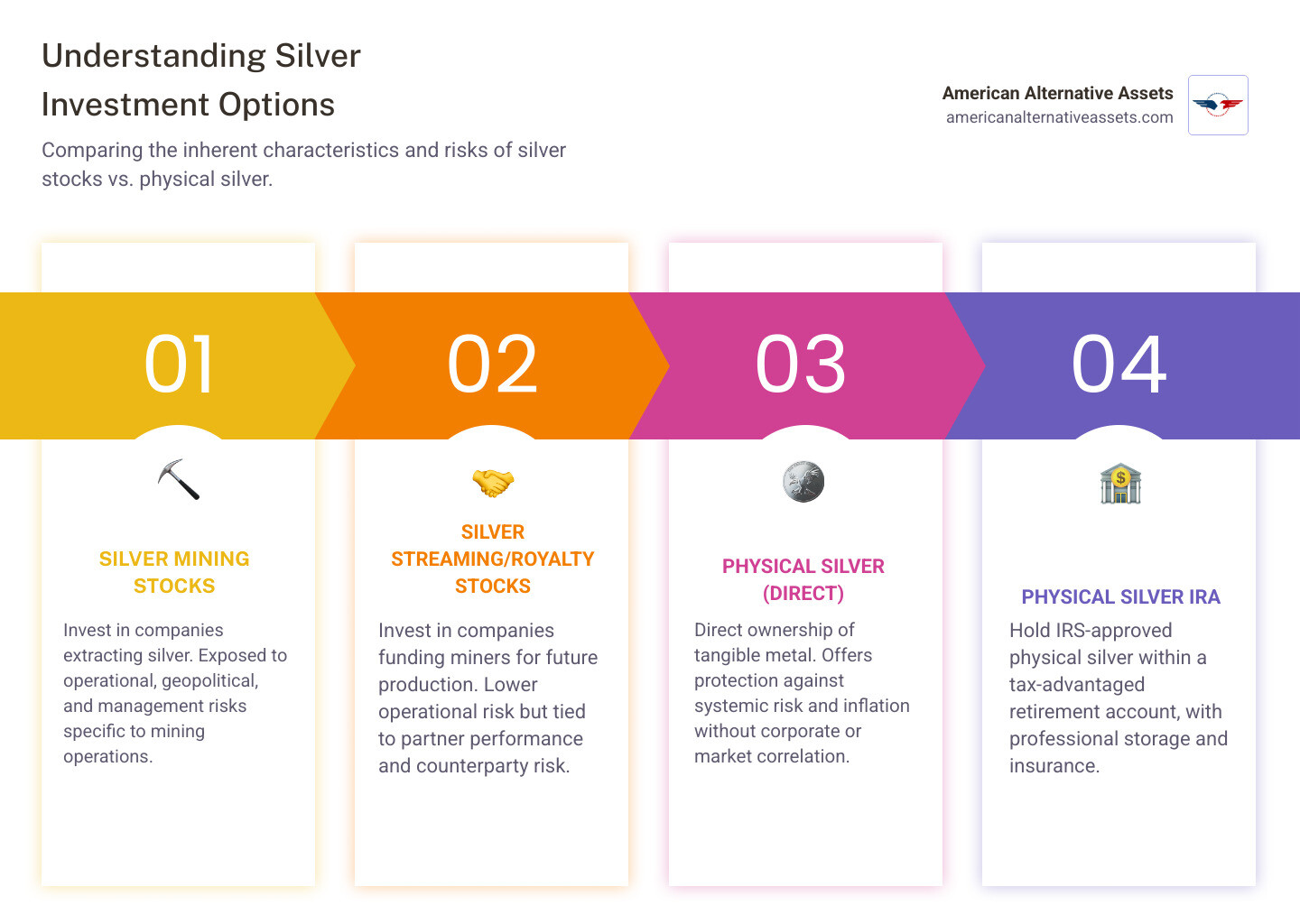
But here’s the critical question most investors overlook: Should you own shares of companies that mine silver, or should you own the silver itself?
Paper assets like stocks represent a claim on future corporate performance. They’re subject to management decisions, mining accidents, and market volatility that has nothing to do with silver’s fundamental value. When you buy a silver stock, you’re betting on a company’s ability to execute, not just on silver’s price appreciation.
Physical silver, on the other hand, is a tangible asset you directly own. No quarterly earnings reports. No corporate debt. No CEO decisions that can derail your investment. Just pure metal that has held value for thousands of years.
I’m Shanon Davis, and after decades in venture capital watching paper assets evaporate during market crashes, I founded American Alternative Assets to help investors secure their wealth with physical precious metals instead of paper promises. This article will examine why that distinction matters more than most investors realize.
The Dual Drivers of the 2025 Silver Boom
Silver’s 2025 surge isn’t happening by accident. Two powerful forces are converging to create what many analysts are calling a historic bull run. Understanding these drivers is essential, not just for identifying the best silver stocks to invest in, but for deciding whether stocks are the right approach at all.
Here’s what makes this moment different: silver plays a unique dual role. It’s both a precious metal with thousands of years of monetary history and an irreplaceable industrial commodity. This combination is creating unprecedented demand just as supply struggles to keep up.
Industrial Demand Drivers
The industrial sector is silver’s secret weapon. Industrial applications are expected to consume over 700 million ounces in 2025, a record-breaking figure driven by technologies that cannot function without silver’s unique properties.
The photovoltaic market is a primary driver. Silver is a key ingredient in solar panels, where its superior electrical conductivity is essential for converting sunlight into electricity. With the solar sector projected to grow by around 20% in 2025, demand is soaring.
Electric vehicles represent another massive consumption driver. Every EV requires significantly more silver than traditional cars for battery connections, power electronics, and charging systems. As the auto industry shifts away from combustion engines, silver demand is climbing sharply.
Then there’s 5G technology. The global rollout of 5G networks demands silver in countless electronic components where its conductivity is essential for speed and reliability.
Investment Demand Drivers
While industrial uses consume most silver, investment demand adds crucial fuel to the fire.
When inflation erodes the purchasing power of paper currencies, investors historically turn to tangible assets like silver. It represents something real in a world of abstract financial instruments.
Geopolitical uncertainty amplifies this trend. When global tensions rise, precious metals attract safe-haven buying. Silver benefits from this flight to safety, offering a store of value outside the traditional financial system.
Supply and Demand Deficit
Here’s where the story gets particularly interesting. The global silver market is forecast to remain in a deficit in 2025, with analysts projecting a shortfall of approximately 149 million ounces. This marks the fifth consecutive year that consumption has exceeded new supply.
This is not a temporary blip, but a structural imbalance. The deficit is being drawn from above-ground stockpiles, and mining companies can’t simply flip a switch to produce more. New mines take years to develop, and many existing operations face rising costs.
Price Projections
With these fundamentals, many analysts expect silver to break past $40 per ounce by mid-2025. But this raises a critical question: How should you invest in silver’s potential?
The traditional answer, buying mining stocks, seems logical. But this is where many investors make a costly assumption. They see strong market fundamentals and immediately search for the best silver stocks to invest in, without considering if stocks are the best vehicle at all.
Owning shares in a silver mining company is fundamentally different from owning silver itself. You’re adding layers of corporate and operational risk on top of your silver exposure. The supply deficit and demand surge point to silver’s value appreciation, but that value accrues most directly to the metal itself, not necessarily to the companies extracting it.
Are Stocks Really the Best Way to Invest in Silver? A Look at 5 Popular Picks
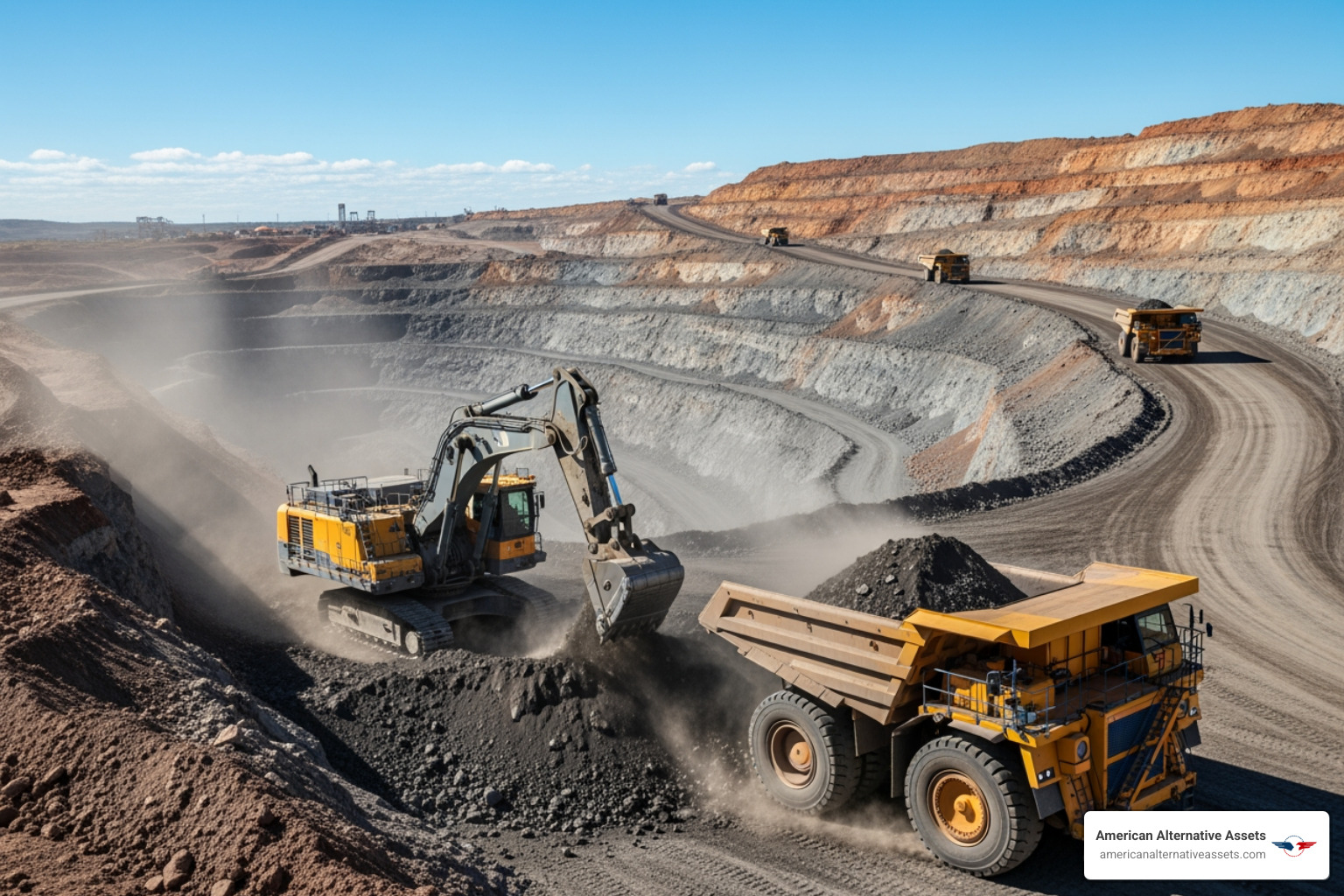
When investors think about capturing silver’s potential, most immediately turn to mining stocks. It seems logical, but at American Alternative Assets, we believe buying a silver stock is fundamentally different from owning silver itself. One is a paper promise tied to corporate performance, while the other is a tangible asset you directly control.
This section analyzes popular silver stocks not to recommend them, but to illustrate the inherent risks of paper assets compared to physical metal. Our goal is to show why direct ownership provides security that stocks cannot match.
The Flawed Metrics Used to Pick Silver Stocks
Investors drawn to stocks often focus on metrics that seem appealing on the surface but mask underlying risks. For example, they might seek out “pure-play” miners—companies with a high percentage of revenue from silver—under the mistaken belief that their stock prices will perfectly track the metal. First Majestic Silver, which gets 57% of its revenue from silver, is often cited in this context.
Other metrics that can distract investors include low production costs (AISC), large mineral reserves, and strong balance sheets. Some are also lured by the promise of leverage, where a modest increase in silver prices can theoretically lead to larger gains in stock value. However, this leverage is a double-edged sword that also amplifies losses. While these metrics might describe a company’s operations, they are irrelevant to the core argument: owning a stock is not the same as owning the metal, and no corporate metric can eliminate the inherent risks of paper assets.
The Hidden Risks of Even the Best Silver Stocks to Invest In
Even the most financially sound mining companies cannot escape the inherent risks of being paper assets.
- Operational Risks: Mining accidents, equipment failures, or geological issues can halt production and hurt earnings, regardless of silver’s price. Physical silver is immune to these company-specific problems.
- Geopolitical Risks: Major silver deposits are often in politically unstable regions. Governments can impose new taxes, revoke licenses, or even nationalize assets, tying your investment’s fate to forces outside your control.
- Market Correlation Risk: During broad market selloffs, silver stocks often fall with other equities, even if silver prices are stable. This means your “silver investment” might not provide the portfolio protection you expect when you need it most.
- Counterparty Risk: When you own stock, you own a claim on a company, not the underlying asset. Mismanagement, debt, or bankruptcy can wipe out your investment even if silver prices soar. This risk doesn’t exist when you hold physical silver.
Most importantly, you have no direct ownership of the metal. A stock certificate is a paper promise. You depend on management teams and mine operators to perform. In a crisis, that promise can evaporate while physical silver retains its intrinsic value.
A Closer Look at 5 Popular Silver Stocks and Their Inherent Risks
Let’s examine five commonly discussed silver stocks through the lens of these risks. This analysis is purely educational and not investment advice.
- Wheaton Precious Metals (WPM): WPM uses a streaming model, financing mines for a share of future production. While this reduces direct operational risk, its success depends entirely on third-party mines performing as expected. If a partner mine fails, Wheaton’s revenue suffers. This is counterparty risk in action.
- Pan American Silver (PAAS): As a large producer with mines across the Americas, Pan American Silver holds substantial silver and gold reserves. However, its scale multiplies its exposure to risk. Political instability, labor disputes, or new regulations in any country where it operates can threaten your investment.
- First Majestic Silver (AG): Often called a “pure-play” for its high silver revenue, this exposure leads to extreme volatility. The company’s performance hinges on a few key mines in Mexico. Any operational or regulatory issue at these sites can severely impact profitability.
- Hecla Mining Company (HL): Despite a long history and strong recent performance, Hecla cannot escape stock market volatility. Its share price fluctuates based on investor sentiment and economic trends, factors unrelated to silver’s intrinsic value or the company’s operational health.
- MAG Silver (MAG): This company represents single-asset risk. Its future depends almost entirely on the success of one project, the Juanicipio mine in Mexico. Any construction delays, cost overruns, or partnership disputes could devastate the stock price.
The pattern is clear: each company carries risks unrelated to silver’s fundamental value. Physical silver in a self-directed IRA eliminates every one of these risks.
The Superior Strategy: Securing Your Future with a Physical Silver IRA
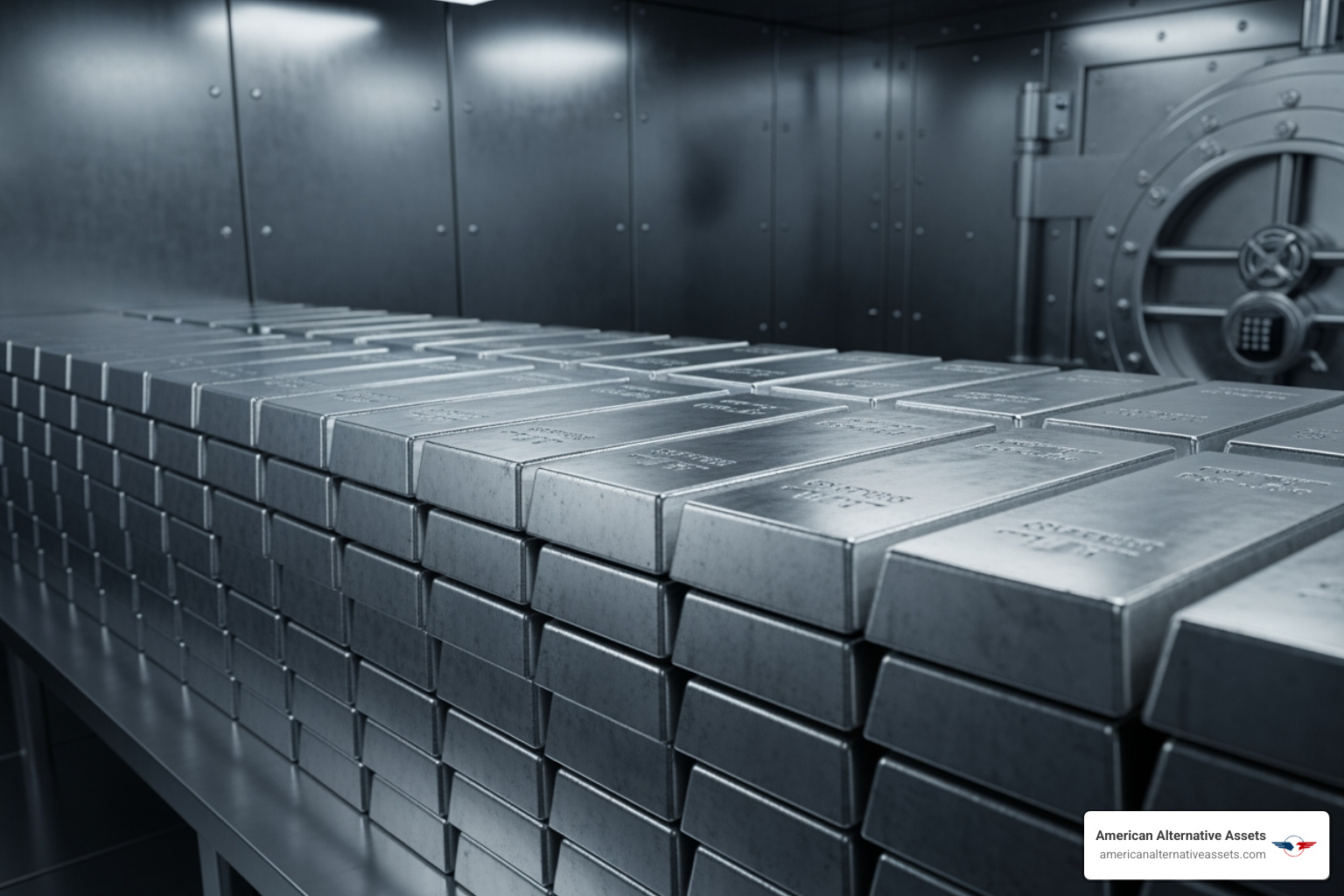
After examining the risks of even the best silver stocks to invest in, a clearer picture emerges. While stocks are claims on corporate performance, physical silver is a tangible asset. This distinction is critical for protecting your retirement savings.
The Argument for Physical Ownership
When you buy a mining stock, you own a piece of a business. When you own physical silver, you own the metal itself. No middleman. No corporate board. No quarterly earnings reports that can sink your investment.
This creates true diversification from Wall Street. Your physical silver sits outside the traditional financial system, operating independently of market sentiment and corporate decisions. During financial crises, stocks can plummet, but physical precious metals have historically maintained their intrinsic value.
Most importantly, physical ownership means no counterparty risk. You are not dependent on a CEO’s judgment or a company’s solvency. There is no entity that can mismanage your asset or declare bankruptcy. The metal is yours, period.
This tangible ownership provides invaluable peace of mind. Throughout history, silver has maintained its status as a store of value. It also offers protection against systemic financial risk in ways paper assets cannot, retaining value when confidence in currencies and financial instruments erodes.
How a Silver IRA Works
A Silver IRA allows you to combine the tax advantages of a retirement account with the security of owning physical silver. Your investment can grow tax-deferred or tax-free, depending on the IRA structure you choose.
A Silver IRA also solves the challenges of storing and insuring precious metals. Professional custodians handle storage and insurance, keeping your assets in highly secure, IRS-approved vaults. You get the benefits of physical ownership without the personal responsibility of safeguarding the metal.
The IRS has specific purity standards for metals held in retirement accounts. The iconic American Silver Eagle Bullion coins are among the most popular choices, containing one troy ounce of 99.9% pure silver. The American Silver Eagle Proof version also qualifies, as do other government-minted coins and approved bars.
At American Alternative Assets, we help clients understand the difference between owning paper promises and owning physical metal. Our relationship-first approach is built on transparency and trust. Your retirement deserves the security of tangible assets you actually own, not just shares in someone else’s business venture.
Frequently Asked Questions About Silver Investing
As we guide investors through the precious metals market, certain questions come up again and again. Let’s address these topics to clarify why physical silver offers unique advantages over paper assets.
What does the gold-silver ratio indicate?
The gold-silver ratio tells you how many ounces of silver it takes to buy one ounce of gold. For centuries, this ratio has averaged around 60:1. However, the current gold-silver ratio is around 84:1. When the ratio is high, it may suggest that silver is undervalued relative to gold. If the ratio were to revert toward its long-term average, silver could see significant upside potential, assuming gold prices remain steady or rise.
Here’s what’s important to understand: The gold-silver ratio is a historical indicator, not a crystal ball. It can offer insights into relative valuations, but it is not a guarantee of future performance. We share this information to help you make informed decisions, not to promise specific outcomes.
Is it better to own physical silver or silver stocks?
This question gets to the heart of our philosophy on wealth preservation.
Silver stocks offer potential leverage, but that leverage comes with significant risks. You are investing in corporate management, operational execution, and geopolitical stability. Your investment’s value can fall due to a mining accident, a market downturn, or poor earnings, even if silver’s price is climbing.
Physical silver offers direct ownership and a true hedge against financial system instability, free from counterparty risk. You own a tangible asset that has held value for thousands of years. There is no CEO who can mismanage it and no corporate debt that can wipe out its value.
For genuine wealth preservation and diversification away from Wall Street, physical silver is the superior choice. For more perspective, you might find our article Is Silver a Good Investment? helpful.
Can you hold physical silver in an IRA?
Yes, and this is one of the most powerful strategies for retirement investors. A self-directed IRA, also known as a Precious Metals or Silver IRA, allows you to combine the tax advantages of a retirement account with the security of owning tangible metal.
The IRS has specific rules about purity and the types of coins or bars allowed. Generally, silver must be .999 pure and produced by a recognized mint or refiner. Popular eligible products include American Silver Eagle Proof coins, American Silver Eagle Bullion coins, and Canadian Maple Leaf silver coins.
Here’s the key requirement: A custodian must hold the physical assets in an IRS-approved depository. You cannot store IRA-owned metals at home. This solves the main concerns about security and insurance, as professional custodians handle both, giving you peace of mind that your assets are protected, insured, and IRS-compliant.
Conclusion: Take Control of Your Wealth with Tangible Assets
The silver market is in an exciting phase, with robust industrial demand and growing investor interest creating compelling fundamentals. Throughout this analysis, we’ve examined what many consider the best silver stocks to invest in, from streaming companies to pure-play miners.
But here’s the real takeaway: how you invest matters far more than what you invest in.
Every silver stock carries risks that have nothing to do with silver’s value, including mining accidents, political instability, and poor management. During a market downturn, even the strongest mining stocks can fall while silver’s intrinsic value remains intact.
Stocks and ETFs are paper promises tied to a volatile market. You’re not owning silver, you’re owning shares in a company. That’s a fundamentally different proposition that exposes your wealth to counterparty risk, operational risk, and market correlation.
Physical silver is a tangible asset you control. No quarterly earnings reports. No corporate debt. Just pure metal that has preserved wealth for thousands of years, sitting securely in an IRS-approved vault as part of your retirement portfolio.
Owning physical metal through a Silver IRA is about wealth preservation and financial security. It’s about holding a universally recognized store of value that provides true diversification from the financial system.
At American Alternative Assets, we specialize in helping investors secure their retirement with physical precious metals through a relationship-first, transparent approach. Our white-glove service is built on trust and ethical practices, ensuring real privacy and protection for your wealth.
To learn more about securing your wealth with tangible assets and find how simple it is to add physical precious metals to your retirement portfolio, explore how to Buy Gold and Silver through our trusted services.
Investing in precious metals involves risk. Past performance does not guarantee future results. This article is for informational purposes only and does not constitute financial advice. Please consult your financial advisor before making investment decisions.