







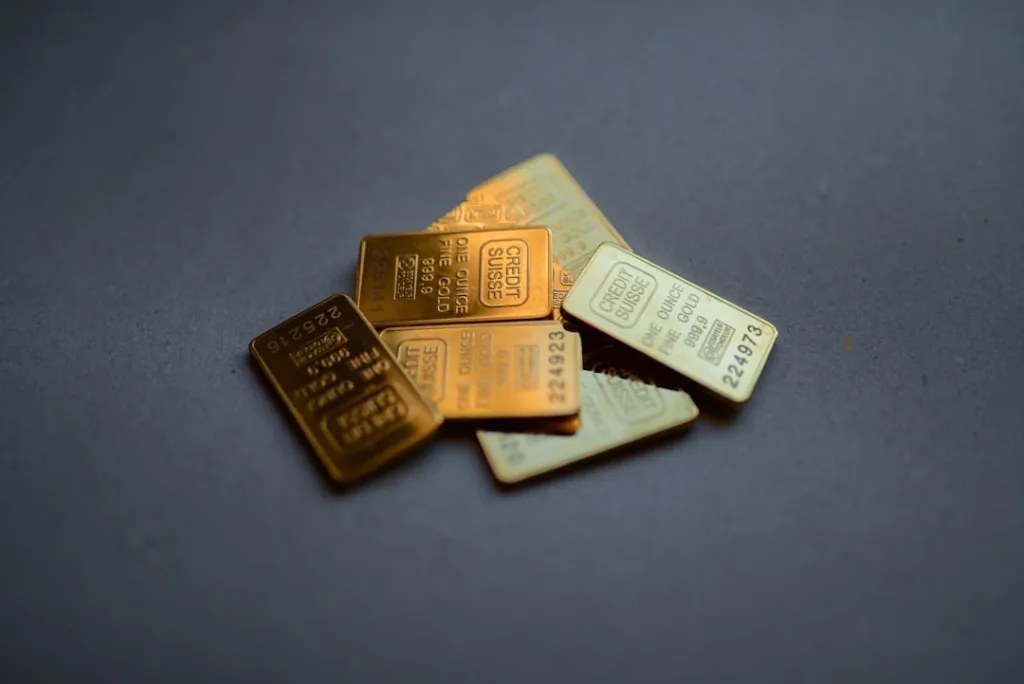
Why Converting 401k to Precious Metals Could Be a Smart Retirement Move
Converting 401k to precious metals is a process that lets you move funds from your employer-sponsored retirement account into a self-directed IRA that holds physical gold, silver, platinum, or palladium, all without triggering taxes or penalties when done correctly.
Here is a quick overview of how it works:
- Check eligibility. Confirm your 401(k) plan allows rollovers (most do after leaving a job, and some allow in-service withdrawals at age 59.5).
- Open a self-directed IRA. Choose a qualified custodian who specializes in precious metals IRAs.
- Request a direct rollover. Have your 401(k) administrator transfer funds directly to your new IRA custodian, no money passes through your hands.
- Purchase IRS-approved metals. Select eligible gold, silver, platinum, or palladium products that meet IRS purity standards.
- Arrange secure storage. Your metals must be held in an IRS-approved depository, not at home.
Markets can shift fast. Inflation erodes purchasing power. And many retirement accounts are tied entirely to paper-based assets that depend on the health of financial systems most of us have little control over. For investors who want something more tangible, a precious metals IRA offers a way to hold real, physical assets inside a tax-advantaged retirement account.
Gold reached an all-time high of $3,500 per ounce in May 2025, driven by tariff uncertainty and inflation fears, and climbed further to $4,600 per ounce by mid-January 2026. That kind of performance has pushed many retirement savers to take a closer look at how physical metals can fit into a long-term strategy.
I’m Shanon Davis, founder of American Alternative Assets, and after watching the 2008 financial crisis expose just how fragile paper-based retirement portfolios can be, I built this company to help ordinary Americans understand the process of converting 401k to precious metals in a way that is simple, compliant, and grounded in real value. This guide will walk you through everything you need to know, step by step.
Physical Assets vs. Paper Assets: Protecting Your Retirement
When we look at traditional retirement planning, most of us are taught to rely on “paper assets.” These include stocks, bonds, mutual funds, and ETFs. These assets are inherently risky, as they share a common vulnerability: they are essentially promises of value. Their worth depends entirely on the performance of a third party, such as a corporation, a bank, or a government. This is known as counterparty risk. If the company goes bankrupt or the financial system faces a systemic shock, your paper wealth can diminish rapidly.
Physical precious metals are different. They represent tangible wealth that has been recognized for thousands of years. Unlike a stock, a gold bar cannot go bankrupt. It doesn’t require a CEO to make good decisions or a board of directors to be honest. It is a private, physical asset that you own.

One of the primary reasons investors consider converting 401k to precious metals is to hedge against inflation. Paper currencies can be printed in unlimited quantities, which often leads to a decrease in purchasing power. Physical gold and silver, however, have a limited supply. During the Great Recession, for example, gold showed its strength as a stabilizer. While the S&P 500 failed to protect investors, gold returned over 27% in 2009 and 32% in 2010.
Many people ask about “paper gold,” such as gold ETFs. Although these may track the price of the metal, they do not offer the same security as physical ownership. With an ETF, you own a share of a fund, not the metal itself. You cannot take delivery of the gold, and you are still exposed to the risks of the financial markets. By choosing a Precious Metals IRA, you are securing physical bullion that is held specifically in your name.
| Feature | Physical Precious Metals (IRA) | Gold ETFs / Paper Assets |
|---|---|---|
| Tangibility | Physical bars and coins | Digital entries/shares |
| Counterparty Risk | Low (Direct ownership) | High (Depends on fund/bank) |
| Delivery | Possible upon distribution | Generally not available |
| Inflation Hedge | Historically strong | Varies with market sentiment |
| Storage | IRS-approved depository | Managed by the fund |
IRS Rules and Purity Standards for Precious Metals IRAs
The IRS is very specific about what can and cannot be held in a retirement account. You can’t just put any gold jewelry or old coins into an IRA. To maintain the tax-advantaged status of your account, the metals must meet strict fineness and purity standards.
According to IRS Code Section 408(m), the following purity standards apply:
- Gold: Must be at least .995 fine (99.5% pure).
- Silver: Must be at least .999 fine (99.9% pure).
- Platinum: Must be at least .9995 fine (99.95% pure).
- Palladium: Must be at least .9995 fine (99.95% pure).
There is one notable exception to the purity rule: the American Gold Eagle coin. Even though it is 22-karat (.9167 fine), the IRS specifically allows it in IRAs. However, other popular coins like the South African Krugerrand do not meet these standards and are prohibited.
When converting your 401(k) to gold or silver in 2026, you must also avoid “collectibles.” This includes numismatic or rare coins where the value is based on scarcity or historical significance rather than metal content. The IRS generally views these as high-risk for retirement accounts. We focus on helping you select bullion bars and coins from approved mints, such as the U.S. Mint or the Royal Canadian Mint, to ensure your account remains fully compliant.
The Step-by-Step Process of Converting 401k to Precious Metals
The transition from a standard 401(k) to a Precious Metals IRA is a structured process. It requires a “Self-Directed IRA” (SDIRA). Most traditional 401(k) providers do not offer the option to hold physical metals, so you must move the funds to a custodian that specializes in alternative assets.
At American Alternative Assets, we pride ourselves on our white-glove service, guiding you through each of these steps:
- Custodian Selection: We help you identify an IRS-approved custodian who will handle the administrative side of your SDIRA, including reporting to the IRS and coordinating with the depository.
- Account Setup: You will fill out the necessary paperwork to open your new Gold IRA or Silver IRA.
- Funding the Account: This is where the rollover happens. Funds are moved from your 401(k) to the new IRA.
- Selecting Your Metals: Once the funds have cleared, you choose which IRS-approved coins or bars you want to purchase.
- Secure Storage: Your metals are shipped directly to an IRS-approved depository. You can choose between “allocated” storage (where your metals are kept in a specific area) or “segregated” storage (where your specific coins are kept physically separate from others). All metals in these facilities are fully insured.
Initiating the Transfer for Converting 401k to Precious Metals
The most critical part of the process is the transfer of funds. To avoid taxes and penalties, we always recommend a direct rollover (also known as a trustee-to-trustee transfer). In this scenario, the money moves directly from your 401(k) administrator to your new IRA custodian. Because you never take possession of the cash, the IRS does not view it as a taxable distribution.
Before starting, we perform an eligibility check. If you have left the employer who provided the 401(k), you are almost certainly eligible to roll over the full balance. If you are still employed, you may be able to perform an “in-service withdrawal.” This usually applies to employees who are age 59½ or older, though every plan has its own unique rules. We can help you review your plan documents to see what is possible.
Selecting Approved Assets when Converting 401k to Precious Metals
Once your account is funded, the exciting part begins: choosing your physical assets. Many of our clients look at the current economic climate when making their selections. With gold reaching historic highs of $4,600 in early 2026, the demand for physical gold remains high as a primary store of value.
However, silver is also a popular choice for its industrial utility and potential for growth. Platinum and palladium offer further diversification. By selecting a mix of these metals, you can build a portfolio designed for long-term stability. We ensure that every product you select meets the IRS fineness requirements, protecting you from administrative errors that could lead to penalties.
Avoiding Penalties and Understanding Tax Implications
The IRS is very strict about the timeline and handling of retirement funds. If you choose an indirect rollover instead of a direct one, the 401(k) administrator will typically withhold 20% of the balance for federal taxes. You then have exactly 60 days to deposit the full original amount into your new IRA. If you don’t replace that withheld 20% out of your own pocket, or if you miss the 60-day window, the IRS will treat the money as an early withdrawal.
The consequences of an improper rollover are steep:
- Income Tax: The entire amount is taxed as ordinary income at your current bracket.
- Early Withdrawal Penalty: If you are under age 59½, you will face an additional 10% penalty.
By sticking to a direct rollover, you maintain the tax-deferred status of your savings. This means your investment can grow without being diminished by annual taxes. If you choose a Roth IRA option, you may even be able to enjoy tax-free withdrawals in the future, provided you meet the IRS requirements.
It is also important to remember Required Minimum Distributions (RMDs). For traditional IRAs, the IRS currently requires you to start taking distributions at age 73. When you reach this age, you can either sell a portion of your metals for cash or take an “in-kind” distribution, where the physical metals are shipped directly to you (though their value will still be taxed as income).
Frequently Asked Questions
Can I store my IRA precious metals at home?
No. This is one of the most common misconceptions in the industry. IRS rules require that all physical metals held in an IRA be stored in the possession of a qualified third party, such as a bank or an approved depository. If you take personal possession of the metals or store them in a home safe, the IRS will consider it a “distribution.” This would disqualify the tax-advantaged status of your account, leading to immediate taxes and potential penalties. We work with world-class facilities like the Delaware Depository to ensure your assets are safe, insured, and fully compliant.
What are the contribution limits for 2025 and 2026?
The IRS adjusts contribution limits periodically to account for inflation.
- For 2025: The annual IRA contribution limit is $7,000. If you are age 50 or older, you can make a “catch-up” contribution of an additional $1,000, for a total of $8,000.
- For 2026: The limit increases to $7,500 for those under 50, and $8,600 for those age 50 and older.
Note that these limits apply to new contributions made from your earned income. Rollovers from a 401(k) are not subject to these annual limits, meaning you can move your entire 401(k) balance into a Precious Metals IRA regardless of the amount.
How long does the conversion process typically take?
On average, the process of converting 401k to precious metals takes between 10 to 30 business days. The timeline depends largely on how quickly your current 401(k) administrator processes the paperwork and releases the funds. Once the funds reach your new custodian, the purchase of the metals and their transport to the depository usually happens within a few days. We stay in constant communication with all parties involved to ensure the process moves as quickly and smoothly as possible.
Conclusion
Securing your financial future requires looking beyond the digital numbers on a screen. By converting 401k to precious metals, you are taking a proactive step toward true diversification and wealth protection. At American Alternative Assets, we believe that every investor deserves the privacy and security that comes with physical asset ownership.
Our team in Woodland Hills, California, is dedicated to providing a relationship-first experience. We don’t just set up accounts, we build lasting partnerships based on trust and ethical practices. Whether you are concerned about the next market downturn or simply want the peace of mind that comes with holding tangible wealth, we are here to help you navigate the rules and regulations of the precious metals market.
Secure your retirement with American Alternative Assets
This article is for informational purposes only and does not constitute financial advice. Please consult your financial advisor before making investment decisions.
Investing in precious metals involves risk. Past performance does not guarantee future results.