







Why Precious Metals Matter in Today’s Economy
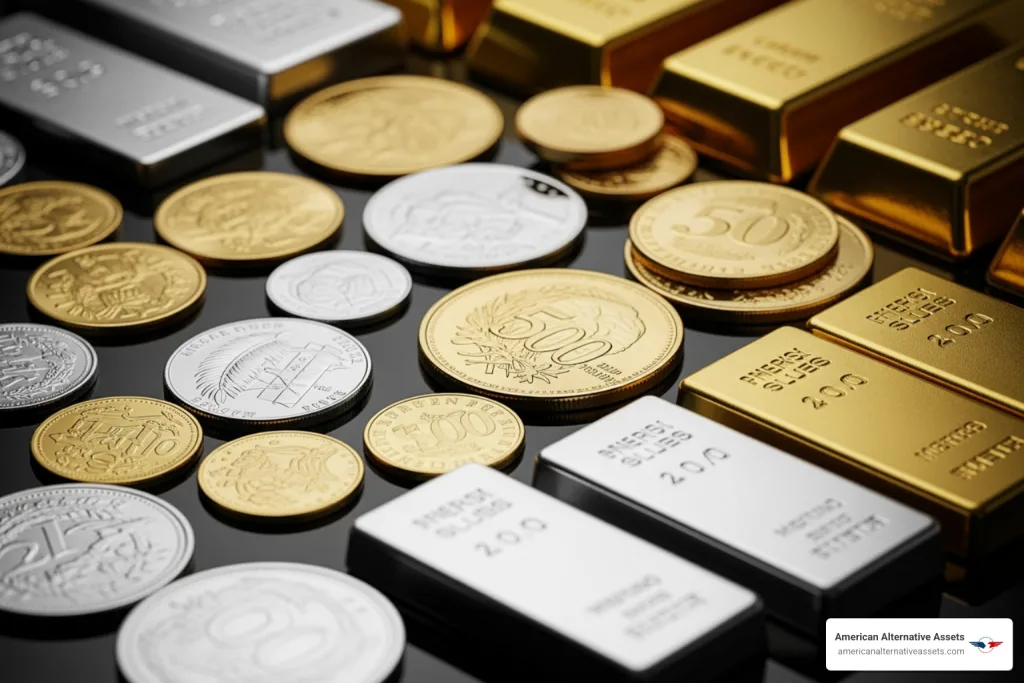
A precious metals guide is essential for anyone looking to protect their wealth during uncertain economic times. Precious metals like gold, silver, platinum, and palladium have served as stores of value for thousands of years, offering protection against inflation, currency devaluation, and market volatility.
Here’s what you need to know:
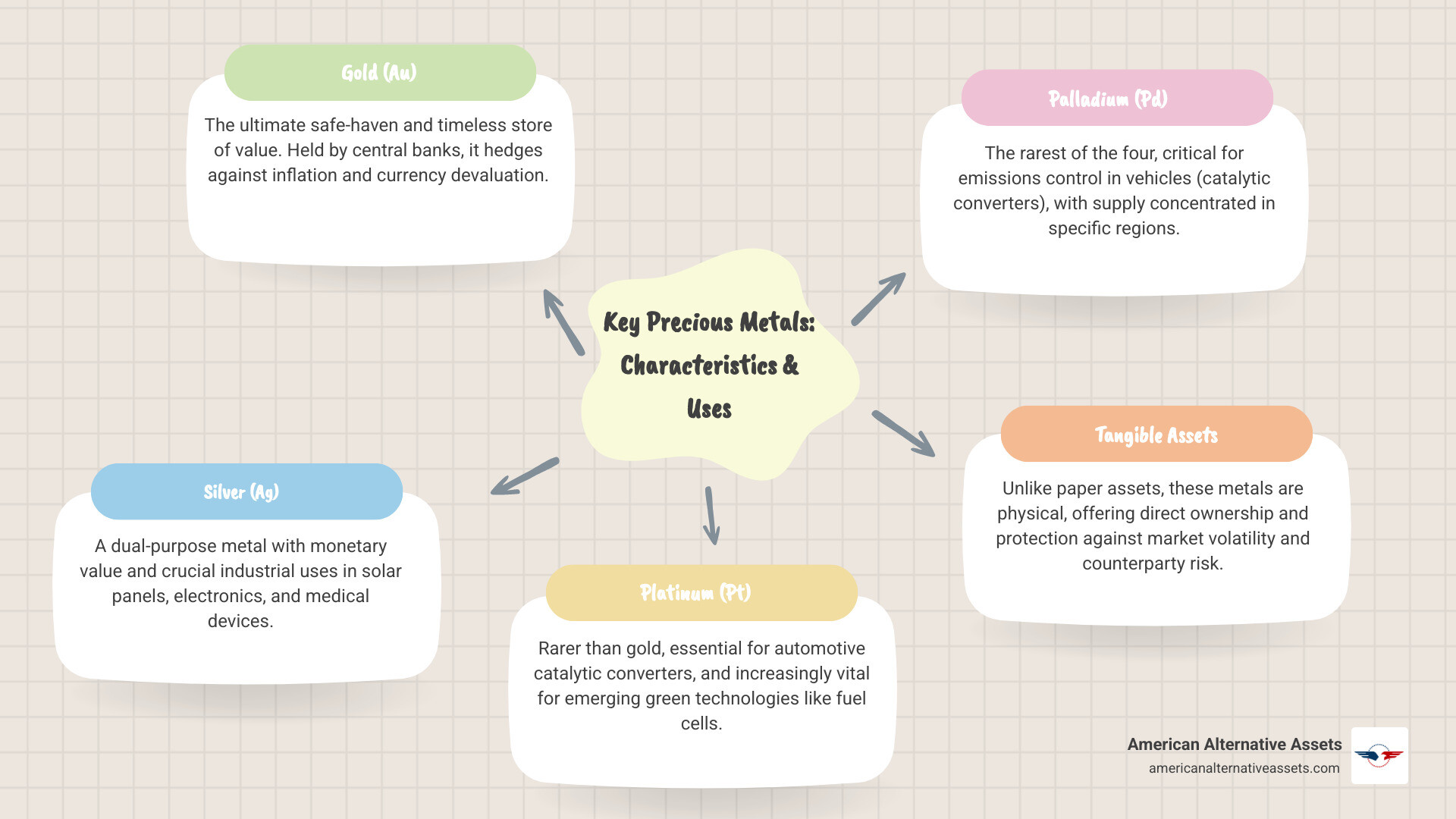
- Gold – The ultimate safe-haven asset, held by central banks worldwide. Gold has appreciated nearly 8% annually since 1971.
- Silver – A dual-purpose metal with both monetary value and industrial applications in solar panels, electronics, and medical devices.
- Platinum – Rarer than gold, primarily used in automotive catalytic converters and emerging green technologies.
- Palladium – The rarest of the four, critical for emissions control in vehicles.
Precious metals are tangible assets you can hold in your hand. Unlike stocks or bonds, they carry no counterparty risk. They don’t depend on any company’s performance or government’s promise. When markets swing on emotion rather than fundamentals, physical metals remain solid.
The United States holds the world’s largest gold reserves at 8,133.5 tons. Central banks have returned to buying gold at roughly 1,200 tons per year, a rate 2.5 times higher than the prior decade. This shift signals a global move toward tangible assets and away from purely paper-based systems.
My story with precious metals started early. I was nine years old when my grandfather handed me a silver Morgan coin and told me, “This is real money.” After decades in venture capital and witnessing the 2008 crash, I founded American Alternative Assets to help ordinary Americans hold value outside a fragile system. This precious metals guide draws on that experience to help you make informed decisions about protecting your wealth.
The “Big Four” Precious Metals: A Detailed Look
This section provides a deep dive into the unique characteristics, investment cases, and market drivers for the most popular precious metals.
Gold (Au): The Timeless Store of Value
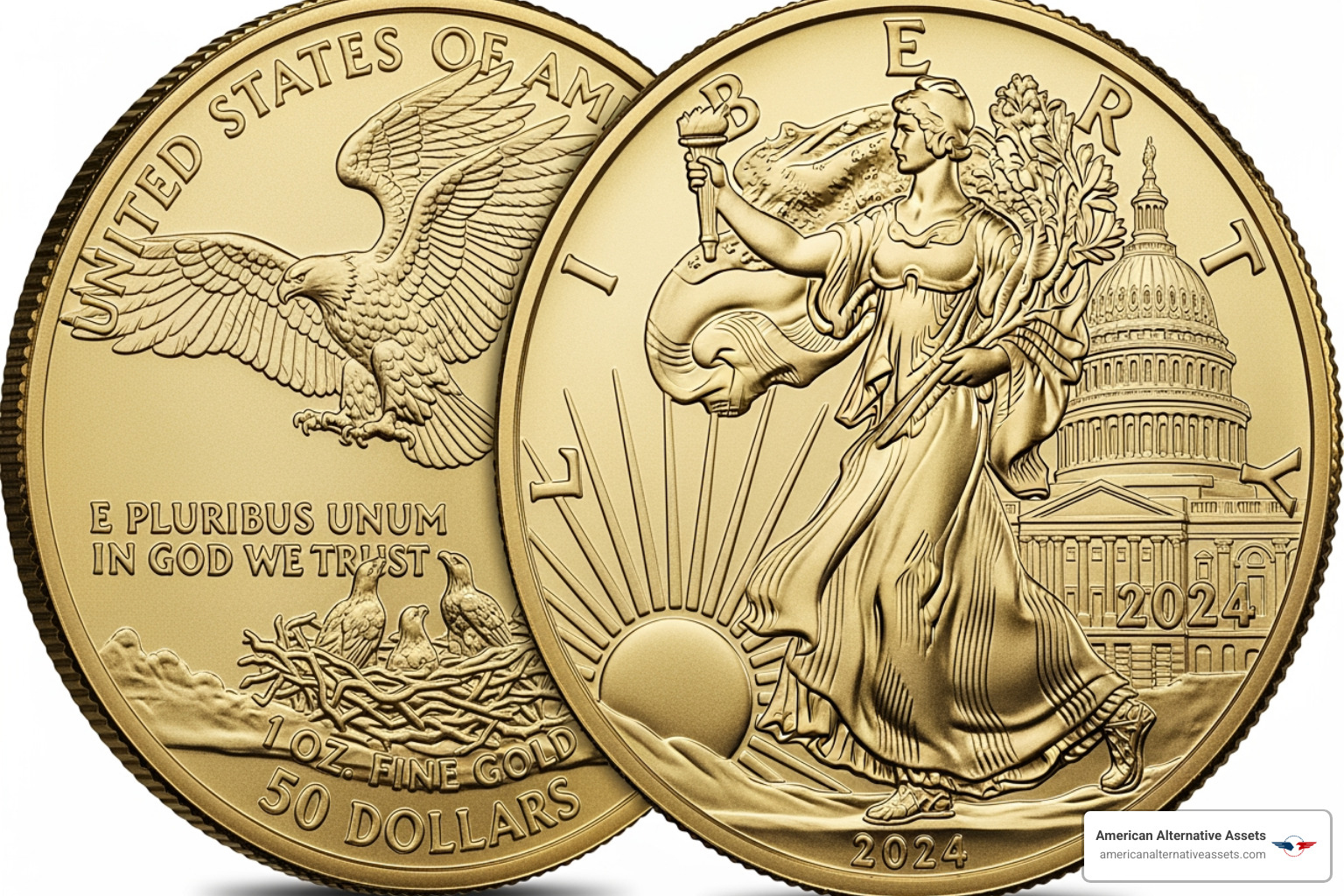
Gold, with its distinctive luster and remarkable properties, has captivated humanity for millennia. It is highly valued for its rarity, malleability, corrosion resistance, and ability to conduct heat and electricity. Unlike many other commodities, a significant portion of all gold ever mined is still in existence, largely due to its durability and resistance to corrosion. This makes it a timeless store of value.
For investors, gold serves as a premier safe-haven asset. During times of economic uncertainty, political instability, or market volatility, investors and central banks often flock to gold as a reliable hedge. Its price is less affected by typical supply and demand dynamics because the vast amount of above-ground gold acts as a buffer. Central banks, recognizing its role as a hedge against inflation and currency devaluation, have been significant buyers of gold, accumulating it at a rate of roughly 1,200 tons per year in recent quarters, which is 2.5 times the rate of the prior decade. This central bank activity underscores gold’s enduring appeal as a reserve asset.
Since the United States abandoned the gold standard in 1971, gold prices have appreciated by almost 8% annually, demonstrating its long-term potential for wealth preservation. The United States currently holds the world’s largest reserves of gold, amounting to 8,133.5 tons as of August 2024. This substantial holding further solidifies gold’s status in the global financial landscape.
We understand the allure of gold, not just as a beautiful metal, but as a critical component for safeguarding financial futures. Its unique characteristics make it an invaluable asset in a well-diversified portfolio. You can learn more about the Investor Benefits in Owning Gold and how it can contribute to your financial resilience.
Silver (Ag): The Dual-Purpose Metal
Often referred to as “gold’s little sibling,” silver possesses a unique dual identity that makes it a fascinating and sometimes more volatile investment. It functions both as a monetary metal and a critical industrial commodity. Silver is valued for its exceptional electrical conductivity, thermal conductivity, reflectivity, and antimicrobial properties.
Roughly half of silver’s demand comes from industrial uses. It is essential in a wide array of modern technologies, including solar panels, electronics, and medical devices. For instance, the demand for silver in solar energy has grown at approximately 16% annualized compound returns over the last nine years, a trend projected to continue. This strong industrial demand means silver prices are significantly impacted by economic growth and technological advancements.
As an investment, silver can act as a hedge against inflation and a store of value, much like gold. However, its substantial industrial applications make its price more sensitive to economic cycles and supply chain disruptions. This can lead to higher volatility compared to gold, presenting both greater opportunities and risks for investors. Despite its volatility, silver remains a tangible asset, a crucial element in our modern world, and a valuable component of a diversified portfolio. For those interested in physical silver, the American Silver Eagle Bullion is a popular choice. You can also find More information on silver’s industrial uses in detailed reports.
Platinum (Pt) & Palladium (Pd): The Industrial Powerhouses
Platinum and palladium are often grouped together as Platinum Group Metals (PGMs), and their primary value drivers stem from their indispensable industrial applications. Both are significantly rarer than gold and silver, contributing to their high economic value.
Platinum is a dense, malleable, ductile, highly unreactive metal with a silvery-white color. It is primarily used in automotive catalytic converters, which reduce harmful emissions from vehicle exhausts. Beyond the automotive sector, platinum also finds applications in jewelry, fuel cells (a key component in green energy technologies), and various medical applications, including chemotherapy drugs. Its rarity is profound—it’s estimated that all the platinum ever mined could fit inside a small room.
Palladium, a close chemical cousin to platinum, shares many industrial uses. Like platinum, its most significant application is in automotive catalytic converters, accounting for about 80% of global palladium supplies. It is also used in electronics, dentistry, and jewelry. Palladium has gained considerable attention as an investment metal due especially to its industrial demand, driven by tightening global emission standards.
The supply of both platinum and palladium is highly concentrated. In 2023, South Africa was the world’s largest producer of platinum and the second-largest producer of palladium, with Russia being the largest producer of palladium. This geographical concentration makes their supply chains vulnerable to geopolitical events and mining disruptions, which can significantly impact their prices. For a deeper dive into these critical metals, refer to the Platinum-Group Metals report from USGS. We recognize the vital role these metals play in modern industry and their potential for growth as technology advances and environmental regulations evolve.
A Comprehensive Precious Metals Guide to Investing
To truly understand how to invest in precious metals, it’s crucial to grasp the fundamental differences between owning physical metal and engaging with paper derivatives. Our approach at American Alternative Assets emphasizes the tangible, ensuring your wealth is truly protected.
Physical Bullion: The Foundation of Tangible Wealth
When we talk about investing in precious metals, we are primarily advocating for physical bullion—coins and bars made of pure gold, silver, platinum, or palladium. This is the cornerstone of tangible wealth and offers distinct advantages over paper assets like stocks or ETFs. Paper assets introduce counterparty risk and do not grant direct ownership of the underlying physical commodity. For us, owning physical metals means true wealth preservation.
| Advantage | Description |
|---|---|
| Direct Ownership | You own the actual metal, not a promise or a share in a fund. |
| Intrinsic Value | Precious metals have inherent value, independent of any government or corporation. |
| No Counterparty Risk | Your investment is not reliant on the solvency or performance of a third party. |
| Tangibility | You can hold your wealth in your hand, offering a psychological and practical sense of security. |
| IRA Eligibility | Certain physical bullion products are approved for inclusion in Precious Metals IRAs, offering tax advantages. |
This distinction is vital. The ability to hold a tangible asset that cannot be hacked, deleted, or devalued by a central authority provides unparalleled peace of mind. We believe that physical precious metals serve as a critical defense against financial uncertainties, as highlighted in “The CBDC Threat: Why Physical Precious Metals Are Your Last Line of Financial Defense.” We are here to help you build this foundation of tangible wealth.
Understanding Pricing and Authenticity
Navigating the precious metals market requires understanding how prices are determined and how to ensure the authenticity of your purchases. The price of precious metals is influenced by a complex interplay of supply and demand, economic indicators, and geopolitical events.
The spot price is the current market price at which a precious metal can be bought or sold for immediate delivery. This is the benchmark price, typically quoted per troy ounce (one troy ounce equals 31.1 grams). You will also encounter bid and ask prices. The bid price is what a dealer is willing to pay for a metal, and the ask price is what they are selling it for. The difference between these two is the dealer’s spread. Retail prices for physical bullion will always include a premium or markup above the spot price, which covers manufacturing, distribution, and dealer costs. This premium can vary based on the product type (e.g., coins often have higher premiums than bars due to their intricate designs and legal tender status) and market conditions.
The London Bullion Market Association (LBMA) plays a significant role in the global precious metals market. It sets refining standards and maintains a list of accredited refiners, ensuring the quality and integrity of bullion traded internationally. The LBMA also facilitates daily auctions that establish benchmark prices for gold and silver, providing transparency and a reference point for market participants.
To ensure authenticity, it is paramount to purchase from a reputable dealer. A trustworthy dealer will have a long-standing history of positive customer feedback and transparent practices. Authentic bullion products feature specific security features, mint marks, and purity stamps. For example, some modern coins incorporate micro-engraving or Bullion DNA technology to deter counterfeiting. We prioritize transparency and security in all our transactions, making the process of buying and selling gold simple and secure for you.
Secure Storage for Your Precious Metals
Once you’ve made the wise decision to invest in physical precious metals, the next crucial step is ensuring their secure storage. The method you choose will depend on your comfort level, the quantity of your holdings, and whether your investment is part of a retirement account.
Here are the primary storage options we recommend:
- Professional Depositories: These are highly secure, insured, and audited facilities specifically designed for storing precious metals. For investors with larger holdings or those seeking maximum security, professional depositories offer peace of mind. Many are located in secure, strategic locations, and they maintain strict protocols for access and inventory management.
- IRA-Approved Vaults: If you are investing through a Precious Metals IRA, federal regulations require your physical bullion to be stored in an IRS-approved depository. These facilities meet stringent security and reporting standards, ensuring your retirement assets are compliant and protected. We can guide you through selecting a suitable IRA-approved storage solution.
- Home Storage Considerations: For smaller quantities, some investors opt for home storage, typically in a secure safe. While this offers immediate access, it comes with inherent risks such as theft, fire, or natural disaster, and may not be fully insured by standard homeowner policies. If considering home storage, ensure your safe is properly secured, fire-rated, and that you have adequate insurance coverage. Controlling for temperature and humidity is also important to maintain the condition of your metals.
We understand that securing your tangible assets is just as important as acquiring them. We partner with leading security companies that offer secure, professional storage solutions to protect your investments. We work with clients to establish depository accounts, ensuring that your precious metals are stored safely and compliantly.
The Role of Precious Metals in a Modern Portfolio
In today’s complex global economy, smart investors and central banks increasingly recognize the indispensable role of precious metals. These tangible assets offer unique benefits that can fortify a portfolio against various economic headwinds.
Diversification and Hedging: A Complete Precious Metals Guide
A key reason investors are drawn to precious metals is their ability to improve portfolio diversification and act as a powerful hedge. Diversification means spreading your investments across different asset classes to reduce overall risk. Precious metals, particularly gold, typically exhibit a low or even negative correlation to traditional assets like stocks and bonds. This means that when stocks or bonds decline, precious metals often hold their value or even increase, helping to stabilize your portfolio.
For instance, during recent crisis periods, gold has outperformed the S&P 500 by an average of 24 percentage points and U.S. Treasuries by an average of 10 percentage points. This historical performance underscores its role as a reliable safe haven asset.
Beyond diversification, precious metals are renowned for their ability to hedge against inflation. When the purchasing power of fiat currencies erodes, the intrinsic value of gold and silver tends to rise, preserving your wealth. This makes them an invaluable tool for maintaining your purchasing power over the long term. We believe that understanding this aspect is crucial for building a resilient financial future, which is why we emphasize Why Precious Metals Matter Now More Than Ever in our discussions with clients.
Central Banks, Geopolitics, and Market Influence
The actions of central banks and the broader geopolitical landscape significantly impact the precious metals market, particularly gold. Central banks are not just passive observers; they are active participants, often buying gold to diversify their reserves away from a single currency, such as the U.S. dollar. This trend of “de-dollarization” is a strategic move to build resilience against currency fluctuations and economic sanctions. As mentioned earlier, central banks are now buying gold at 2.5 times the rate of the prior decade.
Geopolitical events, from regional conflicts to global trade disputes, introduce uncertainty into financial markets. During such times, investors and nations seek stability, and precious metals, especially gold, become highly attractive. Gold’s status as a universally accepted store of value makes it a go-to asset when trust in paper currencies or political systems wavers.
This interplay between central bank policies and geopolitical tensions creates a dynamic environment for precious metals. Understanding these macro-level drivers is essential for any investor considering precious metals. We encourage you to explore how Central Banks Are Betting Big on Gold: Are You Prepared for What’s Coming? and how Geopolitical Tensions and Your Retirement: Why a Precious Metals IRA Could Be Your Safety Net.
Your Precious Metals Guide to Portfolio Allocation
Determining the right allocation for precious metals within your investment portfolio is a personal decision, but there are common considerations and recommendations that can serve as a valuable starting point. Our general guidance suggests that precious metals can constitute a strategic portion of your overall assets.
For many investors, a common allocation suggestion for gold ranges from 5% to 15% of a total portfolio. This allocation aims to provide stability and act as a hedge against market downturns and inflation. Gold is often considered a long-term core strategic position.
Silver, with its dual monetary and industrial demand, can offer higher growth potential but also comes with increased volatility. For silver and other critical materials, a smaller allocation, perhaps 3% to 5%, might be considered. The connection to critical materials like copper and uranium is becoming increasingly relevant due to current economic trends. Copper is essential for electrification, with forecasts indicating electricity demand will increase by roughly 165% by 2050, driving significant demand for the metal. Similarly, the demand for uranium is projected to outstrip supply, with a nearly 1 billion pound deficit expected by 2040, fueled by the renewed focus on nuclear power. These trends underscore the importance of these materials in a forward-looking portfolio.
The best allocation depends on your individual financial goals, risk tolerance, and time horizon. Understanding What Percentage of My Portfolio Should Be Allocated to Gold? is a crucial step in building a resilient and diversified investment strategy.
Frequently Asked Questions About Investing in Precious Metals
What is the best precious metal for a first-time investor?
Gold is often suggested for its relative stability and long history as a monetary asset. It has a larger, more liquid market and is widely recognized as a safe haven. Silver provides a lower price point and significant growth potential tied to industrial demand, making it another popular choice, though it tends to be more volatile. The best option depends on your personal financial goals, risk tolerance, and how you envision the metal fitting into your overall portfolio.
Can I hold physical precious metals in a retirement account?
Yes, a What is a Self-Directed IRA? allows you to own certain IRS-approved physical gold, silver, platinum, and palladium coins and bars within a tax-advantaged retirement account. This is a powerful way to diversify your retirement savings with tangible assets. These metals must meet specific purity standards and be stored in an IRS-approved depository, not at home. We specialize in helping clients establish and manage these Precious Metals IRAs.
How do I know my precious metals are authentic?
To ensure authenticity, it is crucial to purchase from a reputable dealer with a long-standing history of positive customer feedback and transparent business practices. Authentic bullion products have specific security features, mint marks, and purity stamps that can be verified. Always check the dealer’s credentials, look for third-party certifications, and familiarize yourself with the security features of the specific coins or bars you are purchasing. For example, some mints engrave unique serial numbers or use advanced anti-counterfeiting measures. We prioritize due diligence to ensure every purchase is authentic and secure.
Conclusion: Securing Your Financial Future with Tangible Assets
This guide has shown that precious metals, particularly physical gold and silver, serve a vital role in a diversified investment strategy. They offer a proven way to hedge against inflation, currency debasement, and geopolitical risk. Unlike paper assets, owning tangible metals places your wealth directly in your control. For those planning for retirement, a Precious Metals IRA offers a powerful way to incorporate these benefits. At American Alternative Assets, we provide a white-glove service to help clients steer this process with trust and transparency. Learn more about how a Gold IRA can protect your retirement savings.
This article is for informational purposes only and does not constitute financial advice. Investing in precious metals involves risk. Past performance does not guarantee future results.