







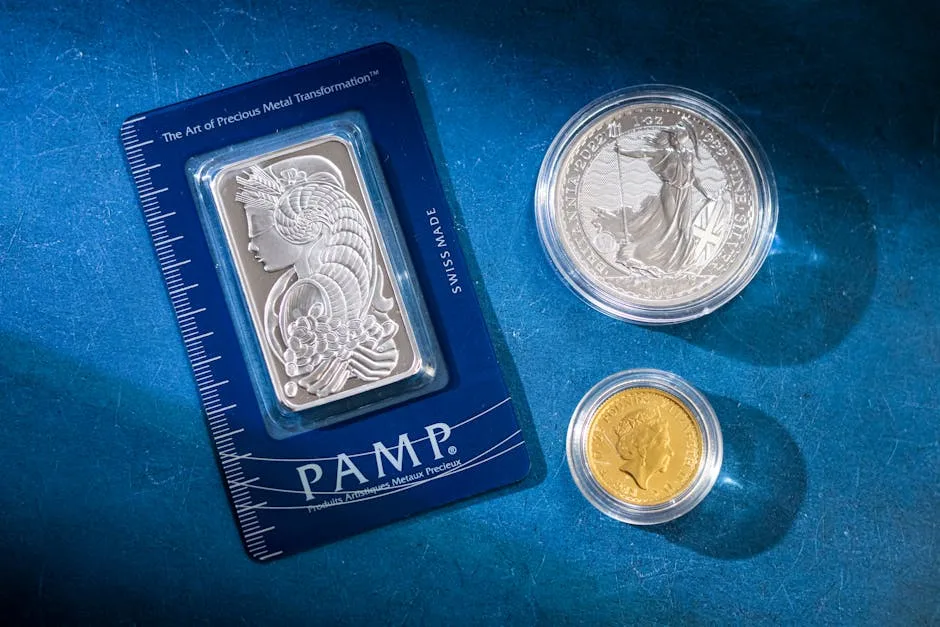
What Are Silver Precious Metals, and Why Do They Matter for Your Retirement?
Silver precious metals are physical, tangible assets that have stored value for more than 6,000 years, and today they remain one of the most accessible ways to diversify a retirement portfolio away from the volatility of traditional financial markets.
Here is a quick overview of what you need to know:
| Topic | Key Facts |
|---|---|
| What it is | A naturally scarce element (Ag, atomic number 47) valued for beauty, rarity, and utility |
| Why it holds value | Limited supply, global demand, and no counterparty risk when held physically |
| Industrial demand | Used in electronics, solar panels, medical devices, and more |
| Investment forms | Physical coins, bars, rounds, and Silver IRAs |
| Top producers | Mexico, China, and Peru lead global mining output |
| IRA eligibility | Must be at least 99.9% pure and held by an approved third-party custodian |
Silver has played a role in virtually every major civilization, from ancient Greek drachmas to the Roman denarius to the British pound sterling. Today, it sits at a unique crossroads: it is both a critical industrial material and a time-tested store of wealth.
For people who are concerned about market volatility, inflation, or the long-term stability of paper-based assets, physical silver offers something rare in modern finance: real, tangible value you can hold in your hand.
This guide covers everything you need to know, from silver’s physical properties and market dynamics to how you can include it in a retirement account.
I’m Shanon Davis, and my interest in silver precious metals goes back to childhood, when my grandfather placed a Morgan silver dollar in my hand and called it “real money.” After years in venture capital and living through the 2008 financial crisis firsthand, I founded American Alternative Assets to help ordinary people access the kind of wealth protection that physical precious metals have provided for generations.

The Unique Properties and Industrial Power of Silver Precious Metals
While many people think of silver primarily as jewelry or currency, it is actually one of the most hardworking elements on the periodic table. Its unique physical and chemical properties make it indispensable to modern life.
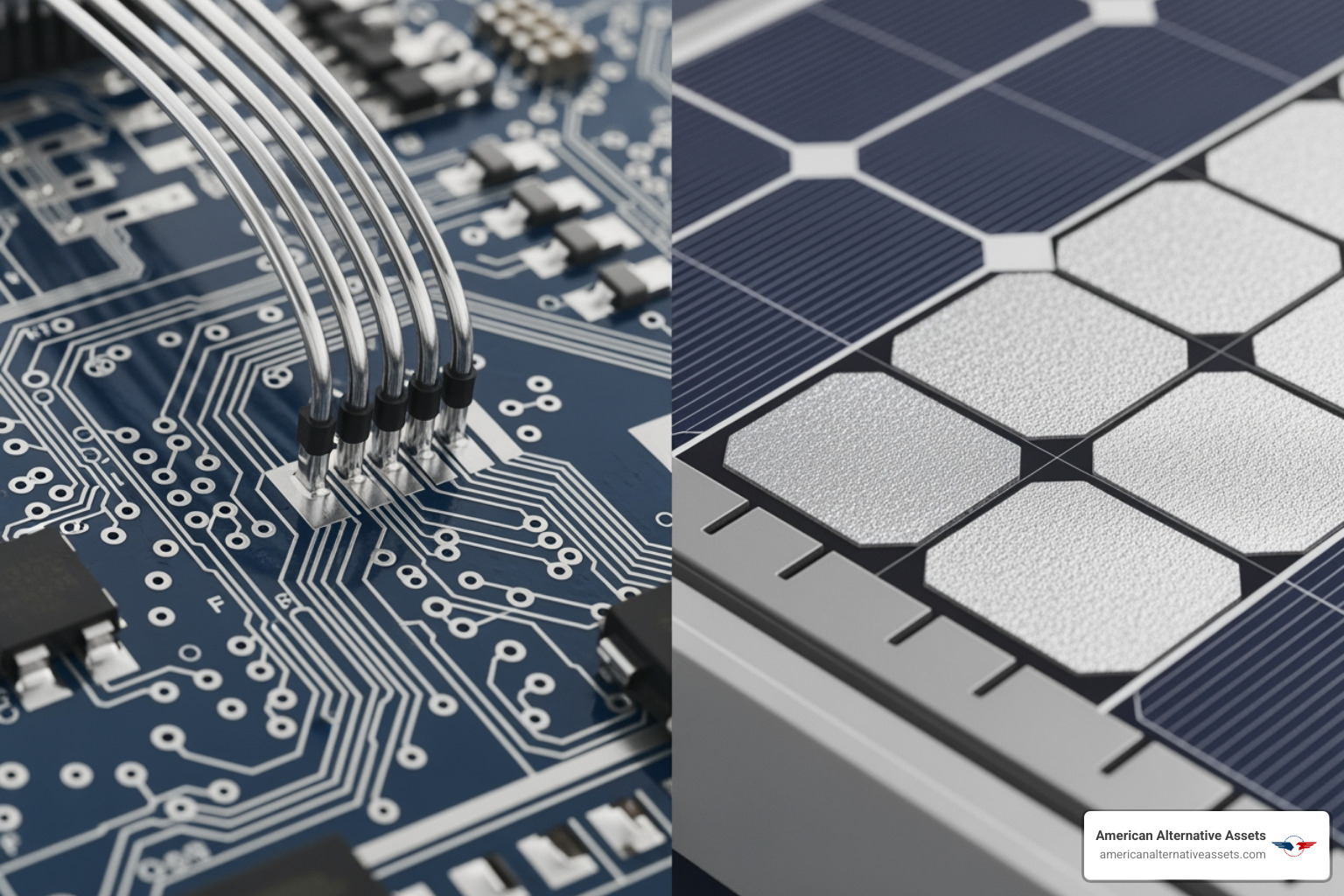
Silver possesses the highest electrical and thermal conductivity of all metals. This means electricity flows through silver with less resistance than through copper or gold. It is also the most reflective metal known to man, capable of reflecting about 95 percent of the visible light spectrum.
Beyond its shine, silver is a powerful antimicrobial agent. For centuries, people used silver coins to keep milk from spoiling. Today, this property is harnessed in medical devices, such as silver-coated catheters and bandages, to prevent bacterial growth.
Industrial Demand and the Silver Precious Metals Market
The “industrial side” of silver is a major driver of its value. Unlike gold, which is mostly stored in vaults, a massive portion of the silver produced every year is “consumed” by industry.
- Solar Energy: Silver is a key component in photovoltaic cells. As the world shifts toward renewable energy, the demand for silver in solar panels continues to climb.
- Electronics and 5G: From your smartphone to the latest 5G towers, silver’s conductivity makes it the go-to metal for printed electrical circuits and high-speed connections.
- Automotive: Electric vehicles (EVs) use significantly more silver than internal combustion engines due to their complex electrical systems and battery management.
- Catalysis: Silver acts as a critical catalyst in chemical reactions, specifically in the production of ethylene oxide, which is used to create plastics and antifreeze.
Physical and Chemical Characteristics
Silver is element 47 on the periodic table, represented by the symbol Ag (from the Latin argentum). It has an atomic weight of 107.8682. One of its most appealing traits for craftsmen is its malleability and ductility, meaning it can be hammered into thin sheets or drawn into fine wire without breaking.
While silver is resistant to oxidation (it doesn’t “rust” like iron), it does react with sulfur in the air to form a dark layer of tarnish. To make it more durable for functional use, it is often alloyed. For example, “Sterling Silver” is a standard that consists of 92.5 percent silver and 7.5 percent copper. However, for those looking at silver bullion investment, the focus is usually on “fine silver,” which is 99.9 percent pure or higher.
From Ancient Drachmas to Modern Bullion: A History of Value
Silver has been recognized as a form of wealth since at least 3000 B.C., with early mining occurring in Anatolia (modern-day Turkey). It has served as the backbone of global trade for millennia.
The first official silver coins appeared around 700 B.C. in Lydia. Later, the Greek drachma and the Roman denarius became the standard “global” currencies of their time. During the Roman Empire, Spanish mines were pushed to their limits to feed the massive demand for silver coinage.
In North America, the discovery of the Comstock Lode in Nevada in 1859 changed the landscape of the U.S. economy. At its peak in the 1870s, U.S. silver production topped 120 million troy ounces annually. However, the most significant change for modern Americans occurred in 1964, when the U.S. Mint transitioned away from 90 percent silver in circulating dimes, quarters, and half-dollars, replacing them with copper-nickel “clad” compositions.
Silver as a Global Monetary Standard
For centuries, the world operated on a bimetallic standard where both gold and silver were used as legal tender. The British “pound sterling” originally referred to a literal pound of sterling silver. The “troy ounce,” which remains the standard measurement for silver precious metals today, has roots dating back to 1527 in Britain and was officially adopted by the U.S. in 1828.
Under the mercantile system, nations measured their power by the amount of silver and gold in their treasuries. Silver was so highly prized in the East that for centuries, European silver flowed steadily into China in exchange for silk and tea.
The Shift from Currency to Investment Asset
As nations moved toward fiat currency (money not backed by a physical commodity), silver’s role changed. It shifted from being the money in your pocket to a vital investment asset and “safe haven.” Because silver has intrinsic value, meaning it is useful and scarce, it maintains purchasing power even when paper currencies lose value to inflation.
Historical price peaks, such as the surge in the early 1980s and the climb in 2011, remind investors that silver can experience explosive growth when economic conditions create a “perfect storm” of high demand and low supply.
Understanding the Market: What Drives the Price of Silver?
If you are researching silver, you have likely seen the term “spot price.” The spot price is the current market price at which silver can be bought or sold for immediate delivery. This price fluctuates constantly throughout the trading day.
Several factors influence these movements:
- Inflation: When the cost of living goes up, investors often flock to silver precious metals to protect their wealth.
- U.S. Dollar Strength: Silver is typically priced in dollars. When the dollar weakens, silver often becomes more expensive to buy.
- Industrial Demand: Because silver is so widely used in tech and green energy, a booming economy can actually drive silver prices higher due to industrial needs.
- Mining Supply: Silver is unique because it is often a “byproduct” metal. About 70 percent of the world’s silver comes from mines primarily looking for lead, zinc, copper, or gold. If those industries slow down, silver supply can tighten.
Why Silver Precious Metals Belong in a Diversified Portfolio
Many of our clients at American Alternative Assets ask, “Is silver a good investment?” While we don’t give personalized financial advice, we do point out that physical silver has a low correlation with the inherent instability of stocks and bonds. When the stock market is crashing, physical silver often provides the stability that paper assets lack.
Silver is often called “the poor man’s gold” because it allows investors to acquire a larger volume of physical metal for a lower entry price than gold. However, it is also more volatile. Because the silver market is smaller than the gold market, even small amounts of money moving in or out can cause larger price swings. This volatility can be a challenge, but for the proactive investor, it also represents opportunity.
Global Supply and Production Factors
In 2023, more than 25,800 tons of silver were excavated globally. Mexico remains the undisputed king of silver production, accounting for over 20 percent of the world’s mine output. China and Peru follow closely behind.
Interestingly, above-ground stockpiles of silver have been diminishing. Unlike gold, which is almost always recycled, silver is often used in such small amounts in electronics that it is not economically viable to recover. This means that a significant portion of mined silver is “lost” every year, making the remaining supply even more precious.
Investing in Physical Silver Precious Metals for Retirement
At American Alternative Assets, we believe in the power of physical ownership. There is a fundamental difference between owning a piece of paper that says you own silver and actually having the metal in your possession or in a secure, allocated vault.
Physical silver is a tangible asset. It cannot be “hacked,” it cannot be deleted in a bank failure, and it does not rely on a company’s management to maintain its value, unlike paper stocks which are subject to corporate mismanagement. It provides a level of privacy and direct control that is simply not available in the digital banking system.
Physical Silver Precious Metals vs. Paper Assets
Many people are tempted by silver ETFs (Exchange Traded Funds) or silver mining stocks because they seem “easier.” However, these “paper assets” come with significant counterparty risk. When you buy an ETF, you don’t own the silver; you own a share in a trust that may or may not have the physical metal to back every share during a crisis.
Furthermore, “delivery hurdles” mean it is nearly impossible for an individual investor to actually take possession of their silver from a paper contract. Physical silver bars and coins eliminate these middlemen. If you’re interested in exploring the world of silver IRA rollovers, you are choosing a path that prioritizes security and tangible wealth over paper promises.
Setting Up a Silver IRA
One of the most effective ways to hold physical silver is through a Self-Directed IRA. This allows you to enjoy the same tax advantages as a traditional IRA while holding physical bullion.
To be eligible for a Silver IRA account, the metal must meet strict IRS purity standards:
- Fineness: The silver must be at least 99.9 percent pure (.999 fine).
- Form: It must be in the form of IRS-approved coins or bars.
- Storage: The law requires that the metal be held by a qualified third-party custodian and stored in an IRS-approved depository.
This setup ensures your wealth is protected by professional security while remaining under your direct investment control.
Frequently Asked Questions about Silver Precious Metals
What is the difference between the spot price and the purchase price?
The spot price is the “wholesale” price used by large-scale traders. When you buy physical silver, you will pay a “premium” over the spot price. This premium covers the costs of refining, minting, shipping, and the dealer’s operating costs. When selling, you might receive a price slightly below or at spot, depending on the market.
How is the purity of silver bullion measured?
Purity is measured on a “per-mille” basis. “Fine silver” is 99.9 percent pure, often stamped as “.999.” Some mints, like the Royal Canadian Mint, produce “extra fine” silver at 99.99 percent purity.
Why did the U.S. stop using silver in circulating coins after 1964?
As the industrial demand for silver grew, the intrinsic value of the silver in coins began to exceed their face value. People started hoarding coins to melt them down for the metal. To prevent a shortage of currency, the U.S. government passed the Coinage Act of 1965, which eliminated silver from dimes and quarters.
Conclusion
Silver precious metals represent a unique opportunity for those looking to secure their financial future. Whether it is the metal’s essential role in the green energy revolution or its 6,000-year track record as a store of value, physical silver offers a layer of protection that risky paper assets simply cannot match.
At American Alternative Assets, we specialize in a white-glove, relationship-first approach to precious metals. We understand that moving a portion of your retirement into physical silver is a big decision, and we are here to provide the transparency and ethical guidance you need to protect your wealth with confidence.
If you are ready to take the next step toward financial preparedness, we invite you to fill out our Silver IRA Intake Form today. Let us help you turn your “paper” retirement into a foundation of real, tangible silver.
Disclaimer: This article is for informational purposes only and does not constitute financial advice. Please consult your financial advisor before making investment decisions. Investing in precious metals involves risk. Past performance does not guarantee future results.