







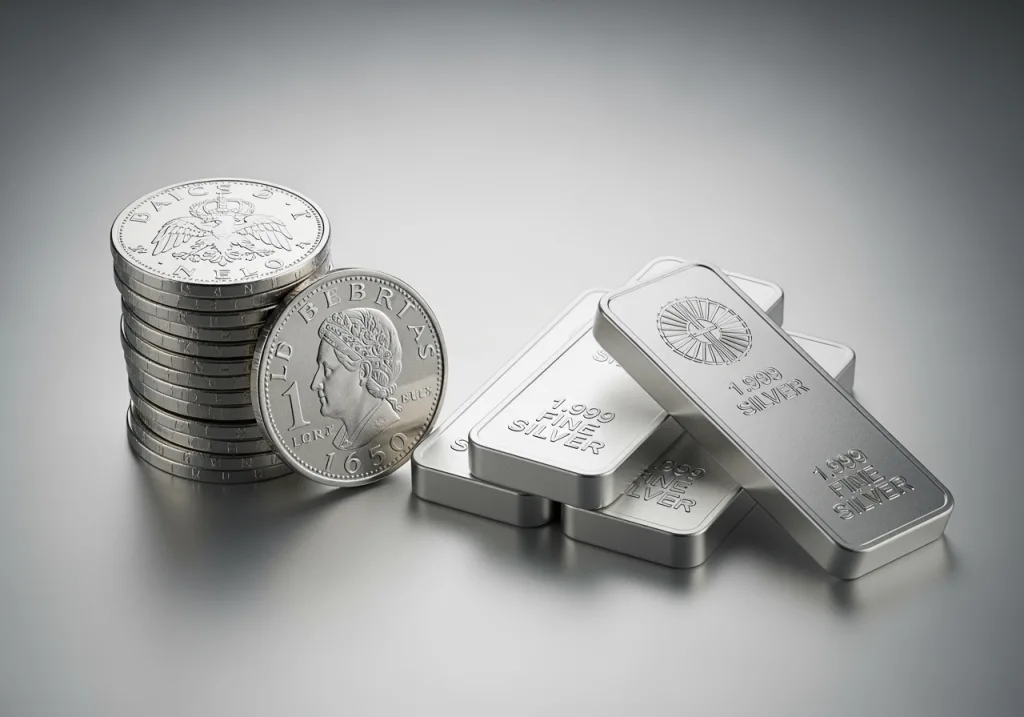
Why Silver Deserves Your Attention
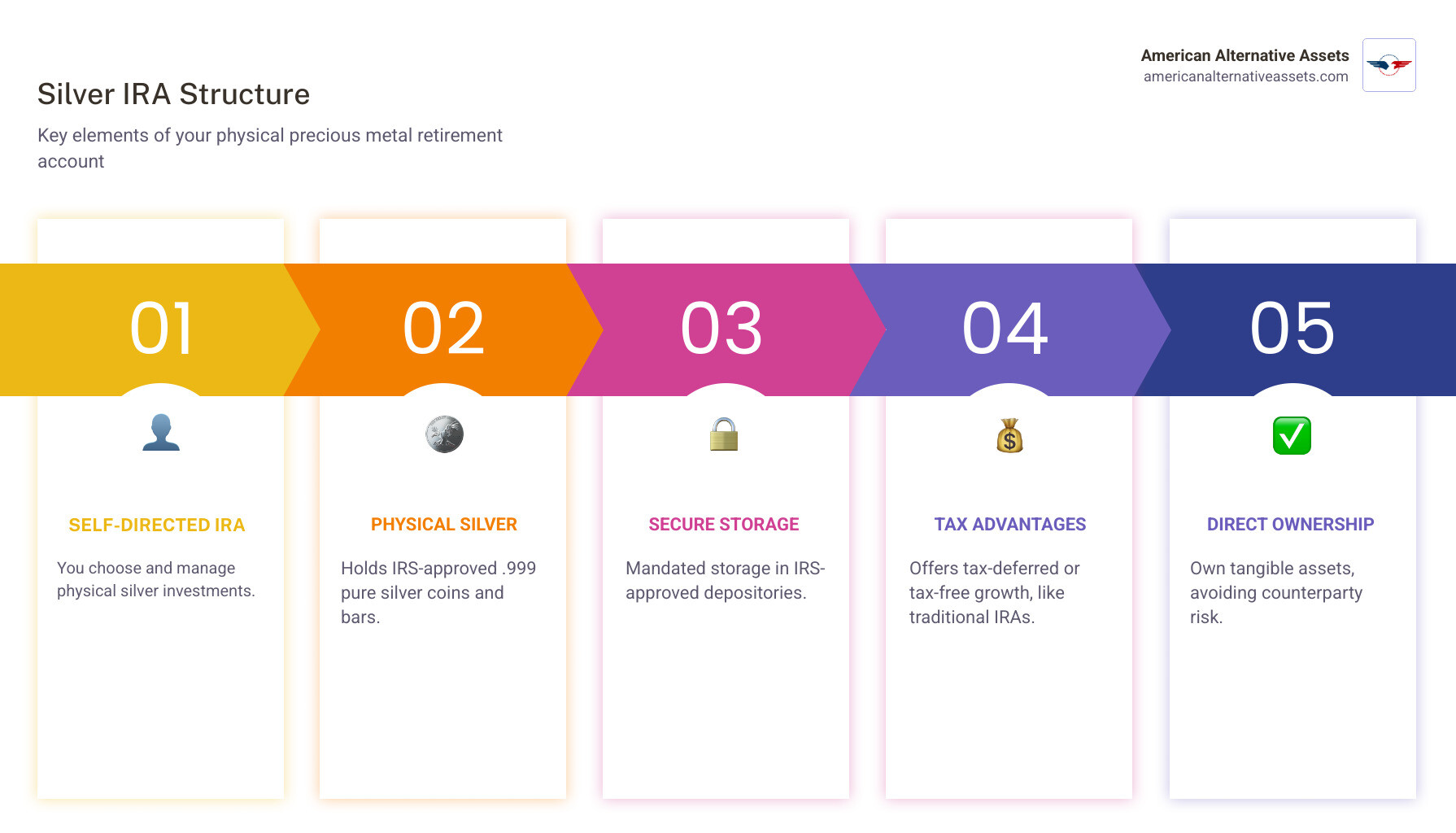
A Silver IRA investment allows you to hold physical silver coins and bars within a tax-advantaged retirement account, offering an alternative to traditional paper assets. Here’s what you need to know:
- What it is: A self-directed IRA that holds physical silver instead of stocks or mutual funds.
- Key benefit: Direct ownership of tangible precious metals with no counterparty risk.
- Eligibility: Must meet IRS purity standards (99.9% pure silver).
- Storage: Required to be held in an IRS-approved depository, not at home.
- Tax advantages: Same as traditional or Roth IRAs, with tax-deferred or tax-free growth.
- Funding options: Direct contributions, rollovers from 401(k)s, or transfers from existing IRAs.
When I was nine, my grandfather handed me a silver Morgan coin and said, “This is real money.” I didn’t understand then, but after witnessing the 2008 financial crisis, his words became clear. The system built on paper promises is fragile; physical precious metals are not.
This is why many Americans now seek assets they can see and touch, assets that have held value for millennia and stand independent of corporate earnings or government policy.
Silver offers something unique in the precious metals world. It’s more affordable than gold, making it accessible to more investors. It has significant industrial demand, from electronics to solar panels. Historically, it has served as a hedge during times of economic uncertainty and inflation.
Unlike paper assets like stocks or ETFs, a Silver IRA investment gives you direct ownership of physical metal. There’s no counterparty risk or fine print diluting your ownership. When you own physical silver in an IRA, you own a tangible asset stored in a secure depository with your name on it. While all investments carry risk, physical silver doesn’t depend on anyone’s promise to perform.
I’m Shanon Davis. After seeing the fragility of paper-based systems, I founded American Alternative Assets to help Americans protect their wealth with physical precious metals. We educate our clients on how to hold real value, independent of Wall Street’s volatility.
Silver IRA investment further reading:
What is a Silver IRA? Understanding the Fundamentals
A Silver IRA investment is a Self-Directed IRA (SDIRA) that lets you hold physical silver bullion, coins, and bars in your retirement portfolio. Unlike traditional IRAs focused on paper assets like stocks and bonds, a Silver IRA gives you direct ownership of a tangible asset. Your physical silver is held for you by an IRS-approved custodian in a secure depository.
This structure offers powerful diversification away from volatile financial markets. By investing in physical silver, you acquire an asset with intrinsic value, independent of corporate performance or government policy, making it a potential cornerstone for long-term wealth preservation for those in California and across the USA.
The Key Differences from a Traditional IRA
The main difference between a Silver IRA and a traditional IRA is the asset type. Traditional IRAs hold “paper assets” like stocks, bonds, and ETFs. These carry counterparty risks and are subject to market fluctuations. For example, a silver ETF is a paper instrument that relies on the solvency of the institutions behind it, not just the price of silver.
A Silver IRA investment, however, allows for investment in physical precious metals. You own a physical commodity, not just a promise or a share. This distinction is crucial for investors who prioritize true ownership and want to minimize exposure to risks in paper-based financial systems. At American Alternative Assets, we empower investors with this level of control and tangible asset ownership.
Types of Silver IRAs: Traditional, Roth, and SEP
Like standard IRAs, Silver IRA investments can be structured in several ways, each with distinct tax advantages:
- Traditional Silver IRA: Contributions may be tax-deductible, reducing your current taxable income. Your investments grow tax-deferred, and you pay taxes on distributions in retirement. This is often appealing if you expect to be in a lower tax bracket during retirement.
- Roth Silver IRA: Contributions are made with after-tax dollars and are not deductible. The major advantage is that qualified withdrawals in retirement are completely tax-free. This is often preferred by those who anticipate being in a higher tax bracket in retirement.
- SEP Silver IRA: Designed for self-employed individuals and small business owners, a Simplified Employee Pension (SEP) IRA allows for higher contribution limits. For 2024, contributions can be up to 25% of compensation or $69,000, whichever is smaller. The tax treatment is similar to a Traditional IRA, with tax-deductible contributions and tax-deferred growth.
Each Silver IRA investment type provides the unique benefit of holding physical silver within a tax-advantaged structure.
The Strategic Advantages of a Silver IRA Investment
Investing in physical silver through an IRA offers strategic advantages for your retirement portfolio. Silver’s dual role as a precious metal and an industrial commodity presents a compelling case for protecting hard-earned savings for clients in California and across the USA.

A primary benefit of a Silver IRA investment is its potential as an inflation hedge. As inflation erodes the purchasing power of currencies, precious metals like silver have historically acted as a store of wealth. For instance, while the U.S. dollar has lost 88% of its purchasing power since 1971, silver has risen over 2,200% in that same period. Silver also performed remarkably during the 1970s stagflation and more than quintupled in price between 2008 and 2011.
A Silver IRA investment also offers excellent portfolio diversification. As a countercyclical asset, silver’s price movements often have a low correlation with stocks and bonds. This can help stabilize your retirement savings during turbulent economic times, making it what many consider a “safe-haven asset.”
Furthermore, silver benefits from significant and growing industrial demand. It is a critical component in solar panels, electronics, medical equipment, and electric vehicles, providing an additional layer of demand that supports its value.
Why Physical Silver Ownership Matters
When we discuss a Silver IRA investment, we mean physical silver ownership, a paramount distinction. Unlike paper-based silver assets like ETFs or mining stocks, a physical Silver IRA gives you true ownership of the metal.
| Feature | Physical Silver IRA | Silver ETF (Paper Asset) |
|---|---|---|
| Direct Ownership | Yes, you own the actual metal | No, you own shares in a fund |
| Counterparty Risk | Minimal (custodian/depository) | Significant (issuer, fund, banks) |
| Tangibility | Physical, real asset | Digital, paper asset |
| Storage | Secure depository | Varies, often pooled/unallocated |
| Inflation Hedge | Strong, tangible asset | Dependent on fund structure |
| Market Volatility | Subject to silver price swings | Subject to silver price + market/fund volatility |
With a physical Silver IRA, you largely eliminate counterparty risk. Your metal is segregated and stored in a secure, IRS-approved depository under your name. In contrast, silver ETFs are paper instruments carrying risks related to the solvency of the fund issuer and other financial intermediaries. The appeal of physical silver lies in its tangibility, offering peace of mind in uncertain times. It’s a real asset that cannot be created out of thin air, aligning with our mission at American Alternative Assets to help clients achieve genuine protection for their wealth.
Understanding Silver’s Volatility and Potential
Silver tends to be more volatile than gold, experiencing larger price swings due to its dual nature as both a monetary and industrial metal. While this might suggest a higher-risk profile, it also implies a higher potential for growth. Its price accessibility compared to gold means you can acquire more ounces for the same investment, potentially amplifying gains. While past performance does not guarantee future results, silver’s historical role and growing industrial demand suggest continued relevance.
How to Set Up and Fund Your Silver IRA
Setting up a Silver IRA investment is a straightforward process with our guidance. Our white-glove, relationship-first service ensures you’re supported through three main steps:

Step 1: Choose a custodian. A custodian is an IRS-approved financial institution that holds your IRA assets and ensures compliance. It’s essential to select one specializing in Self-Directed IRAs for precious metals, and we work with reputable custodians who fit this description.
Step 2: Fund your account. Once your IRA is established, you’ll fund it through direct contributions, rollovers, or transfers.
Step 3: Purchase IRA-approved silver. With a funded account, you’ll work with us to select and purchase IRA-eligible silver. We then coordinate with your custodian to ship the silver directly to a secure, IRS-approved depository.
Funding Your Account: Contributions and Rollovers
You can fund your Silver IRA investment in several ways:
- Direct Contributions: You can contribute new money annually, subject to IRS limits. For 2024 and 2025, the limit is $7,000, or $8,000 if you’re age 50 or older. According to the IRS, the annual contribution limit is $7,000, or $8,000 for people aged 50+.
- Rollovers: This popular method moves funds from a 401(k), 403(b), or other plan from a previous employer into your Silver IRA without taxes or penalties. Rollovers don’t count against annual contribution limits. A direct rollover, where funds move directly between institutions, is the safest method. An indirect rollover, where you receive a check, has a 60-day deadline to avoid taxes and penalties. We strongly recommend direct rollovers.
- Transfers: You can transfer funds from an existing IRA to your new Silver IRA custodian. This is a non-taxable event and is typically quicker than a rollover.
We will work with you and your custodian to steer these options smoothly.
The Silver IRA Rollover Process Explained
Rolling over funds into a Silver IRA investment is an effective way to diversify. Here’s how we facilitate the process:
- Consultation: Contact us to discuss your goals and determine if a Silver IRA is a good fit.
- Custodian Selection: We help you choose a reputable, IRS-approved custodian specializing in precious metals.
- Account Opening: You’ll complete the paperwork to open your new Self-Directed IRA.
- Initiate Rollover/Transfer: We assist you in contacting your current plan administrator to move the funds directly to your new custodian.
- Account Funding: Your account is funded once the funds arrive at the new custodian.
- Select Your Silver: You work with us to choose from a range of IRA-eligible silver products.
- Direct the Purchase: You instruct your custodian to purchase the selected silver from us.
- Secure Storage: We arrange for your silver to be shipped to an IRS-approved depository for secure storage.
The timeline varies, with IRA transfers taking 5-7 business days and 401(k) rollovers typically taking 10-15 business days. Our team ensures a seamless experience.
Navigating IRS Rules for Your Precious Metals IRA
A Silver IRA investment requires strict adherence to IRS regulations to maintain its tax-advantaged status. Complying with these guidelines is paramount to avoid penalties or loss of tax-deferred status. Our expertise helps clients in California and beyond steer these complexities to ensure full compliance.
The IRS has specific requirements for the assets held and how they are handled. For instance, certain Complex Tax Rules prohibit using IRA funds for personal gain outside of retirement benefits.
IRS Purity and Form Requirements for Silver
Not all silver can be held in a Silver IRA investment. The IRS mandates that silver must meet a minimum fineness of .999 (99.9% pure). It must also be in the form of coins or bars from a recognized manufacturer or government mint.
Popular IRA-eligible silver products include:
- American Silver Eagle
- Canadian Silver Maple Leaf
- Austrian Silver Philharmonic
- Mexican Silver Libertad
- Silver bars and rounds from approved refiners like PAMP Suisse or the Royal Canadian Mint, meeting the .999 fineness requirement.
Items like silver jewelry, silverware, or pre-1965 U.S. coins are not IRA-eligible because they don’t meet purity or form requirements. We guide our clients in selecting only IRS-compliant products.
Storage and Custody: Securing Your Silver IRA Investment
A critical IRS rule for a Silver IRA investment is that the physical metals must be held by an approved custodian in an IRS-approved depository. You cannot store the silver yourself at home or in a personal safe deposit box. This “no home storage” rule is strictly enforced.
Your custodian partners with secure, specialized depositories for high-security storage with comprehensive insurance. You may have the option for:
- Segregated storage: Your specific coins and bars are kept separate from others.
- Unsegregated (commingled) storage: Your metals are stored with other investors’ identical holdings.
While you cannot store the silver yourself, you retain full ownership. When it’s time for distributions, you can either sell the silver for cash or take physical possession of the metal. Taking physical possession is a distribution and is subject to applicable taxes and potential early withdrawal penalties if taken before age 59½. We advise consulting a tax professional to understand the implications.
Frequently Asked Questions about Silver IRAs
We understand that a Silver IRA investment can raise questions. Here are answers to some common inquiries.
Can I add the silver I already own to my Silver IRA?
No, you cannot add personal silver holdings to a Silver IRA investment. IRS rules require that all metals be purchased by the IRA itself. Funds must be in your IRA account before your custodian directs the purchase from a dealer. The dealer then ships the silver directly to an IRS-approved depository, ensuring compliance and maintaining the account’s tax-advantaged status.
What are the tax implications of taking withdrawals?
The tax implications for your Silver IRA investment depend on the account type:
- Traditional Silver IRA: Withdrawals are taxed as ordinary income. Required Minimum Distributions (RMDs) begin at age 73.
- Roth Silver IRA: Qualified withdrawals are completely tax-free. To be qualified, you must be over 59½ and have held the account for at least five years. Roth IRAs have no RMDs for the original owner.
Early Withdrawals: Distributions before age 59½ may be subject to a 10% penalty in addition to any applicable income tax. Certain exceptions may apply, so it’s crucial to consult with a tax advisor. Taking physical possession of your silver is considered a distribution and has the same tax implications.
How does a Silver IRA compare to a Gold IRA?
Both a Silver IRA investment and a Gold IRA allow you to hold tangible assets to diversify your portfolio and hedge against economic uncertainty. The key differences are:
- Price Accessibility: Silver is more affordable per ounce, allowing you to purchase more physical units for the same investment.
- Volatility: Silver tends to be more volatile than gold. This can mean greater potential for both gains and losses.
- Industrial Demand: Silver has broader industrial use in electronics, solar tech, and medicine, which provides an additional demand driver.
- Historical Role: Gold is primarily seen as a monetary asset and store of wealth, while silver has a dual role as both a monetary and industrial metal.
The choice depends on your investment objectives and risk tolerance. Many investors include both metals for a balanced portfolio. American Alternative Assets offers both gold and silver physical assets.
Partnering for Your Future: Conclusion
In a world of digital assets, the appeal of a Silver IRA investment is its tangible reality. It offers a powerful way to diversify your retirement portfolio and hedge against inflation and economic volatility. By holding physical silver, you secure a piece of real, enduring value.
At American Alternative Assets, we understand the importance of financial preparedness. Our white-glove, relationship-first service is built on trust and transparency, ensuring real privacy and protection for your wealth. We are dedicated to helping clients in California and across the USA steer the complexities of precious metals IRAs.
We believe empowering you with knowledge and access to physical precious metals is key to a secure financial future.
Learn more about securing your retirement with a Precious Metals IRA
This article is for informational purposes only and does not constitute financial advice.
Investing in precious metals involves risk. Past performance does not guarantee future results.