







The Global Power Shift You Can’t Ignore
Who is joining BRICS is one of the most important geopolitical questions of our time. Here is a quick answer:
New Full Members (2024-2025):
- Egypt (January 2024)
- Ethiopia (January 2024)
- Iran (January 2024)
- United Arab Emirates (January 2024)
- Indonesia (January 6, 2025)
New Partner Countries (effective January 1, 2025):
- Belarus
- Bolivia
- Cuba
- Kazakhstan
- Malaysia
- Nigeria
- Thailand
- Uganda
- Uzbekistan
- Vietnam
BRICS started in 2009 with just four nations: Brazil, Russia, India, and China. South Africa joined in 2010. Today, the bloc has grown to 10 full members and at least 10 partner countries, with over 30 more nations expressing interest in joining.
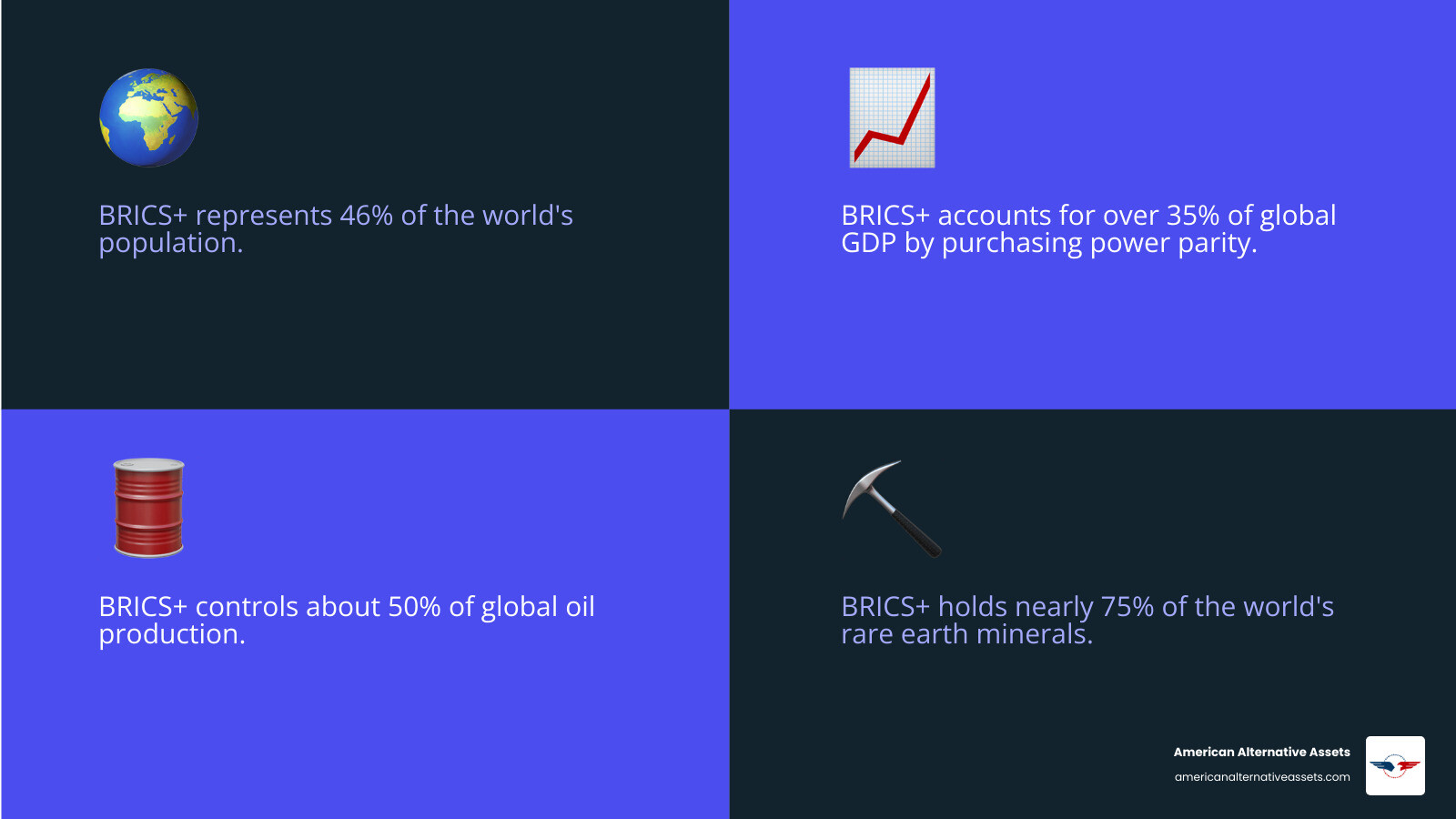
That is not a small club anymore. BRICS+ now represents roughly 46% of the world’s population and over 35% of global GDP measured by purchasing power. It also controls an estimated half of global oil production and nearly three-quarters of the world’s rare earth minerals.
For everyday savers and retirees, this shift matters. A larger, resource-rich BRICS bloc is actively working to reduce reliance on the US dollar in global trade. That has real consequences for the purchasing power of dollar-denominated savings.
I’m Shanon Davis, and my background in venture capital and wealth preservation has given me a front-row seat to how shifts in global economic power, including questions like who is joining BRICS, ripple into the financial lives of ordinary Americans. I’ll walk you through exactly who the new members are and why it matters for wealth preservation through physical assets.
Who is Joining BRICS: The 2024 and 2025 Expansion
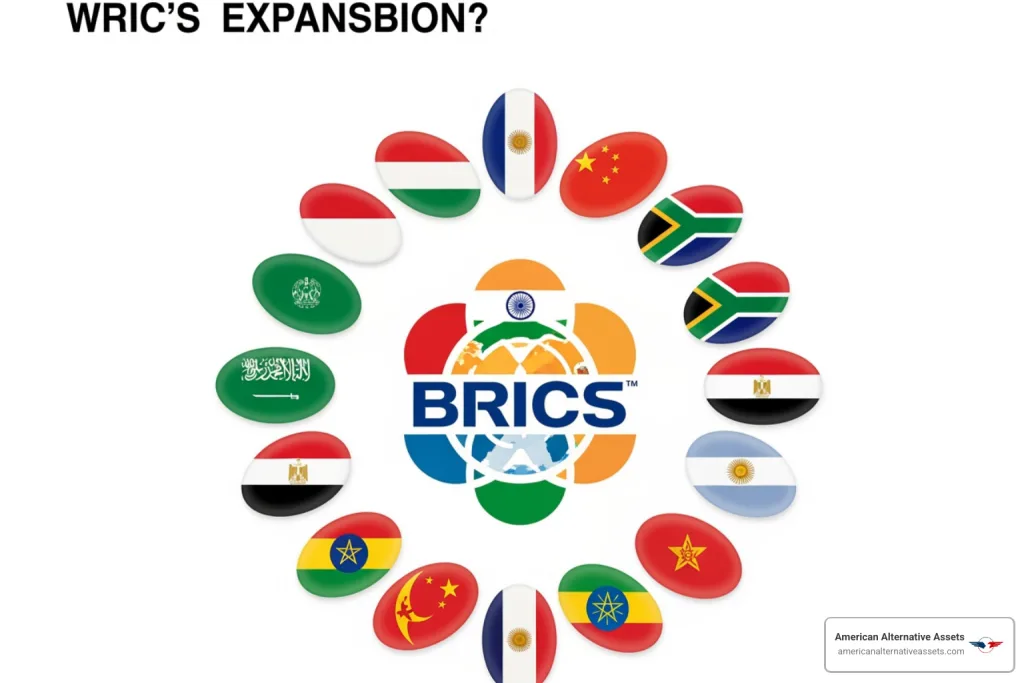
The landscape of global economics changed forever between 2023 and 2025. For years, BRICS was a relatively quiet group of five emerging markets. However, at the 15th Summit in Johannesburg, the floodgates opened. The bloc invited six nations to join, and while not all accepted, the resulting expansion has created a formidable “BRICS+” entity.

In 2024, four major players officially took their seats at the table. Egypt, Ethiopia, Iran, and the United Arab Emirates (UAE) became full members. This move significantly increased the group’s footprint in the Middle East and Africa, particularly around the Suez Canal and the Red Sea, which are critical arteries for world trade.
The momentum did not stop there. In a historic move on January 6, 2025, Indonesia officially joined as a full member. This was a massive win for the bloc, as Indonesia is the world’s fourth most populous nation and the largest economy in Southeast Asia. You can read more about the official announcement of new partner countries to see how the group is structuring this growth.
Who is Joining BRICS as a Partner in 2025?
A new category of participation was introduced at the 2024 Kazan Summit in Russia: the “Partner Country” modality. This acts as a stepping stone for nations that want to align with BRICS but aren’t yet full members. Effective January 1, 2025, several heavy hitters in the Global South joined under this status.
Nigeria is perhaps the most significant addition here. As Africa’s most populous nation and a major oil producer, Nigeria’s partnership gives BRICS a massive foothold in West Africa. Malaysia and Thailand also joined as partners, signaling that Southeast Asia is rapidly moving toward this multipolar alliance.
Other partners include Belarus, Bolivia, Kazakhstan, Cuba, Uganda, Uzbekistan, and Vietnam. These nations represent a diverse mix of resource-rich economies and strategic geographic locations.
To help you keep track, here is a quick look at how the different tiers work:
| Feature | Full Member State | Partner Country |
|---|---|---|
| Voting Rights | Full voting power | Consultative role |
| Summit Participation | Always invited | Invited to specific sessions |
| New Development Bank | Can be full shareholders | Access to some funding |
| Policy Influence | Shapes the core agenda | Endorses declarations |
| Examples | Brazil, China, Indonesia | Nigeria, Thailand, Cuba |
Indonesia: The First Southeast Asian Full Member
Indonesia’s entry in early 2025 was a geopolitical milestone. For a long time, Indonesia sat on the fence, weighing its options between Western alliances and the rising Global South. Under the leadership of President Prabowo Subianto, the country decided that joining BRICS was the best way to diversify its partnerships.
As the world’s 10th largest economy by purchasing power parity, Indonesia brings incredible economic muscle to the group. It is also the world’s most populous Muslim nation, which adds a unique cultural and religious dimension to the bloc’s diversity. For those of us watching from the US, Indonesia’s move is a clear sign that even traditional “middle powers” are looking for alternatives to the dollar-centric financial system.
Understanding the New BRICS Partner Country Modality
The “Partner Country” system was a clever move by the original members to manage the overwhelming interest from other nations. Over 30 countries have expressed interest in joining, but the group wanted to avoid becoming an unmanageable “talking shop.”
The Kazan Summit established that partners are invited to participate in BRICS Summits and Foreign Ministers’ meetings. They have the right to endorse the group’s joint declarations, which often focus on reforming international institutions like the IMF and the World Bank. According to the Human Development Report on emerging economies, these nations are increasingly looking for development paths that don’t come with the strict political conditions often required by Western lenders.
The admission process for partners involves informal consultations led by the rotating presidency, currently held by Brazil in 2025. Decisions are made by consensus, meaning all current full members must agree before a new partner or full member is invited.
Economic Significance of a Larger BRICS+ Bloc
When we look at the sheer numbers, the expansion of BRICS is staggering. The bloc now controls roughly 44% of global oil production and reserves. This is a massive shift in commodity control. When you combine the energy reserves of Russia, Iran, the UAE, and potentially Saudi Arabia with the manufacturing power of China and the agricultural exports of Brazil, you get a self-sustaining economic engine.
At American Alternative Assets, we often talk to our clients about the difference between paper wealth and tangible assets. As BRICS grows, it is focusing heavily on “real” things, such as energy, minerals, and food. This is one reason why we believe physical gold and silver held in a Precious Metals IRA are essential for any retirement strategy. While fiat currencies and paper-based assets like gold ETFs or mining stocks can be manipulated by geopolitical shifts, a physical gold bar remains a tangible asset, regardless of which nations are in or out of a trade bloc.
Who is Joining BRICS to Challenge the US Dollar?
The primary driver for many nations wondering who is joining BRICS is the desire for “de-dollarization.” This isn’t just a buzzword, it is a strategic goal. Countries like Iran and Russia, which have been locked out of Western financial systems, are pushing for an alternative payment network called “BRICS Bridge.”
This system aims to allow nations to settle trade in their own local currencies. By bypassing the SWIFT system, these countries can avoid the impact of US sanctions and maintain their financial sovereignty. For a retiree in the US, this means the dollar may face less demand globally, which can lead to higher inflation and lower purchasing power at home.
The Middle Eastern Power Shift
The inclusion of the UAE and Iran, along with the “pending” status of Saudi Arabia, has turned BRICS into an energy powerhouse. For decades, the “petrodollar” system, where oil is traded exclusively in US dollars, has been a pillar of American economic strength.
Now, we are seeing those pillars tremble. The UAE is already exploring oil trades in non-dollar currencies. If the world’s major energy producers begin accepting yuan, rubles, or even gold for their oil, the global reserve status of the dollar could be significantly diminished. This is why we advocate for the stability of physical precious metals within a Gold or Silver Precious Metals IRA. Physical gold has been a universal currency for thousands of years and doesn’t rely on the strength of any single government’s paper money or the volatile performance of paper-based stock markets.
Frequently Asked Questions about BRICS Membership
As the group expands, many people have questions about how the “club” actually works and who might be next.
What is the difference between a full member and a partner?
The main difference is voting power and the level of integration. Full members have a say in every decision and can participate in every working group. Partners are more like observers with benefits. They can attend high-level meetings and access some development funding, but they don’t have the final word on the group’s direction. Think of it like being a member of a country club versus having a guest pass that lets you use the pool and the gym but doesn’t let you vote on the board of directors.
Which countries have applied but not yet joined?
The list of applicants is long and growing. Turkey, a NATO member, has surprisingly signaled its interest, which has caused quite a stir in Western capitals. Pakistan is also lobbying hard to join, though it faces some hurdles due to its complex relationship with India. Other official applicants include Venezuela, Algeria, and Vietnam. These nations are all watching to see how the 2025 Brazilian presidency handles the next wave of invitations.
Why did Argentina decline the invitation?
Argentina was originally invited to join in 2024, but a sudden change in government shifted its course. President Javier Milei, who took office in late 2023, is a staunch ally of the United States and Israel. He officially canceled Argentina’s plans to join BRICS, stating that his government’s geopolitical alignment is with the West. This shows that while the group is growing, it isn’t a guaranteed path for every nation, especially when domestic politics take a turn toward Western alignment.
Conclusion
The expansion of BRICS is a clear signal that the world is moving toward a multipolar future. As more nations join the bloc and seek to move away from the US dollar, the risks to traditional paper-based retirement accounts are becoming harder to ignore. Paper assets like stocks, bonds, and mutual funds are all ultimately tied to the stability of the dollar and the Western financial system, which makes them inherently vulnerable to these global shifts.
At American Alternative Assets, we believe that true wealth protection requires a different approach. Our “white-glove” service is designed to help you move a portion of your savings into physical gold and silver through a Precious Metals IRA. Unlike paper assets, physical gold has no counterparty risk. It is not subject to the same “de-dollaring” risks as paper assets and cannot be canceled by a geopolitical summit in Kazan or Rio.
As the world’s economic map is redrawn, being proactive is a prudent way to help protect your financial legacy. Whether it is a gold bar in a secure vault or a silver coin in your hand, physical precious metals offer a level of privacy, protection, and peace of mind that paper assets simply cannot match. We are here to help you navigate these global shifts with trust, transparency, and ethical practices.
This article is for informational purposes only and does not constitute financial advice. Please consult your financial advisor before making investment decisions. Investing in physical precious metals involves risk. Past performance does not guarantee future results.