








Why Understanding 24K Gold Matters for Your Financial Future
24 carat gold bullion represents the highest standard of gold purity available to investors. If you’re exploring this precious metal, here’s what you need to know:
Quick Answer: What is 24 Carat Gold Bullion?
- Purity: 99.9% to 99.99% pure gold (.999 to .9999 fineness)
- Forms: Available as bars (1 gram to 1 kilo+) and coins (American Gold Buffalo, Canadian Maple Leaf)
- Color: Rich, deep yellow due to no alloy metals
- Investment Use: Tangible asset for wealth preservation and portfolio diversification
- IRA Eligible: Meets IRS minimum fineness requirement of .995 for Precious Metals IRAs
My grandfather handed me a silver Morgan coin when I was nine. “This is real money,” he told me. I didn’t fully understand then, but decades later, working in venture capital and watching the 2008 crash unfold, those words made perfect sense. The families who lost everything weren’t taking wild risks. They were playing a game where the rules could change overnight.
That’s why physical assets matter. 24 carat gold bullion isn’t just an investment. It’s a form of wealth that doesn’t depend on anyone else’s promises. No counterparty risk. No fine print. Just pure gold you can hold.
I’m Shanon Davis, and I founded American Alternative Assets to help ordinary Americans step outside a fragile system. After years in venture capital and witnessing market collapses, I’ve dedicated my career to teaching people how 24 carat gold bullion and other physical precious metals can serve as a foundation for true financial security.
This guide will walk you through everything you need to know about 24K gold bullion, from what makes it different from other gold investments to how you can hold it securely in a Precious Metals IRA.
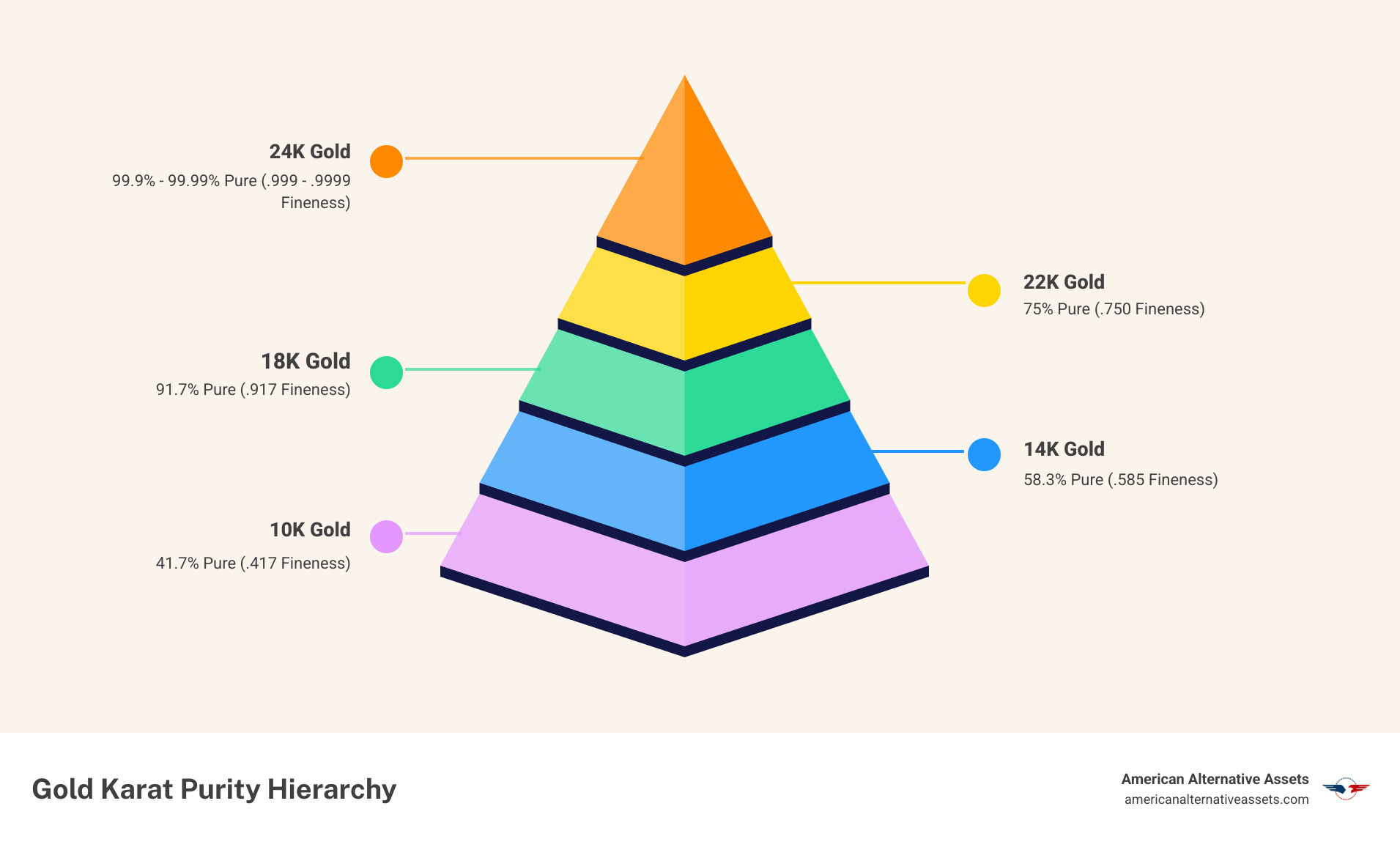
What is 24-Karat Gold? The Definition of Purity
When we talk about gold, one of the first things that comes to mind is its purity. This is where the term “karat” (K) becomes essential. Karat is a measurement system that tells us how much pure gold is present in a given item, out of 24 parts. So, if an item is 24 karats, it means that 24 out of 24 parts are pure gold. This signifies the highest level of gold purity.
It’s important not to confuse “karat” with “carat,” which is a unit of weight used for gemstones. In the context of gold, karat exclusively refers to its purity. While 24 karats ideally represents 100% pure gold, in practical terms, it signifies an extremely high level of purity, typically 99.9% (also expressed as .999 fineness) or 99.99% (.9999 fineness). Some experts even refer to pure gold as having a 999.999 fineness, acknowledging that achieving 100% purity is technically impossible due to the inability to remove all molecular traces of impurities.
What does this exceptional purity mean for 24 carat gold bullion? It means the metal exhibits certain distinct characteristics:
- Rich Yellow Color: Unlike lower karat golds, which are often alloyed with other metals like copper or silver to change their color, 24K gold displays a vibrant, deep yellow hue. This is its natural color, unadulterated by other elements.
- Softness and Malleability: Because it contains virtually no other metals, 24K gold is quite soft. It can be easily scratched or bent. This softness is why 24K gold is less common in everyday jewelry, which requires more durability.
- Resistance to Tarnish: Pure gold does not react with oxygen or other chemicals, meaning it is highly resistant to tarnishing, rust, and corrosion. This enduring quality is part of its appeal as a long-term store of value.
The purity of 24 carat gold bullion directly impacts its value. The higher the purity, the more gold content an item has, and therefore, the closer its value tracks the international spot price of gold. This direct correlation makes 24K gold bullion a transparent and straightforward investment, as its value is primarily determined by the global market price for pure gold, rather than by intricate craftsmanship or design premiums often associated with jewelry.
Investing in 24 Carat Gold Bullion: Benefits and Forms
Investing in 24 carat gold bullion offers a unique set of advantages, particularly for those focused on wealth preservation and portfolio diversification. We view physical gold not just as an asset, but as a cornerstone of financial security.
One of the primary benefits is tangible asset ownership. Unlike paper assets, such as stocks or bonds, physical gold is something you can literally hold. This tangibility eliminates counterparty risk, meaning your investment isn’t dependent on the solvency or performance of a third party. In times of economic uncertainty, political instability, or financial crisis, this direct ownership can provide immense peace of mind.
Gold has historically served as a powerful hedge against inflation and currency devaluation. When the purchasing power of fiat currencies declines, gold has often maintained or increased its value, protecting wealth over the long term. This role as a store of value has been recognized for centuries, making gold bullion a time-tested asset.
Furthermore, including gold in a diversified portfolio can help reduce overall risk and improve long-term stability. Gold has historically shown a negative correlation with other asset classes like stocks and bonds. This means that when traditional investments might be struggling, gold’s value may trend upwards, acting as a buffer against market volatility. For us, the importance of holding physical gold, especially in an era of unpredictable financial landscapes, cannot be overstated.
The Primary Forms of 24 Carat Gold Bullion
24 carat gold bullion is available in various forms, each suited to different investment preferences and goals. The two most common forms are gold bars and gold coins.
Gold Bars
Gold bars are uniform slabs of gold, typically rectangular, with a purity of 99.99%. They come in a wide range of sizes, from a few grams to several ounces and even kilograms. You can find bars as small as 1 gram, 1 ounce, 10 ounces, or even 1 kilo and larger, up to 400 ounces. This variety allows investors to choose sizes that fit their budget and investment strategy.
A notable advantage of gold bars is their generally lower premium compared to gold coins. This is often because bars require less intricate production time and effort. We also find that larger bars often carry a lower premium per ounce, making them a more cost-effective option for significant investments. Gold bars are typically supplied by private refineries, though some sovereign mints also produce them. Many gold bars feature at least .999 pure gold, with .9999 becoming the standard for most products.
Gold Coins
Gold coins offer another popular avenue for investing in 24 carat gold bullion. These are often produced by sovereign mints, which means their weight and purity are backed by a central bank and government. This government backing adds an extra layer of trust and authenticity.
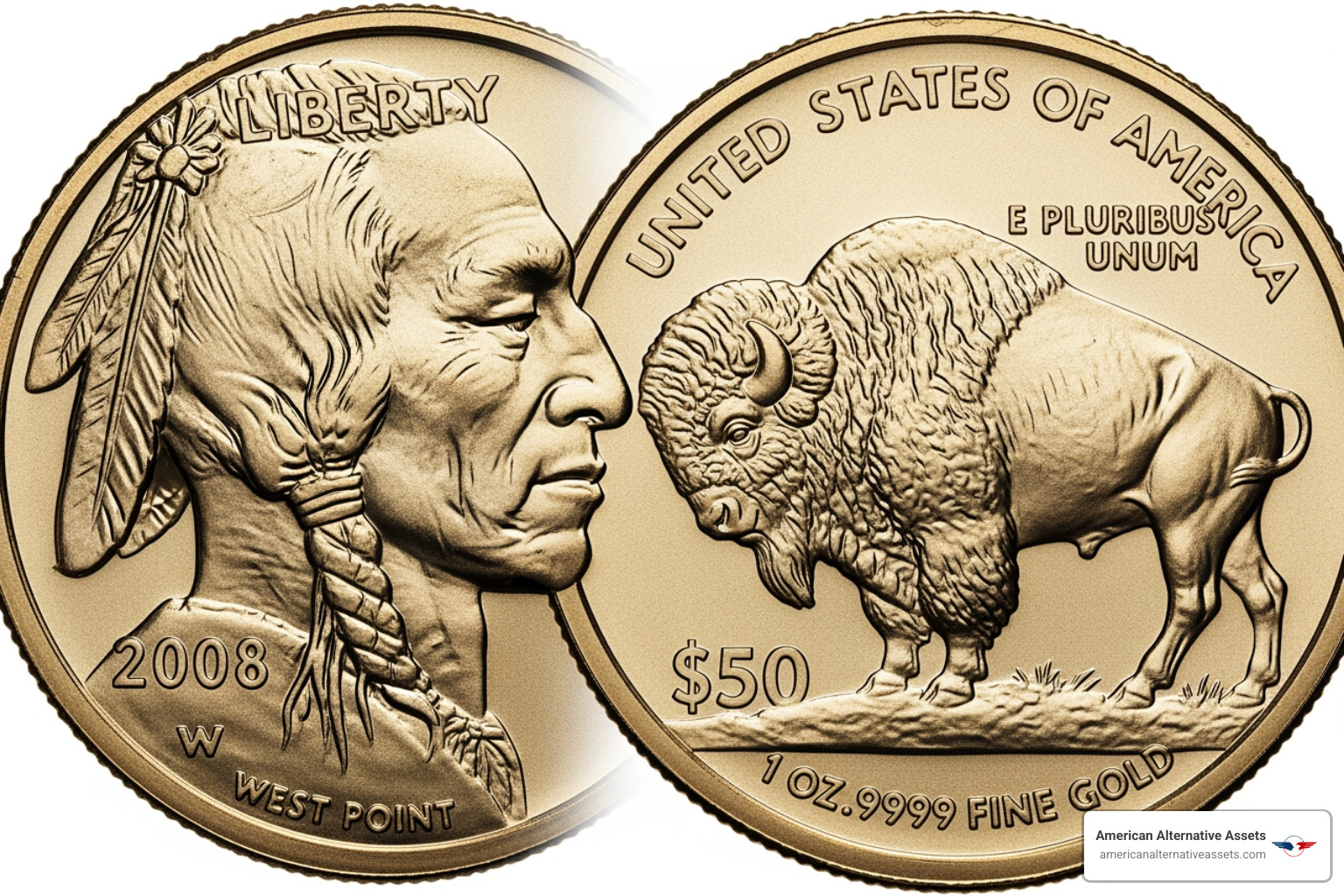
One of the most recognized 24-karat gold coins is the American Gold Buffalo. It holds the distinction of being the first .9999 fine 24-karat gold coin ever struck by the United States Mint. Other popular 24K gold coins include the Canadian Gold Maple Leaf, known for its exceptional .9999 purity. These coins combine the intrinsic value of pure gold with the recognition and liquidity offered by government-issued bullion.
Comparing 24K Bullion to Other Gold Options
Understanding the nuances between various gold investment options is crucial for making informed decisions. When considering 24 carat gold bullion, it’s helpful to see how it stacks up against lower-karat gold products and other forms of gold investment.
| Feature | 24K Bullion | 22K Bullion (e.g., American Gold Eagle) |
|---|---|---|
| Purity | 99.9% to 99.99% pure gold (.999 to .9999) | 91.67% pure gold (alloys make up the rest) |
| Tangibility | Direct ownership of pure physical gold | Direct ownership of physical gold alloy |
| Direct Ownership | Highest gold content by weight | Lower gold content by weight (due to alloys) |
| Softness | Softer, more prone to scratches and dents | More durable, resistant to wear |
| Color | Rich, deep yellow | Slightly muted or reddish-yellow (due to alloys) |
| IRA Eligibility | Generally eligible (meets .995 fineness) | Eligible (IRS exception for American Gold Eagle) |
24K vs. Lower-Karat Bullion
The primary distinction between 24 carat gold bullion and lower-karat gold, such as 22K, lies in its purity and composition. As we’ve discussed, 24K gold is virtually pure, containing 99.9% or 99.99% gold. This means that every ounce of 24K bullion is almost entirely gold, offering the highest possible gold content by weight.
In contrast, 22K gold, often referred to as “crown gold,” is 91.67% pure gold, with the remaining percentage consisting of alloys like copper, silver, or zinc. A prime example is the American Gold Eagle coin. While it is a highly respected and popular bullion coin, it is minted to a 22-karat standard. The addition of these alloys makes 22K gold significantly more durable than 24K gold, making it more resistant to wear and tear, which is why it has historically been favored for circulating coinage.
For investors, this presents a trade-off: durability versus purity. If your priority is to hold the maximum possible amount of pure gold for its intrinsic value and direct correlation to the spot price, 24K bullion is the preferred choice. While 22K coins like the American Gold Eagle are excellent investments and are even eligible for Precious Metals IRAs, they contain slightly less gold per given weight due to their alloy content. This means that an American Gold Buffalo (24K) and an American Gold Eagle (22K), both weighing one ounce, contain different amounts of pure gold. The American Gold Buffalo has one full ounce of pure gold, while the American Gold Eagle contains one full ounce of gold by weight, but only 0.9167 ounces of pure gold.
Physical Bullion vs. Paper Gold
Beyond the purity distinctions, it is important to differentiate between holding physical gold bullion and investing in “paper gold” assets. Paper gold typically refers to investments like gold exchange-traded funds (ETFs), gold mining stocks, or futures contracts. These options do not provide direct ownership and fundamentally differ from owning physical 24 carat gold bullion.
With paper gold, you typically do not have direct ownership of the physical metal. Instead, you own shares in a fund or company that holds gold, or a contract that represents gold. This introduces counterparty risk, meaning your investment is subject to the financial health and management decisions of the issuing entity. If the fund or company faces financial difficulties, your investment could be impacted, regardless of gold’s market performance. There’s a lack of direct ownership, which can be a significant drawback for those seeking true wealth preservation.
For us, the importance of holding physical precious metals, especially in times of economic uncertainty, cannot be overstated. Physical 24 carat gold bullion represents a tangible asset that is not simultaneously someone else’s liability. It’s a direct hedge against systemic risks in the financial system. When you invest in physical gold, you’re not just buying into a market trend, you’re acquiring a hard asset that has been recognized as a store of value for millennia. This is why we advocate for direct physical ownership, particularly within a Precious Metals IRA, to ensure your financial future is built on solid ground.
How to Securely Purchase and Store 24K Gold Bullion
Acquiring 24 carat gold bullion is a significant step towards diversifying your portfolio and preserving your wealth. However, the process requires diligence, especially in selecting reputable dealers and ensuring the secure storage of your assets. We emphasize building trust and transparency throughout this process.
Ensuring Authenticity
When purchasing 24 carat gold bullion, verifying its authenticity is paramount. Reputable dealers play a crucial role here, but understanding the markings on your bullion can provide an extra layer of confidence.
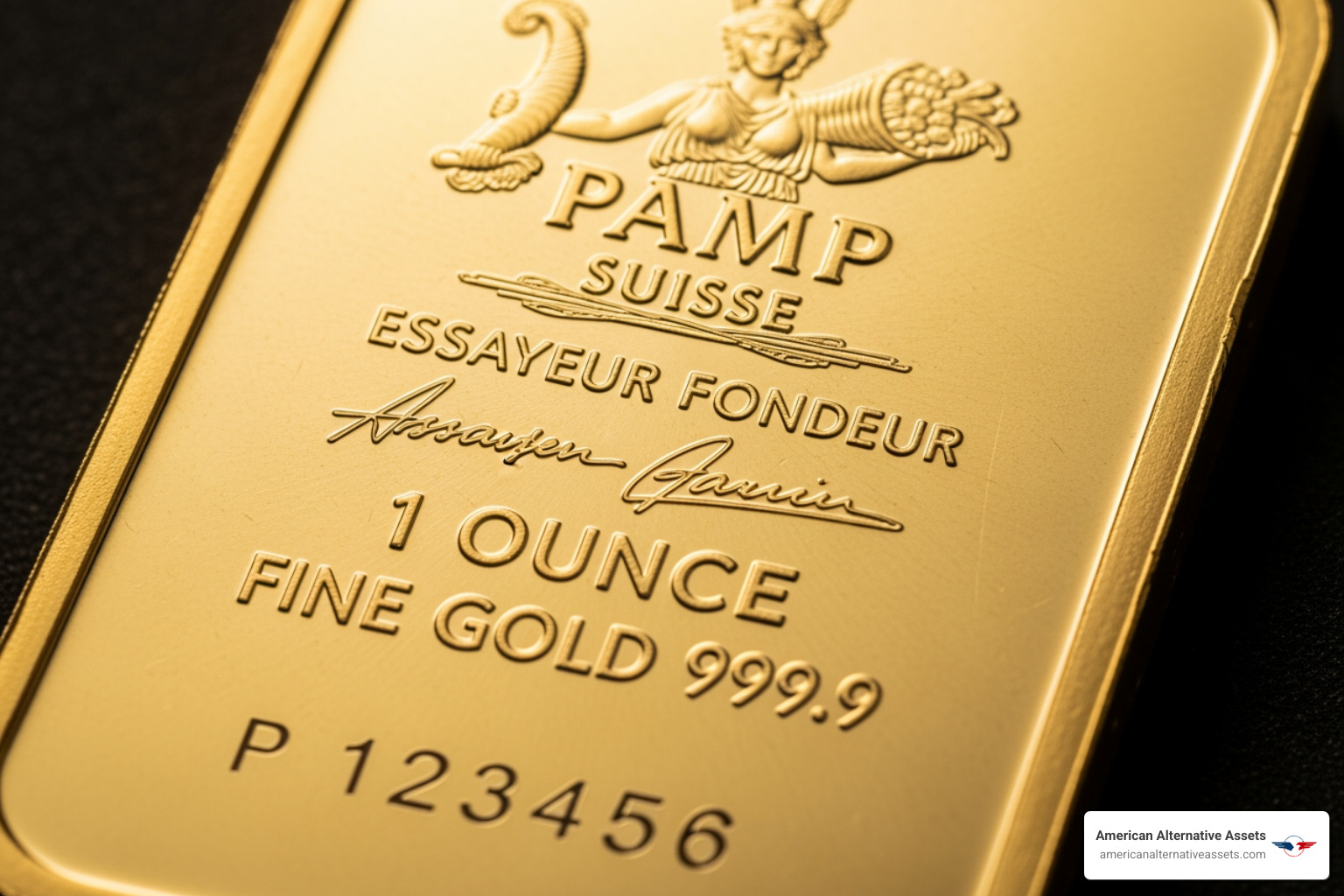
Look for specific markings, known as hallmarks or assay marks, on gold bars and coins. These typically include:
- Refiner’s Stamp: The logo or name of the mint or refinery that produced the bullion.
- Weight and Purity Markings: Clearly indicating the weight (e.g., “1 oz” or “1 Kilo”) and fineness (e.g., “.9999 Fine Gold”).
- Assay Cards: Many reputable refiners, especially for gold bars, provide an accompanying assay card. This card verifies the purity and weight of the bar and often matches a unique serial number stamped directly on the bullion. This card acts as a certificate of authenticity, protecting consumers by confirming the product’s specifications.
- Serial Numbers: Gold bars often have unique serial numbers stamped on them, which should match any accompanying assay card.
When investing in gold bullion, ensuring it meets U.S. Mint standards (if applicable) and comes with a certificate of authenticity from a recognized authority is a best practice. We encourage clients to work with dealers who are transparent about their sourcing and verification processes.
Secure Storage Options
Once you’ve acquired your 24 carat gold bullion, the next critical consideration is secure storage. While some investors opt for home storage, we generally recommend professional, insured vaults for larger investments due to the inherent risks involved with keeping highly valuable assets at home.
Professional Depositories: These specialized facilities offer high-security storage solutions designed specifically for precious metals. They are typically insured, providing protection against theft, damage, or loss. When gold is stored in professional vaults, it often remains within the “chain of integrity.” This means its provenance and authenticity are continuously verifiable, which can simplify future resale as it avoids the need for re-authentication. For us, prioritizing safety, privacy, security, and confidentiality when storing valuable precious metals is a cornerstone of responsible ownership.
Insured Vaults: Working with a dealer or custodian who partners with an insured vault is crucial. This insurance protects your assets against various risks, offering a layer of financial security that home storage typically cannot match.
Home Storage Risks: While home storage offers immediate access, it comes with significant downsides. Your homeowner’s insurance policy may not cover the full value of your gold, and it can make your home a target for theft. The security and insurance considerations for home storage are often complex and costly to manage effectively.
24K Gold Bullion and Your Precious Metals IRA
For many investors, 24 carat gold bullion isn’t just a short-term asset; it’s a strategic component of their long-term retirement planning. This is where a Precious Metals IRA, often referred to as a Self-Directed IRA, comes into play. These specialized IRAs allow you to hold physical assets, like gold and silver, for retirement, offering a powerful tool for long-term financial preparedness.
We believe that diversifying retirement savings beyond traditional paper assets is crucial. A Precious Metals IRA provides a way to incorporate tangible assets into your retirement portfolio, acting as a hedge against inflation and market volatility, and offering a sense of stability that comes with owning physical wealth.
IRA Eligibility for 24 Carat Gold Bullion
The Internal Revenue Service (IRS) sets specific purity requirements for precious metals to be eligible for inclusion in an IRA. For gold, the minimum fineness is .995, meaning the gold must be at least 99.5% pure.
The good news is that most 24 carat gold bullion bars and coins easily meet or exceed this IRS purity requirement. Products with a fineness of .999 or .9999 are readily accepted. This includes popular 24K options like the American Gold Buffalo and many gold bars from reputable refiners.
There is one notable exception to the .995 purity rule: the American Gold Eagle coin. While it is a 22-karat coin with a purity of 91.67% (91.67% gold, 3% silver, and the balance copper), it is specifically permitted by the IRS for inclusion in Precious Metals IRAs. This exception acknowledges its status as an official U.S. Mint bullion product. However, for most other gold products, the .995 minimum fineness is strictly enforced.
Understanding these eligibility rules is vital to ensure your precious metals investments comply with IRS regulations. We work closely with clients to steer these requirements, ensuring that the 24 carat gold bullion they choose for their Precious Metals IRA is fully compliant and positioned for long-term growth and protection. For more detailed information on what constitutes a collectible and exceptions for IRA-eligible precious metals, you can refer to 26 U.S.C. 408.
Frequently Asked Questions about 24K Gold Bullion
Navigating precious metals can bring up many questions, especially when it comes to the nuances of purity and investment strategies. Here, we address some common questions about 24 carat gold bullion.
What is the difference between 24k and 22k gold bullion?
The primary difference lies in their purity and composition. 24 carat gold bullion is considered virtually pure gold, typically 99.9% to 99.99% pure. This means it contains almost no other metals, giving it a rich, deep yellow color and making it quite soft and malleable.
In contrast, 22k gold bullion contains 91.67% pure gold, with the remaining 8.33% consisting of other metals, or alloys, such as copper or silver. These alloys are added to increase the metal’s durability and hardness, making it more resistant to scratches and dents. A prime example is the American Gold Eagle coin, which is 22k. While 22k gold is more durable, it contains less pure gold by weight than its 24k counterpart.
Is 24k gold a good addition to a portfolio?
Many investors turn to 24 carat gold bullion as a tangible asset to diversify their holdings. It is widely seen as a hedge during times of economic uncertainty and a long-term store of value. Gold has a long history of maintaining its purchasing power, even when traditional currencies or markets face volatility. Including physical gold in a portfolio can help reduce overall risk, as gold’s value often moves independently, or even inversely, to stocks and bonds.
As a tangible asset, 24k gold provides direct ownership and eliminates counterparty risk, which is a significant advantage over paper-based investments. While like any investment, it carries risks and past performance does not guarantee future results, its historical role as a safe haven asset makes it a compelling choice for those seeking to protect and grow their wealth over time.
Can I put 24k gold bars in my IRA?
Yes, most 24 carat gold bullion bars and coins that meet the IRS minimum fineness requirement of .995 (99.5% pure) are eligible for inclusion in a Precious Metals IRA. This allows you to hold physical, investment-grade gold within a tax-advantaged retirement account.
This eligibility ensures that you can leverage the benefits of physical gold ownership, including wealth preservation and portfolio diversification, within your retirement strategy. The American Gold Buffalo, being a .9999 fine 24-karat gold coin, is a popular choice for Precious Metals IRAs. When considering a Precious Metals IRA, we ensure that all selected bullion products meet these stringent IRS standards, providing our clients with peace of mind.
Conclusion
In this guide, we’ve explored 24 carat gold bullion, delving into its definition of purity, its unique characteristics, and its significant role as an investment. We’ve seen that 24K gold, with its near-perfect purity of 99.9% or 99.99%, stands as the golden standard for investors seeking direct exposure to the intrinsic value of this precious metal. Its rich color, softness, and resistance to tarnish are hallmarks of its unalloyed nature.
Investing in 24 carat gold bullion offers compelling benefits: it’s a tangible asset that fosters true wealth preservation, acts as a powerful hedge against inflation and economic uncertainty, and serves as an effective tool for portfolio diversification. Whether in the form of gold bars, offering cost-effectiveness for larger investments, or sovereign coins like the American Gold Buffalo, 24K bullion provides a direct and transparent link to the global gold market.
We’ve also highlighted the critical importance of secure purchasing practices, emphasizing the need for reputable dealers and the verification of authenticity through hallmarks, assay marks, and serial numbers. Furthermore, we underscored the necessity of secure storage, often best achieved through professional, insured depositories that maintain the integrity of your assets.
Finally, we discussed how 24 carat gold bullion seamlessly integrates into a Precious Metals IRA, allowing investors to hold physical, investment-grade gold within a tax-advantaged retirement account, provided it meets the IRS’s stringent purity requirements.
At American Alternative Assets, we believe in empowering individuals to take control of their financial future through tangible assets. 24 carat gold bullion is more than just a commodity; it’s a time-tested hedge against volatility and a cornerstone of long-term financial preparedness. A trusted partner like American Alternative Assets can help steer the process of acquiring physical precious metals, offering white-glove, relationship-first service built on trust, transparency, and ethical practices. We are dedicated to ensuring real privacy and protection for your wealth.
We invite you to explore your options to buy gold and silver and find how physical precious metals can fortify your financial security.
This article is for informational purposes only and does not constitute financial advice. Please consult your financial advisor before making investment decisions. Investing in precious metals involves risk. Past performance does not guarantee future results.