







Understanding Silver IRA Accounts: Your Path to Precious Metals Retirement Investing
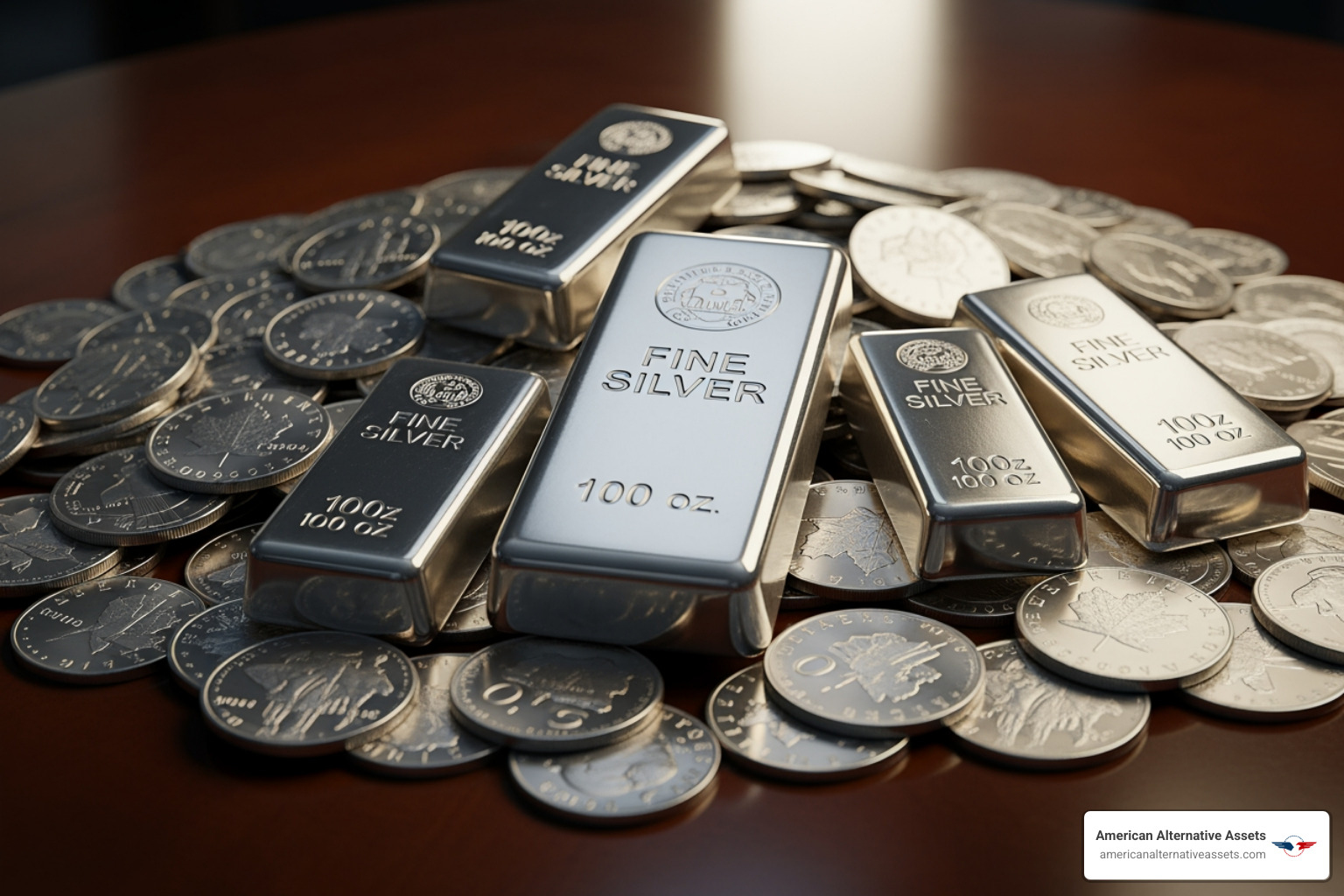
A silver ira account is a self-directed individual retirement account (SDIRA) that allows you to hold physical silver bullion, coins, and bars as part of your retirement portfolio. Here’s what you need to know:
Quick Answer:
- What it is: A specialized IRA that holds IRS-approved physical silver instead of paper assets.
- Minimum purity: Silver must be 99.9% pure (.999 fine).
- How it works: You choose a custodian, fund the account, purchase approved silver, and store it in an IRS-approved depository.
- Tax benefits: Same as traditional IRAs (tax-deferred) or Roth IRAs (tax-free growth).
- 2025 contribution limits: $7,000 per year ($8,000 if age 50+).
- Storage requirement: Must be held by a third-party depository—home storage is prohibited.
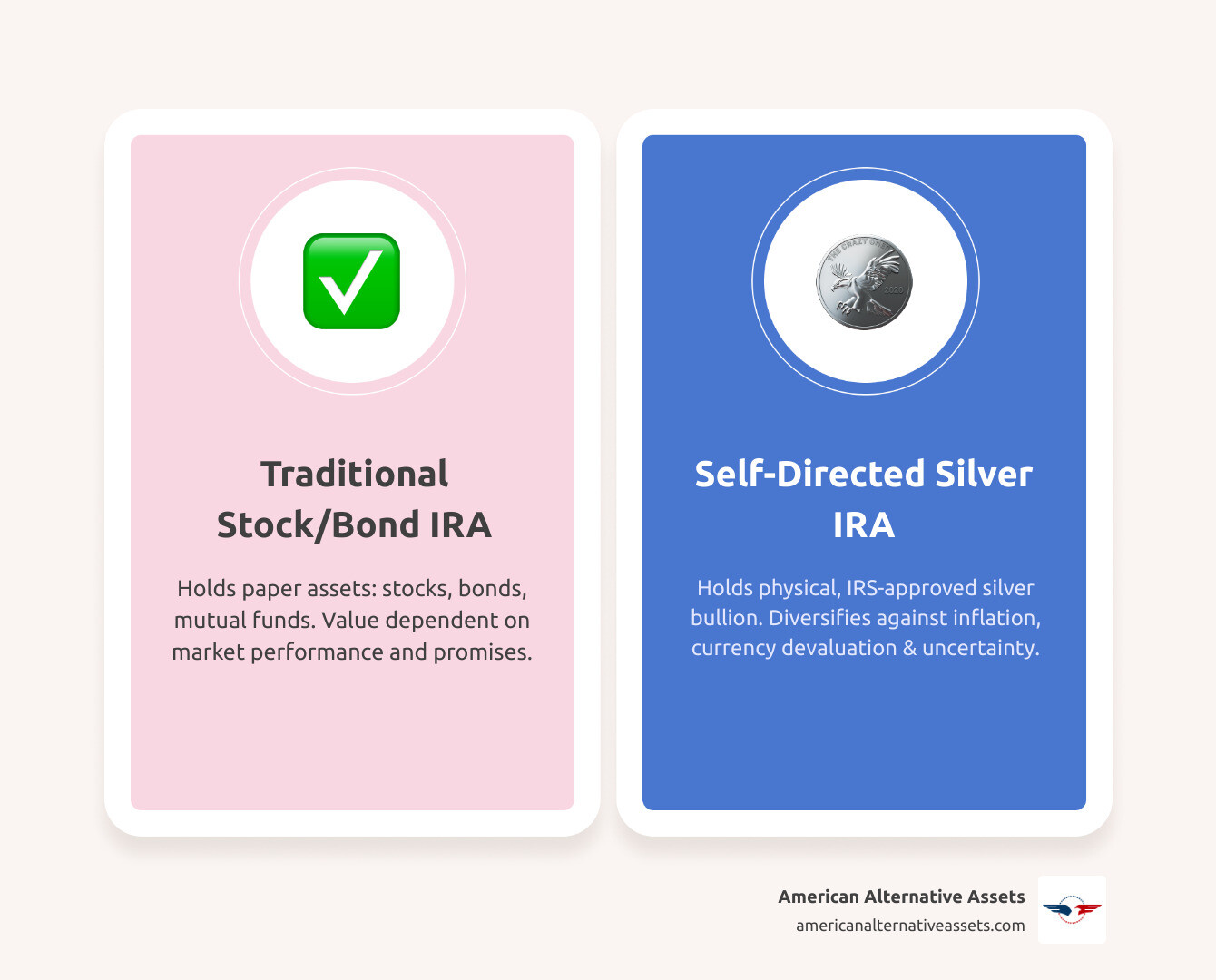
Many investors feel uneasy about retirement accounts holding only stocks and bonds. A silver ira account offers a way to diversify with a tangible asset that has preserved wealth for thousands of years. Unlike paper investments, physical silver sits securely in a vault with your name on it, acting as a hedge against inflation, currency devaluation, and economic uncertainty.
You can move funds from an existing 401(k) or traditional IRA into a silver IRA without triggering taxes or penalties, as long as you follow IRS rules. This allows you to maintain tax advantages while gaining exposure to an asset class that often moves independently of the stock market.
However, silver IRAs have unique considerations. You’ll face storage fees, your silver won’t pay dividends, and prices can be volatile. The process also requires working with specialized custodians and dealers.
I’m Shanon Davis, founder of American Alternative Assets. After decades in finance, I created our firm to help Americans protect their retirement savings with tangible assets like silver ira accounts. This guide will walk you through how to set up, fund, and manage a silver IRA, cutting through the complexity to show you a clear path forward.
Know your silver ira account terms:
Why Consider a Silver IRA? Benefits, Risks, and Account Types
As traditional stock and bond portfolios face uncertainty, more Americans are considering gold investing now—and silver too. A silver ira account is a strategic hedge against economic instability. Here are the key benefits and risks to consider.
Key Benefits:
- Inflation Hedge: When the dollar’s purchasing power declines, silver has historically served as a store of value.
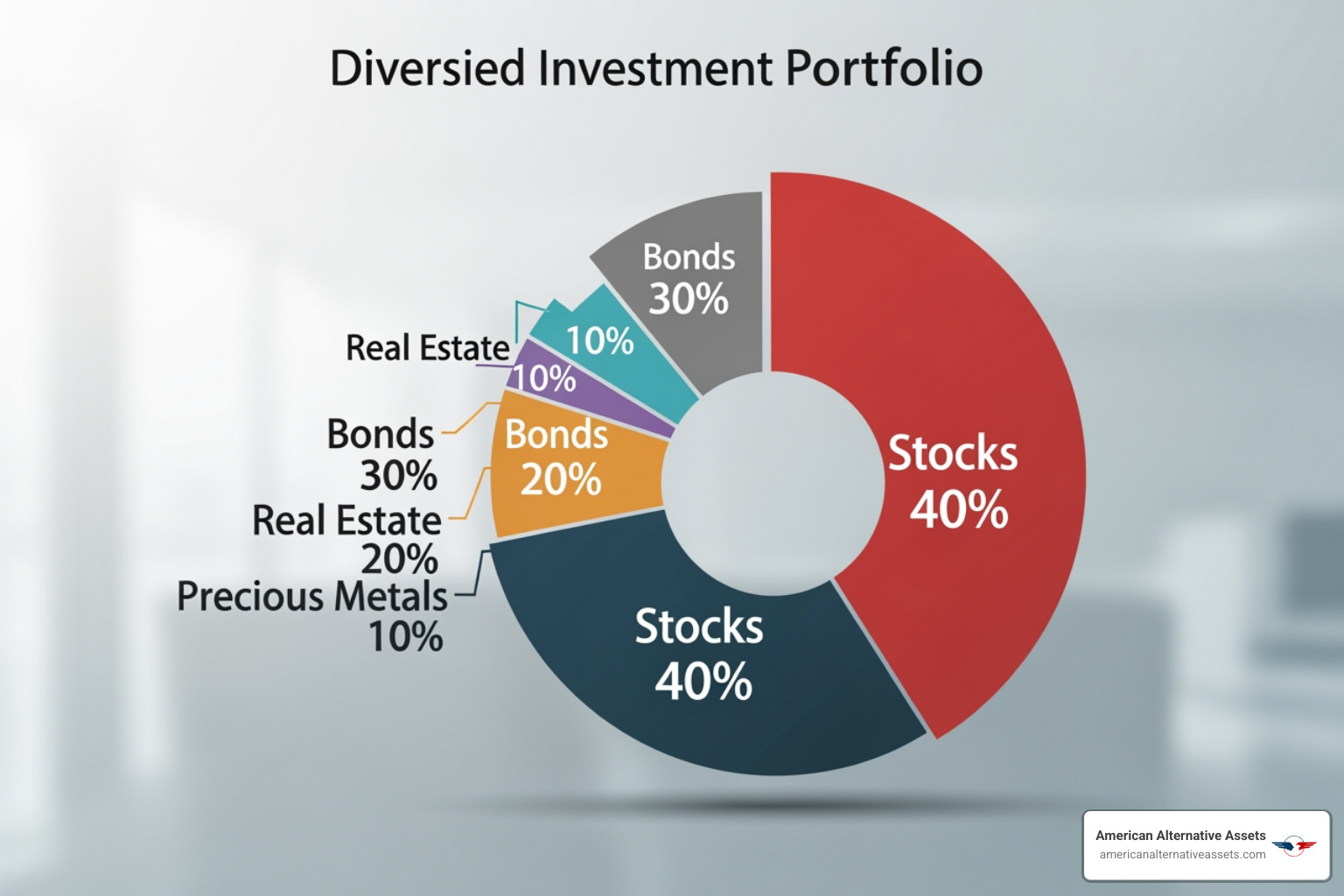
- Portfolio Diversification: Silver often moves independently of the stock market, providing a stabilizing force during downturns and reducing overall portfolio risk.
- Tangible Asset: You own physical metal held in a secure vault, not a paper promise. This provides a sense of security that digital assets can’t match.
- Industrial Demand: Silver is essential for modern technology like smartphones and solar panels, creating a consistent demand floor that supports its value.
Potential Risks:
- Price Volatility: Silver prices can swing more dramatically than gold, offering higher return potential but also greater short-term risk.
- No Passive Income: Your silver does not pay dividends or interest. Profit comes solely from price appreciation when you sell.
- Associated Costs: You will incur annual fees for custodian administration and secure, insured storage in an IRS-approved depository.
- Liquidity: While generally liquid, converting physical silver to cash takes more time than selling a stock and may not occur at the exact spot price.
A silver ira account is a long-term strategy for investors who value tangible assets and want protection against market volatility.
Traditional vs. Roth Silver IRAs
Choosing between a Traditional and a Roth IRA structure is a critical decision based on your tax expectations.
-
A Traditional Silver IRA uses pre-tax contributions, which may be tax-deductible now. Your investments grow tax-deferred, and you pay income tax on withdrawals in retirement. This is often preferred if you expect to be in a lower tax bracket during retirement.
-
A Roth Silver IRA uses after-tax contributions. The benefit is that your investments grow completely tax-free, and qualified withdrawals in retirement are also tax-free. This is attractive if you anticipate being in a higher tax bracket in the future. Roth IRAs also have no Required Minimum Distributions (RMDs) for the original owner.
| Feature | Traditional Silver IRA | Roth Silver IRA |
|---|---|---|
| Contributions | Pre-tax (potentially deductible) | After-tax (not deductible) |
| Growth | Tax-deferred | Tax-free |
| Withdrawals | Taxed as ordinary income | Tax-free (if qualified) |
| RMDs | Required starting at 73 | Not required for original owner |
| Income Limits | None | Yes (for contributions) |
| Best For | Lower tax bracket in retirement | Higher tax bracket in retirement |
Your choice depends on your financial situation and future outlook. Consulting a knowledgeable advisor can help you make the right decision for your circumstances.
How to Open and Fund Your Silver IRA Account: A Step-by-Step Guide
Opening a silver ira account is a straightforward process that breaks down into three main stages: choosing a custodian, funding the account, and purchasing your silver.
Step 1: Choose a Specialized Custodian
This is the most critical decision. A silver ira account requires a self-directed IRA (SDIRA) custodian approved by the IRS to hold alternative assets like physical precious metals. Your custodian administers the account, ensures all transactions are IRS-compliant, and coordinates with dealers and depositories.
Look for a custodian with a strong track record in precious metals, transparent fees, and excellent customer service. The IRS provides a list of licensed IRA custodians. At American Alternative Assets, we perform thorough due diligence to connect you with custodians who meet the highest standards of trust and transparency, ensuring protection for your wealth.
Step 2: Fund Your Account
Once your account is open, you can fund it in several ways:
- Direct Contribution: You can make annual contributions up to the IRS limit. For 2024 and 2025, the annual contribution limits are $7,000, or $8,000 if you are age 50 or older.
- Rollover: You can move funds from a former employer’s 401(k) or 403(b) into your new silver ira account without tax or penalty. A direct rollover, where funds move from one institution to another, is the safest method to avoid potential tax issues.
- Transfer: You can execute a trustee-to-trustee transfer from an existing Traditional or Roth IRA to your new self-directed IRA. This is a seamless, non-taxable event.
Our team at American Alternative Assets can help you determine the best funding method for your situation and manage the paperwork for a smooth process.
Step 3: Purchase and Store Your Silver
With your account funded, you can now purchase your silver. The IRS has strict requirements:
- Purity: Silver must be at least 99.9% pure (.999 fine). Popular IRA-eligible products include American Silver Eagle coins, Canadian Silver Maple Leaf coins, and various silver bars and rounds from approved refiners. Collectible (numismatic) coins are generally not permitted.
- Storage: Your silver must be sent directly from the dealer to an IRS-approved depository. You cannot take physical possession or store it at home. Doing so would be considered a taxable distribution and could incur penalties. These secure facilities are fully insured.
When selecting a depository, you’ll choose between two storage types:
- Segregated Storage: Your specific coins and bars are held separately from all other assets. This option typically costs more.
- Non-segregated (Commingled) Storage: Your silver is held with identical assets from other investors, and you own a proportionate share. This is a more cost-effective option.
We help explain these options and connect you with storage solutions that offer genuine privacy and protection for your wealth.
Navigating IRS Rules for Your Silver IRA Account
To maintain the tax advantages of your silver ira account, you must follow specific IRS rules. These regulations are straightforward and designed to protect the integrity of your retirement savings.
IRS Purity and Product Requirements
The IRS is particular about what can be held in a precious metals IRA. The fundamental rule is that physical silver must be at least 99.9% pure (.999 fine). This ensures you are holding investment-grade bullion.
- Eligible Products: This standard applies to bullion bars, rounds, and certain coins like the American Silver Eagle, Canadian Silver Maple Leaf, and Australian Silver Kangaroo.
- Prohibited Products: The IRS prohibits investing IRA funds in most “collectibles.” This includes rare or numismatic coins valued for their scarcity rather than metal content. Certain bullion coins are specifically exempted from this rule. For more details, you can review the Retirement plans FAQs regarding IRAs on the IRS website.
Contribution Limits and Withdrawal Rules
A silver ira account follows the same contribution and withdrawal rules as standard IRAs.
- Contribution Limits: For 2024 and 2025, you can contribute up to $7,000 per year. If you are age 50 or older, you can make an additional $1,000 catch-up contribution, for a total of $8,000.
- Withdrawal Age: You can begin taking penalty-free withdrawals at age 59 ½.
- Early Withdrawals: Taking funds out before age 59 ½ typically incurs a 10% penalty tax in addition to regular income tax (for Traditional IRAs). However, there are several exceptions to early withdrawal penalties, such as for a first-time home purchase, certain medical or education expenses, or disability.
Tax Implications of a Silver IRA Account
Understanding the tax benefits is key to maximizing your returns.
- Traditional Silver IRA: Contributions may be tax-deductible, and investments enjoy tax-deferred growth. You pay ordinary income tax on withdrawals in retirement. You must also begin taking Required Minimum Distributions (RMDs) starting at age 73.
- Roth Silver IRA: You contribute with after-tax dollars, but your investments grow completely tax-free. Qualified withdrawals in retirement are also tax-free. Roth IRAs have no RMDs for the original owner.
A major advantage of holding silver in an IRA is avoiding the high capital gains tax on collectibles. Outside an IRA, silver gains can be taxed up to 28%. Inside a Traditional IRA, gains are taxed as ordinary income upon withdrawal, while in a Roth IRA, qualified withdrawals are tax-free. Our team helps clients steer these rules to ensure full compliance and maximum benefit.
Frequently Asked Questions about Silver IRAs
Here are answers to the most common questions we receive about silver ira accounts.
Can I store my IRA-approved silver at home?
No. The IRS explicitly prohibits storing IRA-owned precious metals at home or in a personal safe deposit box. Taking physical possession is considered a taxable distribution, which would disqualify the IRA and trigger income taxes and potential penalties. The IRS has warned taxpayers against schemes claiming to allow home storage. All metals in a silver ira account must be held by an approved nonbank trustee in a secure, insured depository.
What are the typical fees associated with a Silver IRA?
Transparency on fees is crucial. Costs associated with a silver ira account typically include:
- Setup Fee: A one-time charge by some custodians to open the account, though many waive this fee.
- Annual Custodian Fee: An administrative fee for account maintenance, record-keeping, and IRS reporting. This can be a flat rate or a percentage of the account’s value.
- Storage Fee: An annual fee paid to the depository for securely storing and insuring your physical silver. Costs vary based on the value of your holdings and whether you choose segregated or non-segregated storage.
- Dealer Markup: The premium charged by the precious metals dealer over the spot price of silver when you buy or sell.
Understanding these costs upfront is essential. Our white-glove approach ensures you have a clear picture of all fees before you commit.
How does a Silver IRA compare to a Gold IRA?
Both silver and gold IRAs offer a way to hold physical precious metals in a tax-advantaged retirement account. They provide similar benefits like inflation protection and diversification. However, they play different roles in a portfolio.
- Gold: Often seen as the ultimate safe-haven asset, gold is known for its stability and lower volatility. It is primarily an investment and monetary metal with limited industrial use. IRA-eligible gold must be 99.5% pure (with some exceptions).
- Silver: Known for higher price volatility, which creates potential for greater returns but also higher risk. About half of silver’s demand is industrial, tying its value to economic growth as well as investment demand. It is also more affordable per ounce, making it accessible for smaller investments. IRA-eligible silver must be 99.9% pure.
Many investors choose to hold both gold and silver to balance stability with growth potential. The right mix depends on your personal risk tolerance and investment goals.
Conclusion
You now have the foundational knowledge to decide if a silver ira account fits your retirement strategy. It offers tangible benefits like inflation protection and diversification away from paper assets, providing the peace of mind that comes from owning a real asset. However, it also requires working with specialized custodians and paying for secure storage.
The most important takeaway is that due diligence is essential. A silver ira account is a long-term strategy that requires careful research of custodians, fees, and how precious metals fit into your overall financial plan.
At American Alternative Assets, our reputation is built on guiding clients through this process with white-glove service. We prioritize transparency, trust, and ethical practices to protect your wealth and privacy. We are here to ensure you steer these decisions with confidence, not pressure.
Whether you’re considering a rollover from a 401(k) or starting a new IRA, a silver ira account could be the stabilizing force your portfolio needs. If you’re ready to take the next step, let’s have a straightforward conversation about your goals.
Explore your precious metals IRA options and learn more about how silver can fit into your future.