








Analyzing 2026 Physical Precious Metals Returns
The year 2025 was a historic turning point for precious metals returns. While traditional paper equity markets faced significant counterparty risks, they were dwarfed by the explosive growth seen in physical metals (coins and bars). This performance was not a fluke but rather a convergence of persistent inflation, geopolitical instability, and a massive shift in how central banks view their reserves.
As we move through 2026, markets are still digesting higher-for-longer policy, heavy government borrowing needs, and ongoing supply constraints. Understanding what drove 2025 performance is essential for investors evaluating their strategy today. Many investors use physical metals as a form of diversification, and the case for owning physical bullion (coins and bars) in a Precious Metals IRA often centers on direct ownership, portability, and independence from financial intermediaries.
| Asset Class | 2025 Annual Return |
|---|---|
| Silver | +147.95% |
| Platinum | +127.04% |
| Palladium | +77.51% |
| Gold | +64.58% |
Gold and Silver Performance: From 2025 into 2026
Gold’s journey in 2025 was a masterclass in resilience. The yellow metal surged 70.9% year-to-date at its peak, ending the year at approximately US $4,492.87 per ounce. We saw gold reach a staggering record of $5,416 per ounce in January 2025 before a natural market correction brought it to $4,641 in February. Despite these fluctuations, the “policy insurance” role of gold remained intact as we progress through 2026, with investors continuing to seek shelter from fiscal deficits.
Silver, however, was the undisputed heavyweight champion of 2025. With a year-to-date increase of 147%, climbing to US $72.31 per ounce, silver benefited from its dual identity. It acted both as a monetary hedge and a critical industrial component. The massive push for clean energy and the expansion of the electronics sector created a “perfect storm” for silver prices, as supply simply could not keep up with the voracious industrial appetite.
For readers evaluating precious metals returns in 2026, it helps to separate performance from purpose. Metals can rise or fall, but many long-term holders focus on what physical gold and silver (coins and bars) can do in a portfolio, namely act as a potential hedge during periods of monetary uncertainty and a diversifier when correlations across paper stocks and bonds increase.
Historical Performance: A 25-Year Review
While the 2025 “moonshot” captures the headlines, the true value of physical precious metals is found in their long-term compounded annual growth. We believe that looking at a 25-year horizon provides the most accurate picture of how these assets manage risk and preserve wealth.
Long-Term Physical Precious Metals Returns in USD and AUD
Between January 1999 and early 2026, gold delivered a compounded annual return of 10.9% in USD terms. For our friends in different regions, such as Australia, the returns were equally impressive at 10.1% per annum in AUD terms. During this same quarter-century, silver delivered 8.9% annually in USD (8.1% in AUD).
These numbers are significant because they prove that physical gold and silver are not just “dead assets” that sit in a vault. They have consistently outperformed cash and volatile paper assets since the turn of the century. This steady growth helps maintain purchasing power even as the dollar’s value is eroded by time and policy.
Performance During Economic Uncertainty
History shows us that physical gold and silver generate above-average returns during short, medium, and long-term horizons of crisis. From the 1970s stagflation to the 2008 financial collapse and the 2020 pandemic, physical metals have acted as a stabilizing force. In 2024, gold returned 26.6% in USD, setting the stage for the 2025 breakout. This safe-haven status is why we see physical metals in a Gold IRA as the foundation of a diversified portfolio, providing a non-correlated anchor when paper stocks and bonds move in tandem during a downturn.
Macro Drivers Behind the Recent Surge

What exactly pushed these prices to such heights? It was not just one factor, but a combination of macroeconomic “red flags” that reached a breaking point.
Central Bank Demand and Fiscal Deficits
Central banks have become the “hidden hand” driving gold demand. In 2025, official sectors bought roughly 633.56 tonnes of gold, with a notable acceleration in the third quarter. As we move through 2026, they continue to diversify away from USD reserve holdings. As fiscal deficits in major economies like the U.S., China, and the U.K. continue to expand, sovereign risk becomes a real concern. Emerging markets, in particular, are targeting gold as a politically neutral asset that does not rely on any single government’s “permission” to hold or trade.
Industrial Demand and the Energy Transition
Beyond the vaults of central banks, the “green revolution” is hungry for metals. Silver is a primary component in solar panels and electric vehicle (EV) electronics. As the world shifts toward electrification and AI infrastructure in 2026, the demand for silver and platinum group metals is projected to remain in a structural deficit. This means that even if the “fear trade” cools down, the “industrial trade” provides a durable floor for precious metals returns.
Physical Bullion (Coins and Bars) vs. Paper Assets
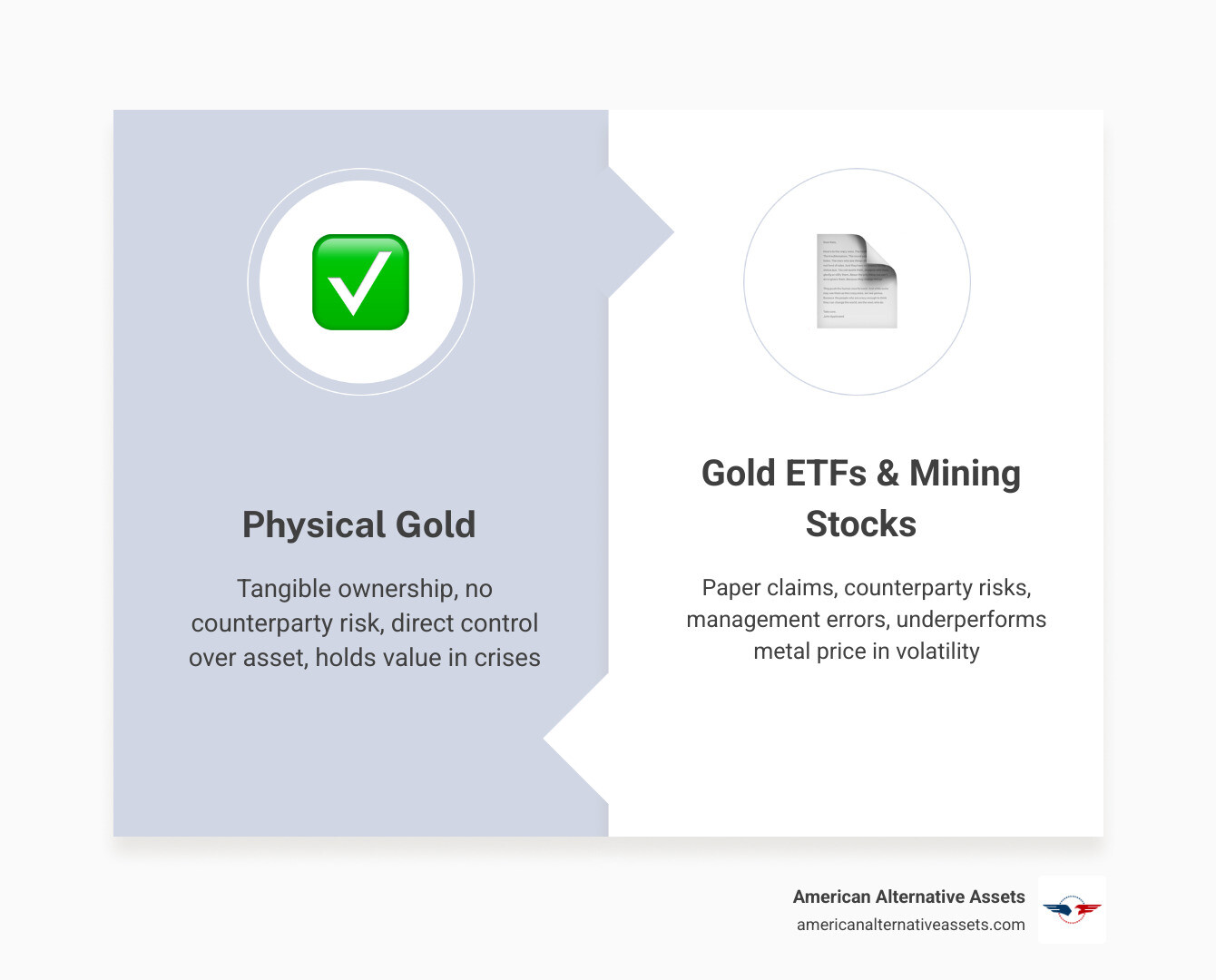
At American Alternative Assets, we feel it is crucial to distinguish between owning physical metals and owning “paper” versions like ETFs or mining stocks. While paper assets attempt to track the price of the metal, they carry significant counterparty risks and are fundamentally inferior to direct ownership.
Why Physical Ownership Outpaces Paper Precious Metals Returns
When you buy a gold ETF, you own a piece of paper that represents a claim on gold, but you do not own the metal itself. In a systemic financial crisis, these “claims” can become difficult to settle. Furthermore, mining stocks are subject to management errors, environmental regulations, and labor strikes, which can cause them to underperform the actual metal they pull out of the ground. Physical bullion (coins and bars), on the other hand, is a tangible asset with no counterparty risk. It is the only financial asset that is not someone else’s liability.
The Role of a Precious Metals IRA
For those looking at long-term retirement goals, a Precious Metals IRA offers a unique path. It allows you to hold physical gold and silver (coins and bars) within a tax-advantaged framework. This combines the wealth-protection benefits of physical assets with the growth potential of a retirement account, all while ensuring your wealth is stored in secure, segregated vaults.
Looking Ahead: Plausible Market Paths for 2027
As we move through 2026, the market is entering a period of “regime awareness.” The focus is shifting from simple inflation to the credibility of central banks and fiscal sustainability. That is why reviewing precious metals returns from 2025 is useful, but it should be paired with a forward-looking lens on what could influence gold and silver in 2027.
In practical terms, investors are watching a few recurring variables, including real interest rates, the trajectory of government borrowing, currency confidence, and whether industrial demand continues to tighten supply for certain metals. None of these factors guarantees higher prices, but they help explain why many people keep a strategic allocation to physical gold and silver (coins and bars) in a Precious Metals IRA as part of a diversified plan.
Plausible Market Paths for 2027
Investors should watch three main scenarios:
- The Soft Landing: Even if inflation cools, physical metals (coins and bars) provide a level of security and direct ownership that paper stocks simply cannot offer.
- The Growth Scare: If the economy stutters and the Fed responds with aggressive rate cuts, the safe-haven bid for physical gold could strengthen while paper assets falter.
- The Credibility Shock: If fiscal deficits lead to institutional volatility or a currency crisis, we could see another explosive leg up in precious metals returns for those holding physical bullion (coins and bars).
Silver remains a “high-beta” play for 2027. Its hybrid nature means it will likely be more volatile than gold, responding sharply to both industrial growth signals and monetary policy shifts.
For long-term savers, the key 2026 takeaway is less about predicting the next move and more about owning the right form of exposure. American Alternative Assets advocates for physical precious metals (coins and bars), including through a Precious Metals IRA, because direct ownership is widely viewed as a way to reduce reliance on financial counterparties.
Frequently Asked Questions about Physical Precious Metals Returns
Which physical precious metal is performing best in 2026?
Silver was the top performer in 2025, delivering a 147.95% return, and it continues to show significant momentum in 2026. This is driven by a combination of intense industrial demand from the solar and electronics sectors and its role as a more affordable monetary hedge compared to gold.
How do physical gold returns compare to volatile paper stock markets in 2026?
In 2025, physical gold significantly outperformed volatile paper stock market indices, returning 64.58%. Throughout 2026, physical gold has continued to act as a non-correlated asset, meaning it often performs well when paper-based equity markets face volatility or high inflation.
What is the recommended portfolio allocation for physical metals?
While every investor’s situation is different, many experts suggest a core allocation of up to 5% in physical precious metals (coins and bars) held within a Precious Metals IRA. This is generally viewed as a defensive position intended to provide diversification and long-term stability rather than the high-risk exposure found in paper assets.
Conclusion
The incredible precious metals returns from physical bullion we have witnessed recently are a wake-up call for many investors. In an era of record fiscal deficits and geopolitical shifting, the role of physical assets has never been more vital. At American Alternative Assets, we specialize in providing white-glove, relationship-first service to help you navigate these markets. Whether you are looking to protect your existing retirement savings or start a new path toward wealth preservation, we are here to ensure your journey is built on trust and transparency.
Investing in physical precious metals involves risk. Past performance does not guarantee future results. This article is for informational purposes only and does not constitute financial advice. Please consult your financial advisor before making investment decisions.