







Understanding Purity and the Karat System
Before we can determine the value of my gold, we have to understand what we are actually holding. Not all gold is created equal. In its raw, 24k form, gold is remarkably soft, so soft, in fact, that you could mold it with your hands. While this makes it beautiful, it makes for terrible jewelry that would bend or scratch during a simple dinner party.
To make gold functional, jewelers mix it with other metals like silver, copper, or nickel. This creates an alloy. The “Karat” system (K) is simply a way to measure how much of that mix is actually pure gold versus those other base metals.
- 24K Gold: This is 99.9% pure. It is the gold standard for investment-grade bullion and bars.
- 22K Gold: Often found in high-end coins like the American Gold Eagle, it is roughly 91.6% pure.
- 18K Gold: Comprising 75% gold, this is popular in luxury European jewelry. It strikes a balance between rich color and durability.
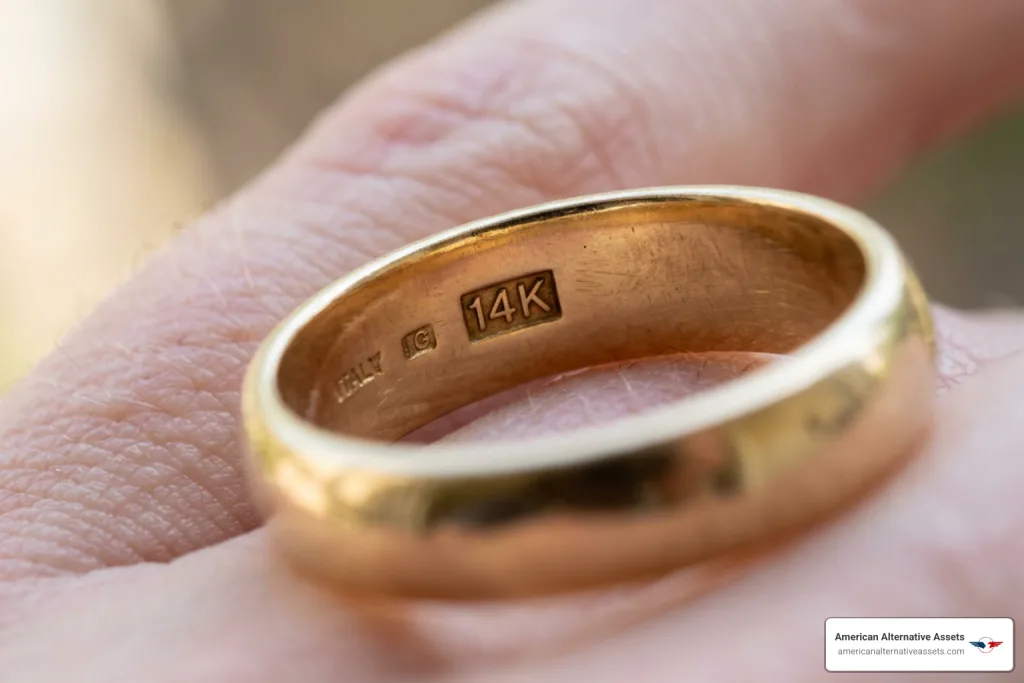
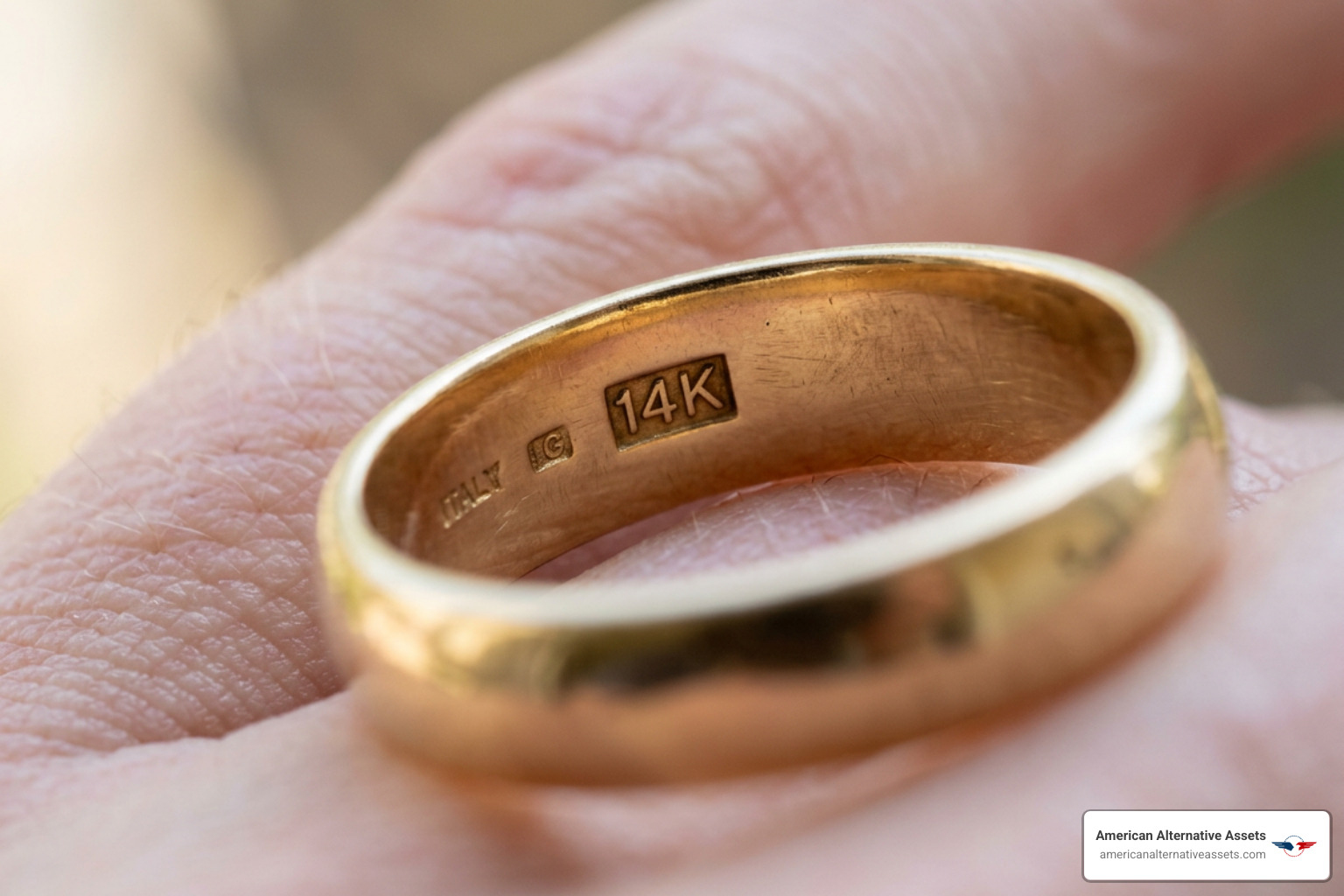
- 14K Gold: This is the most common purity for jewelry in the United States. It is 58.3% pure (14 divided by 24) and is tough enough for everyday wear.
- 10K Gold: At 41.7% purity, this is the minimum standard to be legally called “gold” in the U.S. It is very durable but has a paler yellow tone.
Understanding these levels is the first step in learning more about 24k bullion and how it differs from the jewelry in your dresser.
Identifying Hallmarks and Stamps
Most reputable gold items have a “hallmark,” a tiny stamp that tells you its purity. You might need a magnifying glass or a jeweler’s loupe to see it. Look for numbers like “585” (which signifies 14k or 58.5% purity) or “750” (which signifies 18k or 75% purity). These stamps are usually hidden on the inside of a ring band, the clasp of a necklace, or the post of an earring.
If you can’t find a stamp, don’t panic. Stamps can wear down over decades of use. However, if you see markings like “GF” (gold-filled), “GP” (gold-plated), or “HGE” (heavy gold electroplate), these indicate that the item is not solid gold and has very little melt value. If you are unsure, you can find gold testing kit listings on eBay to help verify the metal at home.
Testing Unmarked Gold
For pieces without a clear pedigree, we use more scientific methods. The most common is the acid test. You slightly scratch the gold on a black touchstone and apply a drop of testing acid. If the gold mark remains, it is at least the purity of the acid used (e.g., 14k acid). If it dissolves, it is a lower purity or a different metal entirely.
There are also electronic testers that measure the electrical conductivity of the metal to give a digital readout of the karat. These are more expensive but less invasive than acid. You can browse various acid test kits online to see which fits your needs. Gold-filled items have a thick layer of gold over a base metal, while gold-plated items have a microscopically thin layer. Neither should be valued as solid gold.
Measuring the Physical Value of My Gold
Once you know the purity, you need the weight. This is where many people get tripped up because the “gold world” uses a different measurement system than the “grocery store world.”
The Troy Ounce vs. The Standard Ounce
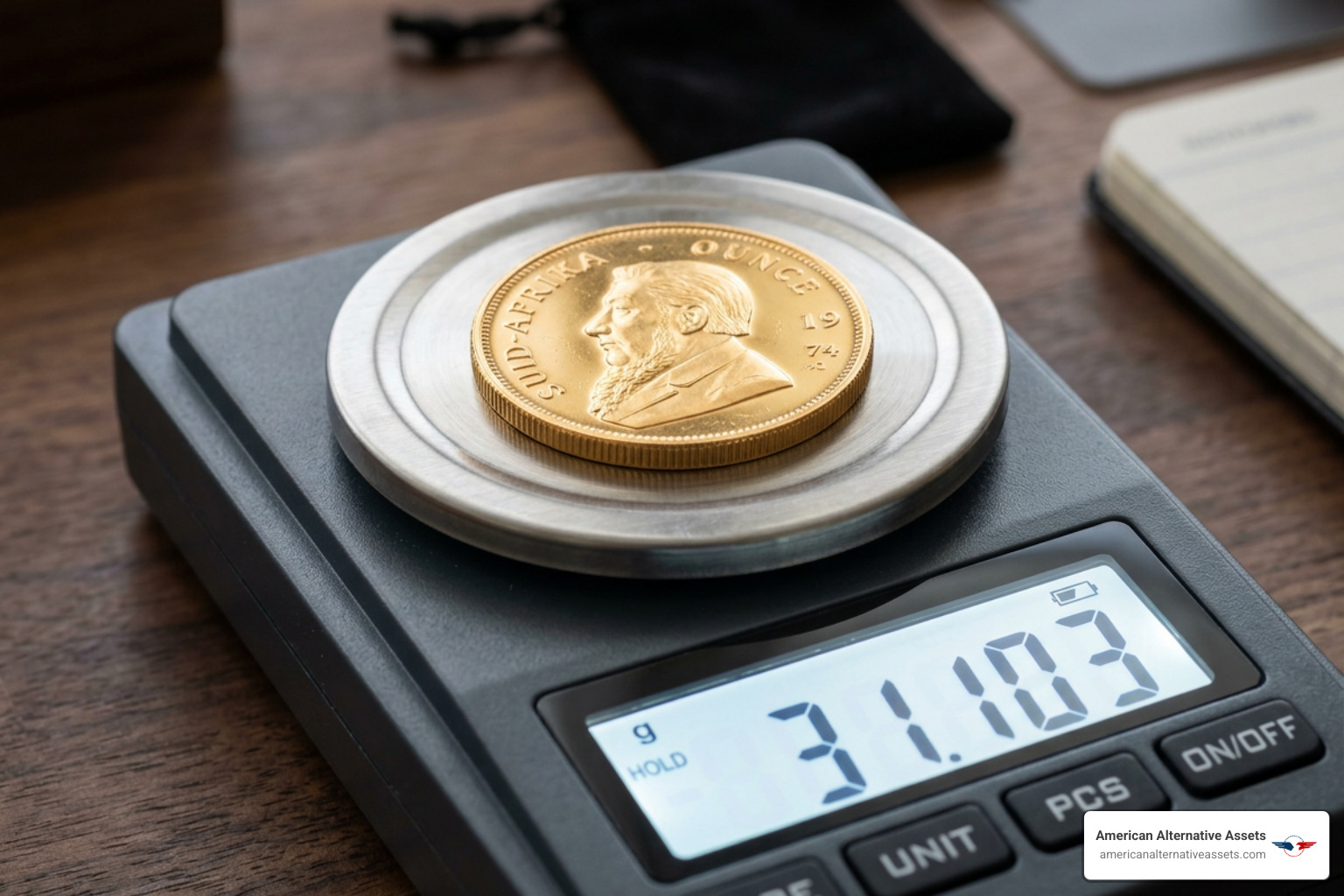
In the United States, we use the “avoirdupois” ounce for most things, which weighs 28.35 grams. However, precious metals are measured in troy ounces. A troy ounce is heavier, weighing exactly 31.1 grams.
If you weigh your gold on a standard kitchen scale and it says “1 ounce,” you actually have less than a troy ounce. This discrepancy can lead to significant measurement errors when calculating the value of my gold. Always ensure your scale is set to grams or troy ounces (ozt). For the most accurate results, we recommend using a scale that measures to at least the tenth of a gram. You can find affordable options by looking at digital gram scale listings on eBay.
Calibrating Your Scale at Home
Before you trust your scale with your wealth, you must calibrate it. Luckily, the U.S. government provides us with perfect calibration weights in our pocket change. According to U.S. Mint, Circulating Coin Specifications, a modern penny weighs exactly 2.5 grams, and a nickel weighs exactly 5.0 grams.
If you place a nickel on your scale and it reads 4.8 or 5.2, your scale is off. Recalibrate it or account for that margin of error before proceeding. Precision is key; even a few grams’ difference can change your valuation by a significant amount. You can verify Official coin weights directly from the Mint’s website to be certain.
Calculating the Melt Value of My Gold
Now we have our two variables: purity and weight. The third variable is the spot price, which is the current price at which gold is trading on the global market. Spot prices fluctuate by the minute, so always look for a “live” rate.
| Gold Karat | Purity Percentage | Decimal Multiplier |
|---|---|---|
| 24K | 99.9% | 0.999 |
| 22K | 91.7% | 0.917 |
| 18K | 75.0% | 0.750 |
| 14K | 58.3% | 0.583 |
| 10K | 41.7% | 0.417 |
Step-by-Step Calculation Formula
To find the raw “melt value” (the value of the gold if it were melted down into a pure bar), use this formula:
- Divide the Karat by 24 to get the purity decimal (e.g., 14 / 24 = 0.583).
- Convert your weight to troy ounces. If you weighed in grams, divide the grams by 31.1.
- Multiply: (Weight in troy oz) x (Purity decimal) x (Current spot price).
Example: You have a 14k necklace weighing 33 grams.
- 33g / 31.1 = 1.061 troy ounces.
- 1.061 oz x 0.583 (purity) = 0.618 ounces of pure gold.
- If the spot price is $2,000, then 0.618 x $2,000 = $1,236.
That $1,236 is your baseline. For a quick check without the math, you can use a Gold Price Calculator to get an instant estimate.
Scrap Value vs. Resale Value
It is important to distinguish between “melt value” and “resale value.” Melt value only considers the raw metal. However, if you have a vintage Tiffany & Co. ring or an antique piece from the Victorian era, it may have a resale value far higher than its weight in gold.
Designer brands, historical significance, and the presence of high-quality gemstones add a premium. Conversely, if you are selling “scrap” (broken chains, single earrings), you should expect to receive a percentage of the melt value, as the buyer must pay for refining fees to extract the pure gold. You can read more about these nuances in this gold selling guide.
Where to Realize the Value of My Gold
Knowing the value of my gold is half the battle; the other half is finding a buyer who won’t take advantage of you. You have several options, each with pros and cons.
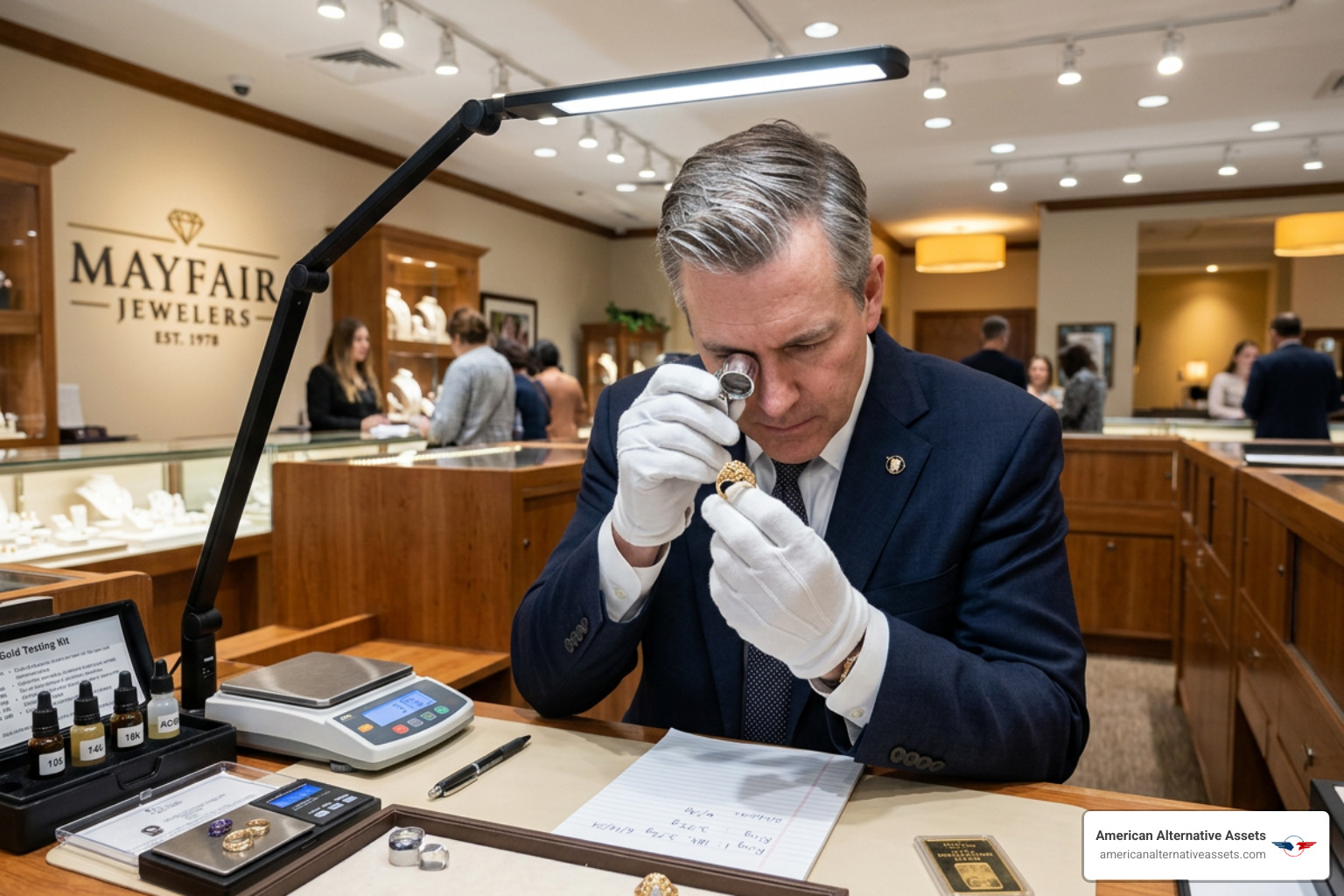
- Local Jewelers: Often the most “middle-of-the-road” option. They are convenient and usually offer fair prices, especially if they think you might buy something else.
- Pawn Shops: These are built for speed, not top-dollar. They often offer lower percentages because they are taking a risk on the item’s resale.
- Online Buyers: High-volume online refiners often pay the best percentages (sometimes up to 95%) because they have lower overhead and deal directly with refineries.
- Mail-in Services: Convenient, but ensure they are insured and reputable. Check this gold buying guide from the Better Business Bureau to vet any company before shipping your valuables.
Avoiding Common Selling Pitfalls
The biggest mistake people make is accepting the first offer. “Hotel buyers” or traveling gold shows often provide lowball offers because they know they will be gone by the time you realize you were underpaid.
Always ask the buyer what percentage of the “spot price” they are paying. If they won’t tell you, or if they try to hide the weight of your items, walk away. You should also ask if they deduct refining fees or commissions separately. Using a Cash for Gold Calculator before you go can give you the confidence to negotiate.
Comparing Buyer Payouts
In the industry, a “good” payout for scrap gold is generally between 75% and 85% of the melt value. If you are selling high-purity bullion or coins, you should expect 95% or more. Anything below 70% is usually considered a poor deal for the seller. Transparency is the hallmark of a good buyer. If they don’t have a live price ticker visible, or if they weigh your gold behind a closed door, find someone else. You can use a Scrap Gold Calculator to compare what different buyers are offering against the real-time market rate.
Beyond Scrap: The Strategic Value of Physical Gold
While selling old jewelry is a great way to generate quick cash, many people are realizing that the true value of my gold lies in long-term physical ownership. In an era of digital bank accounts and “paper” assets, gold remains one of the few things you can actually hold in your hand that has intrinsic value.
We believe physical gold serves as a vital hedge against inflation and economic uncertainty. Unlike stocks or bonds, gold has no “counterparty risk.” This means its value doesn’t depend on a CEO’s honesty or a bank’s solvency. When you own physical bars or coins, you have direct control over your wealth.
Physical Gold vs. Paper Gold Stocks
Many investors are tempted by “paper gold,” such as gold ETFs or mining stocks. However, these are not the same as owning the metal and carry significant risks. Paper assets are subject to market volatility, management fees, and systemic risks within the financial system. If the “paper” exchange fails, you don’t actually have gold; you have a claim on a piece of paper.
Physical gold provides a level of security that digital assets simply cannot match. It is a tangible asset that has preserved wealth for thousands of years. We often discuss The Case for Gold as a way to protect yourself from the “fool’s gold” of purely digital portfolios.
Diversifying with a Precious Metals IRA
For those looking toward retirement, a Precious Metals IRA offers a way to combine the tax advantages of a traditional retirement account with the security of physical gold and silver. Instead of your future being tied solely to the performance of the S&P 500, you can hold physical bars and coins in a secure, IRS-approved depository.
This type of diversification is about more than just profit; it is about protection. By unveiling investor benefits in owning gold, we help our clients see how precious metals can act as an “insurance policy” for their life savings. If you are wondering Why Invest in a Gold IRA?, the answer usually comes down to peace of mind.
Frequently Asked Questions about Gold Valuation
How often does the spot price of gold change?
The spot price of gold is “live,” meaning it changes every few seconds during market hours. Global trading happens nearly 24 hours a day across markets in London, New York, and Hong Kong. When you are ready to sell or value your gold, always use a real-time price feed rather than yesterday’s newspaper.
Can I calculate the value of gold-filled or plated items?
Technically, yes, but the value is usually so low that most refiners won’t buy it in small quantities. Gold-plated items have less than 0.05% gold content. Gold-filled items are better (usually 5% gold by weight), but the cost to refine the gold out of the base metal often eats up most of the profit. These items are best valued as costume jewelry rather than investment metal.
Why do buyers pay less than the full melt value?
Buyers are running a business. When they buy your gold, they have to pay for the storefront, the staff, insurance, and the shipping and refining fees to turn that scrap back into pure 24k gold. A payout of 80% means the buyer is keeping 20% to cover these costs and make a small profit.
Conclusion
Determining the value of my gold doesn’t have to be a mystery. By understanding the karat system, using a precise scale, and keeping an eye on the live spot price, you can walk into any transaction with the upper hand. Whether you are cleaning out a jewelry box or looking to secure your retirement, knowledge is your most valuable asset.
At American Alternative Assets, we pride ourselves on a white-glove, relationship-first approach. We believe in trust, transparency, and ethical practices. Our goal isn’t just to help you buy gold. It is to help you understand the role physical precious metals play in true wealth preservation through a Gold or Silver IRA. If you’re ready to take the next step in protecting your future with a Precious Metals IRA, we invite you to Buy Gold and Silver through a partner that values your privacy and protection as much as you do.
Disclaimer: This article is for informational purposes only and does not constitute financial advice. Please consult your financial advisor before making investment decisions. Investing in precious metals involves risk. Past performance does not guarantee future results.