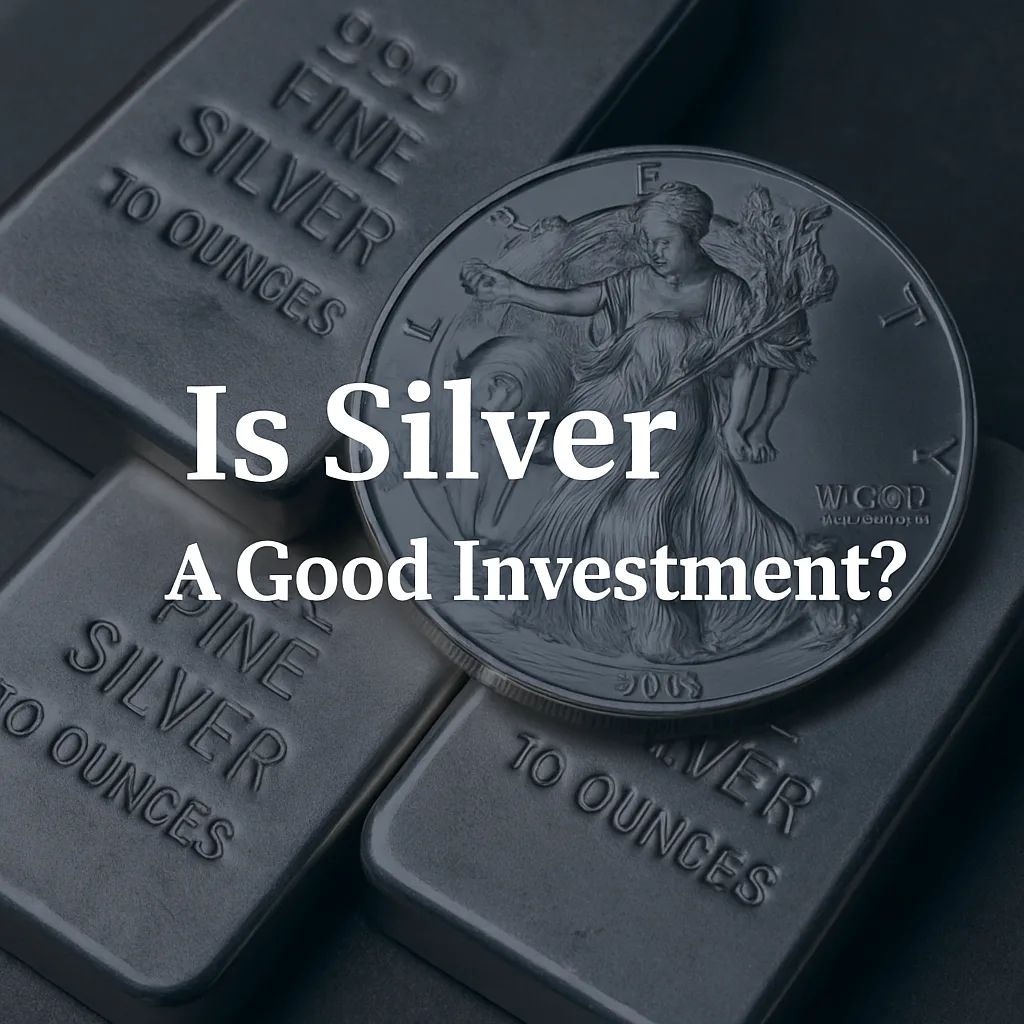
Is Silver a Good Investment? A Comprehensive Guide for Protecting Your Retirement
In a world of soaring national debt, persistent inflation, and unpredictable market swings, many American retirees are asking the same urgent question: How can I protect the wealth I’ve spent a lifetime building?
For generations, the answer has been found not in complex digital assets or volatile stocks, but in the tangible, time-tested value of precious metals. While gold often takes the spotlight, its versatile counterpart, silver, presents a compelling and accessible opportunity for wealth protection.
This guide provides a comprehensive look at silver as a strategic asset. We will explore why silver has been a cornerstone of financial security for centuries, how it performs in today’s economic climate, and the practical steps you can take to make it part of your retirement strategy. Whether you are a seasoned investor or just beginning to explore your options, understanding the role silver can play is a critical step toward securing your financial future.
What is Silver? More Than Just a Precious Metal
Silver is a unique asset that stands at the crossroads of money and industry. For over 4,000 years, it has served as a reliable form of currency and a store of value, trusted by civilizations across the globe. Unlike fiat currencies, which can be printed at will and devalued by inflation, silver has an intrinsic value rooted in its scarcity and its tangible, physical nature. This has made it a foundational asset for wealth preservation.
But silver’s value proposition extends far beyond its monetary history. It is also one of the most critical industrial metals on the planet, second only to oil in its range of applications. Silver’s exceptional conductivity, thermal efficiency, and antimicrobial properties make it an irreplaceable component in modern technology. From the smartphone in your pocket and the solar panels on your roof to advanced medical devices and electric vehicles, silver is the silent engine of innovation.
This ever-growing industrial demand creates a strong, consistent floor for its value, providing a layer of security that other investments simply cannot match.
This dual nature, as both a monetary metal and an essential industrial commodity, is what makes silver such a powerful asset for a diversified portfolio. It offers the stability of a store of value combined with the growth potential driven by technological advancement.
Why Invest in Silver? The Modern Case for a Timeless Asset
In today’s economic landscape, the reasons to invest in silver are more compelling than ever. For retirees and those planning for the future, silver offers a powerful defense against the primary threats to your wealth.
A Proven Hedge Against Inflation and Currency Devaluation
When the government prints more money, the value of each dollar in your savings account decreases.
This is the painful reality of inflation. Precious metals like silver, however, cannot be created out of thin air.
Their value is not tied to government policy or central bank decisions.
Historically, as the purchasing power of the dollar has declined, the price of silver has risen, helping investors preserve their wealth.
In an era of unprecedented government spending and monetary stimulus, holding a physical asset like silver is a prudent strategy to safeguard your retirement from the erosive effects of inflation.
Portfolio Diversification and Risk Management
Financial advisors have long recommended diversification as a key to managing risk.
However, in today’s interconnected markets, traditional assets like stocks and bonds often move in the same direction, especially during a crisis.
Silver, on the other hand, often has a low to negative correlation with these financial assets.
This means that when stock markets are volatile or declining, silver often holds its value or even appreciates. Adding silver to your portfolio can provide a crucial layer of stability, helping to smooth out returns and protect your principal when other assets are underperforming.
Surging Industrial Demand Driving Long-Term Growth
The “green energy” revolution is built on silver.
Solar panels, electric vehicles (EVs), and 5G cellular technology all require significant amounts of the metal.
A typical EV uses nearly twice as much silver as a traditional internal combustion engine vehicle.
The push toward renewable energy and advanced electronics is creating a structural demand for silver that is projected to grow for decades to come. As this demand continues to outpace mine supply, the fundamental case for a long-term increase in silver’s value becomes incredibly strong.
By investing in silver, you are not just buying a monetary metal; you are investing in the future of technology.
An Accessible and Undervalued Alternative to Gold
While gold is the undisputed king of precious metals, silver is often called “the people’s money” for good reason.
With the gold-to-silver ratio historically high, silver is significantly more affordable on a per-ounce basis.
This allows investors to acquire a substantial physical holding for a relatively modest capital outlay.
Many analysts believe that silver is currently undervalued relative to gold, suggesting it has more room for price appreciation.
For investors looking to enter the precious metals market, silver offers a lower barrier to entry with the potential for significant upside.
The Best Ways to Invest in Silver for Retirement
Once you’ve decided to add silver to your portfolio, the next step is to choose the right investment vehicle. For those focused on wealth protection and long-term security, some methods are far superior to others.
At American Alternative Assets, we specialize in helping Americans secure their future with tangible assets, and we believe in a strategy that prioritizes direct ownership and control.
Physical Silver: The Foundation of True Ownership
Owning physical silver, in the form of coins or bars, is the most direct and secure way to invest. When you hold physical silver, you eliminate counterparty risk. You are not relying on a fund manager, a bank, or a brokerage firm to make good on a paper promise.
The asset is yours, held in your possession or in a secure depository of your choice. This is the essence of “real assets, real privacy, real protection.”
The Precious Metals IRA: Tax-Advantaged Silver Investing
For many of our clients, a Silver IRA is the most strategic way to protect their retirement savings. A Precious Metals IRA, also known as a Self-Directed IRA, allows you to hold physical, IRA-eligible silver coins and bars within a tax-advantaged retirement account.
This provides all the benefits of a traditional IRA, such as tax-deferred or tax-free growth, with the added security of owning a tangible asset.
By rolling over a portion of an existing 401(k) or IRA into a Silver IRA, you can diversify your retirement portfolio away from paper assets and into the safety of physical precious metals. This is not about abandoning traditional investments, but about adding a critical layer of insurance against market volatility and inflation.
“Paper Silver”: Understanding the Risks
While some investors are drawn to the convenience of silver-backed Exchange-Traded Funds (ETFs) or mining stocks, it is crucial to understand that these are not the same as owning the physical metal. These “paper silver” assets carry risks that physical ownership does not.
•Silver ETFs: When you buy a silver ETF, you are buying a share in a trust that claims to hold silver. You do not own the metal itself and typically cannot take delivery. The value of your investment is subject to the performance and management of the fund, and it exists as a digital entry in a brokerage account—the very system many are seeking to hedge against.
•Silver Mining Stocks: Investing in mining companies is a bet on the company’s operational success, not a direct investment in silver. Your returns are subject to management decisions, labor strikes, geopolitical instability in mining jurisdictions, and other business risks that have little to do with the price of silver itself.
While these can be legitimate investments for speculation, they do not fulfill the primary role of silver as a core asset for wealth preservation and protection. For that, nothing replaces the security of holding the physical metal.
The Pros and Cons of Investing in Silver
Like any investment, silver has a unique profile of advantages and disadvantages. A clear-eyed assessment is essential for making an informed decision that aligns with your financial goals.
Advantages of Silver:
1.Tangible and Private: Physical silver is a real asset that you can hold in your hand. It exists outside the digital financial system, offering a degree of privacy and control that stocks, bonds, and even bank accounts cannot.
2.Dual Demand: Silver’s value is supported by both investment demand (as a store of value) and growing industrial demand, providing a robust foundation for its price.
3.Inflation Hedge: Silver has a long-standing reputation for preserving purchasing power during periods of high inflation.
4.Affordability: Compared to gold, silver is much more accessible, allowing investors to accumulate a significant number of ounces for a smaller initial investment.
5.Higher Volatility, Higher Potential: While more volatile than gold, this volatility can lead to greater percentage gains during bull markets in precious metals.
Disadvantages and Risks:
1.Price Volatility: Silver’s price can be more volatile than gold’s, experiencing larger swings in both directions. This is why it is best viewed as a long-term holding.
2.Storage and Insurance: Physical silver requires secure storage, whether in a home safe or a professional depository, which may come with associated costs.
3.No Yield: Like other commodities, silver does not pay dividends or interest. Its return comes from price appreciation.
4.Premiums: Buying physical silver involves paying a premium over the “spot price” to cover the costs of minting, fabrication, and distribution.
For the long-term investor focused on wealth preservation, the advantages of holding a tangible, non-correlated asset with growing industrial demand typically outweigh the disadvantages. The key is to approach it with a long-term perspective, not as a short-term trade.
Silver vs. Gold: Which is Right for You?
The question isn’t necessarily “silver or gold,” but rather “how much of each?” Both metals play a vital role in a diversified portfolio, but they have different characteristics.
|
Feature
|
Gold
|
Silver
|
|
Primary Role
|
Monetary Metal, Store of Value
|
Monetary & Industrial Metal
|
|
Volatility
|
Lower
|
Higher
|
|
Market Size
|
Larger, more liquid
|
Smaller, more price-sensitive
|
|
Affordability
|
Higher price per ounce
|
Lower price per ounce
|
|
Industrial Use
|
~10% of annual demand
|
~50% of annual demand
|
|
Best For
|
Ultimate wealth preservation, stability
|
Growth potential, diversification
|
The gold-to-silver ratio is a useful metric for comparing the relative value of the two metals. It represents how many ounces of silver it takes to buy one ounce of gold. When the ratio is high (e.g., 80:1 or higher), it suggests that silver is undervalued relative to gold and may offer a better buying opportunity. When the ratio is low (e.g., 40:1), gold may be the better value.
For most investors, a combination of both gold and silver is the ideal strategy. Gold serves as the stable anchor of your precious metals holding, while silver provides the potential for greater growth. A Precious Metals Specialist can help you determine the right allocation for your specific circumstances and goals.
How to Get Started with Silver Investing
Taking the first step toward securing your wealth with silver is more straightforward than you might think. At American Alternative Assets, we’ve refined the process to be simple, transparent, and supportive.
1.Educate Yourself: The fact that you are reading this guide is the perfect first step. Continue to learn about the market and your options. Our team is here to answer any questions you have, without pressure or obligation.
2.Speak with a Specialist: A brief conversation with a Precious Metals Specialist can provide personalized insights into your goals. We can help you understand whether a Precious Metals IRA or a direct purchase is the right fit, and what allocation makes sense for you.
3.Choose Your Products: Based on your conversation, you can select the specific silver coins and bars that align with your strategy. We will provide clear, transparent pricing with no hidden fees.
4.Execute Your Purchase: We handle all the paperwork and logistics, whether you are setting up a new IRA or making a direct purchase. Our team ensures the process is seamless and secure from start to finish.
5.Secure Delivery or Storage: Your physical silver will be delivered directly to your doorstep in discreet, fully insured packaging. If you are using a Precious Metals IRA, your metals will be transferred to a secure, IRS-approved depository like the Delaware Depository.
Conclusion: Is Silver a Good Investment for Your Future?
For the American retiree seeking to protect their wealth from economic uncertainty, inflation, and market volatility, silver is not just a good investment, it is an essential one.
Its unique combination of monetary history and critical industrial demand provides a foundation of value that paper assets cannot replicate.
While no investment is without risk, silver’s long-term track record as a store of value, its role as an inflation hedge, and its growing importance in the technologies of the future make a powerful case for its inclusion in a well-balanced retirement portfolio.
By prioritizing the ownership of physical silver, either through a direct purchase or a tax-advantaged Precious Metals IRA, you are taking a definitive step toward securing your financial independence. You are moving a portion of your wealth from the complexity and counterparty risk of the digital financial system into a tangible asset that you can trust.
If you are ready to learn more about how silver can fortify your retirement strategy, we invite you to request our free Wealth Protection Guide or speak with one of our dedicated Precious Metals Specialists today. Let us help you build a future of security, privacy, and peace of mind.
Frequently Asked Questions (FAQs)
Q: How much of my portfolio should I allocate to silver?
A: While the specific amount depends on your individual risk tolerance and financial situation, many financial advisors recommend an allocation of 5% to 15% of your total portfolio to precious metals (gold and silver combined). A specialist can help you determine a precise allocation that is right for you.
Q: Is it better to buy silver coins or bars?
A: Both are excellent choices. Coins like the American Silver Eagle offer higher liquidity and recognizability, making them easy to trade. Bars typically have lower premiums, making them a more cost-effective way to acquire a larger number of ounces. A blended strategy often works best.
Q: Where should I store my physical silver?
A: You have several options. For smaller amounts, a high-quality home safe can be a secure solution. For larger holdings, or for metals held within an IRA, using a professional, third-party depository service provides the highest level of security, insurance, and auditing.
Q: Will the government confiscate silver like they did with gold?
A: In 1933, the U.S. government did require citizens to turn in most of their gold. However, silver was not confiscated. Today, most experts believe such an event is highly unlikely due to the global nature of the metals market and the critical role silver plays in industry. Furthermore, certain types of collectible coins were exempt from the 1933 order, a precedent that many investors find reassuring.
Q: How do I sell my silver when I need to?
A: Reputable dealers like American Alternative Assets not only sell precious metals but also buy them back. The process is simple and straightforward. Because government-minted coins and well-known bars are highly liquid, they can be easily sold for the current market price, providing you with access to your funds when you need them.